
Have you ever found yourself reaching for a sweater while someone else in the same room is fanning themselves? You’re not imagining it — differences in how people perceive temperature are both real and common. While environmental conditions affect everyone, individual variations in body chemistry, physiology, and lifestyle mean that two people can experience the same room temperature in vastly different ways. Understanding why you're always cold while others feel hot involves diving into biology, endocrinology, and even psychology. This article breaks down the key factors behind personal temperature sensitivity and offers practical steps to manage discomfort.
The Science of Body Temperature Regulation
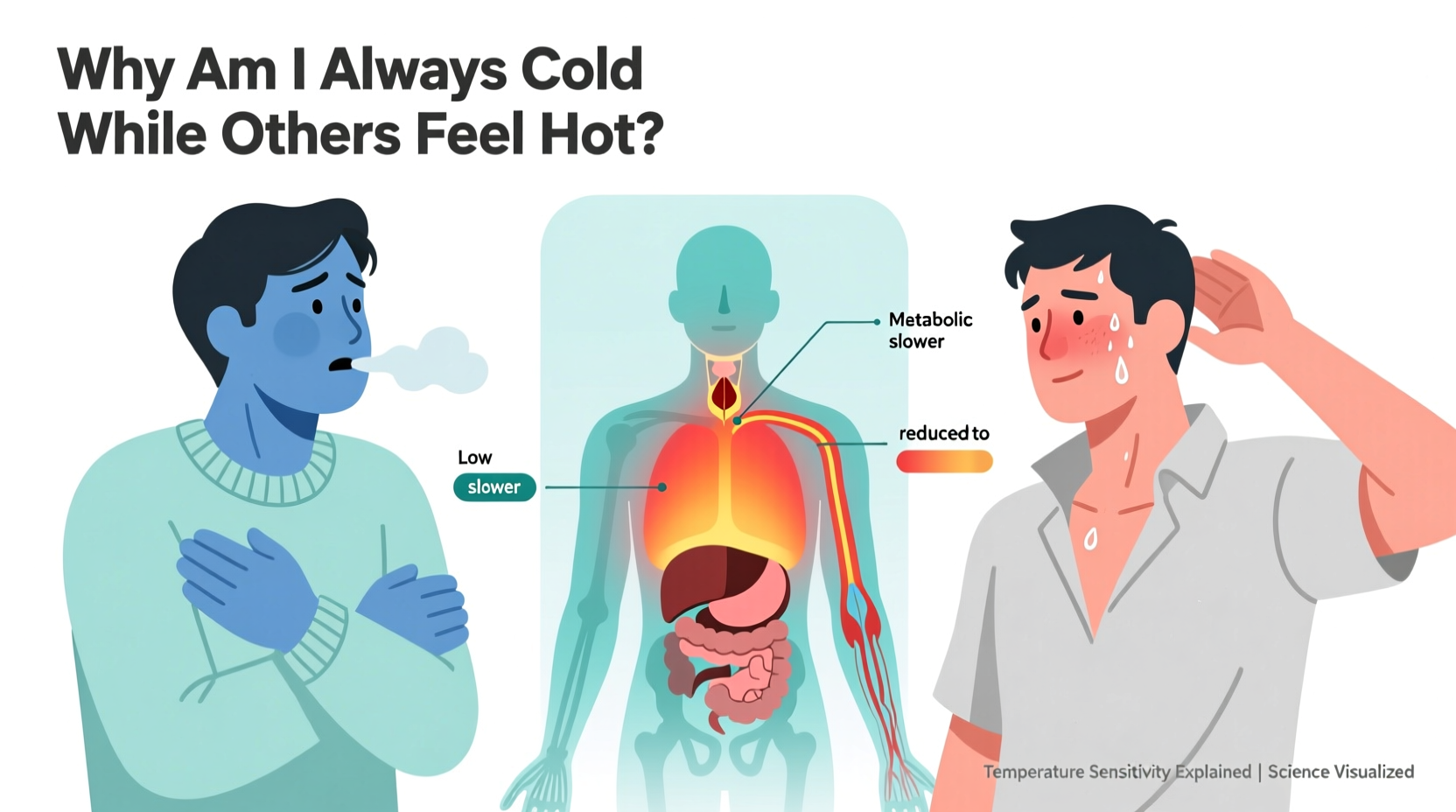
The human body maintains an internal temperature of approximately 98.6°F (37°C) through a process called thermoregulation. This balance is managed by the hypothalamus, a region in the brain that acts like a thermostat. When your core temperature drops, the hypothalamus triggers responses such as shivering and vasoconstriction (narrowing of blood vessels) to conserve heat. Conversely, when you're too warm, it initiates sweating and vasodilation (widening of blood vessels) to release excess heat.
However, the perception of being “cold” or “hot” isn’t solely determined by core temperature. It also depends on skin temperature, blood flow to extremities, metabolic rate, and even psychological state. For example, someone with poor peripheral circulation may feel cold in their hands and feet despite having a normal core temperature. Similarly, hormonal fluctuations can trick the brain into sensing coldness even in a warm environment.
Metabolism and Its Role in Feeling Cold
Your metabolic rate — the speed at which your body converts food into energy — plays a crucial role in how warm you feel. A faster metabolism generates more heat as a byproduct of cellular activity. People with higher muscle mass tend to have elevated basal metabolic rates because muscle tissue burns more calories at rest than fat tissue.
This explains why individuals who are more physically active or have greater muscle density often report feeling warmer. In contrast, those with slower metabolisms — due to age, low muscle mass, or medical conditions — may struggle to generate enough internal heat, making them more prone to feeling cold.
Diet also influences metabolic output. Skipping meals or consuming insufficient calories can slow metabolism, reducing heat production. Extremely low-calorie diets, often seen in eating disorders, can lead to chronic cold sensitivity. Additionally, deficiencies in iron, vitamin B12, or folate impair red blood cell production, limiting oxygen delivery to tissues and further reducing heat generation.
“Metabolic efficiency varies widely between individuals. Two people of similar size and age can have markedly different thermal comfort zones based on their metabolic profiles.” — Dr. Lena Patel, Endocrinologist at Boston General Hospital
Hormonal Influences on Thermal Sensitivity
Hormones significantly impact how we experience temperature. The most notable examples include thyroid hormones, sex hormones, and stress-related chemicals.
Thyroid Function: The thyroid gland produces hormones that regulate metabolism. Hypothyroidism (underactive thyroid) slows down bodily processes, leading to fatigue, weight gain, and a constant feeling of cold. Millions of people live with undiagnosed hypothyroidism, mistaking their symptoms for normal aging or stress.
Sex Hormones: Estrogen and testosterone influence vascular tone and body fat distribution, both of which affect temperature regulation. Women, especially during menstruation, pregnancy, or menopause, often report heightened sensitivity to cold. During menopause, fluctuating estrogen levels can trigger hot flashes followed by sudden chills — a rollercoaster of thermal discomfort.
Cortisol and Stress: Chronic stress elevates cortisol, which can constrict blood vessels and reduce circulation to the skin and extremities. This \"fight-or-flight\" response prioritizes vital organs over limbs, leaving hands and feet feeling icy even in mild temperatures.
Common Hormonal Causes of Cold Sensitivity
| Condition | Affects | Symptoms Beyond Coldness |
|---|---|---|
| Hypothyroidism | Metabolism slowdown | Fatigue, dry skin, weight gain |
| Anemia | Oxygen transport reduced | Pale skin, dizziness, weakness |
| Menopause | Vasomotor instability | Hot flashes, night sweats, mood swings |
| Low Testosterone (in men) | Reduced muscle mass & metabolism | Low energy, decreased libido |
Circulatory and Neurological Factors
Blood flow is essential for distributing heat throughout the body. Conditions that impair circulation — such as Raynaud’s phenomenon, diabetes, or peripheral artery disease — can leave extremities chronically cold. In Raynaud’s, small arteries spasm in response to cold or stress, drastically reducing blood flow to fingers and toes.
Neurological conditions can also distort temperature perception. Nerve damage from diabetes (diabetic neuropathy), multiple sclerosis, or vitamin deficiencies may cause abnormal sensations, including persistent coldness without an external cause. Some medications, particularly beta-blockers used for high blood pressure, reduce heart rate and blood flow, contributing to a chilly sensation.
Body composition matters too. People with lower body fat have less natural insulation. While this doesn’t necessarily indicate poor health, it means they lose heat more quickly in cool environments. Conversely, overweight individuals may retain heat more efficiently, explaining why some people feel hot even in air-conditioned spaces.
Lifestyle and Environmental Contributors
Even with optimal biology, daily habits can amplify or alleviate temperature sensitivity. Consider these often-overlooked factors:
- Hydration: Dehydration reduces blood volume, impairing circulation and heat distribution.
- Sleep Quality: Poor sleep disrupts hormonal balance and lowers metabolic efficiency.
- Clothing Choices: Wearing layers allows for micro-adjustments in thermal comfort.
- Indoor Airflow: Drafts or HVAC imbalances create localized cold spots.
- Diet Timing: Eating increases metabolic heat production — a warm meal can temporarily raise body warmth.
Workplace environments often fail to accommodate individual differences. Open-plan offices with fixed thermostats leave many employees either sweltering or shivering. Employers are increasingly recognizing “thermal comfort” as a factor in productivity and well-being, prompting moves toward personalized climate control solutions.
Mini Case Study: Office Temperature Wars
Sarah, a 34-year-old graphic designer, routinely wore a cardigan to work while her colleague Mark complained the office was too hot. Their manager installed individual desk fans and allowed flexible dress codes. Sarah added a heated cushion and warm socks, while Mark used a cooling pad and lighter fabrics. Within weeks, both reported improved focus and fewer distractions. This real-world scenario highlights how acknowledging physiological diversity leads to better outcomes than enforcing uniform conditions.
Action Plan: Managing Personal Temperature Sensitivity
If you're consistently colder than those around you, consider this step-by-step approach to identify and address underlying causes.
- Assess Your Health History: Note any symptoms like fatigue, hair loss, or irregular periods that might suggest hormonal imbalance.
- Visit Your Doctor: Request blood tests for thyroid function (TSH, T3, T4), iron levels (ferritin), and vitamin B12.
- Track Patterns: Keep a journal of when you feel cold — time of day, activity level, diet, and emotional state.
- Optimize Nutrition: Eat regular, balanced meals rich in protein, iron, and complex carbohydrates.
- Stay Active: Engage in daily movement to boost circulation and metabolism.
- Adjust Your Environment: Use layered clothing, space heaters, or foot warmers as needed.
- Review Medications: Consult your physician about any drugs that may affect circulation or metabolism.
Checklist: What to Do If You're Always Cold
- ✅ Get thyroid and iron levels tested
- ✅ Increase intake of iron-rich foods (spinach, red meat, lentils)
- ✅ Avoid prolonged sitting; take movement breaks every hour
- ✅ Wear moisture-wicking base layers in cold weather
- ✅ Limit caffeine and nicotine, which constrict blood vessels
- ✅ Practice stress-reduction techniques like meditation or deep breathing
- ✅ Monitor changes across menstrual cycles (for women)
Frequently Asked Questions
Why do women generally feel colder than men?
Women typically have lower resting metabolic rates and higher body fat percentages distributed subcutaneously (just under the skin), which insulates the core but leaves extremities cooler. Additionally, estrogen affects blood vessel reactivity, increasing sensitivity to cold. Studies show women prefer room temperatures about 2–4°F higher than men on average.
Can anxiety make me feel cold?
Yes. Anxiety activates the sympathetic nervous system, causing vasoconstriction to redirect blood flow to essential organs. This reduces warmth in hands, feet, and skin surface, creating a sensation of coldness. Hyperventilation during panic attacks can also lower blood CO₂ levels, further altering circulation and temperature perception.
Is feeling cold a sign of low immunity?
Not directly. However, frequent infections or illnesses can lead to fatigue and malnutrition, which in turn slow metabolism and impair circulation. Persistent coldness alongside recurrent sickness warrants medical evaluation for underlying immune or systemic issues.
Conclusion: Embrace Your Thermal Individuality
Feeling cold when others feel hot isn't just a quirk — it's a signal from your body that deserves attention. Whether rooted in metabolism, hormones, circulation, or lifestyle, temperature sensitivity reflects your unique physiology. Instead of dismissing it, use it as motivation to explore your health more deeply. Simple changes — from improving nutrition to checking thyroid function — can dramatically improve comfort and well-being.
Next time you reach for that extra layer, remember: your body isn’t broken; it’s communicating. Listen closely, act wisely, and create an environment where you thrive — temperature-wise and beyond.




 浙公网安备
33010002000092号
浙公网安备
33010002000092号 浙B2-20120091-4
Comments
No comments yet. Why don't you start the discussion?