
Every day around 2 p.m., it hits—the heavy eyelids, the wandering mind, the irresistible urge to rest your head on your desk. You’re not alone. Millions of people experience this daily energy crash, commonly known as the \"afternoon slump.\" While it’s easy to blame a long morning or lack of sleep, the truth is more complex. The 2 p.m. fatigue is often the result of biological rhythms, dietary choices, lifestyle habits, and even workplace environments. Understanding the root causes can help you reclaim your afternoon focus and maintain consistent energy throughout the day.
The Science Behind the 2 p.m. Energy Dip
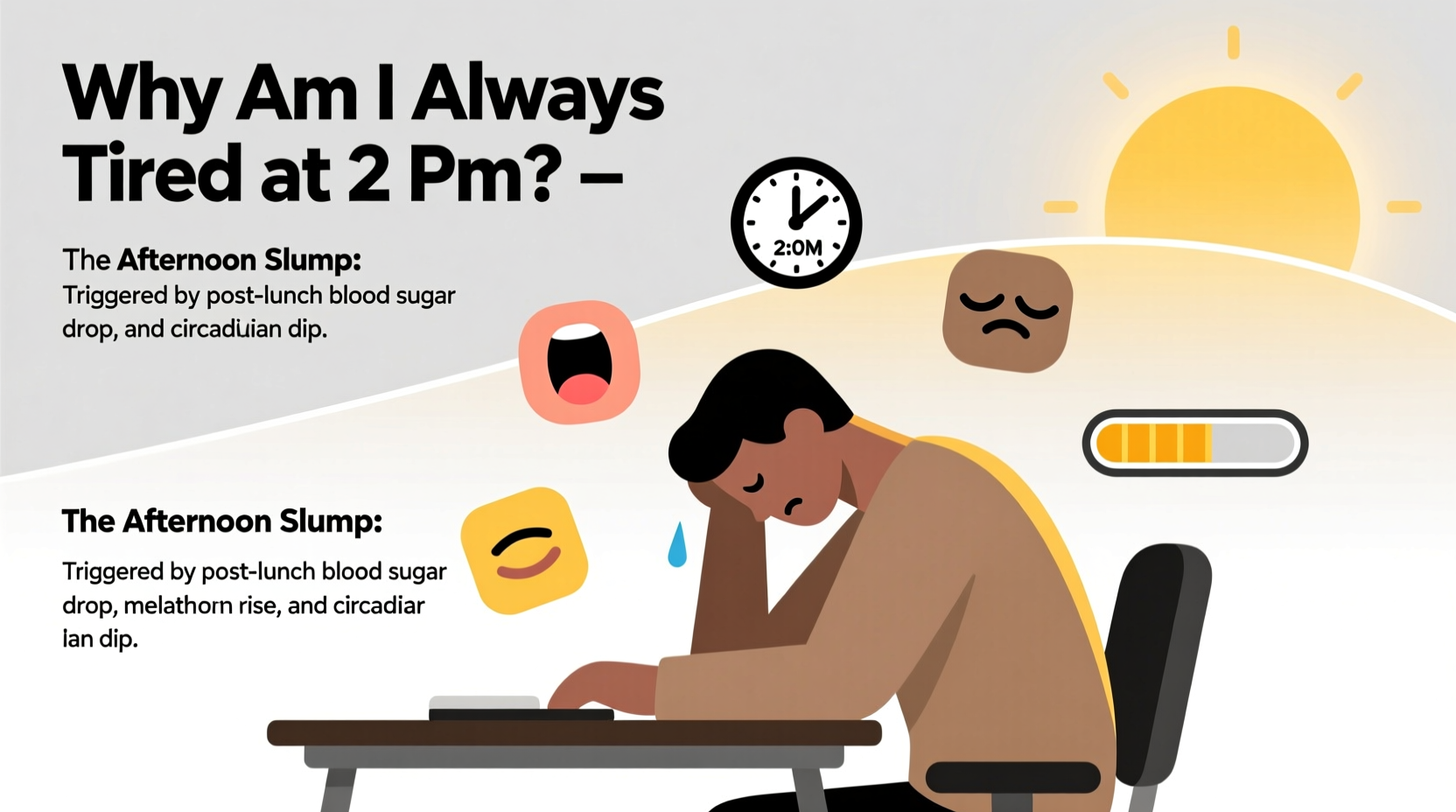
Your body operates on a circadian rhythm—a 24-hour internal clock that regulates sleep, hormone release, body temperature, and metabolism. One of the most predictable features of this rhythm is a natural dip in alertness that occurs in the early afternoon, typically between 1 p.m. and 3 p.m. This post-lunch lull isn't just psychological; it's hardwired into human biology.
Research from the National Sleep Foundation shows that core body temperature drops slightly during this window, signaling the brain to produce melatonin—the sleep hormone—even if it’s still daylight. This dip mirrors the one that occurs late at night, which is why some cultures practice siestas. However, in modern work environments, this biological signal clashes with productivity expectations.
“Humans are biologically predisposed to feel sleepy in the mid-afternoon. It’s not laziness—it’s physiology.” — Dr. Rafael Pelayo, Clinical Professor of Psychiatry, Stanford Center for Sleep Sciences
This natural dip becomes more pronounced when compounded by poor sleep quality, irregular schedules, or high mental workload earlier in the day. But while the circadian dip sets the stage, other factors determine how severe your slump actually feels.
Dietary Triggers: What You Eat Matters More Than You Think
If your lunch consists of a large plate of pasta, a white bread sandwich, or anything high in refined carbohydrates, you’re likely setting yourself up for a crash. These foods cause a rapid spike in blood glucose, prompting the pancreas to release insulin. As insulin clears sugar from the bloodstream, glucose levels drop quickly—leading to hypoglycemia-like symptoms such as fatigue, irritability, and brain fog.
A 2020 study published in the journal Nutrients found that meals high in simple carbs led to significantly lower cognitive performance in the hours following consumption compared to balanced meals rich in protein, fiber, and healthy fats.
Beyond macronutrients, meal size plays a role. Overeating forces your digestive system to divert blood flow away from the brain and muscles, contributing to sluggishness. Large meals activate the parasympathetic nervous system—the “rest and digest” mode—which directly opposes alertness.
Common Dietary Culprits of Afternoon Fatigue
- Refined grains (white bread, pastries, white rice)
- Sugary drinks and desserts
- High-fat fast food meals
- Excessive caffeine followed by withdrawal
- Alcohol consumption, even the night before
Lifestyle and Environmental Contributors
Even with perfect nutrition, external factors can amplify the 2 p.m. slump. Workplace conditions such as poor lighting, stagnant air, and prolonged screen exposure reduce alertness and strain cognitive resources.
Dim lighting suppresses alertness by failing to inhibit melatonin production. A study from the Lighting Research Center at Rensselaer Polytechnic Institute found that office workers exposed to bright light (especially blue-enriched white light) in the afternoon reported higher energy levels and better concentration than those under standard fluorescent lighting.
Sedentary behavior also plays a major role. Sitting for extended periods reduces circulation and oxygen delivery to the brain. Just 5–10 minutes of movement—walking, stretching, or stair climbing—can increase cerebral blood flow and elevate mood through endorphin release.
“Physical activity doesn’t have to be intense. A short walk after lunch can reset your energy and improve mental clarity.” — Dr. Kelly McGonigal, Health Psychologist and Author of *The Joy of Movement*
Workplace Habits That Worsen the Slump
| Habit | Impact | Better Alternative |
|---|---|---|
| Eating lunch at your desk | Reduces mindfulness, increases stress response | Take a real break away from screens |
| No natural light exposure | Disrupts circadian rhythm, lowers alertness | Sit near a window or take outdoor breaks |
| Back-to-back meetings | Mental fatigue accumulates without recovery | Block 10-minute pauses between calls |
| Dehydration | Even mild dehydration impairs focus and energy | Drink water consistently throughout the day |
Step-by-Step Guide to Beat the 2 p.m. Slump
Instead of reaching for another coffee or surrendering to YouTube rabbit holes, try this science-based routine to restore energy naturally.
- Start with hydration: Drink a full glass of water upon arrival at work and continue sipping every hour. Dehydration as mild as 1–2% loss of body weight can impair attention and reaction time.
- Optimize your lunch: Choose lean protein (chicken, tofu, beans), complex carbs (quinoa, sweet potato), and vegetables. Avoid oversized portions.
- Move within 30 minutes of eating: Take a 10-minute walk outside. Natural light and motion stimulate alertness far more effectively than caffeine.
- Control caffeine timing: Consume coffee or tea before 1 p.m. Caffeine has a half-life of 5–6 hours and can disrupt both nighttime sleep and afternoon energy regulation.
- Use strategic lighting: If possible, reposition your workspace near a window or use a daylight-spectrum lamp during the afternoon.
- Practice box breathing: When fatigue strikes, try inhaling for 4 seconds, holding for 4, exhaling for 4, and pausing for 4. Repeat for 2 minutes to reset your nervous system.
Real-Life Example: How Sarah Regained Her Afternoons
Sarah, a 34-year-old project manager in Chicago, used to dread the hours after lunch. “I’d eat a turkey sandwich and an apple at my desk while answering emails,” she recalls. “By 2:15, I’d be staring at the same sentence for 10 minutes, feeling groggy and frustrated.”
After reading about circadian rhythms, she redesigned her routine. She now takes a full 20-minute break, walks around the block, and eats a lunch of grilled salmon, brown rice, and broccoli. She swapped her afternoon soda for sparkling water with lemon and installed a daylight lamp on her desk.
Within two weeks, her focus improved dramatically. “I’m not just surviving the afternoon—I’m getting my best work done between 2 and 4 now,” she says. “It’s like I unlocked extra time in the day.”
Checklist: Daily Defense Against the Afternoon Slump
Use this practical checklist to evaluate and improve your daily habits:
- ☑ Drink at least 16 oz of water before noon
- ☑ Eat a balanced lunch with protein, fiber, and healthy fats
- ☑ Step away from your desk for at least 10 minutes after eating
- ☑ Get 5+ minutes of natural sunlight between 12 p.m. and 2 p.m.
- ☑ Limit caffeine intake after 1 p.m.
- ☑ Take three short movement breaks (stretching, walking, stairs) during the day
- ☑ Ensure your workspace has adequate lighting
- ☑ Maintain a consistent sleep schedule (within 30 minutes nightly)
Frequently Asked Questions
Is the 2 p.m. slump a sign of a medical problem?
Occasional fatigue is normal, but chronic, debilitating tiredness could indicate underlying issues such as sleep apnea, anemia, thyroid dysfunction, or depression. If lifestyle changes don’t help, consult a healthcare provider for evaluation.
Can napping help beat the afternoon slump?
Yes—but with caveats. A 10–20 minute power nap can enhance alertness and cognition without causing sleep inertia. Naps longer than 30 minutes may interfere with nighttime sleep, especially if you struggle with insomnia. Ideal nap time is between 1 p.m. and 3 p.m., aligning with the circadian dip.
Why do I feel fine at 2 p.m. on weekends?
Weekend routines often differ significantly from workdays. You may sleep later, eat differently, move more, and experience less mental strain. Additionally, being free from work-related stress reduces cortisol load, which can influence energy perception. Aligning weekend and weekday rhythms promotes more stable energy.
Conclusion: Reclaim Your Afternoons
The 2 p.m. slump isn’t inevitable. While biology primes us for a midday dip, modern habits often turn a mild lull into a productivity killer. By understanding the interplay of diet, light, movement, and circadian health, you can transform your afternoons from a drag into a period of renewed focus and accomplishment.
Small, consistent changes—like stepping outside after lunch, adjusting your plate, or optimizing your workspace—compound over time. You don’t need a complete lifestyle overhaul to see results. Start with one or two strategies from this guide and observe the difference within days.




 浙公网安备
33010002000092号
浙公网安备
33010002000092号 浙B2-20120091-4
Comments
No comments yet. Why don't you start the discussion?