
It’s a common experience: after several days of intense workouts, you finally take a rest day—only to find yourself raiding the pantry by mid-afternoon. You didn’t burn hundreds of calories lifting weights or running today, yet your hunger feels stronger than ever. This paradox confuses many fitness enthusiasts. Why would your body demand more food when it's not actively exercising?
The answer lies in the complex interplay between metabolism, muscle recovery, and hormonal signaling. Rest days are not metabolic vacations; they're critical periods of repair and adaptation. During this time, your body recalibrates energy systems, replenishes fuel stores, and manages hormones that regulate appetite. Understanding this process can help you respond to hunger cues appropriately—neither overeating out of confusion nor underfueling due to misinformation.
The Role of Metabolism on Rest Days
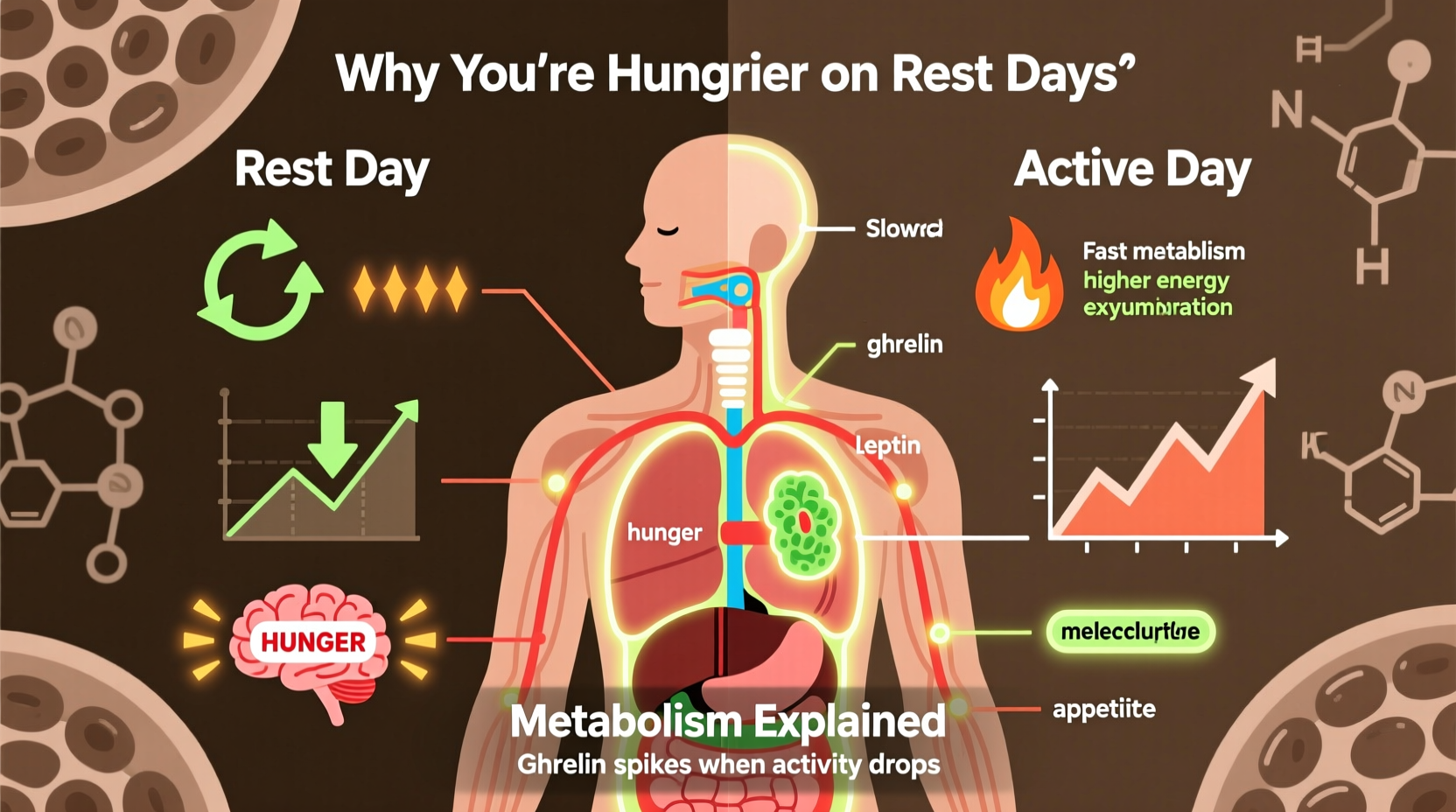
Metabolism is often misunderstood as just the rate at which you burn calories during activity. In reality, it encompasses all biochemical processes that sustain life—including digestion, cellular repair, temperature regulation, and tissue rebuilding. Even at rest, your body consumes energy. This baseline expenditure is known as resting metabolic rate (RMR), which accounts for about 60–75% of total daily energy expenditure.
Contrary to popular belief, RMR doesn't drop significantly on rest days. In fact, it may slightly increase. After strenuous exercise, muscles undergo micro-tears and glycogen depletion. Repairing these tissues requires energy—often peaking 24 to 72 hours post-exercise. This phenomenon, called excess post-exercise oxygen consumption (EPOC), means your body continues burning calories at an elevated rate even while sedentary.
Additionally, protein synthesis—the process of building new muscle fibers—demands ATP (adenosine triphosphate), the body’s primary energy currency. The more intense your previous workouts, the greater the demand for repair, and thus, the higher your metabolic activity during recovery.
Hormonal Drivers of Hunger on Rest Days
Hunger isn’t solely determined by calorie deficit. It’s orchestrated by a network of hormones that communicate between the gut, brain, and fat tissue. Two key players are ghrelin and leptin.
- Ghrelin, often called the “hunger hormone,” is produced primarily in the stomach. Levels rise before meals and signal the hypothalamus to stimulate appetite.
- Leptin, secreted by fat cells, communicates long-term energy stores to the brain. High leptin suppresses appetite; low levels increase it.
Research shows that acute changes in activity and energy balance disrupt this system. A 2018 study published in Appetite found that participants who engaged in high-intensity training followed by rest experienced significant spikes in ghrelin compared to those maintaining consistent moderate activity. This suggests that rest days after heavy training can trigger biological hunger signals independent of actual caloric need.
Another factor is cortisol, the stress hormone. While acute cortisol release during exercise supports energy mobilization, chronically elevated levels—or sudden drops during rest—can dysregulate appetite. Some individuals experience increased cravings for carbohydrates and fats when cortisol fluctuates, especially if sleep or nutrition has been suboptimal.
“Rest days aren’t passive—they’re metabolically active periods where hormonal shifts prepare the body for future performance.” — Dr. Lena Patel, Exercise Endocrinologist
Muscle Recovery and Glycogen Replenishment
One of the most overlooked reasons for increased hunger on rest days is glycogen restoration. During resistance training or endurance exercise, your muscles deplete stored glucose (glycogen) for fuel. Each gram of glycogen binds with approximately 3 grams of water, which explains post-workout weight fluctuations.
On rest days, your body prioritizes refilling these depleted glycogen stores. To do so efficiently, it increases insulin sensitivity in muscle cells and enhances glucose uptake. This creates a physiological pull toward carbohydrate-rich foods, often interpreted as hunger or cravings.
Moreover, muscle protein synthesis remains elevated for up to 48 hours after resistance training. This process requires both amino acids (from dietary protein) and energy (from calories). If your intake doesn’t match this demand, your body may amplify hunger signals to ensure adequate nutrient availability.
| Recovery Process | Energy Demand | Primary Nutrient Needed |
|---|---|---|
| Muscle Repair & Growth | Moderate to High | Protein + Calories |
| Glycogen Replenishment | High (especially after endurance work) | Carbohydrates |
| Inflammation Regulation | Low to Moderate | Omega-3s, Antioxidants |
| Hydration Restoration | Varies | Electrolytes + Water |
Common Misconceptions About Rest Day Nutrition
Many people assume that because they’re not moving much on rest days, they should eat less. This mindset can lead to undereating, impaired recovery, and eventually, plateaus in strength or fat loss.
Here’s what typically goes wrong:
- Calorie restriction based on activity alone: Reducing intake too drastically ignores the energy cost of recovery.
- Fear of fat gain: Temporary water retention from glycogen refill can cause scale creep, mistaken for fat gain.
- Neglecting macronutrient balance: Cutting carbs or protein undermines muscle repair and satiety.
A better approach is to maintain a consistent calorie intake across training and rest days—especially if your goal is body composition improvement. For most active adults, daily energy needs don’t vary enough between workout and non-workout days to justify large reductions.
Do’s and Don’ts on Rest Days
| Do | Don’t |
|---|---|
| Eat balanced meals with protein, complex carbs, and healthy fats | Skimp on carbohydrates out of fear of \"gaining weight\" |
| Stay hydrated—dehydration can mimic hunger | Ignore hunger cues thinking “I didn’t earn it” |
| Include anti-inflammatory foods like berries, leafy greens, and fatty fish | Label foods as “good” or “bad” based on activity level |
| Listen to your body’s fullness and hunger signals | Overcompensate with excessive junk food under the guise of “recovery” |
Real Example: Sarah’s Strength Training Plateau
Sarah, a 32-year-old software engineer, had been following a rigorous strength program for three months. She lifted four times a week, tracked macros, and saw initial progress in muscle tone and lifting numbers. But after week eight, her gains stalled. Worse, she felt constantly fatigued and ravenous on her two rest days.
She assumed she was eating too much and began cutting 500 calories on off-days. Her hunger intensified. By week ten, she lost motivation, started skipping workouts, and noticed her sleep suffered.
After consulting a sports nutritionist, Sarah learned she was chronically underfueling on rest days. Her body was signaling hunger not due to lack of willpower—but because it lacked the resources to repair muscle and restore energy. The solution? She adjusted her plan to keep protein intake consistent (around 1.8g/kg body weight) and restored carbohydrates on rest days, focusing on whole grains, fruits, and starchy vegetables.
Within two weeks, her energy returned. Her hunger normalized. And over the next month, her squat and deadlift numbers climbed again. The breakthrough wasn’t harder training—it was smarter recovery nutrition.
Actionable Tips for Managing Rest Day Hunger
Hunger on rest days isn’t a flaw—it’s feedback. Use it as a guide to support your body’s recovery needs. Here’s how:
- Keep protein intake consistent: Aim for 20–40g of high-quality protein per meal to support ongoing muscle synthesis.
- Don’t cut carbs: Prioritize complex carbohydrates like oats, sweet potatoes, quinoa, and fruit to replenish glycogen.
- Include healthy fats: Avocados, nuts, seeds, and olive oil enhance satiety and support hormone production.
- Hydrate early: Thirst is often mistaken for hunger. Drink water throughout the day, especially upon waking.
- Practice mindful eating: Pause before reaching for snacks. Ask: Am I truly hungry, or responding to boredom or stress?
Frequently Asked Questions
Does metabolism slow down on rest days?
No, not in the way most assume. While active calorie burn from movement decreases, resting metabolic rate can remain elevated due to muscle repair, inflammation management, and glycogen resynthesis. Total daily energy expenditure may only drop by 10–15%, far less than many expect.
Should I eat the same amount on rest days as workout days?
For most people aiming to build muscle or maintain performance, yes. Consistent energy intake supports recovery and prevents metabolic adaptation. Only very active endurance athletes may need larger adjustments based on training load.
Why do I crave sweets on rest days?
Your body may be seeking quick energy to refill glycogen stores. Cravings can also stem from psychological relief after disciplined training days. Try satisfying them with natural sources like fruit, dark chocolate, or yogurt instead of processed treats.
Final Thoughts: Honor Your Body’s Recovery Signals
Hunger on rest days isn’t a sign of weakness or poor discipline. It’s a biological response to the invisible work your body performs when you’re not moving. From repairing muscle fibers to rebalancing hormones, recovery is metabolically demanding. When you feel unusually hungry, consider it your body asking for the raw materials it needs to grow stronger, not a lapse in control.
Instead of resisting rest day hunger, learn to interpret it. Are you craving protein? Carbs? Comfort? Each urge offers insight into your current physiological state. Respond with nourishing foods, patience, and respect for the recovery process.




 浙公网安备
33010002000092号
浙公网安备
33010002000092号 浙B2-20120091-4
Comments
No comments yet. Why don't you start the discussion?