
It’s a common experience among active individuals: after a day of intense training, you expect to feel ravenous. But instead, your appetite is surprisingly mild. Then, on your rest day—when you're sitting on the couch or moving less—you’re hit with wave after wave of hunger. This counterintuitive phenomenon puzzles many fitness enthusiasts, athletes, and casual exercisers alike. Why would your body crave more food when it's doing less?
The answer lies in a complex interplay of hormones, metabolism, psychological factors, and energy regulation systems that don’t always align with intuitive expectations. Contrary to popular belief, exercise doesn’t always spike hunger immediately—and sometimes, it suppresses it. Meanwhile, recovery days activate different physiological pathways that can dramatically increase appetite. Understanding this shift isn’t just about curiosity; it’s crucial for managing nutrition, supporting recovery, and avoiding unnecessary fat gain or muscle loss.
The Immediate Effect of Exercise on Appetite
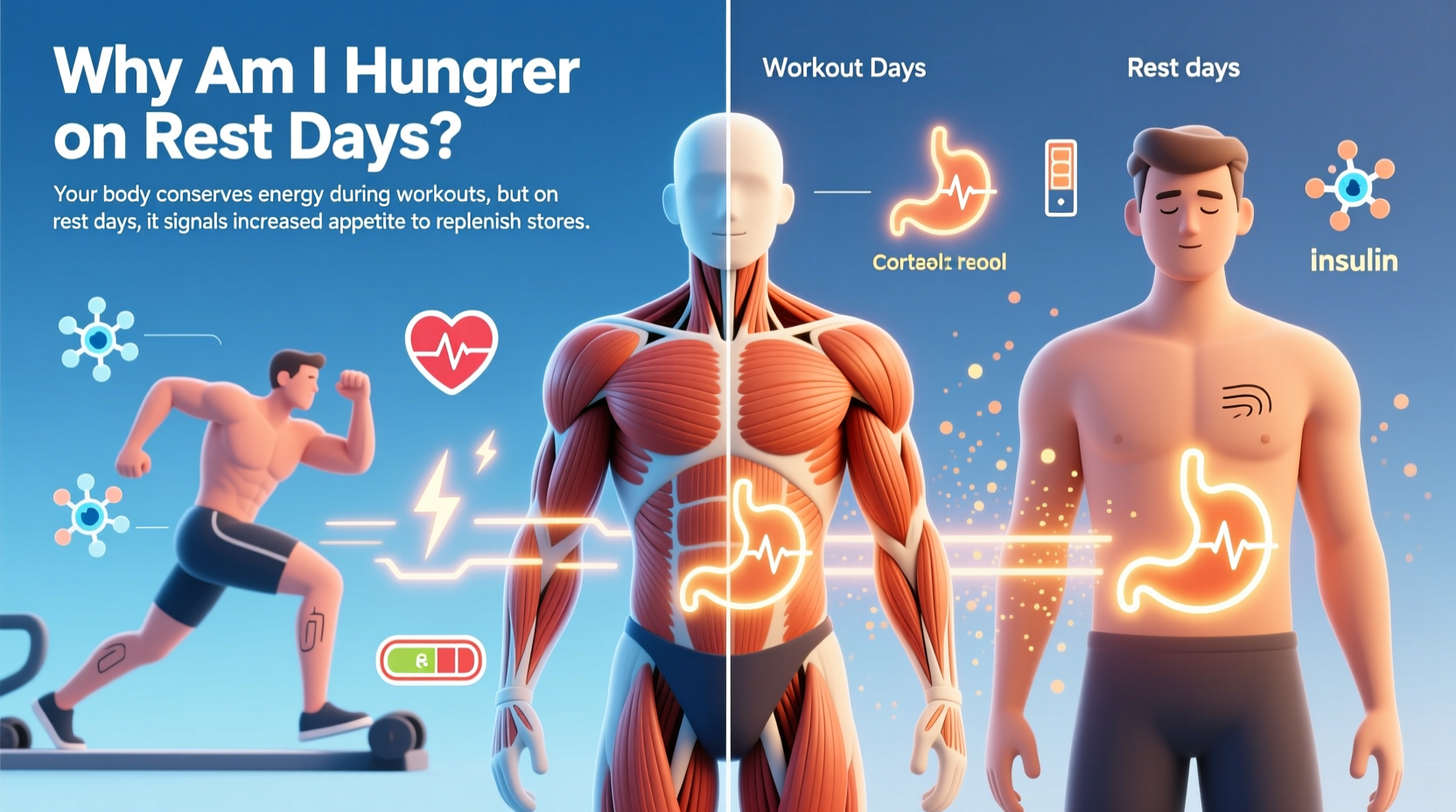
During and immediately after physical activity, especially moderate to high-intensity workouts, most people experience a temporary suppression of appetite. This effect is well-documented in research and is largely attributed to acute hormonal changes.
When you engage in cardiovascular or resistance training, your body releases stress-related hormones such as epinephrine (adrenaline) and norepinephrine. These catecholamines stimulate the sympathetic nervous system—the \"fight or flight\" response—which naturally delays hunger signals. Blood flow is redirected from the digestive system to working muscles, reducing gastrointestinal activity and the sensation of hunger.
Additionally, levels of appetite-suppressing peptides like peptide YY (PYY) and glucagon-like peptide-1 (GLP-1) may rise during endurance exercise, further dampening food cravings. At the same time, ghrelin—the so-called “hunger hormone”—often decreases post-exercise, particularly after aerobic sessions lasting 60 minutes or more.
“Acute exercise tends to transiently suppress appetite, even in individuals who have an energy deficit. The body prioritizes performance over feeding during exertion.” — Dr. John Blundell, Professor of Psychobiology, University of Leeds
This means that despite burning hundreds of calories, you might not feel like eating right away. In fact, many athletes report little interest in food immediately after a hard session, sometimes not until several hours later.
Hormonal Shifts During Recovery Drive Hunger
If exercise suppresses appetite, then why does hunger surge on rest days? The explanation comes down to recovery biology.
After depleting glycogen stores, stressing muscle tissue, and disrupting homeostasis through training, your body enters a repair and adaptation phase. This process requires energy and specific nutrients—especially protein and carbohydrates—to rebuild muscle, replenish fuel reserves, and restore hormonal balance. To meet these demands, your endocrine system shifts into an anabolic, hunger-promoting state.
Ghrelin levels, which were suppressed during exercise, begin to rebound and often exceed baseline levels during recovery periods. Simultaneously, leptin—the hormone responsible for signaling satiety—can decrease, particularly if calorie intake hasn't matched expenditure. Lower leptin amplifies hunger signals to the brain, making food more appealing and harder to resist.
Insulin sensitivity also increases after resistance training, meaning your cells become better at absorbing glucose from the bloodstream. While beneficial for metabolic health, this can lead to quicker drops in blood sugar between meals, triggering hunger cues earlier than usual.
Metabolic Compensation and Energy Debt
Your body operates on a principle of energy balance, but not in real-time. It doesn’t respond to daily calorie burns with immediate adjustments. Instead, it accumulates an “energy debt” over time—particularly after multiple consecutive training days—and seeks to repay it during periods of low activity.
This concept is known as metabolic compensation. If you’ve been in a caloric deficit or expending significant energy over several days, your resting metabolic rate (RMR) may remain elevated even on non-exercise days due to ongoing recovery processes like muscle repair, inflammation reduction, and protein synthesis. These functions require additional calories—sometimes up to 6–15% more than baseline RMR—for up to 72 hours post-exercise.
Yet, because you’re less active on rest days, you’re not burning extra calories through movement. The mismatch between sustained high energy needs and reduced output creates a physiological pressure to eat more. Your brain detects this imbalance via the hypothalamus and triggers stronger food-seeking behaviors.
Moreover, studies show that people tend to underestimate how many calories they burn during workouts by 30–50%, leading them to consume far less than needed on training days. This underfueling sets the stage for compensatory hyperphagia—increased eating—on subsequent rest days.
| Factor | Workout Day Impact | Rest Day Response |
|---|---|---|
| Appetite Hormones (Ghrelin) | Suppressed during/after exercise | Rebounds above baseline |
| Leptin Sensitivity | Moderate; influenced by meal timing | Decreased due to energy debt |
| Blood Sugar Stability | Fluctuates with exertion | Rapid dips increase hunger |
| Energy Expenditure | High (exercise + EPOC) | Lower activity, but elevated RMR |
| Psychological Drive to Eat | Distracted by routine | Heightened awareness of hunger |
Behavioral and Psychological Influences
Beyond biology, psychology plays a powerful role in perceived hunger on rest days.
On workout days, your schedule is often structured: wake up, train, shower, eat, work. There’s momentum and distraction. Hunger cues may be ignored or delayed simply because you’re focused on other tasks. Plus, many people subconsciously justify eating more on workout days, so they plan larger meals in advance.
In contrast, rest days typically involve more downtime, relaxation, and exposure to food-related stimuli—like cooking, browsing recipes, or watching food videos. With fewer distractions, bodily sensations become more noticeable. A mild stomach rumble that would’ve gone unnoticed during a busy gym day suddenly feels urgent.
There’s also a cognitive component: some individuals feel “entitled” to eat more on rest days because they believe they’ve “earned” it through prior effort, even if their actual energy output was lower. Others restrict food on workout days out of fear of weight gain, only to experience rebound hunger later.
“I had clients who trained six days a week but complained of uncontrollable hunger on their one rest day. Once we balanced their intake across all days, the cravings vanished.” — Sarah Lin, Registered Sports Dietitian
Mini Case Study: Alex’s Rest-Day Cravings
Alex, a 29-year-old software developer and recreational lifter, followed a five-day upper/lower split with Saturday and Sunday off. He consistently ate around 2,200 calories on workout days but found himself obsessively snacking on Sundays, often consuming over 3,000 calories without feeling full.
Tracking revealed he burned approximately 350–400 extra calories per workout. Over five days, that totaled nearly 2,000 kcal in additional expenditure. Yet, he wasn’t increasing his intake to compensate. By Sunday, his body had accumulated a substantial energy deficit.
His coach adjusted his plan: adding 200–300 calories on each workout day through oats, peanut butter, and Greek yogurt. Within two weeks, Alex reported stable energy, reduced cravings, and no binge-like behavior on rest days. His total weekly intake remained similar—but now it was distributed more evenly.
The result? Better recovery, improved strength gains, and sustainable habits.
Step-by-Step Guide to Managing Rest-Day Hunger
Understanding the cause is only half the battle. Here’s how to proactively manage increased appetite on rest days:
- Balance calorie distribution: Increase intake slightly on workout days rather than waiting for compensation. Aim to cover 70–90% of estimated exercise expenditure through food.
- Prioritize protein and fiber: Include 25–35g of protein per meal along with high-fiber vegetables and whole grains to enhance satiety.
- Stay hydrated: Thirst is often mistaken for hunger. Drink water consistently throughout the day.
- Maintain consistent meal timing: Avoid skipping meals, which can amplify later hunger. Stick to a predictable eating schedule.
- Include healthy fats: Add sources like avocado, nuts, olive oil, or fatty fish to slow digestion and promote fullness.
- Limit ultra-processed foods: They lack satiating nutrients and can disrupt appetite regulation.
- Monitor sleep and stress: Poor recovery amplifies ghrelin and reduces leptin, worsening hunger control.
Checklist: Optimize Your Recovery Nutrition
- ✅ Consume a post-workout meal with protein and carbs within 1–2 hours of training
- ✅ Spread protein intake evenly across 3–4 meals per day
- ✅ Weigh and track food temporarily to assess actual intake vs. needs
- ✅ Eat mindfully—avoid distracted eating while watching TV or working
- ✅ Plan rest-day meals in advance to prevent impulsive choices
- ✅ Get 7–9 hours of quality sleep to regulate appetite hormones
Frequently Asked Questions
Is it normal to feel hungrier on rest days?
Yes, it’s completely normal—especially after intense or prolonged training. Your body is repairing tissues and restoring energy stores, both of which increase hunger signals. As long as you’re eating nutrient-rich foods and staying within reasonable calorie targets, this hunger is a sign of effective recovery.
Should I eat more on rest days?
Not necessarily more overall—but potentially redistributed. If you're under-eating on workout days, your rest-day hunger is likely compensatory. Adjust by increasing intake on active days rather than drastically overeating on off days. Total weekly energy balance matters most.
Can dehydration mimic rest-day hunger?
Absolutely. Dehydration affects hypothalamic function, which regulates both thirst and hunger. Many people interpret mild dehydration as hunger. Always drink water first when a craving hits, then wait 15–20 minutes before deciding to eat.
Conclusion: Listen to Your Body—But Guide It Wisely
Hunger on rest days isn’t a flaw in your discipline—it’s a signal from your physiology. Your body is designed to recover, adapt, and protect against energy deficits. When it drives you to eat more after hard work, it’s trying to ensure survival and improvement.
The key is not to suppress these signals blindly, nor to surrender to uncontrolled eating. Instead, anticipate them. Fuel adequately during your training week, prioritize recovery-supportive nutrition, and structure your diet to align with your body’s natural rhythms.




 浙公网安备
33010002000092号
浙公网安备
33010002000092号 浙B2-20120091-4
Comments
No comments yet. Why don't you start the discussion?