
About 10% of the global population is left-handed, a trait that has long fascinated scientists, anthropologists, and educators alike. Being left-handed isn’t just about writing with your left hand—it reflects deeper neurological, genetic, and even evolutionary patterns. If you’ve ever wondered why you naturally reach for objects with your left hand or struggle with right-handed scissors, you’re not alone. The roots of handedness run deep into human biology and development.
Handedness—the preference for using one hand over the other—emerges early in life, often before birth, and remains stable throughout adulthood. While society has historically favored right-handedness, modern research reveals that left-handedness is neither a defect nor an anomaly, but a natural variation shaped by complex factors. This article explores the science behind why you might be left-handed, examining brain structure, genetics, prenatal influences, and cultural perceptions.
The Brain’s Role in Handedness
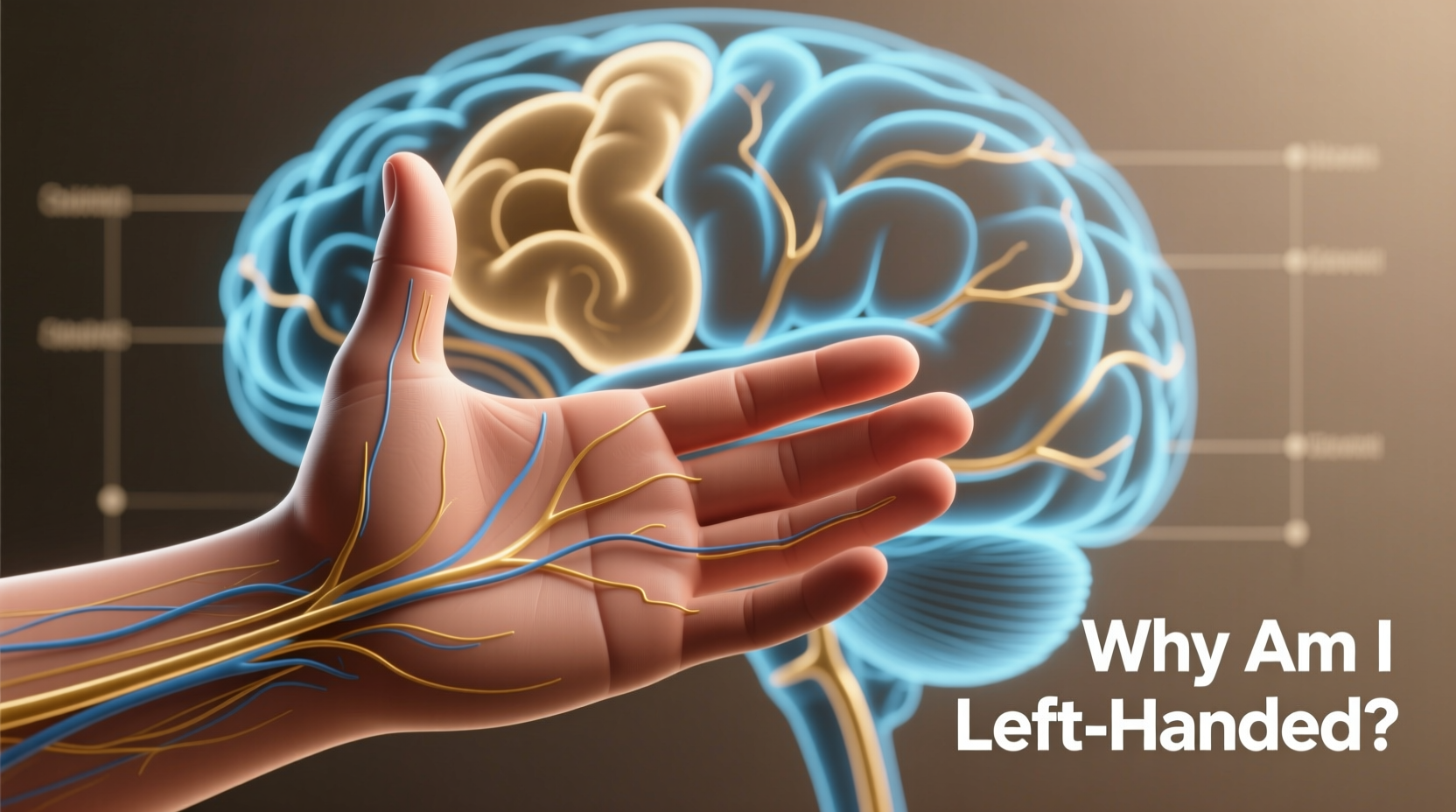
Handedness is closely tied to the brain’s lateralization—the division of cognitive functions between the left and right hemispheres. In most people, the left hemisphere controls language and fine motor skills, which is why the majority are right-handed: the left brain governs the right side of the body. For left-handed individuals, this pattern is less predictable. Around 70% still have language centered in the left hemisphere, but a significant minority show either mixed or reversed lateralization.
This neural flexibility may contribute to some observed differences in left-handed people. Studies suggest they may excel in tasks requiring divergent thinking, spatial reasoning, and rapid adaptation to new stimuli. However, they may also face slightly higher risks for certain neurodevelopmental conditions, such as dyslexia or ADHD, though the connections remain debated.
“Handedness is one of the most visible signs of brain asymmetry, offering a window into how our neural circuits develop.” — Dr. Sarah Blakemore, Cognitive Neuroscientist
Genetic and Hereditary Factors
For decades, scientists searched for a single “left-handed gene,” but modern genomics tells a more nuanced story. Handedness is influenced by multiple genes rather than one dominant factor. A 2021 study published in Brain identified four genetic regions associated with left-handedness, three of which are involved in brain development and the formation of internal body asymmetry.
One key finding was that these genes affect the structure of white matter tracts—pathways that connect different brain regions—particularly those linking areas involved in language processing. This supports the idea that left-handedness is not merely a motor preference but part of a broader neurodevelopmental blueprint.
Family patterns offer further clues. Children with two left-handed parents have a 26% chance of being left-handed, compared to just 9% in families where both parents are right-handed. However, even identical twins can differ in handedness, proving that genetics alone don’t determine the outcome.
Prenatal and Environmental Influences
Handedness begins to form in the womb. Ultrasound studies show that fetuses exhibit hand preferences as early as the 15th week of gestation. At this stage, most babies suck their right thumb, suggesting that motor bias develops before environmental influence plays a role.
Several prenatal factors may tip the balance toward left-handedness:
- Hormonal exposure: Higher levels of testosterone in utero have been linked to increased rates of left-handedness, possibly affecting brain lateralization.
- Birth stress: Complications during delivery, such as low birth weight or hypoxia (oxygen deprivation), correlate with higher left-handedness rates, though causality remains unclear.
- Season of birth: Some studies suggest slight variations based on birth month, potentially tied to maternal vitamin D levels or seasonal infections.
These findings point to a developmental “window” where biological and environmental forces interact to shape handedness—a process far more complex than simple inheritance.
Left-Handedness Across History and Culture
Societal attitudes toward left-handedness have varied widely. The word “sinister” comes from the Latin word for “left,” reflecting historical biases. In many cultures, left-handed children were forced to switch hands for writing, eating, or religious rituals. Even today, everyday tools—from can openers to computer mice—are designed primarily for right-handed users.
Yet, left-handed individuals have made outsized contributions in fields requiring creativity and adaptability. Notable left-handers include Leonardo da Vinci, Marie Curie, Barack Obama, and Jimi Hendrix. In sports like baseball, tennis, and fencing, left-handed athletes often hold a strategic advantage due to their rarity, catching opponents off guard.
| Era | Cultural View of Left-Handedness | Common Practices |
|---|---|---|
| Ancient Rome | Negative; associated with ill omens | Left-handed augurs disqualified from reading signs |
| Medieval Europe | Distrusted; linked to witchcraft | Children corrected or punished for left-hand use |
| 20th Century | Gradual acceptance | Forced retraining common in schools |
| 21st Century | Widespread normalization | Left-handed products widely available |
Practical Implications and Daily Life
Living in a right-handed world presents real challenges. From awkwardly positioned scissors to crowded desks that favor right-handed note-takers, small design flaws accumulate. But awareness is growing. Ergonomic tools, ambidextrous kitchenware, and inclusive classroom setups are becoming more common.
If you're raising a left-handed child—or are left-handed yourself—consider these steps to support comfort and confidence:
📋 **Checklist: Supporting Left-Handed Individuals**- Provide left-handed scissors and writing utensils early in development.
- Teach proper paper positioning: tilt the page counterclockwise for smoother writing.
- Encourage use of the dominant hand without pressure to switch.
- Select ergonomic tools designed for left-hand use (e.g., computer mice, musical instruments).
- Advocate for inclusive design in schools and workplaces.
Mini Case Study: Emma, Age 8
Emma struggled with handwriting in first grade. Her letters slanted upward, she smudged ink constantly, and her wrist ached after short writing sessions. After evaluation, her teacher noticed she was trying to write like a right-hander despite being left-dominant. Once given a left-handed desk, tilted writing pad, and instruction on proper grip and posture, her legibility improved dramatically within weeks. Her confidence soared—proof that small adjustments can make a big difference.
Frequently Asked Questions
Can someone become left-handed later in life?
True handedness is established early and rarely changes. However, injury or stroke affecting the dominant hand may force someone to rely on their non-dominant hand. This is adaptation, not a shift in innate preference.
Are left-handed people more creative?
Some studies suggest a correlation between left-handedness and enhanced performance in creative or spatial tasks, possibly due to greater interhemispheric communication. However, creativity is influenced by many factors, and handedness alone doesn’t determine it.
Is left-handedness linked to intelligence?
No consistent evidence shows that left-handed people are smarter or less intelligent. Large-scale studies find no significant IQ difference between left- and right-handed individuals.
Understanding Yourself Through Handedness
Knowing why you’re left-handed goes beyond curiosity—it connects you to a broader understanding of human diversity. Your handedness is a product of ancient evolutionary trade-offs, intricate brain wiring, and subtle developmental cues. It’s not a quirk, but a testament to the variability that makes each person unique.
As science continues to unravel the mysteries of the brain, handedness remains a powerful lens through which we can explore cognition, development, and identity. Whether you're left-handed or simply intrigued by the phenomenon, recognizing its complexity fosters empathy and appreciation for neurological diversity.




 浙公网安备
33010002000092号
浙公网安备
33010002000092号 浙B2-20120091-4
Comments
No comments yet. Why don't you start the discussion?