
Many people find themselves wide awake when they should be winding down—alert, mentally sharp, and even energized just as the world quiets. This experience isn’t rare, but it can be deeply disruptive. If you’re consistently peaking in alertness late at night while struggling to fall asleep or wake up refreshed, you're likely dealing with a misaligned circadian rhythm or lifestyle factors that override your body’s natural sleep-wake cycle. Understanding the root causes and implementing targeted strategies can restore balance and improve both sleep quality and daytime performance.
The Science Behind Nighttime Alertness
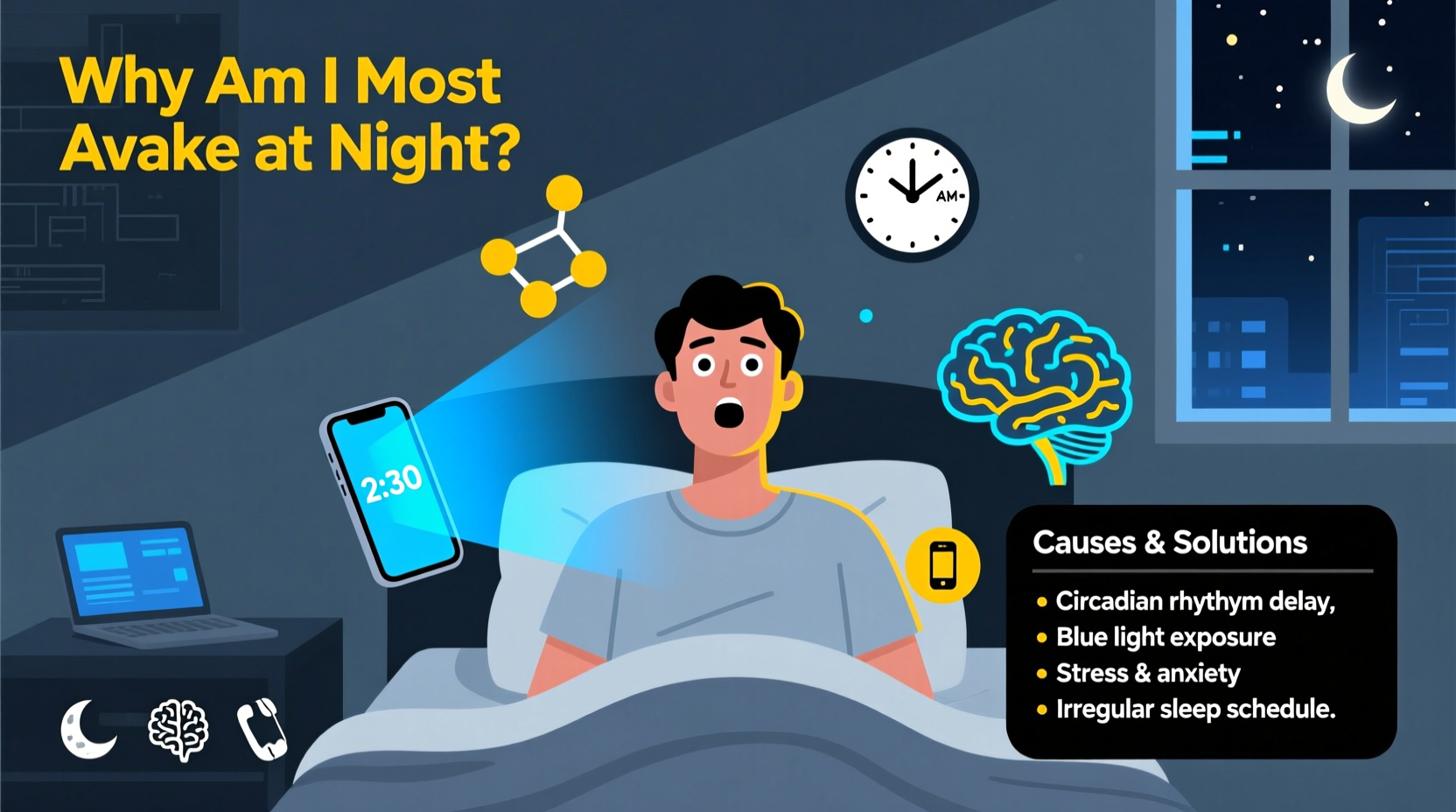
Your body runs on a 24-hour internal clock known as the circadian rhythm. This biological system regulates sleepiness, hormone release, body temperature, and cognitive function. When functioning properly, it promotes alertness during daylight hours and drowsiness at night. However, modern life often disrupts this rhythm. Exposure to artificial light—especially blue light from screens—after sunset delays melatonin production, the hormone responsible for initiating sleep. As a result, your brain receives signals that it’s still daytime, pushing peak alertness into the evening or nighttime hours.
Genetics also play a role. Some individuals are naturally inclined toward being “night owls,” a trait linked to variations in circadian clock genes such as PER3. These genetic predispositions can make it harder to fall asleep early, even if desired. For many, this tendency is compounded by work schedules, social habits, or chronic stress, creating a feedback loop where nighttime becomes the only quiet time for focus or relaxation.
Common Causes of Increased Nighttime Wakefulness
- Delayed Sleep Phase Syndrome (DSPS): A circadian rhythm disorder where the sleep-wake cycle is significantly delayed, leading to difficulty falling asleep before 2–3 AM and waking up late.
- Evening Light Exposure: Blue light from phones, laptops, and LED lighting suppresses melatonin, tricking the brain into staying alert.
- Caffeine and Stimulants: Consuming caffeine after 2 PM can linger in your system for up to 10 hours, interfering with sleep onset.
- Stress and Hyperarousal: Anxiety, rumination, or high cortisol levels keep the nervous system active at night, increasing mental clarity when rest is needed.
- Nocturnal Productivity Habits: Repeatedly using nighttime hours for work or creative projects conditions the brain to associate darkness with activity.
- Irregular Sleep Schedules: Inconsistent bedtimes and wake times confuse the circadian clock, weakening its ability to signal sleepiness.
What You Can Do: A Step-by-Step Guide to Resetting Your Rhythm
- Establish a Consistent Wake Time: Choose a fixed wake-up time—even on weekends—and stick to it. This anchors your circadian rhythm more effectively than focusing solely on bedtime.
- Get Morning Sunlight: Within 30–60 minutes of waking, spend at least 15–30 minutes outdoors. Natural light suppresses melatonin and resets your internal clock.
- Limit Evening Light Exposure: Dim indoor lights in the evening and switch devices to night mode. Consider using blue-light-blocking glasses if screen use is unavoidable.
- Shift Bedtime Gradually: If you typically fall asleep at 2 AM, aim to go to bed at 1:30 AM for 3–4 days, then 1:00 AM, and so on. Small shifts are more sustainable than abrupt changes.
- Create a Pre-Sleep Ritual: Engage in calming activities like reading, journaling, or light stretching to signal the transition from alertness to rest.
- Avoid Heavy Meals and Exercise Late at Night: Both elevate core body temperature and stimulate alertness, making it harder to wind down.
- Use Darkness Strategically: Make your bedroom as dark as possible. Consider blackout curtains and cover electronic lights.
Do’s and Don’ts for Managing Nighttime Wakefulness
| Do | Don’t |
|---|---|
| Expose yourself to bright light in the morning | Use bright screens right before bed |
| Maintain a consistent wake-up time | Hit snooze repeatedly |
| Practice relaxation techniques before sleep | Lie in bed awake for more than 20 minutes |
| Keep your bedroom cool and quiet | Use your bed for work or watching TV |
| Limit caffeine after noon | Drink alcohol to help you sleep |
Real-Life Example: Recovering a Disrupted Sleep Cycle
Sarah, a 29-year-old graphic designer, regularly stayed up until 3 AM working on freelance projects. She felt most creative at night and believed she was simply “a night person.” Over time, however, her productivity during the day declined, and she began experiencing headaches and irritability. After consulting a sleep specialist, she learned she had developed Delayed Sleep Phase Syndrome due to years of inconsistent sleep and evening screen use.
She implemented a structured plan: waking at 7:00 AM daily, walking outside for 20 minutes each morning, avoiding screens after 9 PM, and gradually moving her bedtime earlier by 15-minute increments. Within six weeks, she was consistently falling asleep by midnight and waking up without an alarm. Her energy improved, and she found herself more focused during traditional work hours—even if creativity didn’t peak at night anymore.
“Chronotype isn’t destiny. While some people are biologically predisposed to later rhythms, environmental cues have a stronger influence on long-term sleep health.” — Dr. Lena Patel, Sleep Neurologist, Stanford Center for Sleep Sciences
Actionable Tips for Immediate Improvement
Frequently Asked Questions
Is being most awake at night harmful?
Occasional late-night alertness isn’t dangerous, but chronic misalignment between your sleep schedule and societal demands can lead to sleep deprivation, reduced cognitive function, and increased risk of depression, obesity, and cardiovascular issues. Long-term, it’s important to align your rhythm with a sustainable schedule.
Can I train myself to be a morning person?
Yes. While genetics influence your chronotype, behavioral adjustments—especially consistent wake times and morning light exposure—can shift your rhythm over several weeks. It requires patience and consistency, but most people can adapt to an earlier schedule with deliberate effort.
Why do I feel more creative at night?
Reduced distractions and lower inhibition at night can create a sense of mental freedom. Additionally, a slightly fatigued brain may engage in more divergent thinking, which feels like enhanced creativity. However, this doesn’t mean nighttime is optimal—quality sleep supports long-term cognitive performance far more than isolated bursts of inspiration.
Conclusion: Reclaim Your Natural Rhythm
Feeling most awake at night is often the result of accumulated habits, environmental influences, and biological tendencies that have drifted out of sync. While the quiet solitude of nighttime can feel productive, it comes at a cost to long-term health and daily functioning. By understanding the mechanisms behind your alertness and applying consistent, science-backed strategies, you can gradually shift your rhythm toward a more balanced pattern.
Start small—set a fixed wake time, step into morning light, and reduce screen exposure at night. These actions build momentum. Over time, your body will begin to anticipate sleep and wakefulness at healthier hours. The goal isn’t to eliminate nighttime creativity entirely, but to ensure it doesn’t come at the expense of restorative sleep.




 浙公网安备
33010002000092号
浙公网安备
33010002000092号 浙B2-20120091-4
Comments
No comments yet. Why don't you start the discussion?