
If you've sent out dozens of applications, attended a few interviews, and still haven’t landed a job offer, frustration is understandable—but not inevitable. The hiring process today is more competitive than ever, and subtle missteps can silently disqualify even qualified candidates. The good news? Most obstacles are fixable with awareness and strategy. This guide breaks down the most common reasons people aren’t getting hired, backed by hiring manager insights, and provides actionable steps to dramatically improve your odds.
Why You’re Not Getting Hired: 7 Common Pitfalls
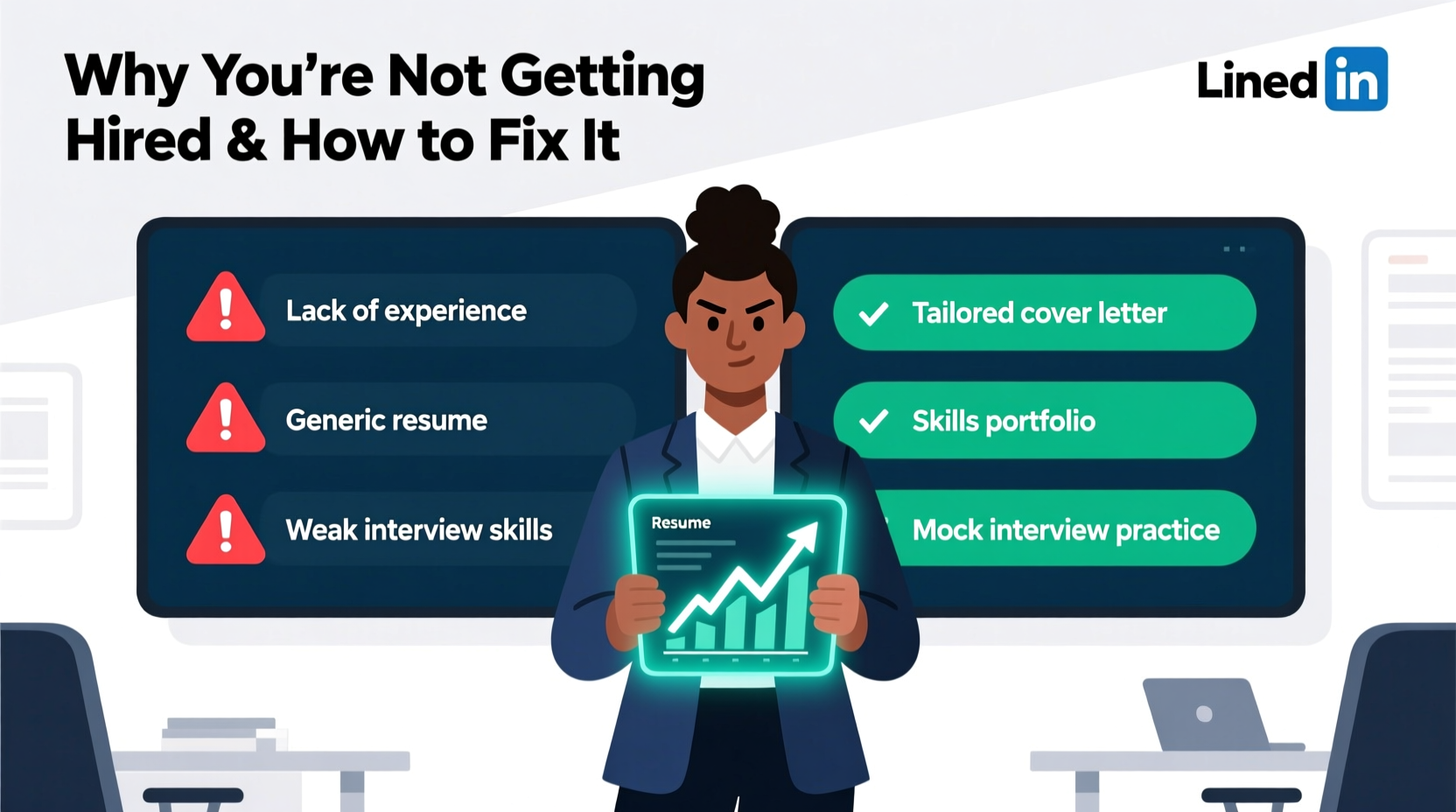
The gap between applying and receiving an offer often comes down to overlooked details. These issues don’t always reflect your skills—they reflect how well you communicate them.
- Generic resumes and cover letters: Sending the same resume to every job signals low effort. Hiring managers spot boilerplate content instantly.
- Weak online presence: Over 90% of employers screen candidates online. An unprofessional social media profile or lack of LinkedIn presence can hurt your credibility.
- Poor interview performance: Even strong applicants falter when they fail to prepare for behavioral questions or don’t research the company.
- Skills mismatch: Your experience may be solid, but if it’s not framed in terms relevant to the role, algorithms and recruiters will miss it.
- Lack of networking: About 70% of jobs are filled through referrals. Relying solely on job boards limits your access to hidden opportunities.
- Overlooking follow-up: Failing to send a thank-you email after an interview can leave a negative impression of disinterest.
- Unrealistic expectations: Applying for senior roles with junior-level experience—or expecting immediate callbacks—can lead to discouragement.
How to Improve Your Chances: A Step-by-Step Guide
Improving your hiring odds isn’t about luck—it’s about precision. Follow this structured approach to refine your job search strategy.
Step 1: Audit Your Application Materials
Start by reviewing your resume and cover letter objectively. Ask: Does this clearly show what I’ve achieved, not just what I did? Replace vague statements like “responsible for team projects” with measurable outcomes: “Led a cross-functional team that reduced project delivery time by 30%.”
Step 2: Optimize for ATS and Humans
Most companies use software to filter resumes before a human sees them. To pass:
- Use standard section headings (e.g., “Work Experience,” “Education”).
- Avoid graphics, columns, or text boxes that confuse scanners.
- Incorporate keywords from the job posting naturally into your bullet points.
Step 3: Build a Professional Digital Footprint
Your online presence should reinforce your professional brand. Update your LinkedIn profile with a clear headline, summary, and endorsements. Remove or privatize controversial social media content.
Step 4: Expand Your Network Strategically
Attend industry webinars, join LinkedIn groups, and reconnect with former colleagues. When reaching out, focus on learning—not begging for a job. A simple message like, “I’ve admired your work at [Company]—would you have 10 minutes to share how you broke into this field?” builds rapport without pressure.
Step 5: Master the Interview Process
Practice answering common questions using the STAR method (Situation, Task, Action, Result). For example: “Tell me about a time you handled conflict.” Don’t just describe the conflict—explain how you resolved it and what the outcome was.
Step 6: Follow Up Gracefully
Within 24 hours of an interview, send a personalized thank-you email. Mention something specific discussed and reiterate your enthusiasm. Example: “I appreciated our conversation about your team’s upcoming product launch—I’m excited about the chance to contribute my UX design experience.”
Do’s and Don’ts: Job Search Best Practices
| Do | Don’t |
|---|---|
| Tailor your resume and cover letter for each role | Use the same generic documents for every application |
| Research the company and mention specifics in interviews | Show up without knowing what the company does |
| Ask thoughtful questions during interviews | Only talk about salary or benefits too early |
| Follow up within 24–48 hours after interviews | Wait more than a week or pester with daily emails |
| Practice answers to common behavioral questions | Wing your responses without preparation |
Real Example: From Rejection to Offer
Samantha, a marketing coordinator with three years of agency experience, applied to over 50 entry-level digital marketing roles with no success. After working with a career coach, she discovered her resume was packed with responsibilities but lacked results. She revised it to highlight achievements: “Increased client engagement by 40% through targeted email campaigns” and “Reduced ad spend waste by optimizing audience segments.” She also began connecting with hiring managers on LinkedIn before applying.
Within three weeks, she had four interviews. During one, she referenced a recent company blog post and suggested a small improvement to their social media strategy. That insight stood out. She received an offer with a 15% higher salary than her previous role.
“Candidates who demonstrate they’ve done their homework and speak in outcomes, not duties, immediately rise to the top.” — James Reed, HR Director at TechGrowth Inc.
Action Checklist: Boost Your Hiring Odds in 30 Days
Use this checklist to systematically improve your job search over the next month:
- ✅ Revise your resume to include 3–5 measurable achievements per role
- ✅ Rewrite your LinkedIn headline to reflect your value proposition (e.g., “Digital Marketer | Driving Engagement & Conversion”)
- ✅ Identify 10 target companies and research their culture, values, and recent news
- ✅ Reach out to 1 former colleague or connection per day for informational chats
- ✅ Practice answering 5 common interview questions using the STAR method
- ✅ Apply to 5 jobs per week with fully customized materials
- ✅ Send a thank-you email after every interview
Frequently Asked Questions
How many jobs should I apply to each week?
Quality matters more than quantity. Aim for 5–10 highly targeted applications per week, each with a customized resume and cover letter. Mass-applying with generic materials yields poor results and wastes energy.
Should I explain employment gaps in my cover letter?
Yes—but briefly and positively. Focus on growth, not excuses. Example: “During a 10-month career break, I completed a certification in data analysis and volunteered with a nonprofit to support their outreach efforts.”
Is it okay to follow up after submitting an application?
Yes, especially if you haven’t heard back in 7–10 days. A polite email to the hiring manager or recruiter referencing the role and expressing continued interest can get your application noticed.
Final Thoughts: Take Control of Your Job Search
Not getting hired doesn’t mean you’re unqualified—it often means your approach needs refinement. The job market rewards those who are strategic, persistent, and proactive. By diagnosing what’s holding you back and making precise improvements, you shift from being just another applicant to a standout candidate.
Stop blaming the system. Start improving your process. Update your resume today, reach out to one contact, practice one interview question. Small actions compound into big results. Your next opportunity isn’t far off—if you position yourself to seize it.




 浙公网安备
33010002000092号
浙公网安备
33010002000092号 浙B2-20120091-4
Comments
No comments yet. Why don't you start the discussion?