
Pulling iron shots is one of the most common frustrations among amateur golfers. A pulled shot flies sharply left of the target (for right-handed players), often ending up in the rough or worse—out of bounds. Unlike a draw, which curves gently from right to left, a pull travels straight left with no curve. The good news? Most causes are mechanical and can be corrected quickly with targeted adjustments. Understanding the root causes behind pulled irons—whether it’s your setup, swing path, or timing—can transform inconsistent ball striking into reliable control.
The Mechanics Behind a Pulled Iron Shot
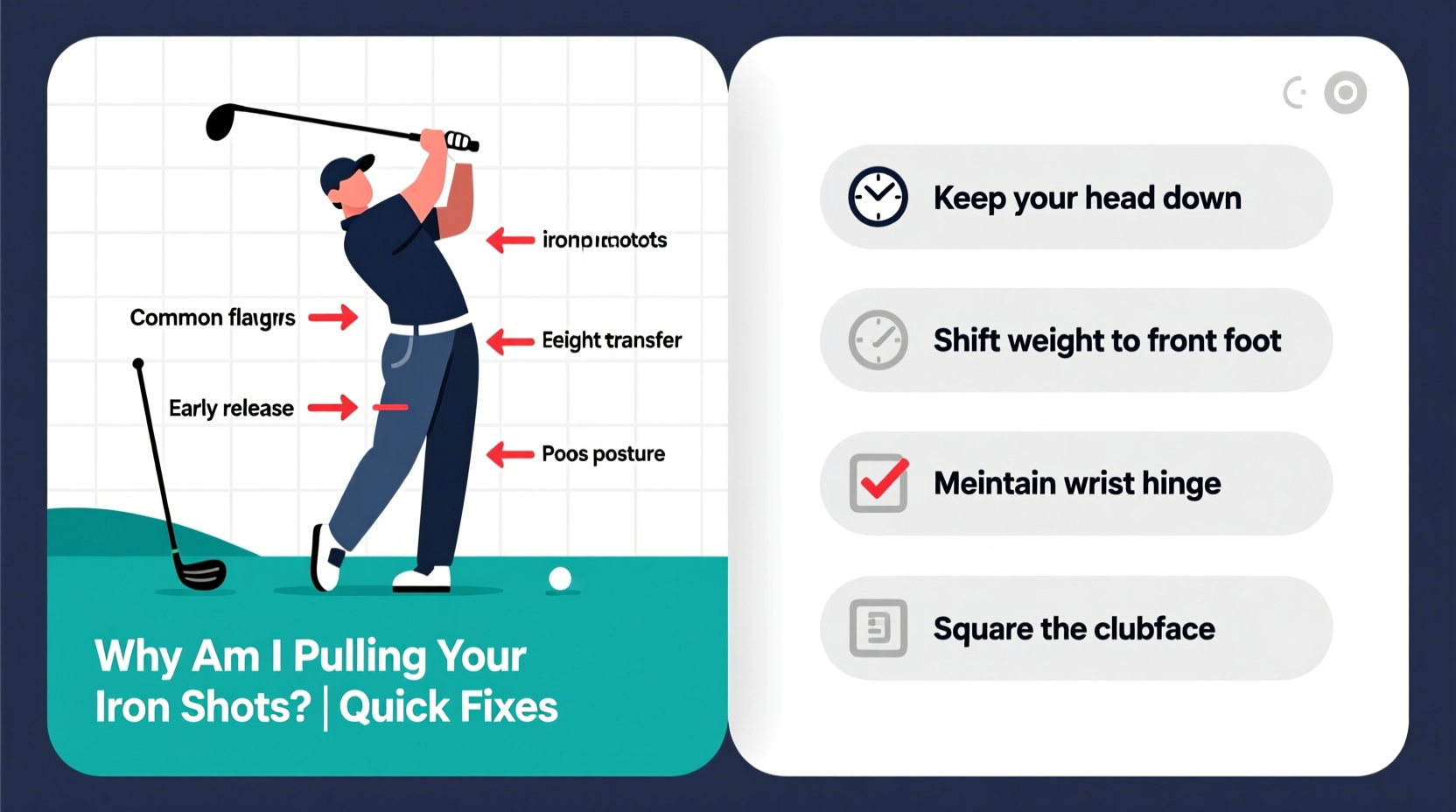
A pulled iron shot occurs when the clubface is aimed at the target at impact, but the swing path moves significantly from inside to outside across the ball. This means the face isn’t open or closed; it's square, but the path cuts across the ball from right to left (for a right-hander). As a result, the ball starts left and stays left—no curve, just a dead pull.
Several key factors contribute to this path fault:
- Over-the-top downswing: When the upper body dominates the downswing and the club comes “over the top,” it forces an outside-in path.
- Poor spine angle shift: Standing up during the downswing lifts the arms, promoting an over-the-top move.
- Incorrect grip pressure: Gripping too tightly restricts forearm rotation, reducing release and encouraging a steep, cut-across motion.
- Weight imbalance: Hanging back on the trail foot delays weight transfer, causing the hands to lead excessively and the path to shift left.
“Most pulls aren’t face issues—they’re path problems. Fix the swing direction, and the ball flight follows.” — Mark Clements, PGA Teaching Professional
Common Causes of Pulling Irons and How to Diagnose Them
Before applying fixes, it’s crucial to identify which part of your swing is misfiring. Use the checklist below to pinpoint your issue:
1. Over-the-Top Transition
This is the leading cause of pulled shots. It happens when the downswing begins with the shoulders and arms instead of the lower body. The club then approaches the ball from outside the ideal swing plane, cutting across it.
2. Closed Clubface at Setup
If your clubface is already aimed left at address, even a neutral swing path will produce a pull. Check your face alignment relative to your target line before every shot.
3. Excessive Shoulder Tilt or Reverse Spine Angle
Tilting too far away from the target or leaning backward during the backswing sets up a compensatory over-the-top move. This disrupts sequencing and encourages a pull.
4. Early Release (Hitting with Hands)
When the wrists unhinge too early in the downswing, the club arrives at impact with the shaft leaning forward but the path coming across. This creates a strong leftward trajectory despite solid contact.
5. Misaligned Feet and Shoulders
Even if your clubface is square, aiming too far left with your body can trick your brain into swinging along that line—resulting in a pull. Alignment is often subconscious, so use visual cues like a club on the ground to verify your setup.
Quick Fixes You Can Apply Today
You don’t need months of lessons to start correcting pulled iron shots. These immediate adjustments can yield noticeable results within a single practice session.
- Use a gate drill for alignment: Place two tees just outside the ball, forming a “gate” that aligns with your target. Practice swinging through without hitting the tees. This trains an inside-to-inside path.
- Feel the lower body leading: Initiate the downswing by rotating your hips toward the target before your arms drop. This prevents the upper body from dominating and reduces over-the-top action.
- Adjust your grip pressure: Hold the club at a 5 out of 10 tightness. Too firm restricts release; too loose loses control. Aim for relaxed hands that still maintain connection.
- Check your ball position: For mid-irons, the ball should sit just ahead of center (left of your sternum). Too far forward promotes a steep, cutting path.
- Practice the towel-under-arm drill: Tuck a small towel under both armpits and make slow swings. If the towel drops, your arms have separated from your torso—indicating poor connection and likely path issues.
Do’s and Don’ts at a Glance
| Do’s | Don’ts |
|---|---|
| Align feet, hips, and shoulders parallel to target line | Assume your alignment is correct without checking |
| Start downswing with hip rotation, not shoulder spin | Let your head dominate the downswing initiation |
| Maintain consistent spine angle from setup to impact | Stand up or lift during the downswing |
| Release the club fully through impact (allowing natural flip) | Hold off the release to “steer” the ball |
| Use video feedback to monitor swing path | Rely solely on ball flight without analyzing mechanics |
Real Golfer Case Study: Fixing Chronic Pulls in One Week
Jason, a 12-handicap golfer, struggled with pulled 7-irons during weekend rounds. He consistently started his shots 15–20 yards left of target, limiting his ability to attack pins. After filming his swing, his coach identified two main flaws: a reverse spine angle at the top and an over-the-top downswing.
Using the following plan over five days, Jason made rapid progress:
- Day 1: Focused on maintaining spine tilt using a mirror drill—keeping his shirt collar level throughout the backswing.
- Day 2: Practiced the “step-through” drill: after starting the backswing, he stepped forward with his lead foot to encourage early lower-body engagement.
- Days 3–4: Used alignment sticks on the ground to ensure his feet and shoulders were square. Combined this with half-swings focusing on inside-down path.
- Day 5: Hit full irons while feeling the “right elbow tuck” sensation to shallow the swing.
By the end of the week, Jason reduced pulled shots by 80%. His miss shape shifted to a slight draw, and his proximity to the hole improved dramatically.
Frequently Asked Questions
Is a pull the same as a hook?
No. A pull flies straight left (for right-handers) with little to no curve, caused by an outside-in swing path with a square face. A hook starts left and curves further left due to a closed clubface and an inside-out path with excessive rotation.
Can grip size affect pulling?
Yes. An undersized grip may encourage overactive hands, while an oversized grip can restrict release. Both alter the delivery path and face dynamics. Get professionally fitted to ensure optimal grip size for your hand structure and swing type.
Should I aim farther right to compensate for pulls?
No. Compensating with aim masks the underlying issue. Instead, fix the swing path and keep your alignment neutral. Training proper mechanics leads to sustainable improvement, not temporary fixes.
Conclusion: Take Control of Your Iron Game
Pulling iron shots isn’t a life sentence—it’s a mechanical signal pointing to specific breakdowns in your swing. Whether it’s an over-the-top move, poor alignment, or timing flaw, each cause has a direct, actionable solution. The fastest way to stop pulling is to combine video analysis with purposeful drills that retrain muscle memory. Focus on lower-body initiation, proper alignment, and maintaining your spine angle, and you’ll see immediate improvements in both accuracy and consistency.




 浙公网安备
33010002000092号
浙公网安备
33010002000092号 浙B2-20120091-4
Comments
No comments yet. Why don't you start the discussion?