
Sleep is essential for recovery, cognitive function, and emotional regulation. Most adults need between 7 and 9 hours per night. But if you're consistently sleeping more than 10 hours—or feel exhausted despite long rest—you may be dealing with hypersomnia or an underlying health issue. Excessive sleep isn’t always a sign of laziness; it can signal deeper physiological or psychological imbalances. Understanding the causes, recognizing warning signs, and knowing when to seek help are critical steps toward restoring balance and improving quality of life.
Common Causes of Excessive Sleep
Over-sleeping, also known as long sleep duration, affects roughly 5–10% of the population. While some people naturally require more sleep due to genetics, in many cases, prolonged sleep is a symptom rather than a lifestyle choice. The following factors frequently contribute to extended sleep patterns:
- Poor sleep quality: Fragmented or non-restorative sleep—often caused by sleep apnea, restless legs syndrome, or frequent nighttime awakenings—can leave you feeling tired even after 10+ hours in bed.
- Depression: One of the most common psychological causes of oversleeping. Depression doesn’t always present as sadness; fatigue and excessive sleep (hypersomnia) are hallmark symptoms.
- Medications: Antidepressants, antipsychotics, antihistamines, and certain painkillers can increase drowsiness and extend sleep duration.
- Hypothyroidism: An underactive thyroid slows metabolism, leading to persistent fatigue and increased sleep needs.
- Chronic fatigue syndrome (ME/CFS): Characterized by unexplained, debilitating fatigue that isn't relieved by rest and often worsened by physical or mental activity.
- Narcolepsy: A neurological disorder that disrupts the brain’s ability to regulate sleep-wake cycles, causing sudden sleep attacks and prolonged nighttime sleep.
- Obstructive sleep apnea (OSA): Repeated breathing interruptions during sleep reduce oxygen flow, fragmenting rest and leaving individuals excessively sleepy during the day—and compensating with longer sleep at night.
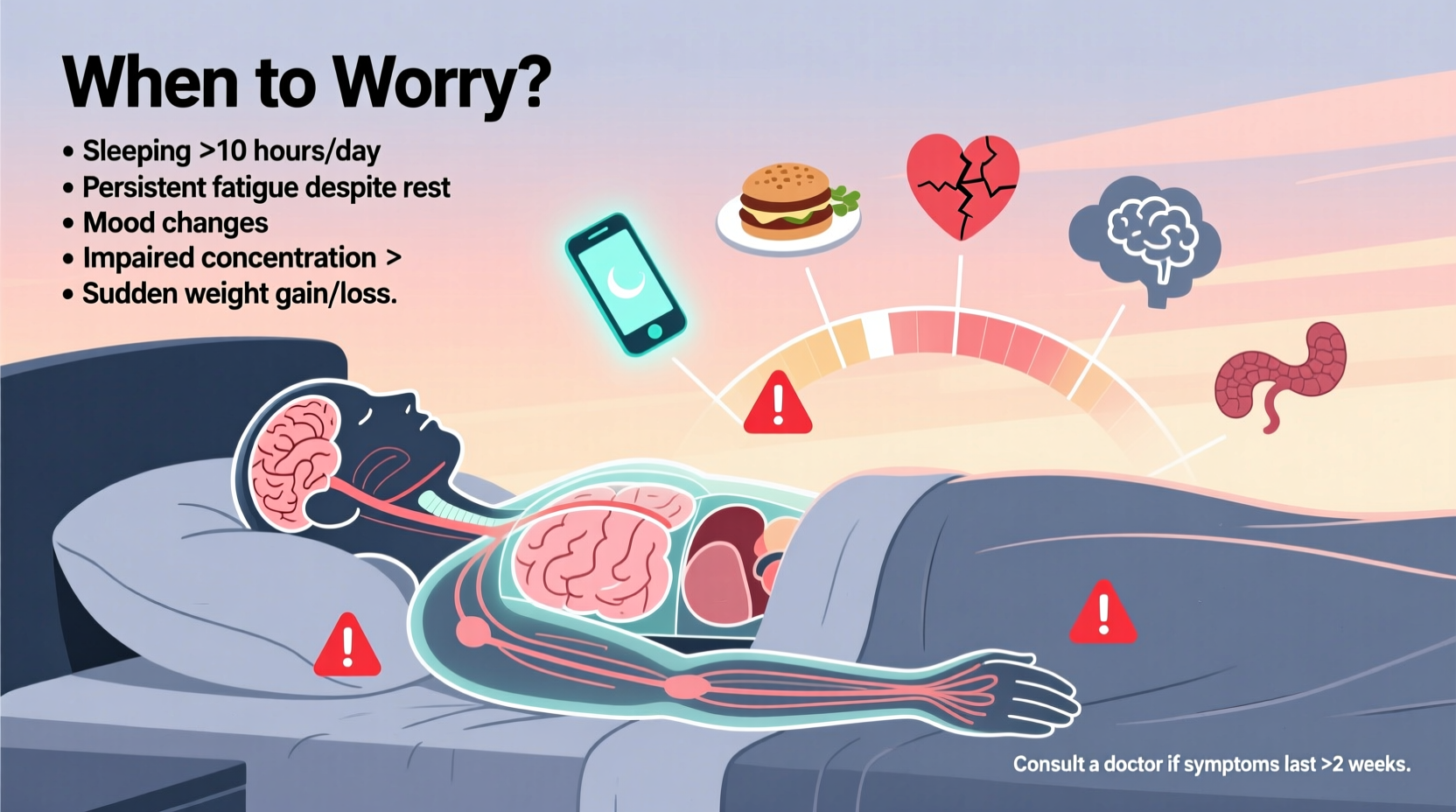
When to Worry: Red Flags of Pathological Oversleeping
Occasional long sleep after a stressful week or intense physical activity is normal. However, consistent oversleeping accompanied by specific symptoms may indicate a medical concern. Watch for these warning signs:
- Sleeping 10+ hours regularly and still feeling fatigued
- Difficulty getting out of bed, even after sufficient sleep
- Daytime confusion, “brain fog,” or memory lapses
- Lack of motivation or withdrawal from social activities
- Headaches upon waking
- Mood disturbances such as irritability, hopelessness, or anxiety
- Sudden changes in appetite or weight
“Persistent hypersomnia should never be dismissed as mere laziness. It’s often the body’s way of signaling that something is off—whether metabolic, neurological, or psychological.” — Dr. Lena Patel, Neurologist and Sleep Specialist
Medical Conditions Linked to Excessive Sleep
Beyond lifestyle and environmental factors, several clinical conditions are directly associated with prolonged sleep. Identifying these early improves treatment outcomes.
Depression and Bipolar Disorder
Up to 40% of younger adults with depression experience hypersomnia. In bipolar disorder, depressive episodes often involve sleeping 12 or more hours daily. Unlike typical tiredness, this fatigue persists regardless of rest.
Neurological Disorders
Kleine-Levin Syndrome, though rare, causes recurrent episodes of excessive sleep lasting days or weeks, along with altered behavior and cognition. Narcolepsy, as mentioned, involves uncontrollable sleep urges and prolonged nocturnal rest.
Cardiovascular and Metabolic Risks
Studies show that regularly sleeping more than 9 hours is linked to a higher risk of heart disease, stroke, type 2 diabetes, and obesity. While correlation doesn’t equal causation, it underscores the importance of investigating why someone sleeps so much.
Medication Side Effects
Drugs like tricyclic antidepressants, benzodiazepines, beta-blockers, and anticonvulsants can induce drowsiness. If you started a new medication around the time your sleep increased, discuss alternatives with your doctor.
| Condition | Typical Sleep Duration | Key Symptoms |
|---|---|---|
| Obstructive Sleep Apnea | 8–12 hours (with poor quality) | Snoring, gasping at night, morning headaches, daytime sleepiness |
| Hypothyroidism | 10+ hours | Fatigue, weight gain, cold intolerance, dry skin |
| Narcolepsy | 9–14 hours | Sleep attacks, cataplexy, hallucinations upon waking |
| Major Depressive Disorder | 10–14 hours | Low mood, loss of interest, appetite changes, guilt |
What You Can Do: Steps to Regain Healthy Sleep Patterns
If you're sleeping too much and feel unrefreshed, small but consistent changes can make a significant difference. Start with these evidence-based strategies:
- Establish a fixed wake-up time: Even on weekends, rise at the same time daily. This stabilizes your circadian rhythm and reduces the urge to oversleep.
- Limit time in bed: Only go to bed when sleepy, and avoid napping past 20 minutes. Long naps reinforce the cycle of poor nighttime sleep and daytime fatigue.
- Get morning sunlight: Exposure to natural light within 30 minutes of waking helps reset your internal clock and suppress melatonin.
- Reduce screen time before bed: Blue light from phones and tablets delays sleep onset and reduces REM sleep quality.
- Address mental health: If low mood or anxiety is driving your sleep habits, therapy or counseling can be transformative.
- See a sleep specialist: A polysomnography (sleep study) can diagnose disorders like sleep apnea or narcolepsy.
Mini Case Study: Recovering from Hypersomnia
Sarah, a 32-year-old graphic designer, began sleeping 11–12 hours nightly and still felt drained. She struggled to get out of bed, missed deadlines, and withdrew from friends. Initially dismissing it as burnout, she eventually consulted her doctor. Blood tests revealed hypothyroidism, and a sleep study detected mild obstructive sleep apnea. With levothyroxine treatment and a CPAP machine, Sarah’s sleep stabilized within two months. She now sleeps 7.5 hours and reports improved focus and energy. Her case illustrates how overlapping conditions can amplify fatigue—and how targeted treatment restores function.
Checklist: When to Seek Medical Help
Use this checklist to evaluate whether your sleep pattern warrants professional attention:
- ☑ I regularly sleep more than 10 hours and still feel tired
- ☑ My sleep is interfering with work, relationships, or daily tasks
- ☑ I’ve noticed changes in mood, weight, or concentration
- ☑ I snore loudly or stop breathing during sleep (reported by partner)
- ☑ I fall asleep suddenly during conversations or while driving
- ☑ Lifestyle changes haven’t improved my energy levels
If three or more apply, schedule an appointment with your primary care provider or a sleep clinic.
Frequently Asked Questions
Is sleeping 12 hours a day unhealthy?
For most adults, consistently sleeping 12 hours can be a sign of an underlying issue, especially if accompanied by fatigue. While some long sleepers are genetically predisposed to need more rest, prolonged sleep is often linked to medical or psychological conditions and may increase health risks over time.
Can anxiety cause me to sleep too much?
Yes. Though anxiety typically causes insomnia, chronic stress and hyperarousal can lead to exhaustion and compensatory oversleeping. Additionally, people with generalized anxiety disorder may avoid waking life due to overwhelm, prolonging time in bed.
How is oversleeping diagnosed?
A doctor will review your sleep history, conduct a physical exam, and may order blood tests (e.g., for thyroid function) or refer you for a sleep study. Tools like the Epworth Sleepiness Scale help assess daytime drowsiness severity.
Take Action: Reclaim Your Energy
Excessive sleep isn’t a character flaw—it’s a signal. Whether rooted in biology, psychology, or lifestyle, it deserves attention. Start by tracking your patterns, adjusting your routine, and seeking clarity through medical evaluation if needed. Small changes today can restore alertness, improve mood, and protect long-term health. Don’t wait for fatigue to define your days. Take the first step toward balanced, restorative sleep—your future self will thank you.




 浙公网安备
33010002000092号
浙公网安备
33010002000092号 浙B2-20120091-4
Comments
No comments yet. Why don't you start the discussion?