
Many people at some point in their lives wonder: \"Why do I come across as annoying?\" It’s not uncommon to leave a conversation feeling uneasy, replaying your words, or receiving indirect feedback that you talk too much, interrupt, or dominate discussions. While being labeled “annoying” can sting, it’s often less about character flaws and more about unconscious behaviors rooted in psychology. Understanding these underlying mechanisms—such as attachment styles, communication habits, and emotional regulation—can transform self-criticism into self-awareness and growth.
The Social Mirror: How We Perceive Ourselves Through Others
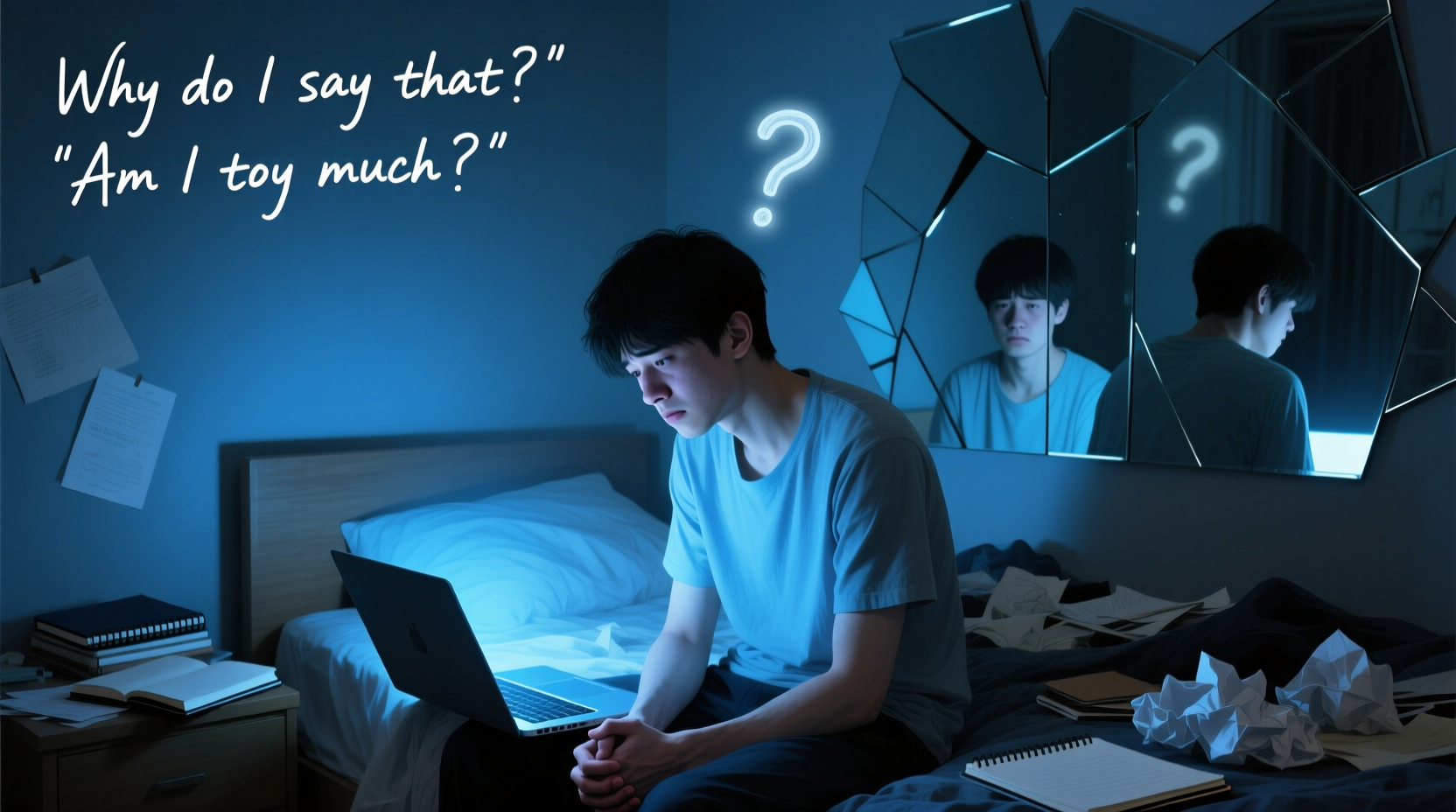
Our sense of self is deeply shaped by social feedback. From childhood, we learn what behaviors are rewarded or discouraged through reactions from parents, peers, and teachers. If you grew up needing attention to feel safe or valued, you may have developed habits like oversharing, seeking validation, or speaking impulsively—all of which can be interpreted as “annoying” in adult relationships.
Social psychologist Dr. Elaine Hartman explains:
“We don’t see ourselves clearly. We see reflections of ourselves in how others respond. If people consistently pull away, interrupt, or seem irritated, we internalize that as personal failure—when it might simply be a mismatch in communication style.”
This gap between intention and perception is where confusion arises. You may believe you’re being enthusiastic or helpful, while others experience you as overbearing or intrusive. The key isn’t to suppress your personality, but to align your expression with social context.
Common Psychological Roots of Annoying Behavior
Feeling “annoying” rarely stems from one single cause. Instead, it’s often a combination of cognitive, emotional, and relational patterns. Here are several psychological factors that contribute:
- Anxiety-driven communication: People with social anxiety may talk excessively to prevent silence, fearing judgment if they stop speaking.
- Attention-seeking due to insecure attachment: Those with anxious attachment styles often crave reassurance, leading to repetitive questions or emotional dependency.
- Low frustration tolerance: Interrupting or correcting others frequently may stem from discomfort with ambiguity or impatience.
- Narcissistic traits (not NPD): A tendency to center conversations on oneself isn’t always pathological—it can be a learned survival mechanism from childhood neglect.
- Neurodivergence: ADHD or autism spectrum traits can manifest as talking over others, missing social cues, or intense focus on niche topics.
Communication Styles That Trigger Annoyance
Even well-meaning people can unintentionally irritate others through habitual communication styles. Below is a breakdown of common patterns and their perceived impact:
| Behavior | Intention | Perceived Impact |
|---|---|---|
| Oversharing personal details early | Building connection quickly | Boundary violation, discomfort |
| Constantly correcting others | Desire for accuracy | Arrogance, condescension |
| Dominating conversations | Fear of silence, need for validation | Ego-centered, dismissive |
| Asking repeated questions | Seeking reassurance | Insecurity, lack of trust |
| Joking at inappropriate times | Diffusing tension | Trivializing emotions |
The dissonance between intent and effect is critical. You may want to connect, but if your method overwhelms others’ emotional bandwidth, the outcome is disconnection—not closeness.
A Real-Life Scenario: Maya’s Story
Maya, a 29-year-old project manager, began therapy after a colleague said, “You’re great at your job, but sometimes you’re exhausting to be around.” Hurt and confused, she reflected on her interactions. She realized she often jumped into meetings with rapid-fire ideas, interrupted teammates, and sent multiple follow-up messages asking, “Did you get my email?”
Through coaching, Maya discovered her behavior stemmed from childhood experiences—her opinions were ignored at home, so she learned to speak louder and faster to be heard. In adulthood, this strategy worked poorly in collaborative environments. By practicing pausing before speaking, using written summaries instead of repeated verbal check-ins, and actively listening without planning her response, Maya improved team dynamics and reduced her own anxiety.
Her transformation wasn’t about becoming quieter—it was about aligning her communication with mutual respect.
Step-by-Step Guide to Reducing Annoying Behaviors
Change begins with observation, not shame. Follow this five-step process to understand and adjust behaviors that may be affecting your relationships:
- Identify triggers: When do you feel the urge to interrupt, over-explain, or seek approval? Note the situations and emotions involved.
- Seek honest feedback: Ask trusted friends or colleagues: “Do I ever come across as overwhelming? How could I improve?”
- Practice reflective listening: In conversations, focus entirely on the speaker. Wait three seconds after they finish before responding.
- Journal your interactions: After social events, write down what went well and what felt off. Look for patterns.
- Implement one small change: Choose one behavior (e.g., reducing message frequency) and commit to it for two weeks.
Checklist: Signs You Might Be Unintentionally Annoying (And What to Do)
- ✅ You notice people glancing at their phones when you speak → Practice shorter contributions and check body language.
- ✅ You often say, “As I was saying…” after being interrupted → Reflect on whether you’ve been dominating the exchange.
- ✅ Friends avoid making plans or respond slowly → Consider if your energy feels demanding rather than inviting.
- ✅ You feel hurt when people don’t reply immediately → Work on managing anxiety around responsiveness.
- ✅ You receive indirect criticism like “You’re intense” → Treat this as valuable data, not an attack.
When “Annoying” Is Actually Neurodivergent Expression
For individuals with ADHD, autism, or high sensitivity, behaviors labeled as “annoying” may reflect neurological differences rather than social failings. A person with ADHD might struggle with turn-taking not out of rudeness, but due to racing thoughts. Someone on the autism spectrum may speak bluntly not to offend, but because they value honesty over social nuance.
Rather than forcing conformity, the goal should be mutual adaptation. As neurodiversity advocate Dr. Lena Torres states:
“Calling someone ‘annoying’ because they don’t mask their neurology is like blaming a fish for not walking. The solution isn’t to change the fish—it’s to design better ecosystems.”
If you suspect neurodivergence plays a role, consider professional assessment. Self-knowledge empowers you to communicate your needs and educate others with clarity and dignity.
FAQ
Is feeling annoying a sign of low self-esteem?
Often, yes. Chronic self-doubt amplifies sensitivity to rejection, making neutral interactions feel like proof of being “too much.” However, external feedback should also be evaluated—sometimes, annoyance stems from others’ intolerance, not your behavior.
Can you be annoying even if you’re kind and intelligent?
Absolutely. Kindness and intelligence don’t override delivery. Someone can offer thoughtful advice in a way that feels patronizing, or express care through constant questioning that feels invasive.
How do I know if it’s me or them?
Look for consistency. If multiple people react similarly across different contexts, there’s likely a behavioral pattern to explore. If only certain individuals label you annoying, consider their communication style and boundaries.
Conclusion: From Self-Judgment to Self-Mastery
Wondering “why am I so annoying” is not a sign of being flawed—it’s a sign of being reflective. Every human has moments of social misstep. What separates growth from stagnation is the willingness to examine those moments with curiosity, not condemnation.
You don’t need to erase your quirks or become someone else. You need to understand the invisible scripts driving your behavior and choose which ones serve you—and others. With awareness, small adjustments can lead to deeper connections, greater confidence, and a sense of belonging that doesn’t rely on constant validation.




 浙公网安备
33010002000092号
浙公网安备
33010002000092号 浙B2-20120091-4
Comments
No comments yet. Why don't you start the discussion?