
It’s a familiar feeling: missed opportunities, unexpected setbacks, relationships that falter without warning. You begin to wonder—why am I so unlucky? The truth is, “bad luck” is rarely a fixed condition. More often, it’s a pattern shaped by perception, behavior, and unconscious habits. While some events are genuinely outside our control, many moments we label as misfortune are influenced by mindset, decision-making, and environmental cues. Understanding this distinction is the first step toward reclaiming agency over your life.
This article explores the psychology behind perceived bad luck, identifies cognitive biases that amplify feelings of misfortune, and provides actionable strategies to reframe your outlook and create conditions for better outcomes.
The Psychology of Perceived Bad Luck
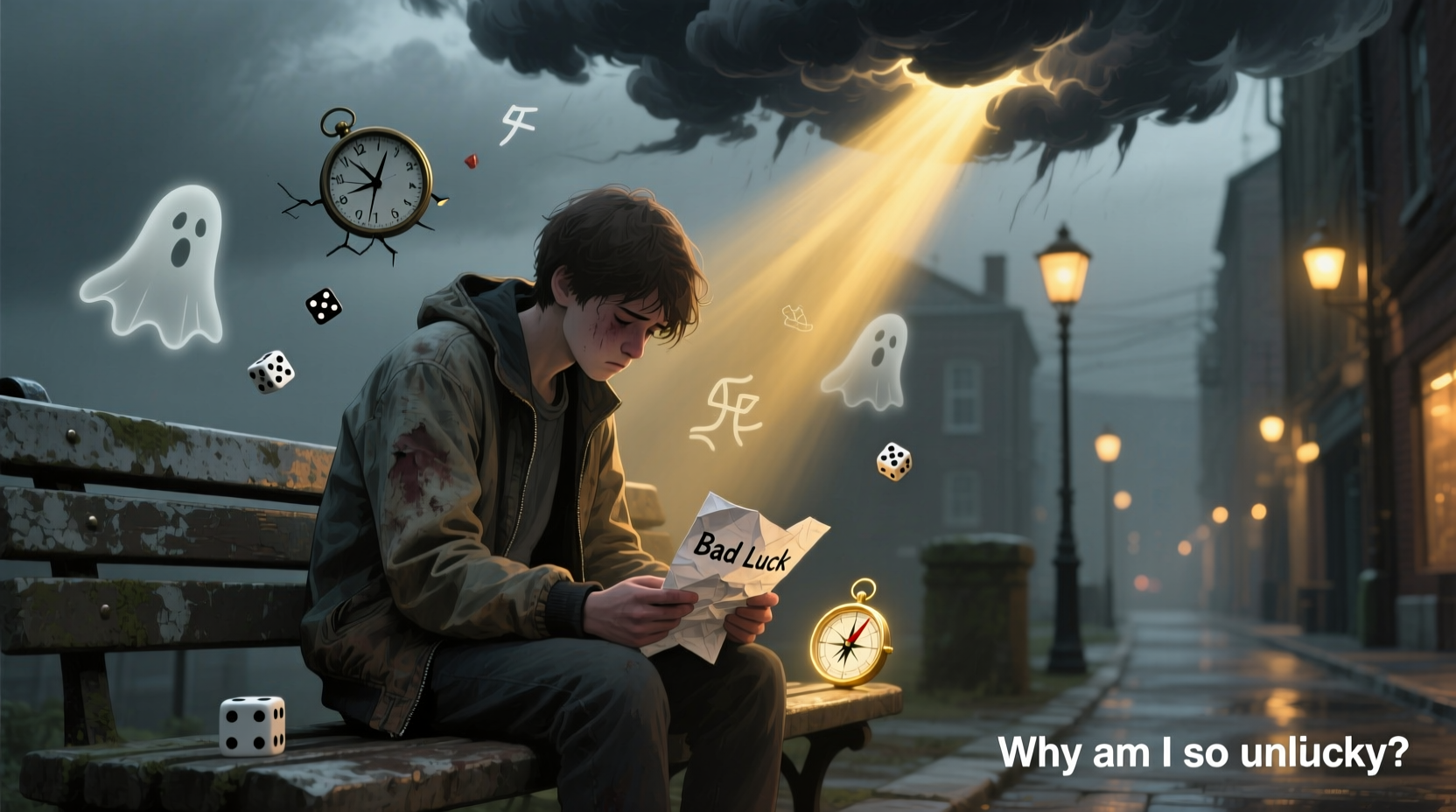
Humans are wired to notice negative events more than positive ones—a survival mechanism known as negativity bias. This means that losing $20 feels worse than finding $20 feels good. When setbacks accumulate, even mildly, they can create a narrative of chronic unluckiness. Over time, this narrative becomes self-reinforcing: you expect bad things to happen, so you interpret ambiguous events negatively, reinforcing the belief.
Psychologist Richard Wiseman conducted a decade-long study on luck, tracking individuals who identified as either extremely lucky or extremely unlucky. His findings revealed that “lucky” people weren’t blessed with supernatural fortune—they simply behaved differently. They were more open to opportunities, maintained positive expectations, and recovered quickly from setbacks. In contrast, “unlucky” participants tended to be tense, anxious, and narrowly focused, causing them to miss chance opportunities right in front of them.
“Luck isn’t magical. It’s the result of attitude, awareness, and action.” — Dr. Richard Wiseman, psychologist and author of *The Luck Factor*
Cognitive Biases That Fuel the ‘Unlucky’ Mindset
Several mental shortcuts distort our sense of fortune:
- Confirmation Bias: You remember every time the elevator was out when you were late but forget the ten times it worked perfectly.
- Survivorship Bias: You compare your struggles to others’ highlight reels, assuming they have endless good fortune while you face constant hardship.
- Fundamental Attribution Error: You blame internal flaws (“I’m just cursed”) for failures but credit external factors (“She got lucky”) when others succeed.
These patterns trap you in a loop: the more you believe you’re unlucky, the more you interpret neutral or minor events as proof, further solidifying the belief.
How Behavior Shapes Your 'Luck'
Luck thrives at the intersection of preparation and opportunity. Consider two job seekers: one applies only to advertised roles, while the other attends networking events, reaches out to contacts, and shares their goals openly. If the second person lands an unadvertised role through a referral, it’s not magic—it’s increased exposure to opportunity.
Research shows that extroverted, optimistic individuals report higher levels of “luck” not because fate favors them, but because they engage more with the world. They say yes to invitations, start conversations, and take calculated risks—all behaviors that expand the surface area for positive outcomes.
| Behavior | Likely to Increase Luck? | Why |
|---|---|---|
| Maintaining a broad social network | Yes | More channels for information and opportunity |
| Practicing mindfulness | Yes | Enhances awareness of subtle chances |
| Avoiding new experiences | No | Limits exposure to serendipity |
| Ruminating on past failures | No | Narrows focus and reduces resilience |
Step-by-Step Guide to Rewiring Your Relationship with Luck
Changing your luck isn’t about waiting for fate to intervene. It’s about adjusting your habits and mindset. Follow this five-step process:
- Challenge the Narrative: Write down three recent “unlucky” events. For each, ask: Was this truly random, or were there contributing factors (e.g., poor planning, emotional state, lack of information)?
- Expand Your Exposure: Commit to one new activity per week—join a meetup, attend a workshop, or message someone in your network. Luck favors the reachable.
- Reframe Setbacks: When something goes wrong, ask: What did I learn? How can this redirect me toward something better? This builds adaptive thinking.
- Practice Gratitude Strategically: List five things that went smoothly today, even if minor (e.g., traffic was light, coffee was hot). This trains your brain to spot neutral or positive events.
- Visualize Opportunity: Spend 3 minutes daily imagining yourself noticing and seizing a chance—answering a call, accepting an invite, speaking up. Mental rehearsal primes real-world action.
Real Example: From 'Chronically Unlucky' to Career Breakthrough
Maya, a graphic designer, felt stuck. Freelance gigs dried up, her portfolio received no responses, and she missed two interviews due to train delays. She believed she was cursed. After reading about Wiseman’s research, she decided to test behavioral changes.
Instead of applying online only, she posted her work on LinkedIn weekly, commented on industry posts, and attended virtual design forums. Within a month, a creative director noticed her insights and invited her to a casual chat. That conversation led to a project—and eventually, a full-time role.
Was it luck? In part. But it was also visibility, consistency, and openness. Maya hadn’t changed her fortune; she had changed her approach.
Checklist: Building a Luck-Friendly Lifestyle
Use this checklist weekly to reinforce behaviors that attract opportunity:
- ✅ Reached out to one person in my network
- ✅ Tried one new activity or environment
- ✅ Refrained from labeling an event as “bad luck” without analysis
- ✅ Practiced gratitude for three neutral or positive moments
- ✅ Took one small risk (e.g., shared an idea, applied for a stretch role)
FAQ
Can you really become luckier, or is it just mindset?
Mindset plays a major role, but so does action. A positive outlook increases resilience and alertness to opportunities, while proactive behavior creates more chances for favorable outcomes. Luck is not passive—it’s cultivated.
What if I’ve experienced real tragedy? Is it fair to say it’s all perception?
No. Genuine trauma, loss, or systemic disadvantage cannot be reduced to mindset alone. This article addresses everyday perceptions of “bad luck,” not profound hardship. For deep emotional wounds, professional support is essential. The goal here is not to dismiss pain but to avoid letting isolated events define your entire life story.
How long does it take to see a change in luck?
Many people report shifts within 4–6 weeks of consistent practice. The key is persistence. Like building muscle, rewiring thought patterns takes repetition. Small wins compound over time.
Conclusion: Redefine Luck, Reclaim Agency
Feeling unlucky is less about fate and more about feedback loops—how you interpret events, respond to challenges, and position yourself in the world. You may not control every outcome, but you can influence the odds. By becoming more observant, open, and resilient, you increase the likelihood of being in the right place at the right time. Luck isn’t something that happens to you. It’s something you participate in.




 浙公网安备
33010002000092号
浙公网安备
33010002000092号 浙B2-20120091-4
Comments
No comments yet. Why don't you start the discussion?