
Seeing the American flag flying at half-staff can evoke a sense of solemnity and reflection. It's a visual signal that the nation is mourning or honoring someone or something significant. But why are American flags at half-staff today? The answer depends on presidential proclamations, state executive orders, or specific federal observances. Understanding flag status isn’t just about knowing current events—it’s about respecting national traditions and recognizing moments of collective grief or honor.
The Meaning Behind Half-Staff
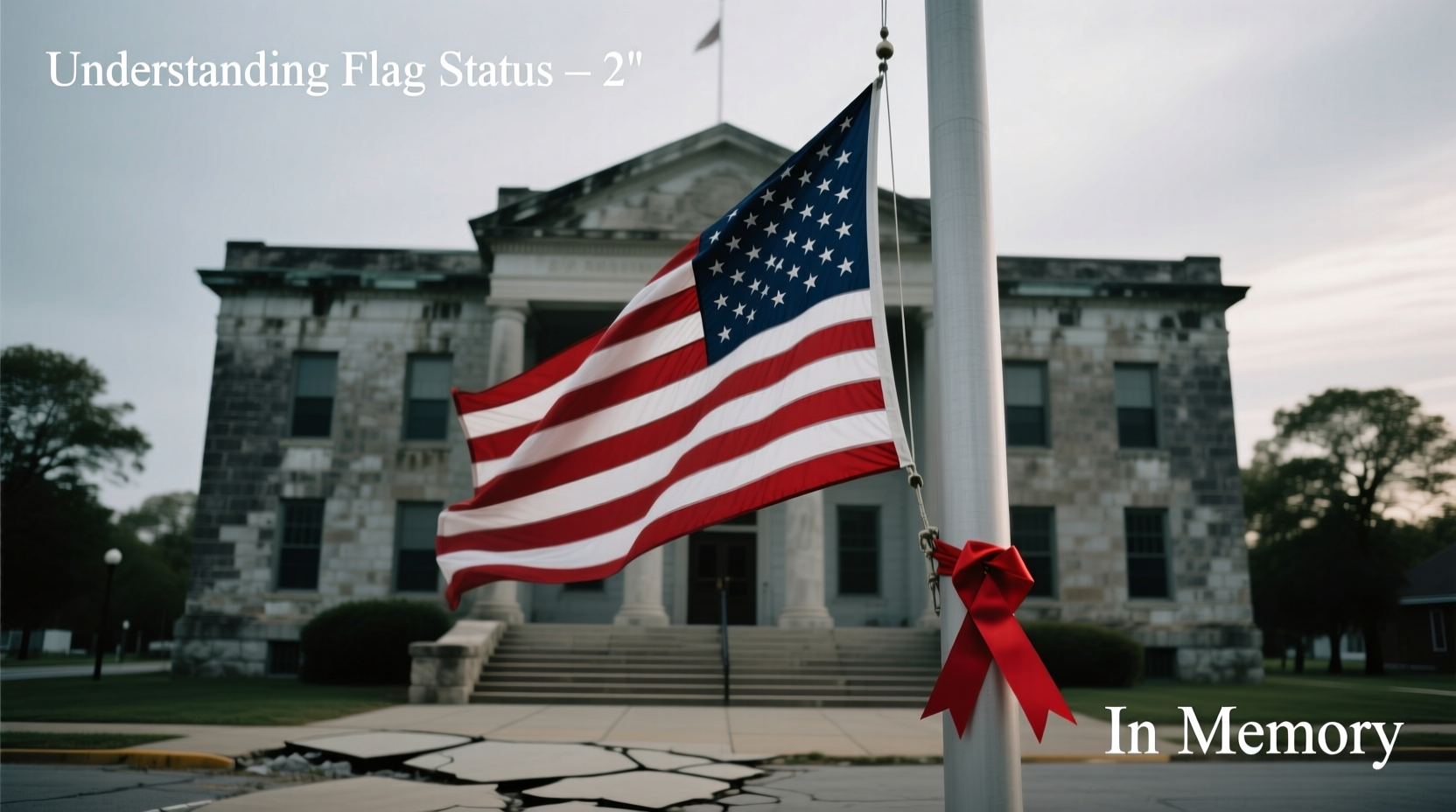
Flying the U.S. flag at half-staff (or half-mast when on ships) is a long-standing tradition symbolizing mourning, respect, and remembrance. It dates back centuries and is deeply embedded in American civic life. When the flag is lowered, it represents that the nation collectively pauses to acknowledge loss—whether due to the death of a prominent leader, a tragic event, or a day of national remembrance.
The flag is not flown at half-staff arbitrarily. Specific guidelines govern its use, primarily outlined in the U.S. Flag Code (4 U.S.C. § 7). While the Flag Code is advisory rather than legally enforceable for private citizens, government entities and military installations follow it strictly.
“Lowering the flag is one of the most powerful gestures of national unity. It shows we stand together in sorrow.” — Dr. James Thornton, Historian of American Symbols
Who Has the Authority to Order Flags at Half-Staff?
The power to order the flag flown at half-staff lies with specific officials:
- The President of the United States: Issues proclamations for national observances, such as the death of a former president, Supreme Court justice, or major national tragedy.
- Governors of States: Can order flags lowered within their state to mourn the death of a current or former state official, first responders, or victims of local tragedies.
- The Mayor of Washington, D.C.: Has authority over flags in the District.
- Leaders of U.S. Territories: Similar authority applies in Puerto Rico, Guam, etc.
These orders are typically time-bound—ranging from a single day to 30 days—and are published through official channels like the White House website or state government portals.
Common Reasons for Half-Staff Observances
Flags are lowered for various reasons, both permanent and ad hoc. Below is a summary of typical occasions:
| Occasion | Duration | Authority |
|---|---|---|
| Death of a sitting or former President | 30 days from death | President |
| Death of a Vice President, Chief Justice, or Speaker of the House | 10 days | President |
| National Peace Officers Memorial Day (May 15) | Sunset after May 15 | President (annual) |
| Patriot Day (September 11) | One day | President (annual) |
| Memorial Day (last Monday in May) | Until noon only | National tradition |
| Death of a prominent public servant or first responder | Varies (1–7 days) | Governor or local authority |
| Mass casualty incidents (e.g., school shootings, natural disasters) | 3–7 days | President or Governor |
For example, in 2023, flags were flown at half-staff following the passing of former First Lady Rosalynn Carter, per a presidential proclamation. Similarly, governors across the country ordered flags lowered after acts of violence affecting law enforcement or firefighters.
How to Verify Today’s Flag Status
If you're unsure whether flags should be at half-staff today, follow this step-by-step verification process:
- Check the White House website: Visit whitehouse.gov and search “flag proclamation” or browse recent press releases.
- Visit your state government’s official site: Most governors post executive orders related to flag status.
- Monitor local news outlets: Reputable stations often report on flag-lowering orders, especially during emergencies.
- Use dedicated flag status websites: Sites like usflag.org or federalflags.us provide daily updates.
- Contact your city or county administrator: For municipal buildings, local leadership may issue directives.
Note: Private citizens are encouraged—but not required—to follow these proclamations. However, many choose to do so as a sign of respect.
Mini Case Study: The Buffalo Shooting and Immediate Response
In May 2022, a mass shooting in Buffalo, New York, claimed 10 lives. Within hours, Governor Kathy Hochul issued an executive order lowering all state flags to half-staff in honor of the victims. Simultaneously, President Biden released a proclamation extending the gesture nationwide.
This dual action highlighted how both state and federal authorities can act in concert during national tragedies. Public buildings, schools, and even private homes responded by lowering flags. The swift coordination underscored the symbolic importance of the gesture—not just as protocol, but as a unifying act of empathy.
Common Misunderstandings About Half-Staff vs. Half-Mast
While often used interchangeably, “half-staff” and “half-mast” have distinct meanings:
- Half-staff: Refers to flags on land-based poles. The term applies to all civilian and government buildings.
- Half-mast: Used exclusively for flags on naval vessels or ships at sea.
Despite this technical distinction, media and public discourse frequently use “half-staff” in all contexts, which has become widely accepted.
Proper Protocol for Raising and Lowering the Flag
When flying the flag at half-staff, proper etiquette matters:
- Begin by raising the flag briskly to the top of the pole.
- Then, lower it slowly and ceremoniously to the halfway point.
- At the end of the day, raise it to the top again before lowering it completely.
This ritual symbolizes that the flag never flies below anything except in mourning—and even then, it briefly returns to full height as a sign of resilience.
FAQ
Can individuals lower their own flags to half-staff?
Yes. While not legally required, private citizens are encouraged to follow presidential or gubernatorial proclamations as a mark of respect. There are no penalties for not doing so, but participation reflects civic awareness.
Why is the flag only at half-staff until noon on Memorial Day?
This tradition honors the memory of fallen service members in the morning. At noon, the flag is raised to full-staff to symbolize the nation’s living commitment to liberty and the ongoing fight for freedom.
What if I see a flag at half-staff with no known reason?
It could be due to a local observance, such as the death of a community leader or first responder. Check with your city hall or fire department for clarification. Some organizations also lower flags independently to honor internal losses.
Conclusion
Understanding why American flags are at half-staff today goes beyond checking a date or headline. It connects us to shared values of honor, sacrifice, and national unity. Whether prompted by the death of a world leader or the loss of a local hero, each lowered flag invites reflection and solidarity.
Stay informed. Respect the symbolism. And remember—the flag’s position is more than ceremonial; it’s a quiet call to remember those who served, suffered, or sacrificed.




 浙公网安备
33010002000092号
浙公网安备
33010002000092号 浙B2-20120091-4
Comments
No comments yet. Why don't you start the discussion?