
Anime has long captivated global audiences with its vivid animation, emotional storytelling, and archetypal characters. One recurring pattern stands out: the protagonist is frequently an orphan. From Naruto Uzumaki to Edward Elric, Light Yagami to Eren Yeager, the absence of parents is more than a coincidence—it's a deliberate narrative device deeply embedded in Japanese storytelling traditions. This article decodes the reasons behind this trope, exploring its psychological, structural, and cultural significance in anime.
The Orphan Archetype: A Foundation for Unrestricted Growth
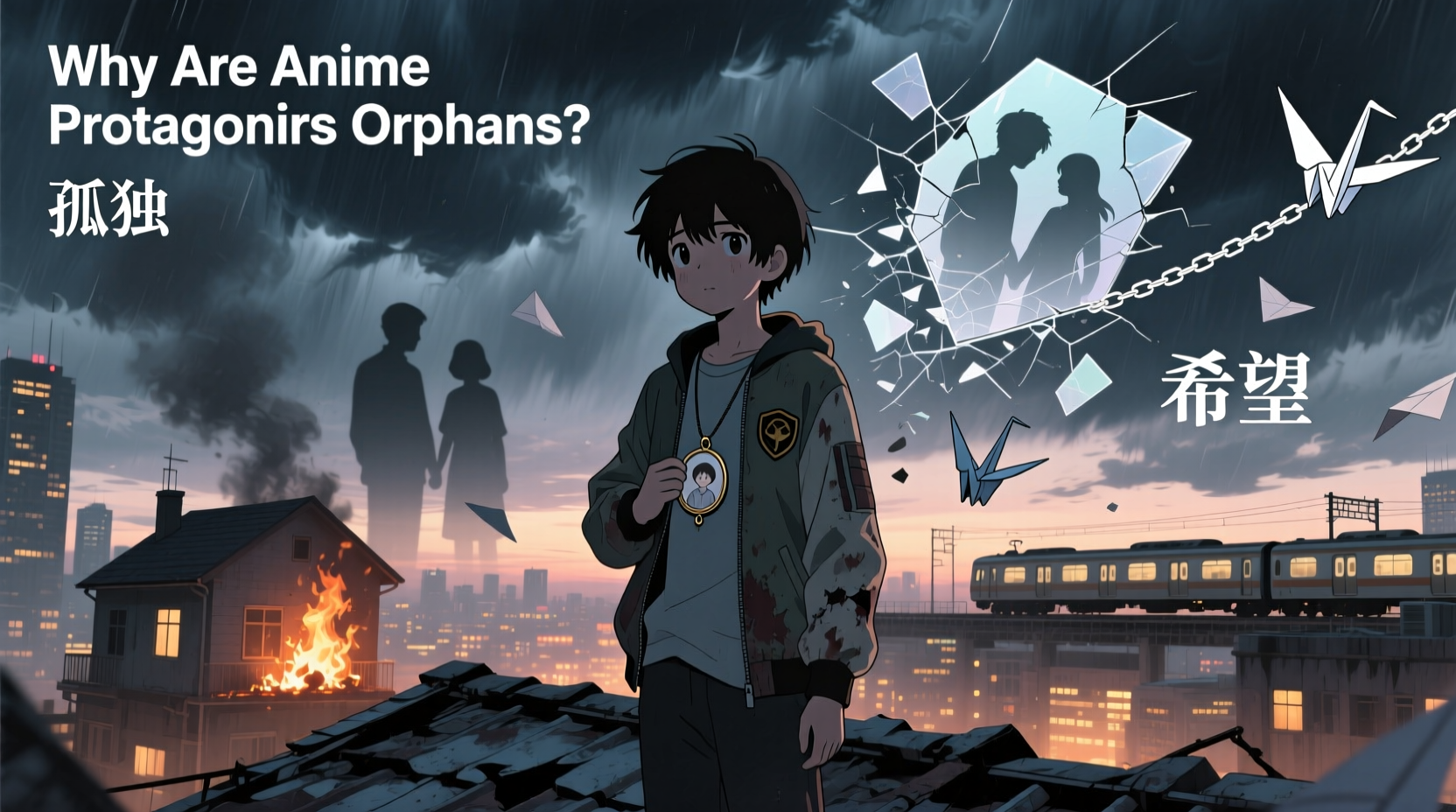
In Western literature, the orphan hero is not uncommon—think Harry Potter or Oliver Twist—but in anime, the trope reaches near-universal prevalence. The absence of parental figures removes natural constraints on a character’s behavior, allowing them to evolve without familial obligations or moral oversight. This freedom is essential in stories where protagonists must make extreme choices, traverse dangerous worlds, or undergo radical personal transformations.
Orphans are unmoored from traditional societal structures. Without parents, they lack guidance, inheritance, or social standing, forcing them to define themselves through action rather than lineage. This self-determination aligns perfectly with anime’s emphasis on personal growth, resilience, and individualism. Characters like Goku (Dragon Ball) or Luffy (One Piece) are not only orphans but also emotionally untethered, enabling their boundless curiosity and relentless pursuit of strength.
Narrative Efficiency and Emotional Stakes
From a storytelling perspective, making a protagonist an orphan streamlines plot development. Parental presence often introduces subplots—family drama, expectations, generational conflict—that can dilute focus in fast-paced series. Removing parents eliminates these distractions, keeping the story centered on the hero’s journey.
Moreover, orphanhood instantly establishes emotional stakes. Audiences sympathize with loss, especially when it’s tied to the protagonist’s motivation. Take Naruto, whose parents died sealing the Nine-Tails within him. His loneliness and desire for recognition stem directly from this absence, fueling his ambition to become Hokage. The pain of abandonment becomes a catalyst for greatness, making the character more relatable and compelling.
This emotional resonance is amplified by the common backstory: many anime orphans lose their parents under tragic or mysterious circumstances. These unresolved origins often tie into larger plot arcs, such as Guts’ (Berserk) quest for vengeance against the God Hand, or Alucard’s (Hellsing) cursed immortality born from betrayal. The search for identity and meaning becomes central to the narrative.
Cultural Context: Japan’s Historical and Philosophical Influences
The prevalence of orphan protagonists cannot be fully understood without examining Japan’s historical and philosophical landscape. Post-war Japan saw widespread displacement and family fragmentation. Stories emerging from this era often reflected societal trauma, with orphaned or displaced children symbolizing national recovery and resilience.
Beyond history, Shinto and Buddhist philosophies emphasize impermanence (*mujō*) and the transient nature of life. Suffering, loss, and detachment are not just accepted but seen as pathways to enlightenment. An orphan protagonist embodies this worldview—stripped of attachments, they must confront suffering head-on, ultimately finding strength in solitude.
“Anime orphans aren’t just characters without parents—they’re symbols of self-reliance in a world defined by flux.” — Dr. Kenji Tanaka, Cultural Analyst at Tokyo University of the Arts
In contrast to Western narratives that often prioritize reconciliation with family, anime heroes rarely find closure through reunion. Instead, they build new families—found families—through comradeship. Think of the Straw Hat crew in *One Piece* or the Phantomhive household in *Black Butler*. These bonds are earned, not inherited, reinforcing themes of loyalty, sacrifice, and chosen belonging.
Psychological Depth and the Hero’s Journey
Joseph Campbell’s monomyth—the Hero’s Journey—provides a useful framework for understanding the orphan trope. The first stage, “The Call to Adventure,” often begins with a disruption of normalcy. For an orphan, that disruption has already occurred. Their ordinary world is one of loss, making the transition into the extraordinary seamless.
Consider the stages of the journey:
- Departure: Orphans are already separated from home; no need for reluctant departure.
- Initiation: Trials test their independence, morality, and willpower—traits shaped by early hardship.
- Return: They return transformed, not to a family, but to a society they now protect or redefine.
This structure fits anime protagonists perfectly. Take Levi Ackerman (*Attack on Titan*), raised in the underground slums after losing his mother. His entire ethos—discipline, efficiency, emotional restraint—is forged in adversity. He doesn’t seek parental approval; he seeks purpose through duty.
Psychologically, orphan protagonists often exhibit traits associated with post-traumatic growth: heightened empathy, resilience, and a strong sense of justice. Yet they also grapple with trust issues, anger, and existential doubt. These internal conflicts add layers to their personalities, making them more than just action figures—they become mirrors for viewers processing grief, isolation, or identity crises.
Comparison of Orphan Tropes Across Key Anime
| Protagonist | Anime | Parental Fate | Impact on Character |
|---|---|---|---|
| Naruto Uzumaki | Naruto | Died protecting village | Craves recognition; driven by loneliness |
| Edward Elric | Fullmetal Alchemist | Mother died; father abandoned | Guilt over failed resurrection; protective of brother |
| Eren Yeager | Attack on Titan | Mother killed by Titan; father missing | Rage-fueled vengeance; obsession with freedom |
| Light Yagami | Death Note | Parents alive but emotionally distant | Feels morally superior; rejects parental authority |
| Saitama | One Punch Man | Unknown (implied absent) | Detached from society; seeks meaning through challenge |
Note that even when parents are technically alive, their absence—emotional or physical—functions narratively as orphanhood. Light Yagami, for instance, respects his father but ultimately surpasses and opposes him, symbolically severing paternal influence.
When the Trope Subverts Expectations
Not all anime follow the orphan formula blindly. Some deliberately subvert it to explore different dynamics. In *My Hero Academia*, Izuku Midoriya has a living, supportive mother who plays a crucial emotional role. Her presence highlights the value of familial love in a genre that often dismisses it. Similarly, *Demon Slayer*’s Tanjiro Kamado is deeply motivated by his family’s murder, making their memory a sacred anchor rather than a void.
These exceptions prove the rule: when parents are present, their role is intensified. Their love becomes a source of strength, their loss a profound tragedy. By contrast, the typical orphan’s journey begins in emptiness, forcing them to create meaning from nothing.
Mini Case Study: How Orphanhood Shapes Identity in *Neon Genesis Evangelion*
Shinji Ikari is one of anime’s most psychologically complex protagonists—and a textbook example of the orphan archetype. His mother died when he was young, and his father, Gendo, is emotionally abusive and distant. Shinji isn’t just parentless; he’s actively rejected by the one parent who remains.
This abandonment manifests in chronic insecurity, fear of rejection, and an inability to assert himself. Yet he’s forced to pilot a biomechanical mecha to save humanity—a responsibility far beyond his emotional capacity. The series uses Shinji’s orphan status not as a heroic launchpad, but as a lens to examine trauma, depression, and the human need for connection.
In this case, the orphan trope isn’t about empowerment—it’s about vulnerability. It challenges the assumption that suffering automatically leads to strength, instead showing how unchecked pain can paralyze. *Evangelion* deconstructs the trope, revealing its darker implications.
Actionable Insights: What Writers and Fans Can Learn
Understanding the orphan trope isn’t just academic—it offers practical value for creators and viewers alike. Whether you're writing a story or analyzing your favorite series, consider the following checklist to deepen your engagement:
- Identify whether the protagonist’s orphan status is literal or symbolic.
- Analyze how the absence of parents affects decision-making and relationships.
- Look for found families and assess how they compensate for lost kinship.
- Examine whether the character seeks closure, revenge, or self-definition.
- Question if the trope reinforces or challenges cultural norms about independence and suffering.
Frequently Asked Questions
Why do so many shonen protagonists lack parents?
Shonen anime targets young male audiences and emphasizes self-reliance, growth, and adventure. Parental figures would limit the protagonist’s freedom to travel, fight, and make risky decisions. Orphanhood removes these barriers, allowing unfettered progression through the story’s world.
Are there any popular anime where the protagonist has both parents alive and involved?
Yes. Examples include *My Hero Academia* (Izuku’s mother), *Spirited Away* (Chihiro’s parents, though briefly present), and *Clannad* (where family relationships are central). These stories often focus on emotional growth within relational contexts rather than solitary heroism.
Does being an orphan make anime characters more relatable?
For many viewers, yes—especially adolescents navigating independence. The feelings of isolation, searching for identity, and proving oneself resonate universally. Even those with supportive families may identify with the emotional core of the orphan experience: the desire to matter in a world that feels indifferent.
Conclusion: Beyond the Trope
The orphan protagonist in anime is more than a cliché—it’s a narrative engine that drives emotional depth, character autonomy, and thematic richness. Rooted in cultural history and psychological insight, the trope allows storytellers to explore what it means to grow up alone, to suffer, and to rebuild meaning from loss.
Yet as audiences evolve, so too does the portrayal of family in anime. Newer works are beginning to challenge the necessity of orphanhood, embracing complex familial bonds as sources of strength rather than obstacles. The future may see fewer blank-slate heroes and more nuanced explorations of belonging.
For now, when you watch an anime and notice the protagonist has no parents, don’t dismiss it as lazy writing. Instead, ask: What does this absence enable? What wounds does it carry? And how does it shape the journey ahead?




 浙公网安备
33010002000092号
浙公网安备
33010002000092号 浙B2-20120091-4
Comments
No comments yet. Why don't you start the discussion?