
When residents of Arizona see state or national flags flying at half-staff, it often prompts a moment of reflection—and sometimes confusion. The sight is both solemn and symbolic, but not everyone understands the reasons behind it. Whether due to tragedy, remembrance, or national observance, the decision to lower the flag follows specific protocols established by federal and state authorities. This article explores the full scope of when and why flags in Arizona are lowered, how the public is notified, and what these gestures represent in practice.
Understanding Half-Staff Protocol in Arizona
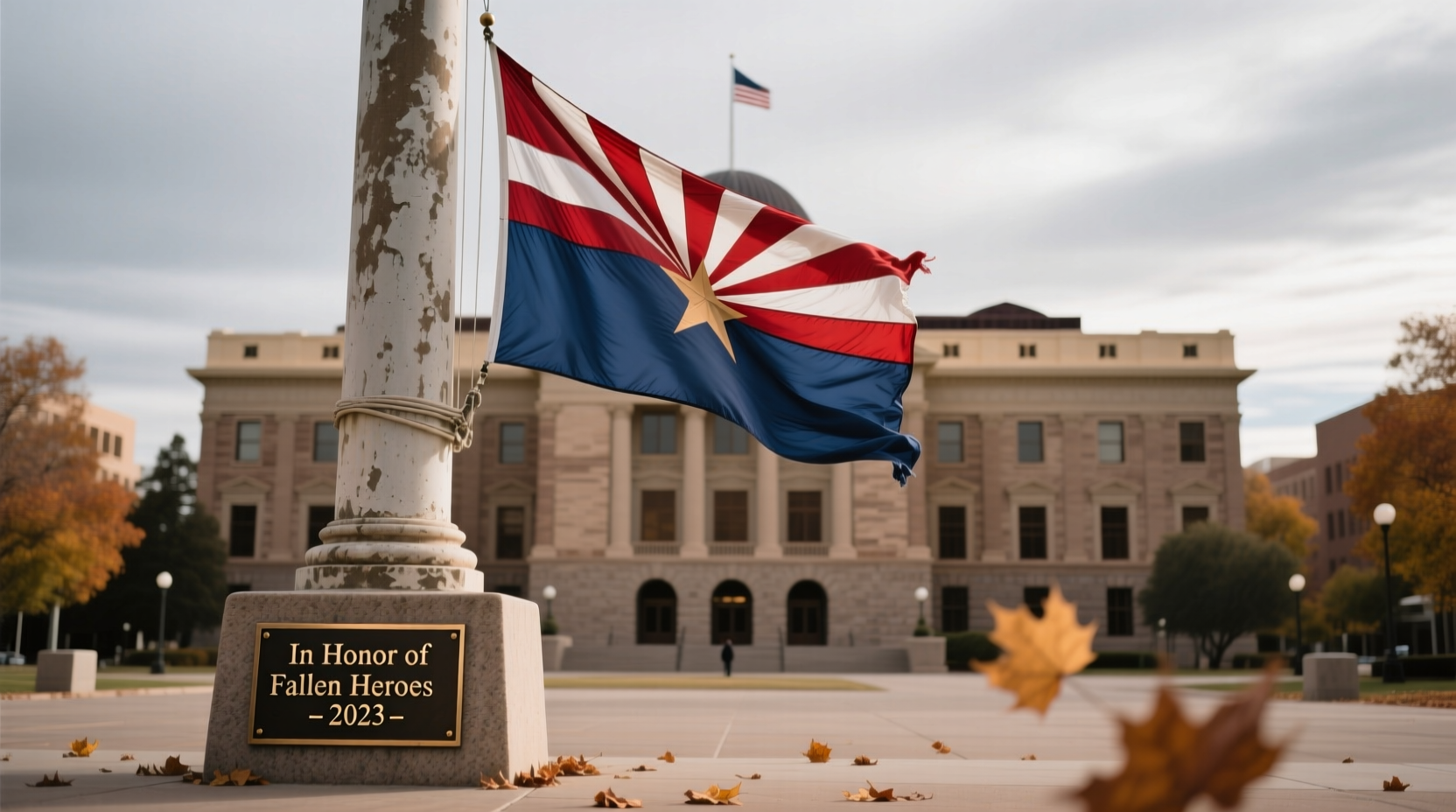
Flying a flag at half-staff—also known as half-mast—is a sign of mourning, respect, or remembrance. In Arizona, this gesture applies to both the American flag and the Arizona state flag. The authority to order flags lowered comes from either the President of the United States or the Governor of Arizona, depending on the nature of the event.
According to U.S. Code Title 4, Chapter 1, Section 7(m), the president has the power to issue proclamations ordering flags to be flown at half-staff on federal buildings, grounds, and naval vessels. Similarly, Arizona Revised Statutes (A.R.S. § 41-805) empower the governor to direct state agencies and local governments to lower the state flag in response to tragedies affecting Arizona specifically.
The distinction between federal and state authority means that while national events typically prompt uniform action across all states, Arizona may independently lower its state flag during local tragedies—even if the U.S. flag remains at full height.
Common Reasons for Lowering Flags in Arizona
Flags are lowered for several key reasons, each tied to a formal recognition of loss or sacrifice. These include:
- National tragedies – Such as terrorist attacks, mass shootings, or natural disasters with widespread impact.
- Death of prominent figures – Including sitting or former presidents, members of Congress, Supreme Court justices, and military leaders.
- Line-of-duty deaths – Law enforcement officers, firefighters, and first responders killed in the line of duty.
- Memorial observances – Designated days like Peace Officers Memorial Day (May 15) or National Firefighters Memorial Day (first Sunday in October).
- State-specific losses – Deaths of Arizona officials, legislators, or community leaders deemed significant by the governor.
“Lowering the flag is more than a ceremonial act—it’s a collective expression of grief, honor, and unity.” — Dr. Linda Chavez, Political Historian and Public Policy Analyst
How Notifications Are Issued and Disseminated
When a decision is made to lower flags, timely communication ensures consistency across government entities and public spaces. The process varies slightly depending on whether the directive originates federally or at the state level.
Federal Directives
When the president issues a proclamation, it is published in the Federal Register and distributed through official channels such as the White House website, press releases, and interagency memos. Federal facilities in Arizona—like post offices, courthouses, and military bases—follow these orders immediately.
Arizona State Directives
The Governor’s Office issues executive orders or press releases announcing when and for how long the Arizona state flag should be flown at half-staff. These directives are shared via:
- Official governor.az.gov announcements
- Email alerts to state agencies and municipalities
- Social media updates from the governor’s office
- News releases sent to local media outlets
Real Example: The 2011 Tucson Shooting Tribute
One of the most poignant examples of flags being lowered in Arizona occurred after the January 8, 2011, shooting in Tucson that injured Congresswoman Gabrielle Giffords and killed six others, including federal Judge John Roll and nine-year-old Christina-Taylor Green.
In response, then-Governor Jan Brewer issued an executive order directing all Arizona state flags to be flown at half-staff for five days. Simultaneously, President Barack Obama issued a national proclamation. This dual action underscored both the local impact and national significance of the tragedy.
Public buildings, schools, and private citizens across Arizona participated in the tribute. The coordinated notification system ensured that cities like Phoenix, Flagstaff, and Yuma adjusted their flags promptly, demonstrating statewide unity in mourning.
Flag Status Timeline: What Happens When a Tragedy Occurs
A clear sequence of actions unfolds once a flag-lowering decision is made. Here's a step-by-step look at the typical timeline:
- Event occurs – A death or tragedy takes place that qualifies for a memorial gesture.
- Evaluation by leadership – The governor’s office assesses whether the incident warrants lowering the state flag.
- Proclamation issued – An official statement is released specifying duration and scope.
- Distribution of notice – Alerts are sent to state departments, county administrators, and city managers.
- Implementation – Government buildings lower flags; media report the change.
- Duration period – Flags remain at half-staff for the designated time (e.g., one day, seven days).
- Return to full staff – Flags are raised again, often accompanied by a closing message or moment of silence.
Do’s and Don’ts When Flags Are at Half-Staff
| Do’s | Don’ts |
|---|---|
| Pause briefly to reflect on the reason for mourning | Use the occasion for political commentary or controversy |
| Ensure your personal flag, if displayed, is lowered correctly | Leave a flag at half-staff beyond the designated period |
| Share official notifications to inform others | Assume all flags must be lowered automatically without verification |
| Follow proper flag etiquette when raising or lowering | Ignore discrepancies in flag status at public buildings—report them if needed |
FAQ: Common Questions About Arizona Flag Protocols
How can I find out if Arizona flags are currently at half-staff?
You can check the official website of the Governor of Arizona (governor.az.gov) under \"Press Releases\" or \"Executive Orders.\" Many local news stations and government social media accounts also provide updates when flag status changes.
Can cities or counties lower flags independently?
While municipalities may choose to honor local heroes or events by lowering flags on city property, they are expected to follow state guidance. Independent actions should not conflict with official proclamations and are generally reserved for unofficial tributes rather than formal declarations.
Why do some flags go back up earlier than others?
This can happen due to miscommunication, oversight, or differences in jurisdiction. Federal installations follow presidential orders, while state and local buildings follow the governor. Private entities may not always stay updated. Consistency improves when communities rely on verified sources for information.
Checklist: How to Respond When Flags Are Lowered in Arizona
- Verify the flag-lowering order through the Governor’s Office or trusted news source
- If you display a flag at home or business, lower it to half-staff appropriately
- Take a moment to acknowledge the individuals or cause being honored
- Inform your workplace, school, or organization so flags on institutional property are adjusted
- Note the end date and ensure the flag is raised again promptly
- Report inconsistencies in flag status at public buildings to local officials
Conclusion: Honoring Through Awareness and Action
The lowering of flags in Arizona is more than a procedural act—it is a visible symbol of collective empathy, respect, and civic responsibility. Understanding the reasons behind these gestures, staying informed through reliable notifications, and responding appropriately allows every resident to participate in honoring those who have served, sacrificed, or suffered.
These moments remind us of our shared values and the importance of unity in times of sorrow. By paying attention to flag status and acting with intention, Arizonans contribute to a culture of remembrance that transcends politics and geography.




 浙公网安备
33010002000092号
浙公网安备
33010002000092号 浙B2-20120091-4
Comments
No comments yet. Why don't you start the discussion?