
The flicker of Christmas lights strung across rooftops, wrapped around trees, or dancing along window frames is one of the most iconic sensory experiences of the winter season. For many, these blinking lights evoke nostalgia, warmth, and a sense of wonder. But beyond sentimentality, there’s a deeper neurological reason why blinking Christmas lights can feel so mesmerizing—almost hypnotic. The human brain responds to rhythmic visual stimuli in predictable yet profound ways, and seasonal light displays tap directly into these mechanisms. This article explores the science behind this phenomenon, detailing how our brains interpret flashing lights, why they captivate attention, and what psychological effects they produce.
The Science of Rhythmic Light and Brainwave Entrainment
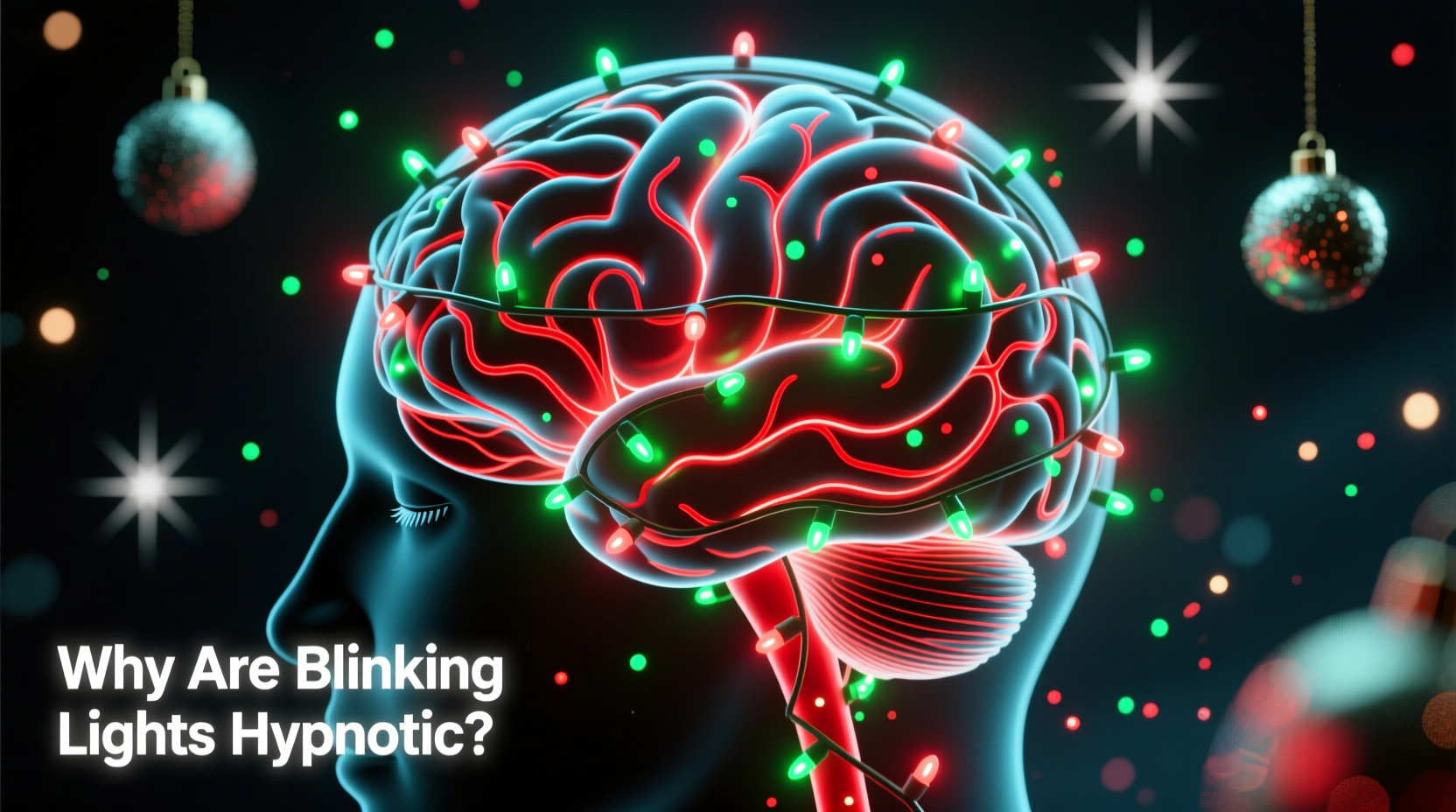
One of the primary reasons blinking Christmas lights feel hypnotic lies in a process known as brainwave entrainment. When exposed to repetitive visual stimuli—such as lights that flash at regular intervals—the brain's electrical activity begins to synchronize with the frequency of that stimulus. This synchronization is called frequency-following response.
For example, lights that blink at a rate of 4 to 7 times per second fall within the theta wave range, which is associated with deep relaxation, meditation, and the edge of sleep. Meanwhile, lights flashing between 8 and 13 times per second align with alpha waves, linked to calm alertness and reduced anxiety. Even if we’re not consciously aware of it, our brains subtly adjust their dominant rhythms to match the flickering pattern.
“Rhythmic visual stimulation can induce altered states of awareness similar to those achieved through meditation or rhythmic drumming.” — Dr. Lena Torres, Cognitive Neuroscientist, University of California
This neural synchronization doesn’t require focused attention. Simply being in the presence of blinking lights—especially in low-light environments—can gently pull the brain toward a more relaxed state. It’s no coincidence that people often report feeling “soothed” or “mesmerized” while gazing at holiday light displays.
How the Visual System Processes Flashing Lights
The human visual cortex is highly sensitive to motion and contrast changes. Blinking lights create dynamic shifts in brightness and spatial focus, which naturally draw attention. Unlike static objects, flashing stimuli trigger continuous micro-saccades—tiny eye movements that help maintain visual interest.
When multiple lights blink in sequence (such as chasing patterns on a string), the brain interprets them as movement, even though no physical object is moving. This illusion, known as the phi phenomenon, tricks the visual system into perceiving continuous motion from discrete flashes. The result? A captivating display that feels alive and rhythmic.
Additionally, the peripheral vision plays a key role. Our side vision is especially attuned to sudden changes in light, making blinking decorations visible even when not looked at directly. This creates a subtle background stimulation that keeps the brain mildly engaged without requiring effortful focus.
The Emotional and Psychological Impact of Holiday Lights
Beyond neurology, blinking Christmas lights carry strong emotional resonance. For many, they symbolize celebration, family, and tradition. These associations activate the limbic system—the brain’s emotional center—particularly the amygdala and hippocampus, which store memories tied to emotion.
When someone sees twinkling lights during the holidays, the brain may retrieve positive memories from childhood or past celebrations. This retrieval is often automatic and contributes to feelings of comfort and joy. In fact, studies in environmental psychology suggest that warm-toned lighting (like amber or soft white) increases perceived coziness and social connectedness.
Moreover, in regions with short winter days, seasonal light displays serve as a form of environmental enrichment. They counteract the monotony of dark, gray skies and long nights, offering a source of visual delight that combats seasonal affective tendencies. The rhythmic nature of blinking lights adds an extra layer of soothing predictability in an otherwise chaotic time of year.
Case Study: The Therapeutic Use of Twinkling Lights in Senior Care
In a memory care unit in Portland, Oregon, caregivers introduced a nightly ritual where residents gathered in a common room decorated with softly blinking white and gold Christmas lights. The room was kept quiet, with gentle instrumental music playing in the background. Over six weeks, staff observed measurable reductions in agitation among participants with dementia.
One resident, Martha, 82, who typically became anxious after sunset, began to relax visibly during the light sessions. Her daughter reported, “She’d stare at the lights and start humming old carols. It was like she was remembering something beautiful.” Staff noted improved sleep onset and fewer nighttime wanderings during the trial period.
While not a formal treatment, the intervention highlighted how rhythmic, non-intrusive visual stimuli can support emotional regulation in vulnerable populations. The combination of predictability, low cognitive demand, and nostalgic association made the blinking lights a calming anchor.
The Role of Contrast and Color in Perception
Not all blinking lights have the same effect. The impact depends heavily on color, intensity, and contrast with the environment. Warm colors like red, orange, and yellow are processed differently than cool tones like blue and green. Warm hues are generally perceived as comforting and inviting, while cooler tones can feel more alerting or clinical—even unsettling if overused.
A study published in the *Journal of Environmental Psychology* found that participants exposed to warm-colored blinking lights reported higher levels of emotional warmth and lower stress markers than those viewing cool-white or multicolored strobing lights.
| Light Type | Perceived Effect | Best Use Case |
|---|---|---|
| Warm white (2700K–3000K) | Calming, cozy, nostalgic | Indoor spaces, bedrooms, living rooms |
| Cool white (4000K–5000K) | Awake, alert, modern | Kitchens, workspaces, outdoor signage |
| Multicolor (slow blink) | Festive, joyful, playful | Holiday displays, parties |
| Multicolor (fast strobe) | Overstimulating, disorienting | Avoid in therapeutic or rest settings |
Additionally, excessive contrast—such as very bright lights against total darkness—can cause mild visual stress in some individuals, particularly those with sensory sensitivities or migraines. Moderation and diffusion (using frosted bulbs or indirect placement) can mitigate this.
Practical Tips for Creating Hypnotic, Soothing Light Displays
If you're aiming to harness the hypnotic power of blinking lights—not just for decoration but for well-being—consider these evidence-based strategies:
- Choose warm-toned LEDs over cool or bright white for a calming effect.
- Arrange lights in flowing patterns (e.g., draping garlands) rather than sharp geometric shapes to enhance visual fluidity.
- Use dimmers or timers to control brightness and duration, limiting exposure before bedtime if sensitivity is a concern.
- Combine blinking lights with ambient sound (like soft music or nature sounds) to deepen the immersive experience.
- Avoid rapid strobing or random flashing modes, which can disrupt focus and increase anxiety in some people.
Checklist: Designing a Brain-Friendly Light Display
- ✅ Select warm-color bulbs (red, amber, soft white)
- ✅ Use a consistent, slow blink rate (1–3 Hz)
- ✅ Install in low-light or dark environments for maximum contrast
- ✅ Position at eye level or slightly above to engage peripheral vision
- ✅ Limit runtime to 1–3 hours for therapeutic use
- ✅ Avoid placing near workspaces or screens to reduce visual competition
FAQ: Common Questions About Blinking Lights and Brain Response
Can blinking Christmas lights trigger seizures?
For the vast majority of people, typical holiday lights pose no risk. However, individuals with photosensitive epilepsy may be affected by rapid flashing (especially above 3 Hz) or high-contrast strobing. To minimize risk, avoid fast strobe settings and opt for slower, smoother transitions. If in doubt, consult a neurologist.
Why do I feel calmer looking at twinkling lights?
The calming effect comes from a combination of brainwave entrainment, reduced cognitive load, and emotional memory activation. The rhythmic pattern provides gentle stimulation without demanding attention, allowing the mind to enter a relaxed, reflective state—similar to staring at a fireplace or ocean waves.
Are LED lights better for creating a hypnotic effect?
Yes, modern LEDs are ideal because they offer precise control over blink rate, color temperature, and brightness. Unlike older incandescent bulbs, LEDs can produce clean, consistent flashes without flicker distortion, making the rhythm more effective for neural synchronization.
Conclusion: Harnessing the Power of Light for Mind and Mood
The hypnotic quality of blinking Christmas lights isn’t just poetic—it’s rooted in neuroscience. From synchronizing brainwaves to evoking cherished memories, these simple visual rhythms engage the brain in meaningful ways. They offer more than decoration; they provide a form of passive sensory therapy that can soothe, focus, and uplift.
Understanding how the brain perceives flickering light empowers us to design environments that support mental well-being, especially during darker months. Whether used in homes, care facilities, or public spaces, thoughtfully designed light displays can become tools for emotional regulation and connection.




 浙公网安备
33010002000092号
浙公网安备
33010002000092号 浙B2-20120091-4
Comments
No comments yet. Why don't you start the discussion?