
Seeing both turn signals illuminate at the same time can be confusing—and alarming. You might assume your vehicle is signaling a turn in both directions, or worse, that something serious has gone wrong with your electrical system. While it’s not always a critical failure, this behavior indicates an underlying issue that needs attention. Unlike normal turn signal operation, where only one side flashes when activated, simultaneous blinking suggests a fault in the circuitry, grounding, or control module. Understanding why both blinkers come on helps you diagnose the problem efficiently and avoid potential safety hazards on the road.
Understanding How Turn Signals Work
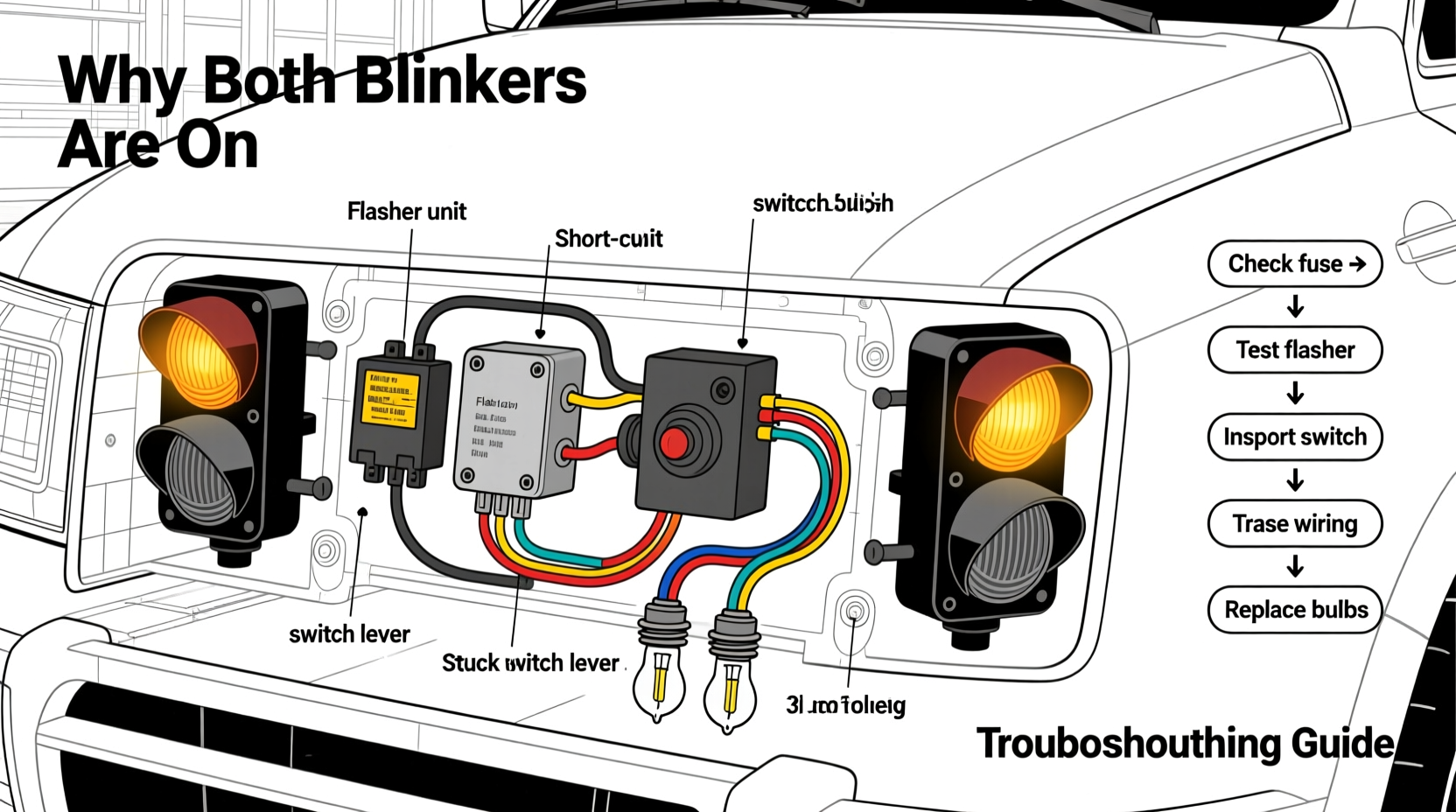
Modern turn signals operate through a relay-based or electronic flasher system that alternates power to the left or right bulbs when the turn signal lever is engaged. When functioning correctly, activating the lever sends a signal to the flasher unit (or body control module in newer cars), which then pulses electricity to the appropriate side—left or right. The flashing pattern is created by a timed interruption of current, producing the familiar click-and-glow effect.
In most vehicles, hazard lights share the same bulbs but are controlled separately. Pressing the hazard switch activates *both* left and right turn signals simultaneously—this is intentional and safe. However, if both blinkers activate without pressing the hazard button, there's likely an electrical malfunction or component failure.
“Simultaneous turn signal illumination outside of hazard mode is never normal. It points to cross-circuiting, poor grounding, or a failing control unit.” — Carlos Mendez, Automotive Electrical Systems Technician with 15 years of experience
Common Causes of Both Blinkers Turning On
Several mechanical and electrical issues can lead to both turn signals coming on unexpectedly. Identifying the root cause requires understanding how these components interact:
- Faulty Flasher Relay or Module: The flasher controls the timing and direction of the turn signals. If it fails internally, it may send power to both circuits at once.
- Hazard Switch Malfunction: A stuck or shorted hazard switch can trigger both sides even when not pressed.
- Shared Ground Failure: Turn signals often use a common ground point. Corrosion or disconnection forces current to seek alternate paths, sometimes lighting both sides.
- Wiring Harness Damage: Frayed, pinched, or melted wires in the steering column or rear harness can create unintended connections between circuits.
- Aftermarket Accessories Interference: Poorly installed trailer wiring, LED bulb conversions, or alarm systems may introduce feedback loops or voltage backfeeds.
- Body Control Module (BCM) Glitch: In modern vehicles, software errors or corrupted data in the BCM can misroute signals.
Troubleshooting Steps: A Step-by-Step Guide
Follow this logical sequence to isolate and fix the issue safely and effectively.
- Verify the Condition: Confirm whether both blinkers activate during normal turns, only when using hazards, or randomly. Note any patterns.
- Test the Hazard Switch: Disconnect the hazard switch connector under the dash. If the blinkers stop activating simultaneously, the switch is likely faulty.
- Inspect the Flasher Unit: Locate the flasher relay (usually in the fuse box). Replace it with a known-good unit. Many auto parts stores offer free testing.
- Check Bulbs and Sockets: Remove each turn signal bulb and inspect for cracks, moisture, or incorrect installation. A reversed filament in a dual-filament bulb (like 1157) can cause feedback.
- Examine Wiring for Shorts: Trace wiring from the front to rear lights. Look for chafed insulation, especially near hinges or suspension components.
- Test Ground Connections: Use a multimeter to check continuity between the bulb housing and chassis ground. Clean corroded terminals with a wire brush.
- Scan for Error Codes: For vehicles with onboard diagnostics, use an OBD2 scanner to check for BCM or lighting system faults.
- Isolate Aftermarket Devices: Temporarily disconnect trailer wiring harnesses, LED drivers, or aftermarket modules to rule out interference.
Do’s and Don’ts: Quick Reference Table
| Do’s | Don’ts |
|---|---|
| Use OEM-specified bulbs or compatible LEDs with CANBUS error correction | Install high-wattage bulbs that exceed circuit ratings |
| Label disconnected wires during diagnosis | Mix up connectors or leave them exposed |
| Carry spare fuses and a flasher relay | Ignore flickering or dim signals—they’re early warning signs |
| Keep wiring diagrams handy (available online for most models) | Cut or splice wires without proper insulation and strain relief |
Real-World Example: A Case of Miswired LEDs
A 2017 Honda Civic owner reported that both front and rear turn signals blinked whenever he signaled left. The car had recently been fitted with aftermarket LED bulbs. Initial inspection showed no blown fuses or visible damage. The technician discovered that the new LED setup lacked load resistors, causing a hyper-flash condition and backfeeding voltage into the opposite circuit. Once CANBUS-compatible LEDs were installed with proper load equalizers, the issue resolved completely. This case highlights how modern upgrades can disrupt legacy electrical designs if not properly matched.
Preventive Maintenance Checklist
Regular inspection can prevent unexpected failures. Add these tasks to your biannual maintenance routine:
- ✅ Test all turn signals (left, right, hazards) for proper function
- ✅ Inspect bulb condition and replace any showing dark spots or filament sag
- ✅ Clean ground points near light housings with sandpaper or contact cleaner
- ✅ Check for loose connectors in the headlight and taillight assemblies
- ✅ Verify that trailer wiring harnesses (if equipped) are sealed and undamaged
- ✅ Update vehicle software if manufacturer recalls exist for BCM issues
Frequently Asked Questions
Can bad bulbs cause both turn signals to come on?
Yes. A damaged or incorrectly installed dual-filament bulb (e.g., 1157) can allow current to flow backward into the opposite circuit. This “feedback loop” may illuminate both sides, especially in older vehicles with shared grounds.
Why do my blinkers work fine on hazards but not when turning?
This usually indicates a problem with the turn signal switch inside the steering column. The hazard circuit bypasses the directional selector, so if hazards work but individual turns don’t, the switch or its wiring is suspect.
Is it safe to drive with both blinkers on unintentionally?
No. Other drivers may misinterpret your intentions, increasing collision risk. Even if the lights eventually correct themselves, the underlying fault could worsen. Address the issue before driving long distances or at night.
Final Thoughts and Next Steps
Both blinkers illuminating simultaneously isn't just a nuisance—it's a communication failure that compromises your safety on the road. Whether caused by a simple relay failure or complex wiring cross-talk, the solution begins with careful observation and methodical testing. Most issues can be diagnosed at home with basic tools, though modern vehicles with integrated electronics may require professional scanning equipment.
If troubleshooting doesn’t resolve the issue, consult a certified auto electrician. Persistent problems may stem from deeper issues like a failing body control module or embedded software bugs. Don’t delay repairs—your turn signals are essential for clear, predictable driving behavior.




 浙公网安备
33010002000092号
浙公网安备
33010002000092号 浙B2-20120091-4
Comments
No comments yet. Why don't you start the discussion?