
The American prairies echo with the thunder of hooves, and in popular culture, that sound is often attributed to \"buffalo.\" From sports teams to folk songs, the term “American buffalo” is everywhere. Yet, scientifically speaking, there are no true buffalo in North America. What most people call a buffalo is actually a bison. This widespread mislabeling has deep historical, linguistic, and cultural roots. Understanding why this confusion persists reveals more than just a taxonomic error—it uncovers how language evolves through contact, simplification, and myth.
The Biological Difference: Bison vs. Buffalo
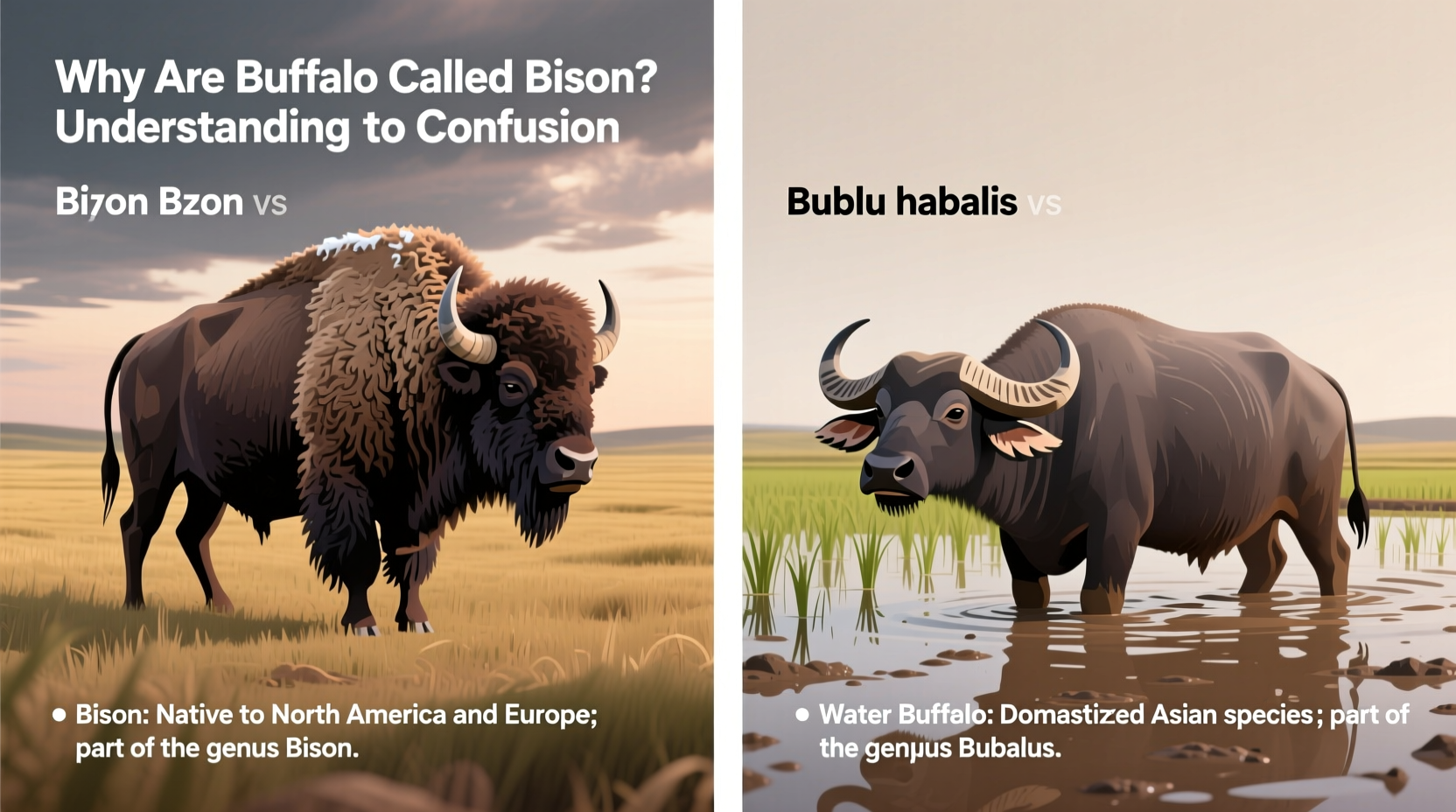
Despite being used interchangeably, “bison” and “buffalo” refer to entirely different animals from separate continents and evolutionary lineages. True buffalo—such as the African cape buffalo (Syncerus caffer) and the Asian water buffalo (Bubalus bubalis)—belong to a different genus than the North American and European bison species.
The American bison (Bison bison) and its Eurasian cousin, the wisent (Bison bonasus), are the only two surviving members of the Bison genus. They are more closely related to domestic cattle than to any true buffalo species. Key physical differences include:
- Hump: Bison have large shoulder humps made of muscle, which support powerful necks for snow-clearing during winter. True buffalo lack this feature.
- Head and Horns: Bison have massive heads with short, curved horns designed for dominance fights. Buffalo horns are typically larger, sweeping, and adapted for defense against predators.
- Fur: Bison are covered in thick, shaggy fur, especially around the head, shoulders, and mane. Buffalo have sparser coats suited to warmer climates.
“Calling a bison a buffalo is like calling a zebra a horse—similar, yes, but not accurate. The distinction matters for conservation, education, and respect for biological precision.” — Dr. Lila Monroe, Wildlife Biologist, University of Montana
Historical Origins of the Misnomer
The confusion dates back to early European exploration of North America. When French explorers encountered the massive bovines on the Great Plains in the 1600s, they referred to them as “les bœufs,” meaning “oxen” or “beeves.” Over time, this evolved phonetically into “buffalo” among English-speaking settlers.
The word “buffalo” was already familiar in English due to its use in describing African and Asian bovines brought into European awareness through trade and colonial expansion. It was a convenient, pre-existing label. Even though it was biologically inaccurate, “buffalo” stuck because it was easier to say and fit existing linguistic patterns.
By the 19th century, the term had become so entrenched in American vernacular that even scientists and naturalists used it colloquially. The famous William Clark of Lewis and Clark fame wrote about hunting “buffalo” across the western territories, further cementing the misnomer in national lore.
A Comparison of Species: Bison vs. True Buffalo
| Feature | American Bison | African Cape Buffalo | Asian Water Buffalo |
|---|---|---|---|
| Scientific Name | Bison bison | Syncerus caffer | Bubalus bubalis |
| Native Continent | North America | Africa | Asia |
| Shoulder Hump | Yes, muscular | No | No |
| Coat Density | Dense, shaggy | Short, coarse | Very sparse |
| Temperament | Generally calm, but unpredictable when threatened | Highly aggressive, known as “Black Death” | Gregarious, often domesticated |
| Conservation Status | Near Threatened (reintroduced) | Least Concern | Endangered (wild populations) |
Cultural Impact and Lingering Language Habits
Language reflects culture more than taxonomy. Despite scientific clarity, “buffalo” remains dominant in everyday speech. Consider these examples:
- Sports Teams: The Buffalo Bills, Buffalo Sabres, and countless high school teams proudly bear the name.
- Folklore and Music: “Home on the Range” sings of “the deer and the antelope play, where seldom is heard a discouraging word, and the skies are not cloudy all day”—but everyone remembers the “buffalo roaming.”
- Branding: Products like Buffalo Wild Wings, buffalo check shirts, and buffalo mozzarella (ironically made from water buffalo milk) keep the term alive.
This cultural entrenchment makes correction difficult. For many, correcting someone who says “buffalo” feels pedantic. Yet, for conservationists and educators, precision matters. Misidentification can lead to misunderstandings about habitat needs, behavior, and ecological roles.
Mini Case Study: Yellowstone National Park Interpretation
In Yellowstone, park rangers began noticing that visitors consistently referred to bison as buffalo, often expressing surprise when told otherwise. In response, the park launched an educational campaign titled “Bison, Not Buffalo” at visitor centers and ranger talks. Rangers now begin wildlife tours by clarifying the distinction, using skulls and pelts to show anatomical differences.
After one year, a survey showed a 63% increase in correct terminology usage among returning visitors. More importantly, guests reported greater appreciation for the animal’s unique evolutionary history. As one ranger noted, “Once people learn it’s not just a ‘mistake,’ but a chance to understand deeper truths about nature, they listen.”
How to Use the Terms Correctly: A Practical Checklist
Whether you're writing, teaching, or simply conversing, clarity starts with intention. Here’s how to get it right:
- Use “bison” when referring to Bison bison in North America or Bison bonasus in Europe.
- Reserve “buffalo” for African cape buffalo or Asian water buffalo—especially in scientific or educational contexts.
- Clarify in conversation: If someone says “buffalo,” gently note, “You mean bison—the native North American species.”
- Teach the difference to children using simple comparisons: “Think of bison as the furry giants of the plains, and buffalo as the tough survivors of Africa and Asia.”
- Support accurate media: Praise documentaries, books, or parks that use “bison” correctly, and provide feedback when major outlets perpetuate the error.
Frequently Asked Questions
Are bison and buffalo the same species?
No. Bison and buffalo are different animals from different continents and evolutionary branches. The American bison is not closely related to African or Asian buffalo species.
Why do we still say “buffalo” if it’s wrong?
Language evolves through common usage. “Buffalo” became popular due to early French influence and phonetic ease. Cultural traditions, place names (like Buffalo, New York), and branding have kept the term alive despite its inaccuracy.
Is it harmful to keep using “buffalo” instead of “bison”?
While not inherently harmful, persistent misuse can obscure important distinctions in conservation, biology, and ecology. Accurate language supports better public understanding of biodiversity and species-specific needs.
Conclusion: Embracing Accuracy Without Losing Culture
The story of why bison are called buffalo is ultimately about the collision of science and society. We don’t need to erase cultural references—songs, team names, and idioms can remain—but we can also choose precision when it counts. Recognizing the bison for what it truly is honors both the animal and our responsibility to understand the natural world accurately.




 浙公网安备
33010002000092号
浙公网安备
33010002000092号 浙B2-20120091-4
Comments
No comments yet. Why don't you start the discussion?