
Bugatti is not just a car brand—it’s a symbol of automotive perfection, technological dominance, and uncompromising luxury. When a Bugatti Chiron rolls past, it doesn’t just turn heads; it redefines what’s possible in engineering. But with base prices starting well over $3 million and limited editions soaring beyond $10 million, many ask: why are Bugattis so expensive? The answer lies far beyond horsepower figures or top speed records. It’s embedded in materials science, artisan craftsmanship, R&D investment, and an unrelenting pursuit of excellence that few manufacturers can match.
The Engineering Behind the Extravagance
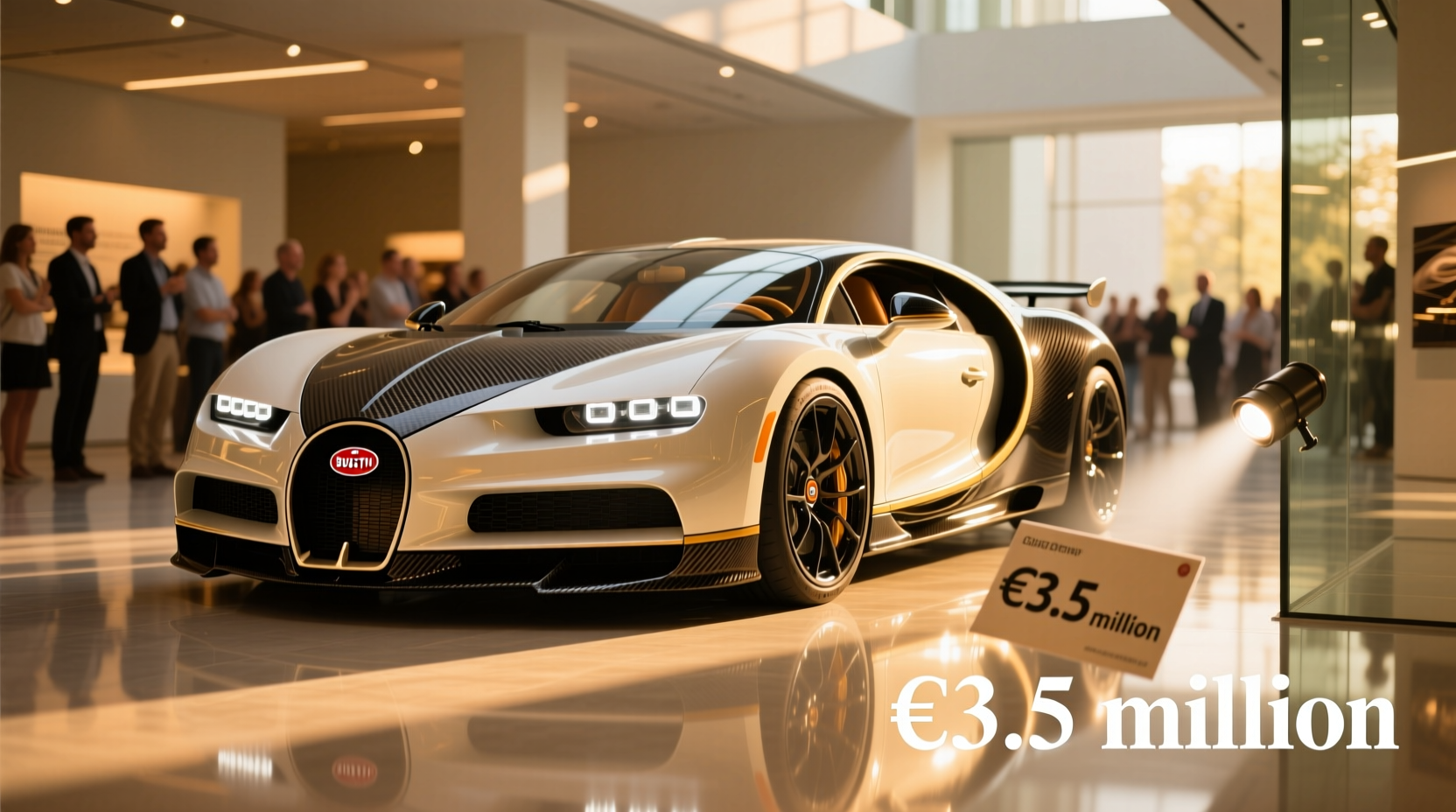
At the heart of every Bugatti is a feat of mechanical artistry—the 8.0-liter quad-turbocharged W16 engine. This powerplant, co-developed with Volkswagen Group engineers, produces up to 1,600 horsepower in the Chiron Super Sport and can propel the car from 0 to 60 mph in under 2.4 seconds. But raw power alone doesn’t justify the cost. What does is the level of innovation required to manage such forces safely and consistently.
Consider thermal management: at top speeds exceeding 300 mph, airflow and heat dissipation become critical. Bugatti developed custom cooling systems with 10 radiators—yes, ten—each calibrated for specific components like the intercoolers, transmission, and differentials. These systems are tested rigorously in wind tunnels and real-world conditions across continents.
The carbon fiber monocoque chassis is another marvel. Each one is hand-laid using pre-preg carbon fiber and cured in aerospace-grade autoclaves. This process ensures maximum rigidity while minimizing weight—critical for both performance and safety. The entire structure takes nearly three weeks to complete and undergoes destructive testing to validate its integrity.
“Bugatti doesn’t push boundaries—they redraw them. Every component is engineered beyond necessity because failure is not an option.” — Dr. Klaus-Gerd Wagner, Automotive Materials Scientist
Handcrafted Precision and Artisan Labor
While many high-end cars use automated production lines, Bugatti maintains a deeply human touch. Each vehicle receives over 300 hours of hand assembly at the Molsheim, France facility—the historic birthplace of the brand. Skilled artisans fit leather interiors stitch by stitch, polish aluminum trim by hand, and calibrate digital displays for pixel-perfect alignment.
The interior alone involves more than 15 square meters of premium leather, often sourced from sustainable German cattle farms known for flawless hides. Each piece is cut manually to ensure grain consistency across panels. Even the stitching follows a strict tension standard—too loose and it sags; too tight and it cracks under temperature shifts.
R&D Investment and Technological Innovation
Developing a new Bugatti model costs upwards of $1.2 billion. Much of this goes into research areas rarely seen in mainstream automaking. For example, when developing the Chiron’s 304 mph top speed run, engineers had to create tires capable of surviving sustained rotation at over 5,000 RPM. Traditional tire compounds would disintegrate within seconds.
Michelin collaborated exclusively with Bugatti to develop the Pilot Sport Cup 2R ZP, reinforced with titanium-coated nylon strands and capable of enduring centrifugal forces equivalent to 4,000 kg per wheel. These tires cost approximately $47,000 for a full set—and must be replaced after just one top-speed run.
Similarly, the braking system uses carbon-ceramic discs measuring 420 mm in diameter, cooled by dedicated air channels. Stopping from 249 mph requires 2.5 miles and generates enough heat to glow orange-red—yet the system must remain reliable over repeated cycles.
Development Costs Breakdown (Estimated)
| Area | Investment | Notes |
|---|---|---|
| W16 Engine Development | $300M | Including fuel injection, turbo layout, cooling |
| Aerodynamics & Wind Tunnel Testing | $180M | Over 5,000 hours of simulation and physical tests |
| Materials & Lightweighting | $220M | Carbon fiber, titanium, magnesium alloys |
| Tire & Brake Systems | $150M | Partnerships with Michelin, SGL Carbon |
| Electronics & Software Integration | $120M | Real-time torque distribution, stability control |
| Total (approximate) | $970M+ | Excludes marketing and factory upgrades |
Exclusivity and Brand Heritage
Bugatti produces fewer than 70 vehicles per year. This deliberate scarcity enhances desirability and protects brand equity. Unlike mass-market luxury brands, Bugatti treats each owner as a patron of automotive art. Buyers often work directly with the “Sur Mesure” team to customize everything from paint chemistry to embroidery thread color.
The brand also carries immense historical weight. Founded in 1909 by Ettore Bugatti, the company won the 1939 24 Hours of Le Mans and built legendary pre-war machines like the Type 35 Grand Prix car and the majestic Royale. Modern Bugattis honor this legacy through design cues—such as the horseshoe grille and exposed hinge mechanisms—that echo early 20th-century engineering elegance.
“We don’t build cars for everyone. We build them for those who understand that perfection has a price.” — Stephan Winkelmann, President of Bugatti Automobiles
Mini Case Study: The Bugatti La Voiture Noire
In 2019, Bugatti unveiled the La Voiture Noire—a one-off homage to the lost Type 57 SC Atlantic. With a reported sale price of $18.7 million (before taxes), it became the most expensive new car ever sold. But the cost wasn’t just about nostalgia.
The car featured a completely redesigned body in matte black carbon fiber with a seamless roofline, requiring six months of mold development alone. Its interior used rare French walnut veneer treated with UV-resistant resin and accented with platinum inlays. Even the exhaust tips were machined from solid stainless steel and polished to mirror finish.
Most significantly, the buyer—an anonymous collector believed to be a member of the Porsche family—didn’t just purchase a car. He acquired a piece of living history, certified by the Fédération Internationale de l'Automobile and accompanied by a bespoke ownership dossier including blueprints, material certifications, and a personal letter from the chief designer.
Step-by-Step: How a Bugatti Goes from Concept to Delivery
- Concept Design (6–12 months): Sketches evolve into digital renderings, followed by 1:4 scale clay models reviewed by executives and designers.
- Engineering Validation (18–24 months): Simulations test aerodynamics, crash safety, and thermal loads. Prototype engines undergo 10,000-hour durability runs.
- Prototype Building (12 months): Functional mules are built and tested in extreme environments—from Death Valley to Arctic Circle.
- Hand Assembly (3+ months): Final vehicle assembled by a team of 12 specialists, with daily quality audits.
- Client Delivery (Personalized): Car shipped in a climate-controlled container; owners invited to Molsheim for a multi-day handover experience including driving instruction and factory tour.
Frequently Asked Questions
Are Bugattis worth the price?
For most people, no—but value isn’t purely financial. Bugattis appreciate as collectibles, with models like the Veyron Centenaire selling for double their original price. More importantly, they represent the pinnacle of what human ingenuity can achieve in automotive form.
Why not make electric Bugattis to reduce costs?
Bugatti is exploring electrification, but current battery technology cannot deliver the sustained power output needed without adding prohibitive weight. Any future EV will need to exceed the performance of today’s W16, not compromise it.
Can you service a Bugatti yourself?
No. All maintenance must be performed by authorized Bugatti technicians using proprietary software and tools. Even oil changes require specialized vacuum extraction systems to prevent air pockets in the dry-sump lubrication setup.
Conclusion: Beyond Price, Into Legacy
The cost of a Bugatti reflects more than engineering—it embodies a century of ambition, precision, and defiance of limits. From the painstaking hand-stitching of a headliner to the physics-defying stability at 300 mph, every element is optimized for excellence. These cars aren’t built to compete with Ferraris or Lamborghinis; they exist on a plane above comparison.
If you’ve ever wondered why Bugattis command such astronomical prices, the answer isn’t found in a spec sheet. It’s in the silence of a perfectly insulated cabin at top speed, in the warmth of hand-polished metal under your fingertips, and in the knowledge that only a handful of humans will ever experience what you’re about to drive.




 浙公网安备
33010002000092号
浙公网安备
33010002000092号 浙B2-20120091-4
Comments
No comments yet. Why don't you start the discussion?