
The name \"catfish\" evokes curiosity. At first glance, it seems like a mismatch—a fish named after a land-dwelling mammal. Yet, millions of people around the world use this term without questioning its origin. The truth is, the name isn’t arbitrary or whimsical; it’s deeply rooted in observable biology and centuries-old language evolution. Understanding why catfish are called catfish reveals more than just etymology—it uncovers how humans interpret nature through familiar references.
Catfish belong to one of the most diverse groups of fish, with over 3,000 known species inhabiting freshwater and marine environments across six continents. Despite their global presence, the shared trait that unites them—and gave rise to their name—is the presence of long, whisker-like appendages near their mouths. These structures resemble a cat’s whiskers, prompting early naturalists and fishermen to draw a visual parallel between the two creatures.
The Whiskers That Started It All
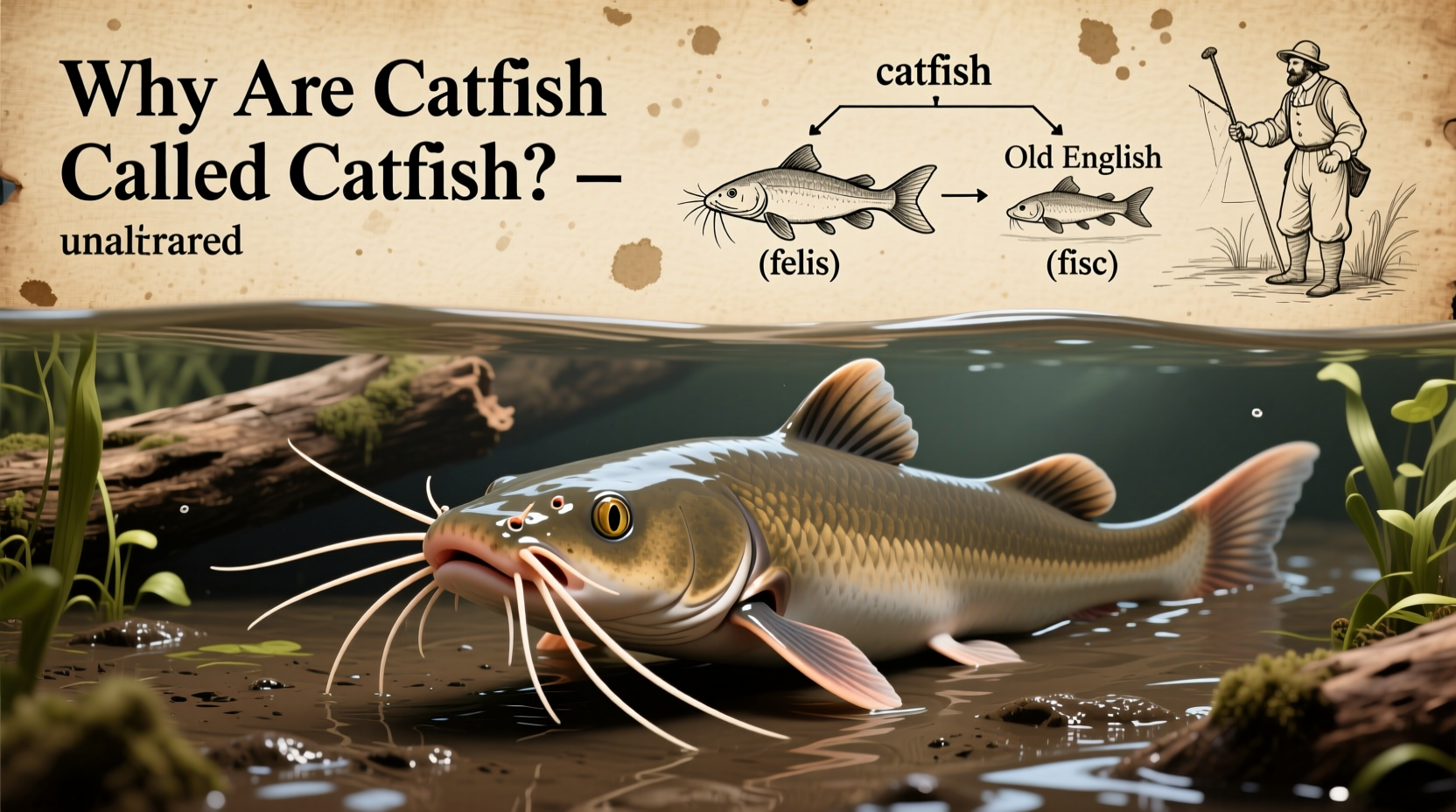
The defining feature linking catfish to cats is their barbels—slender, flexible sensory organs protruding from the upper and sometimes lower jaws. Most catfish have anywhere from two to four pairs of barbels, which they use to navigate murky waters, locate food, and detect changes in their environment. Unlike eyesight, which is often limited in dark or sediment-heavy water, these tactile organs are highly sensitive to vibrations and chemical cues.
This adaptation is crucial for survival, especially for bottom-dwelling species that scavenge for food among mud and debris. But to early observers, these dangling filaments didn’t suggest advanced sensory biology—they looked unmistakably like the whiskers of a house cat. The resemblance was strong enough to influence naming across multiple languages and cultures.
“Names in natural history often arise from analogy rather than anatomy. The ‘catfish’ is a perfect example—named not for behavior or lineage, but for a striking physical similarity.” — Dr. Lena Pruitt, Historical Linguist and Zoological Nomenclature Specialist
Linguistic Roots: From Old English to Modern Usage
The word “catfish” dates back to at least the 17th century in English-speaking regions. Its formation follows a common pattern in animal nomenclature: combining a familiar creature (the cat) with a less familiar one (the fish) to create an instantly descriptive label. This kind of compound naming is seen elsewhere—think “starfish,” “jellyfish,” or “crayfish”—even when the second animal isn’t technically a fish.
Etymologically, “cat” comes from the Old English *catt*, which itself has parallels in Latin (*catus*) and other Germanic languages. “Fish” traces back to *fisc* in Old English. The combination “cat-fish” first appeared in written records as early as 1618, used by British colonists describing North American species they encountered. By the 18th century, the term was widely adopted in scientific and vernacular contexts alike.
Interestingly, similar names exist in other languages. In German, *Wels* refers to large catfish, but smaller species are sometimes called *Katzenwels* (“cat-wels”). In French, *poisson-chat* translates literally to “cat-fish.” Even in non-European languages, such as Thai (*pla suea*) or Vietnamese (*cá trê*), descriptors referencing feline features appear, indicating a near-universal visual association.
Biological Functions of Barbels: More Than Just Looks
While the name originated from appearance, the barbels themselves serve essential biological functions. Packed with taste buds and tactile receptors, they act as external tongues and fingers combined. Catfish can “taste” their surroundings by brushing their barbels against objects, allowing them to distinguish edible matter from inedible debris.
Different species have evolved specialized barbel arrangements based on habitat and feeding habits:
- Channel catfish – Long maxillary barbels (on the upper jaw) help sweep the riverbed.
- Wels catfish – Extremely elongated barbels aid nocturnal hunting in deep European rivers.
- Sea catfish – Shorter but sturdier barbels adapted for sandy ocean floors.
These adaptations underscore that while the name “catfish” may seem fanciful, it points to a key evolutionary innovation. The very feature that inspired the name is central to the animal’s ecological success.
Common Misconceptions About the Name
Despite the clear link to barbels, several myths persist about the origin of the term “catfish.” Some believe it refers to the fish’s supposed “meowing” sounds, others think it relates to predatory behavior akin to a cat stalking prey. While catfish do produce audible grunts or croaks via swim bladder vibrations—especially when out of water—this trait was documented long after the name was established.
Likewise, while some catfish are opportunistic feeders, their hunting style is more passive than feline pouncing. The name, therefore, was never intended to reflect sound or behavior. It was, and remains, a straightforward reference to morphology.
| Feature | Related to Name? | Explanation |
|---|---|---|
| Barbels (whisker-like feelers) | Yes | Primary reason for the name; direct visual similarity to cat whiskers. |
| Vocalizations (grunting noises) | No | Sounds were observed later and vary by species; not the origin of the name. |
| Bottom-dwelling behavior | No | Common among many fish; not unique or named-based. |
| Facial structure | Partially | Broad, flat heads enhance the cat-like impression but aren’t the main factor. |
From Biology to Culture: The Catfish Legacy
The influence of the name extends beyond taxonomy. In modern culture, “catfishing” refers to the act of creating a fake online identity to deceive someone—popularized by the 2010 documentary and subsequent TV series. The metaphor draws loosely on the idea of something deceptive lurking beneath the surface, much like a catfish scavenging unseen in muddy water.
However, this digital slang has no basis in the original naming logic. It’s a creative reinterpretation, demonstrating how a biological descriptor can evolve into a cultural idiom. Still, biologists emphasize that real catfish are neither deceitful nor dangerous; most are peaceful, ecologically vital members of aquatic ecosystems.
Mini Case Study: Naming in the Field
In 2015, a team of ichthyologists in Thailand discovered a new species of armored catfish in a remote cave system. Though blind and pale from generations underground, the fish had prominent barbels. During initial discussions, researchers briefly considered names referencing its subterranean lifestyle. However, one scientist noted, “Even without eyes, it still looks like it has a cat’s face.” The species was ultimately named *Pterocryptis cryptophthalmus*, but field guides consistently refer to it colloquially as a “cave catfish”—proof that the visual naming convention remains powerful.
Frequently Asked Questions
Are all catfish named because of their whiskers?
Yes. Regardless of species, size, or habitat, the presence of barbels is the universal trait that qualifies a fish as a “catfish” in common language. Scientific classification relies on genetics and anatomy, but the common name consistently references the whisker-like structures.
Do catfish behave like cats in any way?
Not really. While both are curious and adaptable, the comparison ends there. Cats are terrestrial predators with complex social behaviors; catfish are primarily solitary, bottom-oriented feeders. Any behavioral similarities are coincidental, not the basis for the name.
Can you eat catfish?
Absolutely. Catfish are a major food source worldwide. Farmed channel catfish are popular in the United States, while species like the Mekong catfish are staples in Southeast Asia. Their mild flavor and firm texture make them versatile in cooking.
Practical Tips for Understanding Fish Names
- Observe facial features first—barbels, snout length, eye position.
- Check regional naming variations; a “mud cat” in one area may be a “channel cat” elsewhere.
- Use scientific names for precision, especially when researching habitats or care requirements.
- Consult field guides that include illustrations of key identifiers like barbels.
- Avoid assuming behavior from names—“shark” doesn’t always mean aggressive, just as “catfish” doesn’t mean feline-like.
Conclusion: A Name Rooted in Observation
The term “catfish” endures because it works. It captures a distinctive trait in a simple, memorable way. Far from being a random or misleading label, it reflects centuries of human observation and our instinct to relate the unfamiliar to the known. Whether you’re a biologist, angler, or casual learner, recognizing the origin of the name deepens appreciation for both language and life beneath the surface.




 浙公网安备
33010002000092号
浙公网安备
33010002000092号 浙B2-20120091-4
Comments
No comments yet. Why don't you start the discussion?