
Many cat owners love their pets deeply—yet still find themselves asking, “Why is my cat so annoying?” Whether it’s knocking things off shelves, meowing at 4 a.m., or ignoring affection when you want to cuddle, cats often act in ways that frustrate even the most devoted guardians. But before labeling your cat as deliberately difficult, consider this: what seems like annoyance is usually communication. Cats don’t misbehave out of spite—they respond to instinct, environment, and unmet needs. Understanding feline behavior transforms irritation into insight.
The Instinct Behind the “Annoyance”
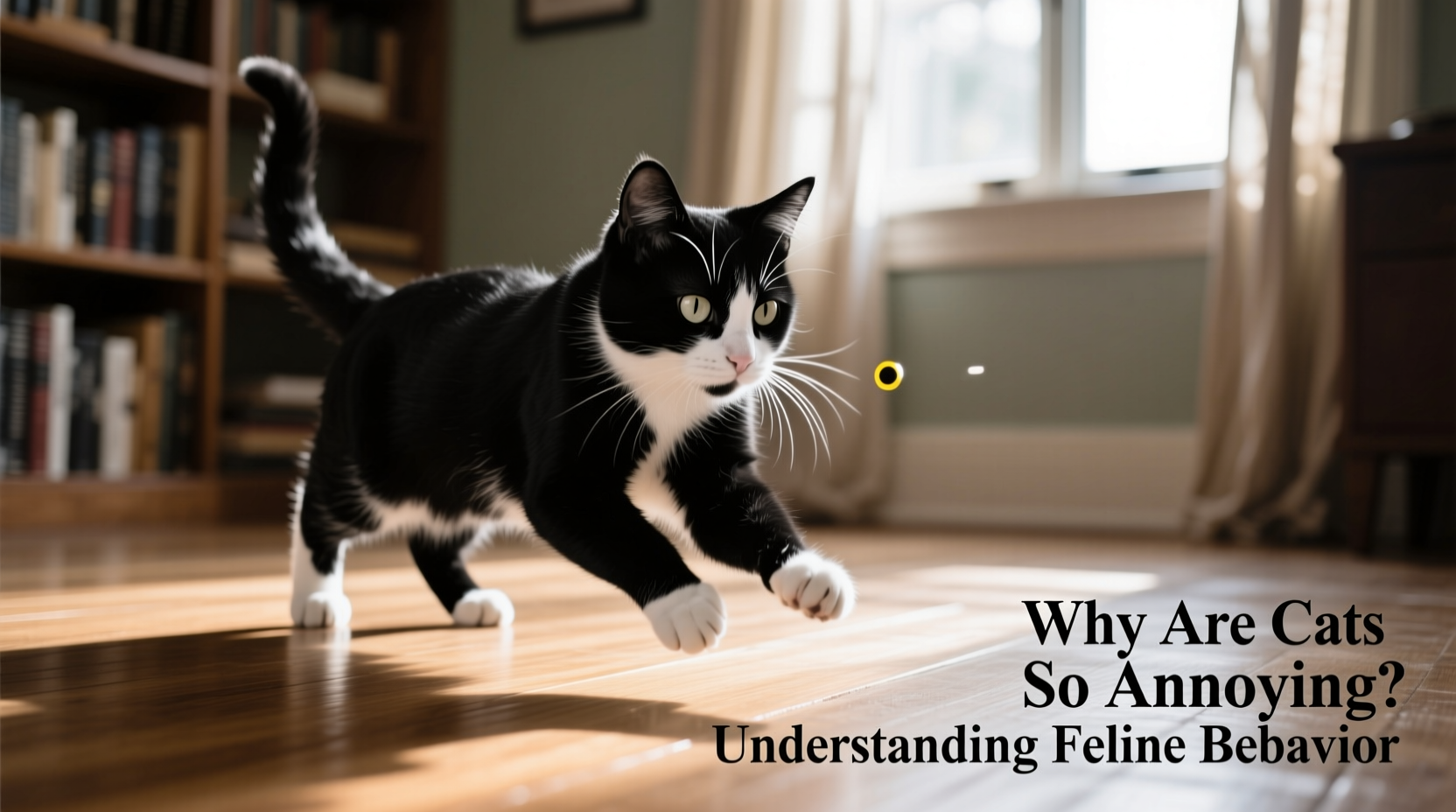
Cats are predators by nature. Even well-fed indoor cats retain strong hunting instincts that drive many of their seemingly inexplicable actions. Pouncing on toes, chasing light beams, and sudden bursts of energy (often called “zoomies”) aren’t signs of chaos—they’re expressions of natural behavior. In the wild, cats spend hours stalking, capturing, and playing with prey. Indoor environments rarely offer enough stimulation to satisfy these deep-rooted impulses, leading to redirected behaviors that humans interpret as irritating.
Scratching furniture, for example, isn’t vandalism. It serves multiple purposes: marking territory via scent glands in the paws, stretching muscles, and shedding old claw layers. Similarly, bringing dead mice or birds to your doorstep is not a gift in the human sense—it’s an instinctual teaching behavior, rooted in how mother cats train kittens.
Common “Annoying” Behaviors and What They Really Mean
Below is a breakdown of frequently misunderstood cat actions and the motivations behind them:
| Behavior | Likely Reason | Solution Approach |
|---|---|---|
| Knocking objects off tables | Curiosity, sensory exploration, or attention-seeking | Provide safe alternatives like puzzle feeders or motion-activated toys |
| Excessive vocalization at night | Nocturnal instincts; seeking interaction or food | Establish a calming evening routine and avoid reinforcing cries with attention |
| Refusing affection on demand | Autonomy is central to feline comfort; overhandling causes stress | Let the cat initiate contact; respect body language cues like tail flicking |
| Scratching furniture | Natural marking and physical maintenance | Offer appealing scratching posts near favored spots and use pheromone sprays |
| Overgrooming or licking obsessively | Potential medical issue or stress response | Consult a vet; evaluate environmental stressors like changes in routine |
The Role of Territory and Stress
Cats are highly territorial animals. Even subtle changes—a new piece of furniture, unfamiliar scents on clothing, or the presence of outdoor cats visible through windows—can trigger anxiety. When stressed, cats may exhibit behaviors such as urinating outside the litter box, excessive meowing, or aggression. These aren’t attempts to punish you; they’re signals that something feels unsafe.
“Cats don’t act out of malice. Every behavior has a function, even if it’s inconvenient for humans.” — Dr. Sarah Ellis, Feline Behavior Scientist, University of Bristol
Communication Gaps Between Cats and Humans
One reason cats seem “annoying” is mismatched communication styles. Humans express affection through touch and proximity. Cats, however, communicate more subtly—through slow blinks, tail position, grooming, and rubbing. When a cat rubs against your leg, it’s marking you with its scent, claiming you as part of its social group. But if you respond by picking it up for a hug, you may be overriding its preferred method of interaction.
Similarly, prolonged eye contact is seen as threatening in cat language. A direct stare can make a cat feel challenged, leading to avoidance or defensive swatting. Learning to “speak cat” builds trust and reduces friction.
Mini Case Study: Midnight Meows in a Busy Household
Sarah, a teacher from Portland, adopted a rescue cat named Luna. Within weeks, Luna began yowling loudly between 3–5 a.m. The family was exhausted. At first, they assumed she wanted food, so they fed her during episodes. The behavior worsened. After consulting a veterinary behaviorist, they learned Luna had likely experienced food insecurity in her early life. Her vocalizations were panic-driven, not manipulative.
The solution? A structured routine: feeding right before bedtime, interactive play to simulate a “hunt,” and leaving a timed feeder for a small morning snack. Within three weeks, the midnight calls stopped. The key wasn’t punishment—it was understanding the root cause.
How to Reduce “Annoying” Behaviors: A Step-by-Step Guide
Instead of reacting to unwanted behaviors, proactively shape a cat-friendly environment:
- Assess the environment. Is your cat getting enough vertical space, hiding spots, and mental stimulation?
- Implement a daily play routine. Use wand toys for 10–15 minutes twice a day to mimic hunting sequences.
- Provide appropriate outlets. Place scratching posts near sleeping areas and window perches for bird watching.
- Respect boundaries. Let the cat choose when to interact; avoid forcing cuddles.
- Use positive reinforcement. Reward calm behavior with treats or praise; never punish.
- Rule out medical issues. Sudden behavior changes may indicate pain or illness—consult a vet.
Frequently Asked Questions
Why does my cat bite me after licking me?
This is often a sign of overstimulation. Cats may start grooming as a bonding gesture but become overwhelmed by sensory input. The bite is a way to say, “I need space now.” Watch for tail flicking or skin rippling as early warning signs.
Is my cat being spiteful when it scratches the couch?
No. Spite requires complex emotional reasoning that cats don’t possess. Scratching is instinctive and functional. The best approach is to make legal scratching options more appealing than the furniture.
Can I train a cat to stop being “annoying”?
You can’t eliminate natural behaviors, but you can redirect them. Training focuses on shaping acceptable outlets—not suppressing instincts. Clicker training, for instance, can teach cats to perform tasks like coming when called or using specific scratching zones.
Checklist: Creating a Cat-Friendly Home
- ✅ Provide at least one scratching post per floor
- ✅ Offer elevated spaces (shelves, cat trees)
- ✅ Rotate toys weekly to maintain interest
- ✅ Clean litter boxes daily; one box per cat plus one extra
- ✅ Use Feliway diffusers in high-stress areas
- ✅ Schedule daily interactive play sessions
- ✅ Avoid loud noises and sudden movements around the cat
Conclusion: From Annoyance to Appreciation
The quirks that make cats seem annoying are often the very traits that make them fascinating companions. Their independence, precision, and mysterious demeanor stem from a finely tuned evolutionary blueprint. Rather than trying to change a cat into something it’s not, the path to harmony lies in understanding. When we see behaviors not as personal affronts but as expressions of instinct and need, frustration gives way to empathy.
By enriching their environment, respecting their boundaries, and learning their language, we transform daily irritations into moments of connection. A cat who knocks over a cup isn’t defying you—it’s exploring. One who ignores you isn’t rejecting you—it’s choosing autonomy. Recognizing this shifts the relationship from conflict to coexistence.




 浙公网安备
33010002000092号
浙公网安备
33010002000092号 浙B2-20120091-4
Comments
No comments yet. Why don't you start the discussion?