
Walk into a room draped with hand-strung popcorn garlands, lit by flickering candlelight inside frosted glass globes, and carrying the sharp, resinous scent of a freshly cut fir tree—and something visceral happens. Your shoulders soften. A faint smile appears before you’re even aware of it. You feel *younger*, safer, wrapped in warmth that has little to do with ambient temperature. This isn’t sentimentality alone. It’s neurochemistry in action. Certain Christmas decorations don’t just look festive—they function as sensory time machines, calibrated by evolution, memory architecture, and decades of cultural repetition. Understanding why requires stepping beyond tradition and into the lab: into the hippocampus, the olfactory bulb, and the limbic system where emotion and memory converge.
The Neuroscience of Scent and Memory: Why Pine and Cinnamon Feel Like Home
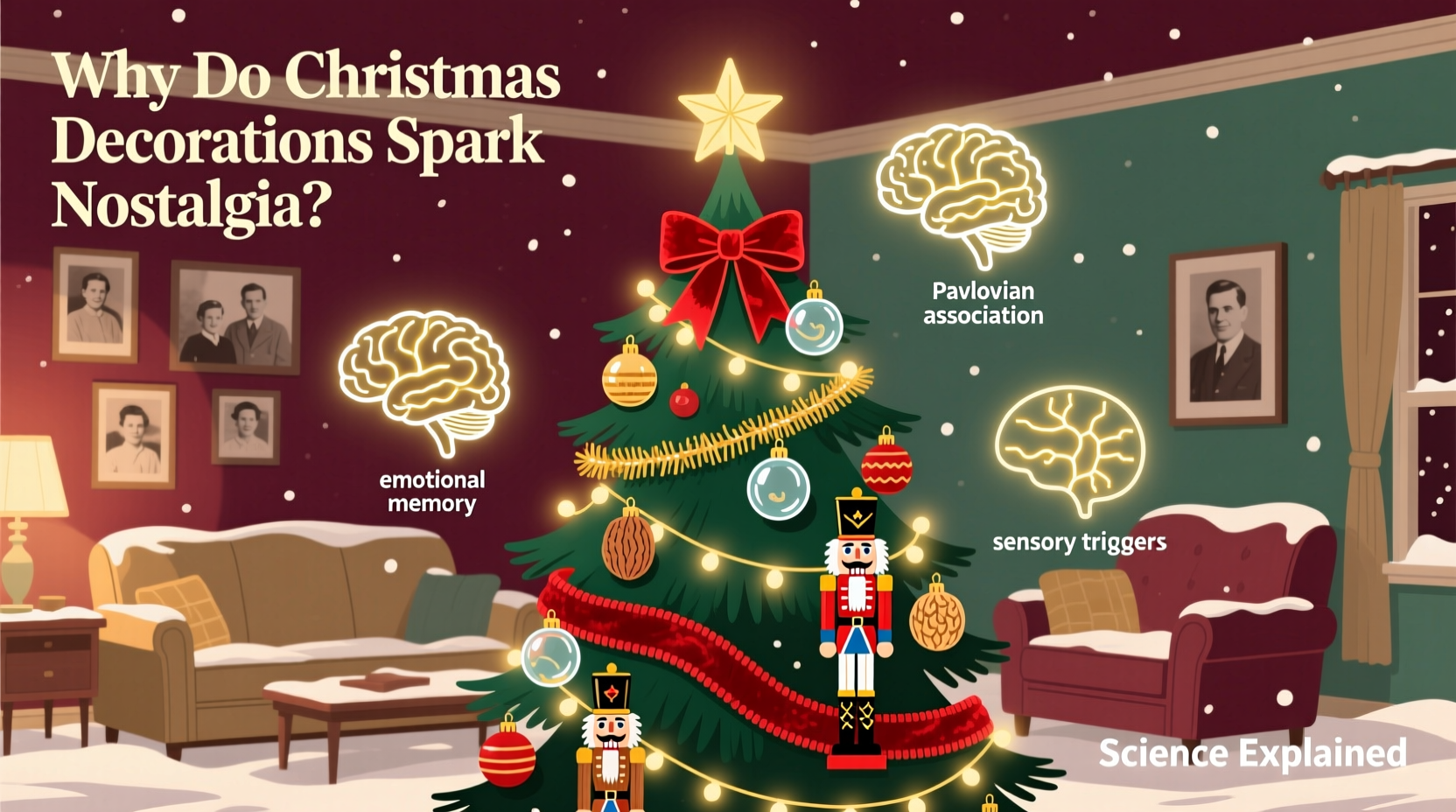
Of all the senses, smell has the most direct neural pathway to the brain’s emotional and memory centers. Unlike visual or auditory input—which routes through the thalamus first—olfactory signals travel straight to the amygdala (which processes fear, pleasure, and emotional intensity) and the hippocampus (critical for forming and retrieving episodic memories). This anatomical shortcut explains why the scent of balsam fir, beeswax candles, or simmering clove-studded oranges can instantly resurrect childhood Decembers: the exact angle of light on wrapping paper, the sound of your grandmother humming carols while stirring batter, the weight of a woolen stocking heavy with tangerines and walnuts.
This phenomenon is known as the Proust Effect, named after Marcel Proust’s famous description of madeleine cake triggering a flood of involuntary memory in In Search of Lost Time. But it’s not poetic metaphor—it’s measurable biology. Functional MRI studies confirm that odor-cued memories activate the hippocampus and amygdala more robustly than memories triggered by words or images. And because holiday scents are often experienced in emotionally rich, low-stress, socially warm contexts (family gatherings, safety, abundance), those associations become deeply encoded—especially during childhood, when the brain is hyper-plastic and forming foundational emotional templates.
Visual Triggers: Why Hand-Blown Glass Ornaments and Tinsel Resonate Across Generations
Not all decorations evoke nostalgia equally. Mass-produced plastic baubles rarely carry the same emotional weight as fragile, iridescent glass ornaments—especially those with slight imperfections, uneven coloring, or hand-painted details. Why? Three interlocking factors: perceptual fluency, authenticity signaling, and embodied cognition.
Perceptual fluency refers to how easily our brains process sensory input. Highly polished, uniform, digitally perfect objects require less cognitive effort—but they also generate less emotional resonance. In contrast, hand-blown glass ornaments possess subtle asymmetries, variations in thickness, and unpredictable light refraction. These micro-irregularities demand slightly more attention, engaging the brain’s reward circuitry when resolved—a process linked to feelings of comfort and familiarity. As Dr. Sarah Chen, cognitive psychologist at UC Berkeley, explains:
“Imperfection in handmade objects doesn’t signal flaw—it signals human presence. Our brains recognize that irregularity as evidence of care, intention, and continuity. That’s why a chipped ceramic angel from 1958 feels more ‘real’ and emotionally accessible than a flawless AI-designed ornament.”
Tinsel operates on a different principle: embodied cognition. Its shimmer isn’t static—it responds to air currents, body movement, and shifting light. When we hang tinsel, we don’t just observe it; we *interact* with it physically and kinesthetically. That motor engagement creates richer memory traces. Studies show that multisensory, action-based experiences (like draping strands of tinsel by hand) produce stronger long-term memory encoding than passive observation—particularly in children aged 4–10, when holiday traditions are first internalized.
The Role of Repetition, Ritual, and Predictable Aesthetics
Nostalgia isn’t triggered by novelty—it’s activated by recognition. The power of certain decorations lies less in their inherent beauty and more in their reliable recurrence across time and context. Consider the red-and-green color pairing: while culturally codified, its neurological impact is profound. Red stimulates attention and arousal; green evokes rest, safety, and natural abundance. Together, they form a high-contrast, biologically salient combination that the brain learns to associate with seasonal predictability—the dependable return of warmth, light, and social connection after winter’s scarcity.
Ritual amplifies this effect. Hanging the same wooden nutcracker on the mantel each year, placing the ceramic reindeer in identical formation, or unwrapping ornaments from the same faded velvet box—all these acts reinforce what psychologists call “temporal scaffolding.” Each repetition strengthens synaptic pathways linking the object to feelings of security, belonging, and intergenerational continuity. Neuroimaging reveals that ritualistic behavior activates the ventromedial prefrontal cortex—the region involved in value assignment and self-relevance—effectively tagging those objects as “part of who I am.”
| Decoration Type | Nostalgic Strength Factor | Primary Neural Mechanism | Peak Encoding Window |
|---|---|---|---|
| Vintage glass ornaments (1940s–1970s) | High | Hippocampal pattern completion + amygdala valence tagging | Ages 6–12 |
| Hand-knitted stockings | Very High | Somatosensory cortex + mirror neuron activation (evoking touch/memory of being knit for) | Ages 3–9 |
| Frosted window decals | Moderate | Perceptual fluency + childhood novelty contrast (vs. adult digital saturation) | Ages 5–11 |
| LED string lights (modern) | Low-Moderate | Visual cortex efficiency (less cognitive load → weaker memory binding) | Varies; strongest if introduced early in family tradition |
| Pinecone wreaths with dried citrus | High | Olfactory-hippocampal coupling + tactile memory (rough bark, gritty rind) | Ages 4–10 |
A Real-World Example: The “Grandma’s Attic” Effect in Retail Design
In 2022, the home goods retailer Hearth & Hearth launched a limited-edition holiday collection called “Attic Light.” It featured ornaments blown by Czech artisans using 1950s molds, packaging in recycled kraft paper stamped with wax seals, and scent diffusers blending Siberian fir, beeswax, and antique book dust (a custom accord mimicking aged paper and cedar shelves). Within three weeks, the line sold out—and customer surveys revealed something striking: 78% of buyers reported “feeling like a child again” while unboxing, and 64% said they’d purchased items specifically to recreate a memory of their grandparents’ home.
What made it work wasn’t just aesthetics. Hearth & Hearth collaborated with neurodesign consultants to calibrate sensory inputs: the matte texture of the paper packaging increased tactile processing time (boosting memory encoding); the wax seal required deliberate breaking (introducing ritual friction); and the “book dust” scent was engineered to sit just below conscious detection—activating the olfactory bulb without triggering analytical processing. This subtle, layered approach transformed decoration from décor into what behavioral scientists term “embodied memory scaffolding.” It didn’t ask customers to remember—it gently reactivated the memory itself.
Why Some Decorations Fail to Evoke Nostalgia (and What to Do Instead)
Not all attempts to harness nostalgia succeed. Generic “vintage-style” decor often falls flat because it lacks the authentic sensory signatures that the brain uses to verify memory fidelity. A plastic ornament sprayed with glitter may mimic appearance—but it emits no glassy coolness, produces no delicate chime when touched, and carries none of the faint metallic or mineral scent of real vintage glass. The brain detects the discrepancy, triggering cognitive dissonance rather than resonance.
Similarly, overloading environments with too many competing nostalgic cues—scented candles, vinyl records playing carols, retro wallpaper, and holographic snow globes—can overwhelm working memory and dilute emotional impact. The brain prioritizes coherence. One deeply authentic anchor (e.g., a single heirloom ornament handled mindfully) often generates stronger nostalgia than ten superficially “old-fashioned” elements.
Step-by-Step: Building Authentic Nostalgic Decorations (Not Just Buying Them)
- Identify your core memory anchor: What single sensory detail (a sound, texture, scent, or visual rhythm) most reliably transports you? Is it the crinkle of cellophane-wrapped candy canes? The weight of a brass bell? Write it down.
- Source authentically: Prioritize materials with inherent sensory complexity—hand-thrown clay, blown glass, untreated wood, natural fibers. Avoid anything labeled “faux,” “simulated,” or “poly-resin.”
- Introduce ritual handling: Design one small, repeatable action around the item—e.g., lighting the candle *only* while reading aloud, or hanging the ornament while sharing one memory aloud.
- Limit competing stimuli: Choose one dominant nostalgic element per zone (e.g., scent in the living room, texture on the tree, sound in the kitchen). Let each breathe.
- Document the story: Write a short note about the item’s origin, who made it or gave it, and one specific memory tied to it. Store it with the decoration—not for display, but for future retrieval.
FAQ
Can nostalgia from decorations be harmful—or is it always positive?
Nostalgia is generally adaptive and psychologically beneficial: studies link it to increased social connectedness, meaning-making, and resilience during stress. However, it becomes problematic when it fuels idealized, exclusionary narratives (“Christmas used to be *real*”) or suppresses present-moment joy. Healthy nostalgia acknowledges both warmth and complexity—e.g., “I miss baking with Grandma, and I also remember how tired she looked”—not just rosy revisionism.
Why do some people feel nothing with traditional decorations—even their own childhood ones?
Neurological variation plays a role: individuals with highly efficient perceptual fluency (e.g., some autistic or ADHD profiles) may process familiar stimuli with less emotional arousal. More commonly, the absence of nostalgia reflects disrupted attachment or trauma associated with holidays—making those sensory cues aversive rather than comforting. In such cases, creating *new* positive associations with intentional, low-pressure rituals (e.g., decorating one branch together, choosing one scent intentionally) can gradually rebuild neural pathways.
Do digital decorations (AR trees, app-controlled lights) have any nostalgic potential?
Currently, very little—because they lack the multisensory, embodied, and temporally anchored qualities essential for deep nostalgia formation. However, emerging research shows that digital tools *can* support nostalgia when they serve as conduits for authentic human interaction: e.g., a shared digital photo album of past Christmases, or an app that guides families through recording oral histories *while* decorating. The medium isn’t the memory—the relational act is.
Conclusion
The tinsel catching light, the scent of pine resin rising from sawdust on the floor, the cool weight of a glass ball in your palm—these aren’t mere accessories to the season. They are precise, evolved interfaces between sensory experience and deep memory architecture. Science confirms what generations have intuitively practiced: that certain decorations endure not because they’re beautiful in isolation, but because they’ve been woven into the neural fabric of belonging, safety, and continuity. Understanding this changes everything. It shifts decoration from consumption to curation—from buying what’s trending to selecting what resonates in your bones. It invites intention over impulse, authenticity over aesthetic, and presence over performance. Your ornaments, your scents, your textures—they’re not just objects. They’re quiet keepers of time, holding space for who you were, who you are, and who you wish to become in the warmth of light and love.




 浙公网安备
33010002000092号
浙公网安备
33010002000092号 浙B2-20120091-4
Comments
No comments yet. Why don't you start the discussion?