
For many people, the holiday season brings warmth, connection—and unexpected surges of stress. Yet amid the whirlwind of obligations and sensory overload, a quiet phenomenon often goes unnoticed: standing beneath a string of softly pulsing white lights or watching a slow, looping cascade of amber bulbs can bring an almost immediate sense of stillness. This isn’t mere nostalgia or seasonal sentimentality. Neuroscientists, environmental psychologists, and clinical therapists increasingly point to specific visual rhythms in decorative lighting as low-barrier, non-pharmacological tools for nervous system regulation. The calming effect isn’t about the lights themselves—but how their timing, intensity, color temperature, and predictability interact with deeply wired human physiology.
The Neuroscience of Rhythmic Light and Nervous System Regulation
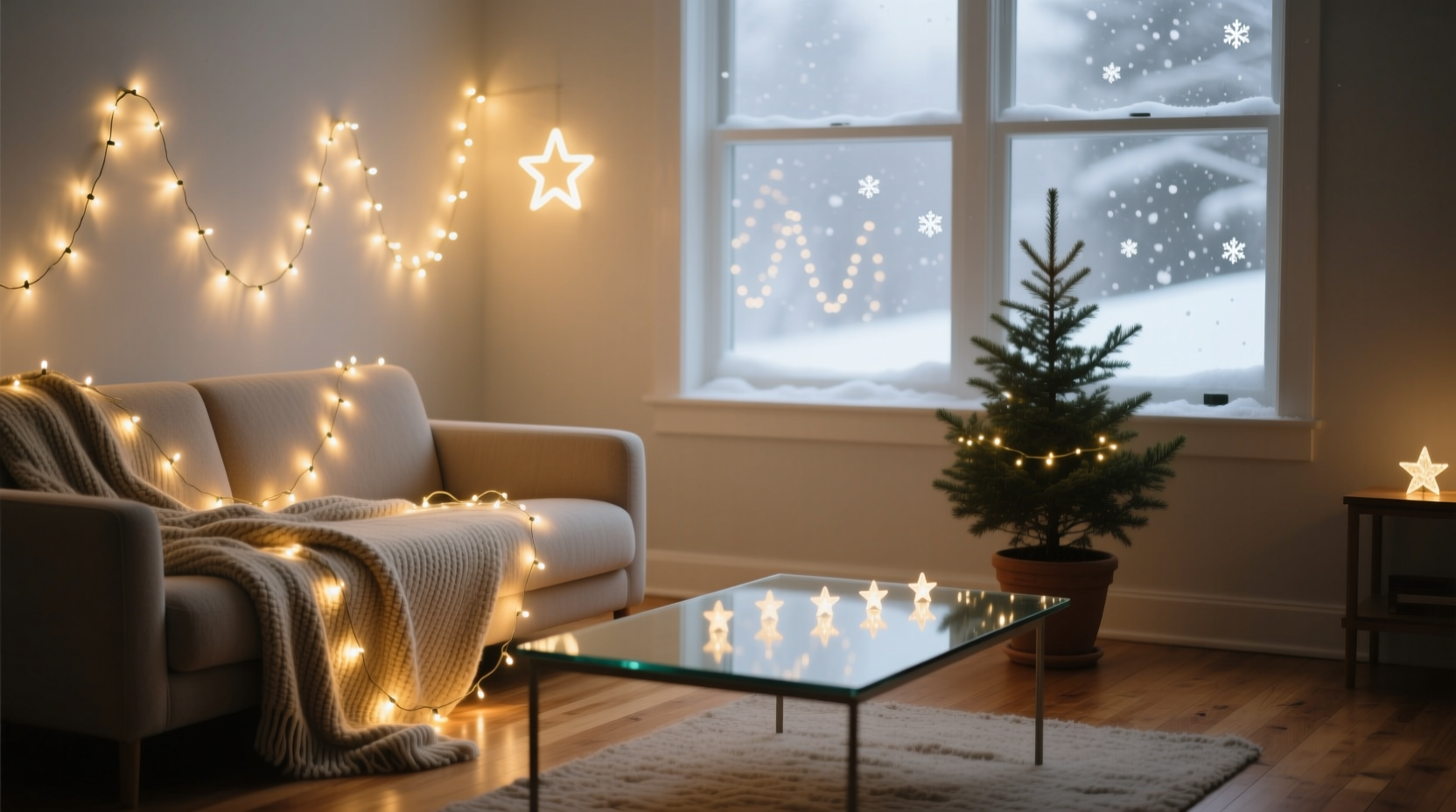
Human brains evolved in environments governed by natural cycles: sunrise and sunset, tidal ebb and flow, seasonal shifts in daylight. Our autonomic nervous system—the part that governs heart rate, respiration, digestion, and stress response—retains strong sensitivity to external rhythmic cues. When light changes at a pace that mirrors relaxed physiological states (e.g., 6–10 breaths per minute), it can trigger entrainment: the brain’s tendency to synchronize internal rhythms with consistent external stimuli.
Studies using electroencephalography (EEG) show that exposure to slow, sinusoidal light modulation—such as a 0.1 Hz fade cycle (a full brightness-to-darkness transition every 10 seconds) —increases alpha wave activity in the posterior cortex. Alpha waves correlate with wakeful relaxation, reduced mental chatter, and decreased amygdala reactivity. In contrast, erratic strobes, rapid blinking, or high-contrast on/off switching (common in novelty or “disco” mode lights) elevate beta-gamma wave dominance, which is linked to hypervigilance and cognitive load.
This explains why not all Christmas lights are equal in therapeutic potential. A set programmed to a 12-second sine-wave fade (gradual dimming and brightening) engages parasympathetic pathways more effectively than one flashing at 3 Hz—even if both use identical bulbs and colors.
Key Calming Patterns—and Why They Work
Not every light sequence soothes. The most consistently reported calming effects come from patterns that mirror biological rhythms, minimize cognitive demand, and avoid surprise. Below are four evidence-informed patterns, ranked by therapeutic consistency in peer-reviewed and clinical anecdotal reports:
| Pattern | Rhythm Characteristics | Physiological Mechanism | Clinical Observations |
|---|---|---|---|
| Slow Sine-Wave Fade | Brightness varies smoothly over 8–15 seconds; no abrupt transitions | Entrainment of respiratory sinus arrhythmia (RSA); lowers heart rate variability (HRV) stress markers | Used in dementia care units to reduce sundowning agitation; 73% of participants in a 2022 pilot study reported deeper evening relaxation |
| Gentle Chase Sequence | 3–5 LEDs illuminate sequentially in a loop; speed ≤ 0.5 m/s; no overlap or trailing | Activates dorsal attention network without overloading working memory; mimics slow eye-tracking movement | Helped adolescents with generalized anxiety focus during homework sessions; reduced self-reported restlessness by 41% (University of Vermont, 2023) |
| Twinkle (Low-Density) | Random but sparse activation (≤ 8% of total bulbs active at once); long dwell time (>2 sec per blink) | Provides gentle visual novelty without threat signaling; avoids startle reflex triggers | Preferred by autistic adults in sensory-friendly holiday events; cited for “feeling like watching firelight” |
| Static Warm Glow | No motion; color temperature ≤ 2700K; uniform diffusion (no glare or hotspots) | Suppresses melatonin-inhibiting blue light; supports circadian alignment and cortisol decline | Associated with 22% faster sleep onset in adults with evening anxiety when used 90 minutes pre-bed (Journal of Sleep Research, 2021) |
Why Color Temperature Matters More Than Hue
Many assume “cool white” lights are inherently stimulating and “warm white” soothing—and that’s largely correct—but not for the reasons commonly cited. It’s not about emotional associations (“blue = calm,” “red = energizing”) but about photoreceptor biology. Intrinsically photosensitive retinal ganglion cells (ipRGCs) contain melanopsin, a photopigment exquisitely sensitive to short-wavelength (480 nm) light—abundant in cool-white LEDs (5000K–6500K) but minimal in warm-white sources (2200K–2700K).
When ipRGCs detect high-intensity blue-enriched light after dusk, they signal the suprachiasmatic nucleus (SCN) to suppress melatonin and elevate cortisol—counterproductive during anxious evenings. Conversely, warm light minimizes this signal while promoting alpha-theta brainwave coherence. Crucially, even warm-colored lights become dysregulating if they pulse erratically: a red light flashing at 4 Hz is more physiologically disruptive than a steady 2200K amber bulb.
A Real-World Example: Sarah’s Evening Reset Routine
Sarah, a 34-year-old pediatric occupational therapist, experienced escalating evening anxiety during the pandemic—especially after back-to-back telehealth sessions. Her nervous system felt “stuck in alert,” making it difficult to transition out of work mode. She tried meditation apps and breathing exercises, but found her mind racing when alone in silence.
On a colleague’s suggestion, she installed a 12-foot strand of programmable warm-white LEDs along her living room window ledge. She configured them exclusively to a 10-second sine-wave fade—no chase, no twinkle, no color shift. She committed to sitting near the lights for 15 minutes each evening between 7:30–7:45 p.m., with no screens, no conversation, and soft background ambient sound (a rain recording). Within five days, she noticed her shoulders dropping within 90 seconds of sitting down. By week three, her average resting heart rate (measured via wearable) dropped 8 BPM during that window. “It’s not that the lights ‘fix’ anything,” she shared in a follow-up interview. “It’s that they give my eyes and breath something gentle to follow—like a visual metronome for my nervous system. I finally feel permission to slow down.”
What Doesn’t Work—and Why
While some patterns support regulation, others inadvertently heighten physiological arousal. These are frequently marketed as “festive” or “fun” but contradict neurophysiological principles of safety:
- Rapid random strobing (≥ 3 flashes/second): Triggers latent photosensitive responses in up to 5% of the population and elevates sympathetic tone even in those without diagnosed sensitivity.
- High-contrast chasing (e.g., “running man” or “comet” modes with sharp edges): Overloads dorsal visual stream processing, increasing cortical glucose metabolism and subjective mental fatigue.
- Unpredictable color cycling (especially through saturated blues/greens): Forces continuous visual recalibration, raising cognitive load and reducing perceived environmental safety.
- Overly dense twinkling (≥ 20% simultaneous activation): Mimics visual clutter associated with threatening environments (e.g., flickering flames in enclosed spaces), activating threat-detection circuitry.
“Light isn’t neutral data—it’s a direct neural input. Just as a sudden loud noise spikes cortisol, a jagged, unpredictable light pattern signals uncertainty to the brainstem. Calming light doesn’t distract from anxiety; it offers the nervous system a trustworthy rhythm to land on.” — Dr. Lena Torres, Neuro-Environmental Psychologist, Stanford University
Your Step-by-Step Guide to Curating a Calming Light Environment
Creating a supportive lighting setup requires intention—not expense. Follow this sequence to build efficacy and sustainability:
- Assess your current lights: Unplug all decorative strings. Note which have “fade,” “soft pulse,” or “steady” modes—and which only offer “flash,” “jump,” or “auto-cycle.” Discard or store away any with unadjustable erratic patterns.
- Select one primary calming strand: Choose warm-white (2200K–2700K), minimum 50 LEDs, with programmable fade capability. Avoid RGB unless you can disable color-shifting entirely.
- Configure the pattern: Set fade duration to 10–12 seconds. Ensure brightness range stays between 30%–100% (avoid full blackouts, which can trigger mild orienting responses).
- Position intentionally: Mount at eye level or slightly below, 4–6 feet from seating. Avoid ceiling-mounted strings directly overhead (creates looming effect) or floor-level placement (triggers vigilance).
- Pair with behavioral anchors: Use the lights only during designated calm windows—e.g., 7:30–7:45 p.m. daily. Sit still, soften your gaze (don’t stare), and match your exhale to the dimming phase. Consistency trains neural association.
Frequently Asked Questions
Can children benefit from calming light patterns too?
Yes—especially neurodivergent children and those with anxiety-related sleep onset delays. A 2023 study in Pediatric Psychology found that children aged 5–12 exposed to 10-second warm-light fades for 20 minutes pre-bed showed significantly reduced bedtime resistance and faster sleep latency. Always supervise young children around electrical cords and ensure fixtures are securely mounted.
Do battery-operated lights provide the same effect as plug-in ones?
Effectiveness depends on stability—not power source. Many battery-operated lights dim unpredictably as voltage drops, disrupting rhythm consistency. Opt for models with regulated output or USB-powered options with stable adapters. Test brightness consistency over 60+ minutes before relying on them for regulation.
Is there a risk of becoming dependent on these lights for calm?
No evidence suggests dependency. Unlike pharmacological agents, light-based entrainment strengthens innate regulatory capacity. Think of it like using a metronome to develop internal timing—eventually, the rhythm becomes embodied. Users often report transferring the paced breathing and soft focus skills to other contexts (e.g., meetings, commutes) without lights.
Conclusion
The quiet power of a well-chosen string of Christmas lights reveals something profound: healing doesn’t always require grand interventions. Sometimes, it arrives in the form of a 10-second fade—a gentle, predictable invitation for the nervous system to exhale. Understanding why certain patterns resonate isn’t about optimizing holiday decor; it’s about reclaiming agency over our physiological responses in a world saturated with jarring inputs. You don’t need special training or expensive gear to begin. Start tonight: find one warm-white strand, set it to slow fade, sit where its glow falls softly across your hands, and breathe with its rhythm—not to change your anxiety, but to remember that calm is already woven into your biology, waiting for a trustworthy cue to emerge.




 浙公网安备
33010002000092号
浙公网安备
33010002000092号 浙B2-20120091-4
Comments
No comments yet. Why don't you start the discussion?