
The Charizard Pokémon card has become more than just a piece of cardboard with a cartoon dragon—it’s a cultural icon, a collector’s dream, and in some cases, a six-figure investment. Once found in children’s cereal boxes or traded during recess, these cards now sell for tens of thousands, even millions of dollars. What transformed a nostalgic relic into a high-value asset? The answer lies in a unique convergence of rarity, nostalgia, condition, and market dynamics that have elevated Charizard to legendary status in the world of collectibles.
The Legacy of Charizard in the Pokémon Franchise
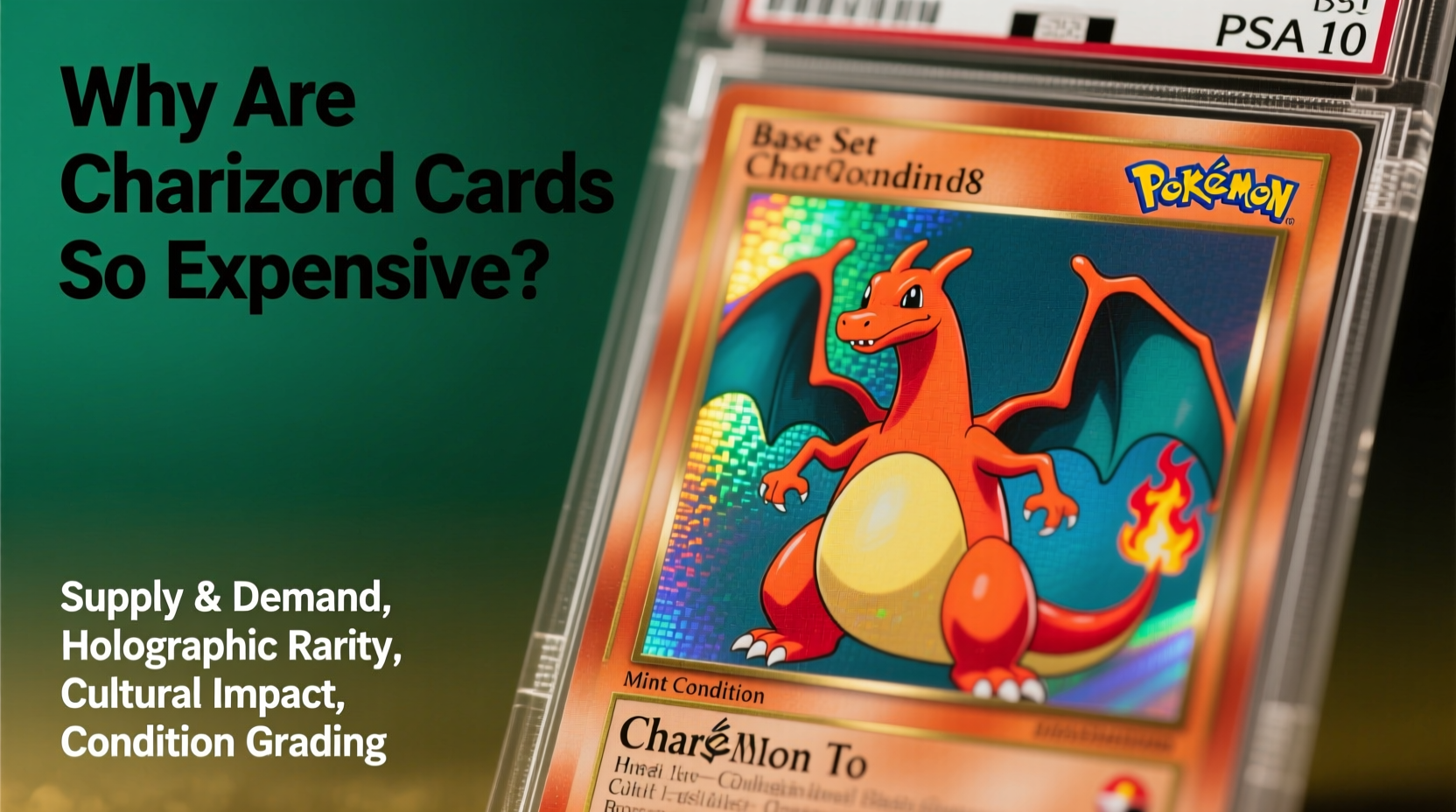
Charizard, numbered 006 in the Base Set of the Pokémon Trading Card Game (TCG), was introduced in 1999 alongside the original 150 Pokémon. As the evolved form of Charmander—one of the three starter Pokémon—it quickly became a fan favorite due to its powerful appearance, fire/flying typing, and prominent role in the early Pokémon anime series. Ash Ketchum’s Charizard, with its rebellious streak and eventual loyalty, cemented the character’s place in pop culture history.
This emotional connection translates directly into demand. For many collectors, owning a Charizard card isn’t just about possession—it’s about reliving childhood memories. “There’s an undeniable emotional premium attached to Charizard,” says Ryan Sargent, senior analyst at Collectors Universe.
“It’s not just the most iconic Pokémon card—it’s one of the most recognizable trading cards in history.”
Rarity and Print Runs: Why Not All Charizards Are Equal
Not every Charizard card commands top dollar. Value is heavily influenced by edition, print run, and scarcity. The earliest English-language Charizard cards come from the 1999 Base Set, often referred to as \"Shadowless\" or \"1st Edition.\" These were part of the first wave of Pokémon cards released outside Japan and had limited production.
The 1st Edition stamp—indicating it was printed during the initial release—significantly increases value. Later print runs without this mark, known as Unlimited editions, are far more common and therefore less valuable. For example, a PSA 10 graded 1st Edition Base Set Charizard sold for over $400,000 in 2022, while an equivalent Unlimited version in the same condition might fetch only a few thousand.
Key High-Value Charizard Variants
| Variety | Year Released | Estimated Value (PSA 10) | Key Features |
|---|---|---|---|
| Base Set 1st Edition Shadowless | 1999 | $300,000–$450,000+ | No shadow under artwork, 1st Edition stamp |
| Base Set Unlimited | 1999 | $1,500–$4,000 | No 1st Edition stamp, common print |
| Neo Revelation Holo | 2002 | $300–$800 | Darker art, textured holo pattern |
| EX Fire Red & Leaf Green #104 | 2004 | $100–$300 | Modern holofoil, EX symbol |
| Silver Tempest Secret Rare | 2022 | $80–$150 | Full-art, rainbow foil, high pull rate |
The Role of Grading in Determining Value
Condition is everything in the trading card market. A Charizard card in mint condition can be worth exponentially more than one with slight wear. Third-party grading services like PSA (Professional Sports Authenticator), Beckett (BGS), and CGC evaluate cards based on centering, corners, edges, and surface quality, assigning a grade from 1 to 10.
A PSA 10 (Gem Mint) rating means the card is flawless under magnification. Even minor imperfections—such as a microscopic scratch or off-center cut—can drop a card to a PSA 9 or lower, slashing its value by 50% or more. This precision has led to a booming sub-industry of slabbing (encasing graded cards in protective plastic) and resubmitting cards for higher scores.
“Grading removes subjectivity. It’s the closest thing we have to a standardized currency in the hobby.” — Linda Cho, TCG Market Analyst
Because of this, many collectors now buy ungraded “raw” cards, get them professionally graded, and resell them at a markup if they score high. This speculative behavior has further driven up demand for potentially high-grade candidates, especially vintage Charizards.
Market Trends and Investment Speculation
The surge in Charizard card prices didn’t happen overnight. Several external factors contributed to the boom starting in the late 2010s:
- Nostalgia Wave: Millennials who played with Pokémon as kids now have disposable income and are eager to reconnect with their youth.
- Celebrity Influence: High-profile figures like Logan Paul and Ben Affleck have publicly showcased rare Pokémon cards, increasing mainstream visibility.
- Investment Mentality: With real estate and stocks becoming increasingly volatile, alternative assets like rare cards have gained traction as “tangible investments.”
- Supply Chain Scarcity: Pandemic-era disruptions limited new card production, making older sets seem even rarer by comparison.
In 2020, eBay reported a 320% year-over-year increase in Pokémon card sales. By 2022, Heritage Auctions sold a PSA 10 1st Edition Charizard for $420,000—the highest price ever paid at auction for a single Pokémon card at the time.
Mini Case Study: The $420,000 Charizard
In January 2022, a 1999 1st Edition Base Set Charizard graded PSA 10 sold through Heritage Auctions for $420,000. The card was originally purchased in 2016 for $12,000 by a private collector who had it professionally graded and stored in a climate-controlled safe. Over six years, the card appreciated by over 3,400%. Its sale coincided with a peak in Pokémon nostalgia, fueled by viral TikTok videos and YouTube unboxings. The buyer, reportedly a tech entrepreneur, viewed the purchase as both a passion investment and a hedge against inflation.
How to Evaluate and Protect Your Charizard Card
If you own a Charizard card—or are considering buying one—understanding how to assess and preserve its value is critical. Follow this checklist to maximize protection and potential return:
✅ Charizard Card Care Checklist
- Verify the edition (1st Edition vs. Unlimited).
- Check for autographs, misprints, or special variants.
- Have the card professionally graded by PSA, BGS, or CGC.
- Store in a UV-protected, acid-free sleeve and top-loader.
- Keep in a cool, dry place away from sunlight and humidity.
- Avoid handling the card’s surface; oils from fingers can cause damage.
- Research recent sales on platforms like eBay, PWCC, and Heritage Auctions.
Frequently Asked Questions
Are all Charizard cards worth a lot of money?
No. Only specific versions—particularly the 1999 1st Edition Base Set in high grades—are extremely valuable. Common modern reprints or damaged vintage copies may only be worth a few dollars.
Can I get my Charizard card graded myself?
You cannot grade it yourself, but you can submit it to professional services like PSA or Beckett. Expect to pay $20–$100 per card depending on service speed and insurance. High-value submissions often use premium tiers for better handling and authentication.
Will Charizard card values keep rising?
While past performance doesn’t guarantee future results, many experts believe the market will stabilize rather than crash. Iconic cards like 1st Edition Charizard are likely to retain strong floor value due to enduring demand, though speculative spikes may cool over time.
Final Thoughts: More Than Just a Card
The Charizard card’s astronomical price tag reflects more than scarcity—it embodies decades of cultural resonance, emotional attachment, and evolving market mechanics. Whether you’re a lifelong fan, a cautious investor, or a curious newcomer, understanding the forces behind its value empowers smarter decisions.
As the line between collectible and commodity blurs, one truth remains: Charizard isn’t just a Pokémon. It’s a symbol of a generation’s shared imagination, preserved in ink and foil. And for now, that story has a very high price tag.




 浙公网安备
33010002000092号
浙公网安备
33010002000092号 浙B2-20120091-4
Comments
No comments yet. Why don't you start the discussion?