
Compression socks have become a staple for athletes, travelers, medical patients, and people on their feet all day. Despite their seemingly simple appearance, they often carry price tags that surprise first-time buyers—sometimes $30 to $60 per pair. So why are compression socks so expensive compared to regular socks? The answer lies in a combination of advanced materials, precise engineering, regulatory standards, and targeted functionality. Unlike ordinary hosiery, compression socks are designed to deliver consistent pressure gradients that support circulation, reduce swelling, and prevent blood clots. This level of performance doesn’t come cheap, and understanding the cost breakdown helps justify the investment.
The Science Behind Compression Therapy
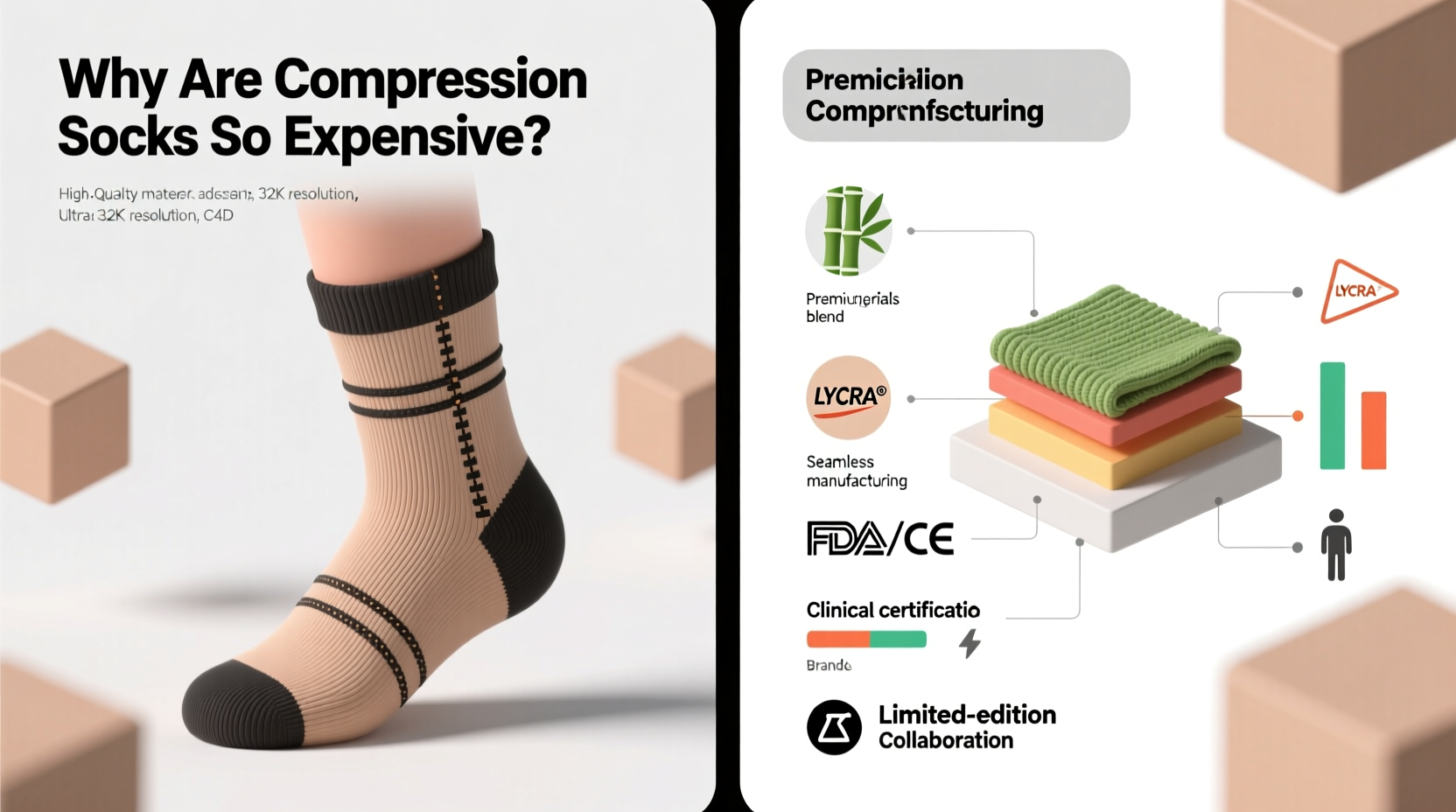
Compression socks apply graduated pressure—tightest at the ankle and gradually decreasing up the calf—to encourage blood flow back to the heart. This mechanism reduces venous pooling, minimizes leg fatigue, and lowers the risk of deep vein thrombosis (DVT), especially during long periods of inactivity. To achieve this safely and effectively, the socks must meet strict medical standards.
The U.S. Food and Drug Administration (FDA) classifies medical-grade compression socks as Class I or Class II medical devices, depending on their pressure level. This classification means manufacturers must adhere to rigorous testing, quality control, and documentation protocols. These regulatory requirements add significant overhead that is reflected in the final retail price.
“Medical compression garments aren’t fashion accessories—they’re engineered tools. The precision required in knitting tension, elasticity, and durability makes them far more complex than standard apparel.” — Dr. Laura Simmons, Vascular Health Specialist
Key Factors That Drive Up the Cost
Several interrelated elements contribute to the high price of compression socks. Below is a detailed look at each factor:
1. High-Performance Materials
Compression socks use specialized synthetic fibers like nylon, spandex (Lycra), and microfiber blends engineered for durability, moisture-wicking, and consistent elasticity. These materials maintain compression levels over time, even after repeated washing. Cheaper fabrics lose their stretch within weeks, rendering the sock ineffective.
Many premium brands incorporate antimicrobial treatments (e.g., silver ions) to reduce odor and bacterial growth—especially important for users wearing them daily. These additives increase production costs but enhance comfort and hygiene.
2. Precision Manufacturing and Knitting Technology
Unlike regular socks made on standard knitting machines, compression socks require computer-controlled circular knitting with tight gauge tolerances. Each sock must deliver exact millimeters of mercury (mmHg) of pressure at specific points. A variance of even 5% can compromise therapeutic effectiveness.
Manufacturers invest in high-end machinery capable of producing seamless constructions, reinforced heels and toes, and gradient compression zones. These advanced techniques ensure comfort and consistent performance but raise production expenses significantly.
3. Medical Certification and Compliance
To be sold as medical-grade, compression socks must comply with international standards such as ISO 10993 (biocompatibility) and undergo clinical testing to verify pressure delivery. In the U.S., FDA registration requires submission of device listings, adherence to Good Manufacturing Practices (GMP), and periodic audits.
These processes involve legal fees, lab testing, and ongoing compliance monitoring—all of which are factored into pricing. Non-certified “compression-style” socks bypass these costs, but lack reliability and consistency.
4. Brand Reputation and Clinical Trust
Established brands like Jobst, Sigvaris, and Medi have spent decades building trust with healthcare providers. Doctors recommend these brands because they consistently meet clinical expectations. This reputation allows them to command premium prices.
Smaller or generic brands may offer lower prices, but often cut corners on material quality or calibration accuracy. For users relying on compression for conditions like lymphedema or chronic venous insufficiency, inconsistent performance can lead to complications.
5. Limited Competition and Insurance Gaps
The medical compression market is relatively niche, dominated by a few large European and American manufacturers. With limited competition, pricing power remains concentrated among top players.
Additionally, while some insurance plans cover compression garments for diagnosed conditions, many patients pay out-of-pocket due to restrictive eligibility rules or high deductibles. This lack of widespread reimbursement removes downward pressure on prices.
Cost Comparison: Medical vs. Athletic vs. Fashion Compression
| Type | Pressure Level (mmHg) | Price Range (per pair) | Regulated? | Best For |
|---|---|---|---|---|
| Medical-Grade | 20–30 or 30–40 | $40–$80 | Yes (FDA/CE) | Lymphedema, DVT prevention, post-surgery recovery |
| Athletic/Performance | 15–20 | $25–$45 | No | Recovery, endurance training, travel |
| Fashion/Support Socks | 10–15 | $10–$25 | No | Mild tiredness, light swelling |
Mini Case Study: Sarah’s Experience with Post-Surgery Recovery
Sarah, a 58-year-old teacher from Portland, was prescribed 30–40 mmHg compression socks after knee replacement surgery. Her doctor recommended a Sigvaris pair priced at $72. Initially hesitant, she considered buying a cheaper alternative online for $22. After two weeks, the cheaper socks lost their elasticity and caused discomfort around her calves.
She switched to the medical-grade pair and noticed immediate improvement: reduced swelling, better mobility, and no skin irritation. Her vascular therapist explained that the subpar socks weren’t delivering consistent pressure, undermining her recovery. Though costly, the investment paid off in faster healing and fewer complications.
How to Choose Smartly Without Overpaying
You don’t need to spend top dollar in every case. Here’s how to make a cost-effective decision based on your needs:
- Assess your medical need: If you have a diagnosed circulatory condition, invest in FDA-cleared medical-grade socks.
- Check for insurance coverage: Ask your provider if compression garments are covered under durable medical equipment (DME).
- Buy in bundles: Many brands offer discounts when purchasing 2–3 pairs together.
- Look for patient assistance programs: Some manufacturers offer rebates or coupons via their websites.
- Consider refurbished or open-box options: Authorized sellers sometimes offer lightly used medical socks at reduced prices.
Checklist: Buying Compression Socks on a Budget
- Confirm whether you need medical-grade compression (ask your doctor).
- Compare mmHg ratings—don’t over-compress.
- Verify FDA or CE certification for medical models.
- Read return policies—fit is critical.
- Sign up for brand newsletters to receive discount alerts.
- Avoid Amazon third-party sellers unless they are authorized retailers.
- Wash gently and air dry to extend lifespan (can last 3–6 months with care).
Frequently Asked Questions
Do expensive compression socks really work better?
Yes, when it comes to medical-grade socks. Higher-priced brands typically use superior materials, tighter manufacturing tolerances, and undergo clinical validation. Studies show that cheaper alternatives often fail to maintain prescribed pressure after just a few washes.
Can I wear compression socks every day?
Yes, if they’re properly fitted and prescribed for daily use. However, remove them before sleeping unless directed otherwise by a physician. Daily wear is common for people with varicose veins, edema, or jobs requiring prolonged standing.
How long do compression socks last?
Most medical-grade socks last 3 to 6 months with daily use. Elasticity degrades over time, reducing effectiveness. Replacing them regularly ensures consistent therapeutic benefit.
Final Thoughts: Value Over Price
The high cost of compression socks reflects their role as functional medical tools, not mere accessories. While the sticker shock is real, viewing them as preventive healthcare investments changes the perspective. Proper compression can reduce hospital visits, improve athletic recovery, and enhance quality of life for those with chronic conditions.
Instead of chasing the lowest price, focus on value: accurate pressure delivery, durability, comfort, and trusted sourcing. When chosen wisely, compression socks deliver returns far beyond their initial cost.




 浙公网安备
33010002000092号
浙公网安备
33010002000092号 浙B2-20120091-4
Comments
No comments yet. Why don't you start the discussion?