
In the United States, the process of determining cause and manner of death often falls to a coroner—yet unlike most medical professionals involved in public health, many coroners are not required to be doctors. Even more striking: they are frequently elected by voters. This raises an important question: why are coroners elected, and what does this mean for the accuracy, independence, and integrity of death investigations?
The elected coroner system is a uniquely American institution with deep historical roots. While some states have moved toward a medical examiner model—a physician-led, appointed system—many counties still rely on elected officials to oversee death certification and investigations. Understanding why this system persists requires examining its origins, structure, strengths, and flaws.
Origins of the Elected Coroner System
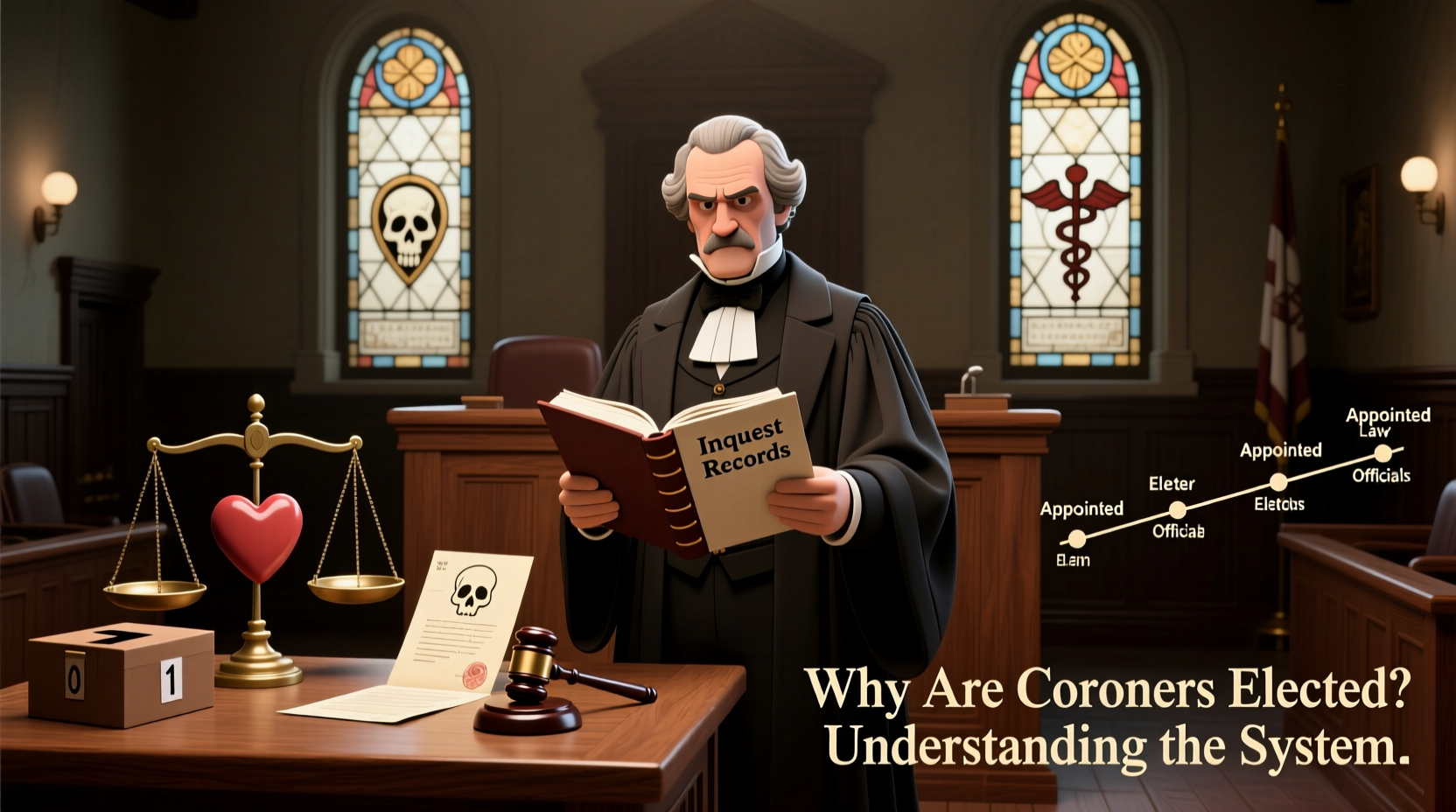
The office of the coroner dates back to 12th-century England, where the role was created to protect the financial interests of the Crown. The term “coroner” derives from “crowner,” a royal official tasked with investigating sudden deaths, especially those involving potential property forfeiture or criminal activity. When English common law was adopted in colonial America, the position came with it.
By the 1800s, the coroner had become a local political office in most U.S. jurisdictions. Unlike today’s expectations of forensic expertise, early coroners were typically laymen—farmers, sheriffs, or justices of the peace—with no medical training. Their primary duties included holding inquests, certifying deaths, and sometimes seizing property from deceased individuals.
The persistence of election reflects this legacy. At a time when local governance was paramount, communities preferred to choose their own officials rather than accept state-appointed ones. This tradition of local control remains a key reason why coroners are still elected in over 1,000 counties across 27 states.
How the Coroner System Works Today
In modern practice, the responsibilities of a coroner can include:
- Determining the cause and manner of death (natural, accidental, homicide, suicide, undetermined)
- Authorizing autopsies and overseeing forensic examinations
- Releasing bodies to families or funeral homes
- Working with law enforcement and medical examiners
- Testifying in court
- Issuing death certificates
However, unlike medical examiners—who are board-certified forensic pathologists—coroners may have no formal medical education. In states like Kentucky, Colorado, and Michigan, coroners only need a high school diploma and residency in the county. Training, if provided, is often minimal and on-the-job.
This creates a fragmented system. One county might have a physician serving as coroner; another might elect a former police officer with no medical background. The inconsistency undermines national standards for death investigation and can lead to misclassification of deaths, particularly in complex cases involving drugs, trauma, or foul play.
Coroner vs. Medical Examiner: A Key Comparison
| Feature | Coroner | Medical Examiner |
|---|---|---|
| Selection Method | Elected by voters | Appointed based on qualifications |
| Medical Training Required? | No (in most states) | Yes (must be a licensed physician, usually forensic pathologist) |
| Typical Background | Layperson, law enforcement, funeral director | Medical doctor with forensic specialization |
| Autopsy Authority | May contract out or delegate | Performs or supervises autopsies directly |
| System Prevalence | Common in rural counties | Found in urban and reform-minded areas |
Arguments for and Against Electing Coroners
Supporters of the elected coroner model argue that it promotes accountability and local representation. Because coroners interact with grieving families, law enforcement, and courts, having an official who answers directly to the public ensures transparency and responsiveness.
Critics, however, point to serious risks. Without mandatory medical training, elected coroners may lack the expertise to interpret toxicology reports, recognize signs of abuse, or distinguish between natural causes and homicide. Misdiagnosed deaths can obstruct justice, delay insurance claims, and erode public trust.
“Electing a coroner without requiring medical knowledge is like electing a surgeon without requiring a medical license.” — Dr. Michael Baden, Former Chief Medical Examiner of New York City
In 2018, a report by ProPublica and NPR found that thousands of deaths across the U.S. were misclassified due to inadequate oversight in coroner systems. In one case, a man who died from a perforated ulcer was ruled a homicide due to confusion over autopsy findings—an error that triggered a wrongful police investigation.
A Real Case: The Kentucky Example
In rural Kentucky, where coroners are elected and not required to be physicians, a 2020 incident highlighted systemic vulnerabilities. A county coroner without medical training certified a death as “accidental overdose” based on circumstantial evidence, declining to order an autopsy. Later, toxicology results revealed no drugs in the system. An independent review concluded the actual cause was undiagnosed heart disease.
The misclassification delayed life insurance benefits for the family and obscured a potential hereditary condition affecting other relatives. While the coroner acted in good faith, the lack of standardized training and oversight contributed to a preventable error.
Steps Toward Reform: Modernizing Death Investigation
Given the stakes involved, several states have reformed or proposed changes to their death investigation systems. The following steps outline a path toward greater accuracy and professionalism:
- Require Minimum Medical Qualifications: Mandate that coroners be physicians, preferably with forensic pathology training.
- Replace Election with Appointment: Shift to a merit-based appointment system overseen by state health or justice departments.
- Standardize Training and Certification: Implement uniform continuing education and accreditation programs.
- Fund Regional Forensic Centers: Allow smaller counties to pool resources and access qualified pathologists.
- Improve Data Transparency: Require public reporting of death investigation outcomes and error rates.
Frequently Asked Questions
Can anyone become a coroner in the U.S.?
In many states, yes. Requirements vary widely. Some counties only require a high school diploma and voter registration. Others mandate EMT certification, funeral director experience, or even medical degrees. Always check your local statutes.
Why hasn’t the U.S. switched entirely to medical examiners?
Political inertia, budget constraints, and local control traditions have slowed reform. Rural areas often lack access to forensic pathologists, making the elected lay coroner a practical—if imperfect—solution. However, federal grants and tele-forensics are helping bridge the gap.
Are elected coroners more corrupt or less accurate?
Not necessarily. Many elected coroners serve honorably and pursue extensive training. However, the absence of universal standards increases variability in quality. Accountability through elections doesn’t always translate to technical competence.
Conclusion: Rethinking a Legacy System
The elected coroner system is a relic of medieval governance that persists in modern America. While it embodies democratic ideals of local accountability, it often fails to meet contemporary standards of scientific rigor and public health safety. As forensic science advances and demands for transparency grow, the disconnect between tradition and expertise becomes harder to justify.
Understanding why coroners are elected is the first step toward meaningful reform. Whether through legislative action, professional advocacy, or public awareness, citizens have a role in ensuring that death investigations are conducted with both dignity and precision. The goal should not be to eliminate local input, but to align it with the highest standards of medical and legal integrity.




 浙公网安备
33010002000092号
浙公网安备
33010002000092号 浙B2-20120091-4
Comments
No comments yet. Why don't you start the discussion?