
Credit card interest rates often seem shockingly high—sometimes exceeding 25% or even 30%. For many consumers, carrying a balance can quickly become a financial burden, with interest charges piling up faster than expected. But these elevated rates don’t exist in a vacuum. They are shaped by a combination of economic forces, risk assessments, and industry practices. Understanding why credit card interest rates are so high is essential for making informed financial decisions and avoiding long-term debt traps.
How Credit Card Interest Works
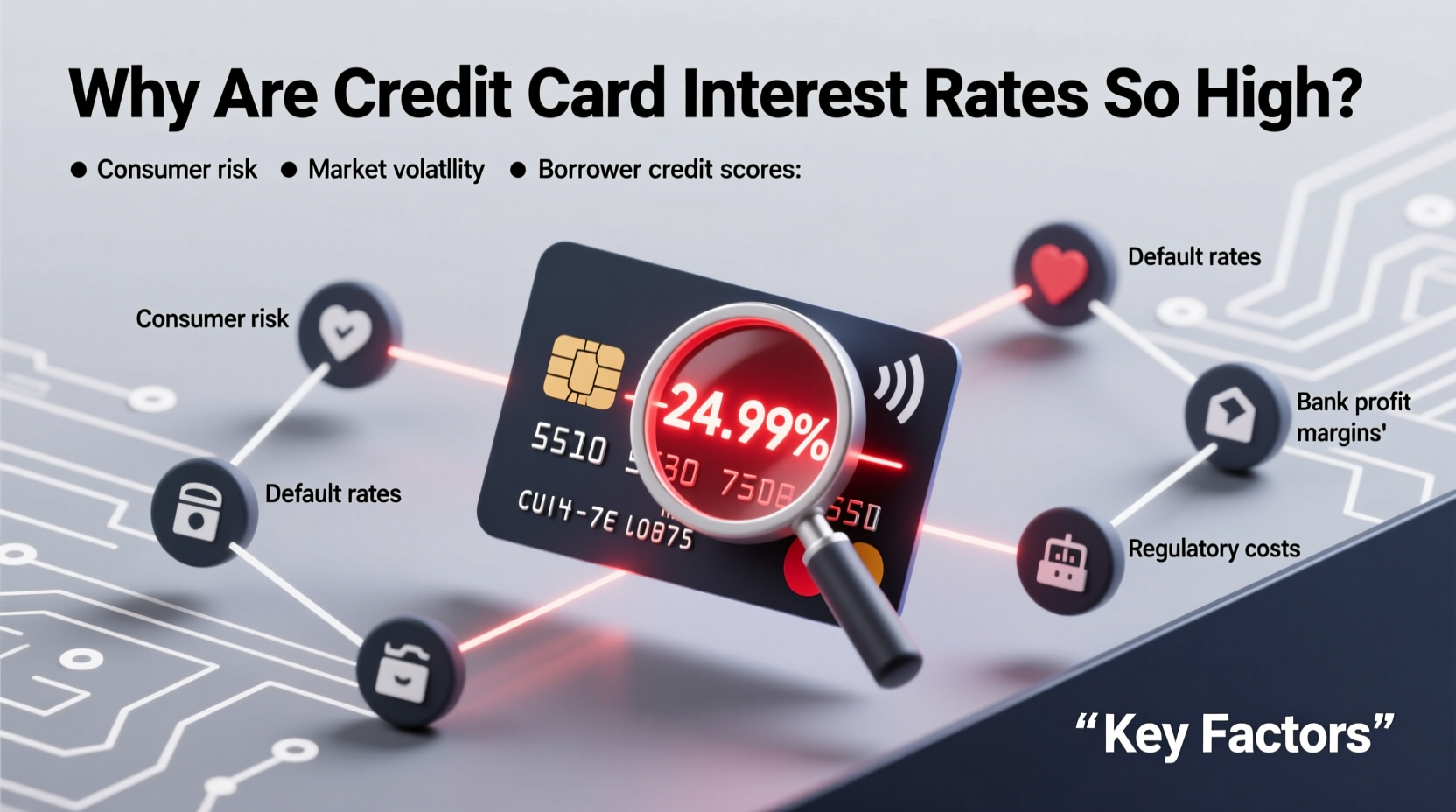
Credit card interest is typically expressed as an Annual Percentage Rate (APR), which represents the yearly cost of borrowing money. Unlike installment loans, where payments are fixed and predictable, credit card balances revolve—meaning you can carry a balance from month to month. If you don’t pay your full statement balance by the due date, interest is applied to the remaining amount.
Interest is usually calculated daily using a daily periodic rate derived from the APR. For example, a card with a 24% APR has a daily rate of about 0.0657%. Over time, this compounds, significantly increasing what you owe—even if your spending habits haven’t changed.
Key Factor 1: Risk-Based Pricing and Default Rates
Lenders charge higher interest rates primarily because credit cards are unsecured loans—there’s no collateral backing them. If a borrower defaults, the issuer has limited recourse to recover funds. This inherent risk is especially pronounced given that millions of Americans have low or unstable incomes, poor credit histories, or unpredictable repayment behaviors.
According to the Federal Reserve, average credit card charge-off rates (accounts written off as uncollectible) fluctuate between 2% and 5%, depending on economic conditions. To offset these losses, issuers spread the cost across all borrowers, including those who pay on time. In essence, responsible users help subsidize the risk posed by delinquent accounts.
“Credit card lending is inherently risky because there’s no asset securing the loan. High interest rates are one way issuers manage that risk.” — Dr. Laura Simmons, Consumer Finance Economist at the Brookings Institution
Key Factor 2: The Role of the Federal Funds Rate
The Federal Reserve’s benchmark interest rate directly influences credit card APRs. Most credit cards have variable rates tied to the prime rate, which is typically set at the federal funds rate plus a margin. When inflation rises and the Fed increases rates to cool the economy, credit card rates follow suit.
For example, between 2022 and 2023, the Fed raised interest rates aggressively to combat inflation. As a result, the average credit card APR climbed from around 16% to over 24%, reaching historic highs. Even though inflation has begun to stabilize, these elevated rates persist because lenders lock in margins during periods of economic uncertainty.
| Year | Average Credit Card APR | Federal Funds Rate (Target) |
|---|---|---|
| 2020 | 14.5% | 0.00–0.25% |
| 2021 | 15.8% | 0.00–0.25% |
| 2022 | 18.3% | 4.25–4.50% |
| 2023 | 24.1% | 5.25–5.50% |
| 2024 | 24.7% | 5.25–5.50% |
This correlation shows that macroeconomic policy plays a major role in determining how much you’ll pay when carrying a balance.
Key Factor 3: Profitability and Business Model
Credit card companies operate on a thin-margin, high-volume model. While interchange fees (paid by merchants) generate revenue, interest income is a primary profit driver—especially from customers who carry balances month after month.
Industry reports show that U.S. credit card issuers earned over $150 billion in interest income in 2023 alone. This profitability allows banks to offer rewards programs, sign-up bonuses, and premium travel benefits. However, these perks are largely subsidized by interest payments from less financially stable cardholders.
In effect, the system rewards convenience and spending but penalizes those who rely on credit out of necessity rather than choice. This dynamic contributes to the persistence of high rates, as lowering them would disrupt the entire ecosystem of rewards and incentives.
Key Factor 4: Creditworthiness and Individual Risk Assessment
Not all cardholders face the same rates. Issuers use credit scores, income levels, and repayment history to assign personalized APRs. Those with lower credit scores are deemed higher risk and charged accordingly.
- Excellent credit (750+): APRs may range from 14% to 19%
- Fair credit (650–699): APRs often range from 22% to 27%
- Poor credit (below 600): APRs can exceed 30%
This tiered pricing means that individuals already struggling financially are often hit hardest by high interest, creating a cycle that’s difficult to escape.
Real-World Example: Maria’s Experience with Rising Rates
Maria, a freelance graphic designer from Austin, Texas, maintained a $3,000 balance on her general-purpose credit card after a medical emergency. Her card initially had a 19% APR in early 2022. Over the next 18 months, as the Fed raised rates, her APR increased three times—eventually reaching 28.99%.
Despite making minimum payments of around $90 per month, her balance barely decreased. After running a payoff simulation, she realized it would take her nearly 15 years to clear the debt if she didn’t increase her payments. This experience prompted her to transfer her balance to a 0% intro APR card and commit to a strict repayment plan.
Maria’s story reflects a common scenario: rising interest rates disproportionately affect those without emergency savings or access to lower-cost credit options.
Strategies to Mitigate High Interest Costs
While systemic factors keep credit card rates high, consumers aren’t powerless. Several practical steps can reduce or eliminate interest expenses.
- Pay in full every month: Avoid interest altogether by never carrying a balance.
- Use balance transfer cards: Move existing debt to a card offering 0% introductory APR for 12–21 months.
- Negotiate your rate: Call your issuer and request a lower APR, especially if you have a strong payment history.
- Improve your credit score: Higher scores qualify you for lower-rate cards and better terms.
- Consider personal loans: Fixed-rate installment loans often have lower APRs than credit cards for large balances.
FAQ: Common Questions About Credit Card Interest
Why do some credit cards have such high introductory rates?
Some cards marketed to people with poor credit come with very high APRs—sometimes above 30%—because the issuer views the borrower as high-risk. These cards may also have high fees, making them expensive options unless used cautiously and paid off quickly.
Can my credit card interest rate go down over time?
Yes. Some issuers review accounts periodically and may lower your APR if you maintain consistent on-time payments. You can also request a rate reduction or qualify for better offers as your credit improves.
Are high interest rates illegal?
No. While usury laws limit interest rates in some states, most credit card issuers operate under national banking regulations or are headquartered in states with lenient caps (like South Dakota or Delaware). This allows them to charge high rates nationwide.
Conclusion: Take Control of Your Credit Costs
High credit card interest rates are not arbitrary—they stem from real economic risks, monetary policy, and business models designed to maximize profitability. But understanding these forces empowers you to make smarter choices. Whether it’s avoiding revolving balances, transferring debt strategically, or improving your credit profile, proactive management can save hundreds or even thousands of dollars in interest over time.




 浙公网安备
33010002000092号
浙公网安备
33010002000092号 浙B2-20120091-4
Comments
No comments yet. Why don't you start the discussion?