
Crows are among the most intelligent and socially complex birds in the animal kingdom. Their sudden appearances in large numbers—perched silently in trees, circling overhead, or calling in unison—often spark curiosity, concern, or even superstition. But far from being omens of doom, these gatherings are rooted in practical, evolutionary behaviors. Understanding why crows gather offers a window into their sophisticated social structures, communication systems, and survival instincts. This article explores the science behind crow congregations, decoding their actions with insights from ornithology and behavioral ecology.
The Science Behind Crow Roosting Behavior
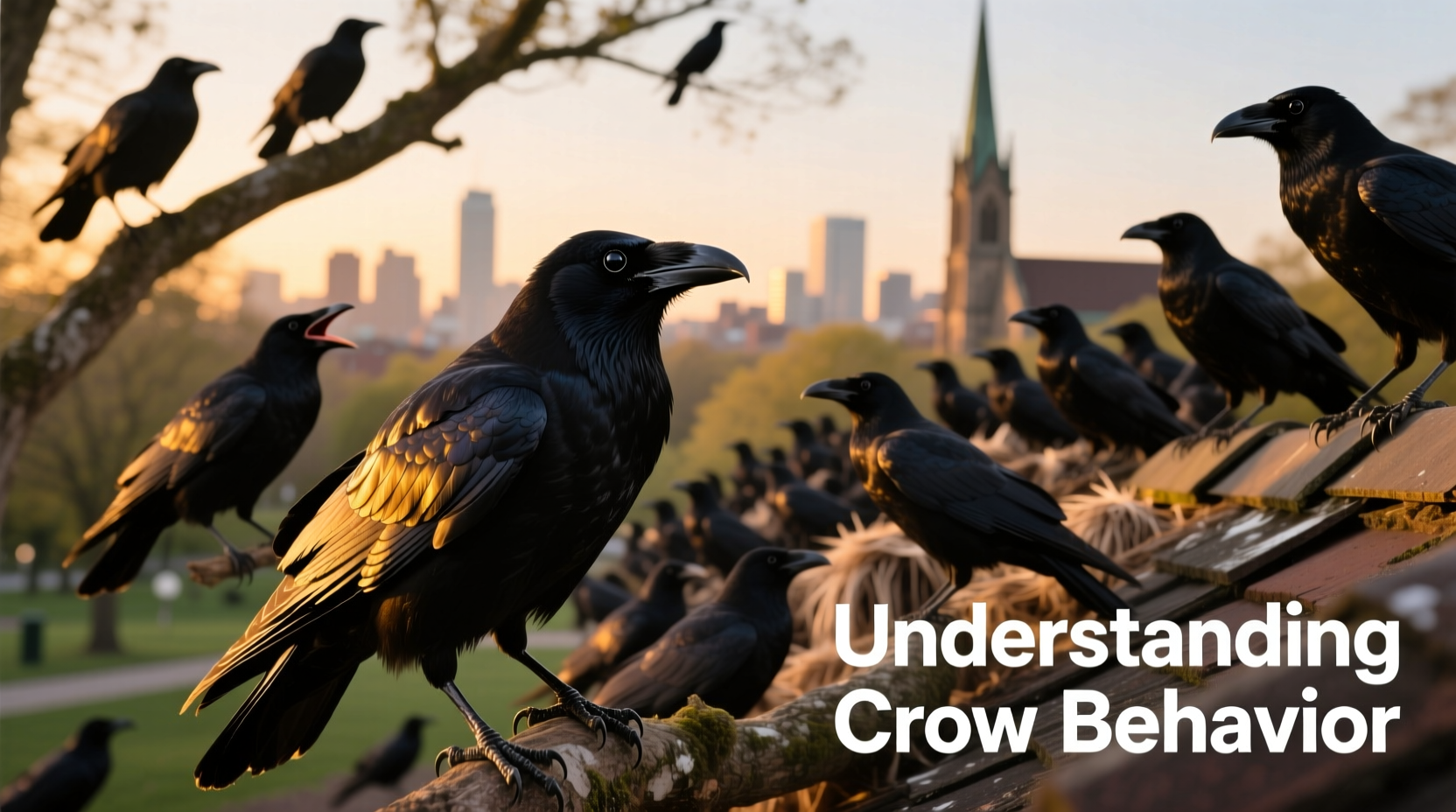
One of the most common reasons for large gatherings of crows is communal roosting. Every evening, especially during fall and winter, hundreds or even thousands of crows converge on specific sites to spend the night together. These roosts can form in urban parks, wooded areas, or near reliable food sources. The behavior serves multiple purposes: safety in numbers, information sharing, and thermoregulation.
Roosting in groups reduces individual risk from nocturnal predators like owls. With more eyes and ears, threats are detected earlier. Additionally, younger or less experienced crows benefit from proximity to older, wiser individuals who may lead them to productive feeding grounds the next day. Scientists believe that crows use roosts as “information centers,” where birds observe others’ departure directions at dawn to locate food sources.
Social Structure and Communication in Crow Communities
Crows live in tight-knit family units and extended social networks. A single flock often consists of related individuals—parents, offspring, and sometimes even siblings from previous broods—who cooperate in raising young, defending territory, and finding food. Their ability to recognize individual faces, remember past interactions, and warn others about threats highlights their advanced cognitive abilities.
Vocalizations play a central role in coordination. Crows have a wide repertoire of calls: short alarm caws, soft contact notes between mates, and complex sequences that may convey detailed information about predator type or location. Researchers have observed that crows react differently to recorded calls depending on context—indicating they understand not just *what* is said, but potentially *why*.
“Crows exhibit social learning and cultural transmission similar to primates. They don’t just react—they assess, communicate, and adapt.” — Dr. John Marzluff, Wildlife Scientist and Author of *In the Company of Crows and Ravens*
Why Do Crows Gather Around Dead Crows?
A particularly striking behavior is the crow’s response to death. When a crow dies, others often gather around the body, calling loudly and remaining nearby for hours. This isn’t mourning in the human sense, but rather a learned survival strategy. Scientists refer to this as a “teachable moment.” By investigating the site of a dead crow, living birds learn to associate the location, sights, or smells with danger—especially if a predator or human was involved.
In controlled experiments, researchers placed taxidermied crow corpses in various locations and observed that wild crows avoided those areas for days, even weeks. Some returned repeatedly to scold the dummy, suggesting long-term memory and emotional engagement. This behavior reinforces group awareness and helps prevent future casualties.
Step-by-Step: How Crows Respond to Danger
- A crow dies unexpectedly in a public space.
- Nearby crows emit loud, high-pitched alarm calls.
- Additional crows fly in, forming a loose circle around the body.
- They vocalize intensely for up to an hour, attracting more individuals.
- After dispersal, many avoid the area for days.
- Some crows later scold humans or animals associated with the incident.
Seasonal Patterns in Crow Gatherings
Crow behavior shifts throughout the year, influenced by breeding cycles, food availability, and migration patterns. Understanding these rhythms explains when and why gatherings occur:
| Season | Gathering Type | Purpose |
|---|---|---|
| Spring | Family groups | Breeding, nest defense, cooperative chick-rearing |
| Summer | Loose flocks | Foraging in open fields, teaching juveniles |
| Fall | Mass roosts (hundreds–thousands) | Thermal warmth, safety, information exchange |
| Winter | Large urban roosts | Shelter from cold, reduced predation |
In autumn, juvenile crows leave their natal territories and join larger aggregations. These wandering flocks eventually settle into regional roosts, some of which persist for decades. Cities are increasingly popular due to warmer microclimates, fewer predators, and abundant waste-based food sources.
Real Example: The Tacoma Crow Roost
In downtown Tacoma, Washington, a massive crow roost has formed each winter for over 25 years. At its peak, it hosts more than 15,000 crows. Local residents initially complained about noise and droppings, but city officials partnered with biologists to educate the public. Signs were posted explaining crow behavior, and guided evening viewings became community events. The case demonstrates how understanding animal behavior can transform fear into fascination—and even civic pride.
The project included acoustic monitoring and tracking studies, revealing that many crows traveled up to 50 miles daily from suburban feeding grounds to return to the urban roost. This long-distance fidelity underscores the importance of stable roost sites in crow ecology.
Common Misconceptions About Crow Gatherings
Despite growing scientific knowledge, myths persist. Many people interpret crow gatherings as supernatural signs or harbingers of death. While crows are associated with mystery in folklore—from Celtic legends to Japanese mythology—their real-world behaviors are grounded in biology, not mysticism.
- Myth: Crows gather to curse people or predict misfortune.
Reality: They respond to environmental cues, not omens. - Myth: Large groups mean disease or danger.
Reality: Healthy populations naturally aggregate; outbreaks are rare and localized. - Myth: Crows are pests with no ecological value.
Reality: They clean up carrion, control insect populations, and disperse seeds.
How to Coexist Peacefully with Gathering Crows
If crows frequent your neighborhood, there are humane ways to manage interactions without harming the birds:
- Do not feed crows regularly—this encourages dependency and littering.
- Secure trash bins to reduce scavenging incentives.
- Protect fruit trees with netting during harvest season.
- Report injured crows to local wildlife rehabilitators.
- Observe quietly—crows appreciate respectful distance.
FAQ: Common Questions About Crow Gatherings
Why do crows caw so loudly when they gather?
Loud vocalizations help maintain group cohesion, signal danger, and establish social hierarchies. Different call patterns convey specific messages—scientists are still decoding their full complexity.
Are crow gatherings dangerous to humans or pets?
No. Crows rarely attack unless defending nests during breeding season. Even then, incidents are minor and avoidable by giving space. They pose no disease risk under normal conditions.
Can I discourage crows from roosting near my home?
Temporarily, yes—using visual deterrents like wind chimes, shiny ribbons, or timed lighting. Permanent removal is discouraged and often illegal under migratory bird protections.
Conclusion: Learning from the Intelligence of Crows
Crows gather not out of chaos or menace, but as part of a deeply evolved strategy for survival, communication, and community. Their behavior reflects problem-solving skills once thought exclusive to mammals. By observing them with curiosity rather than fear, we gain insight into the complexity of non-human intelligence and our shared ecosystems.
The next time you see a swirl of crows descending into the treetops at dusk, pause and watch. You’re witnessing a network of informed, social beings making decisions based on memory, trust, and collective wisdom. Respect their space, learn from their presence, and consider sharing your observations with local birding groups or citizen science projects.




 浙公网安备
33010002000092号
浙公网安备
33010002000092号 浙B2-20120091-4
Comments
No comments yet. Why don't you start the discussion?