
Notarization is a routine step in many legal and financial processes, yet its significance often goes unnoticed until something goes wrong. Whether you're signing a real estate deed, preparing a power of attorney, or submitting an affidavit, a notary public may be required to verify your identity and willingness to sign. But why are documents notarized in the first place? The answer lies in trust, verification, and legal protection. Notarization serves as a critical checkpoint that helps deter fraud, confirm identities, and ensure the integrity of important transactions.
The Legal Purpose of Notarization
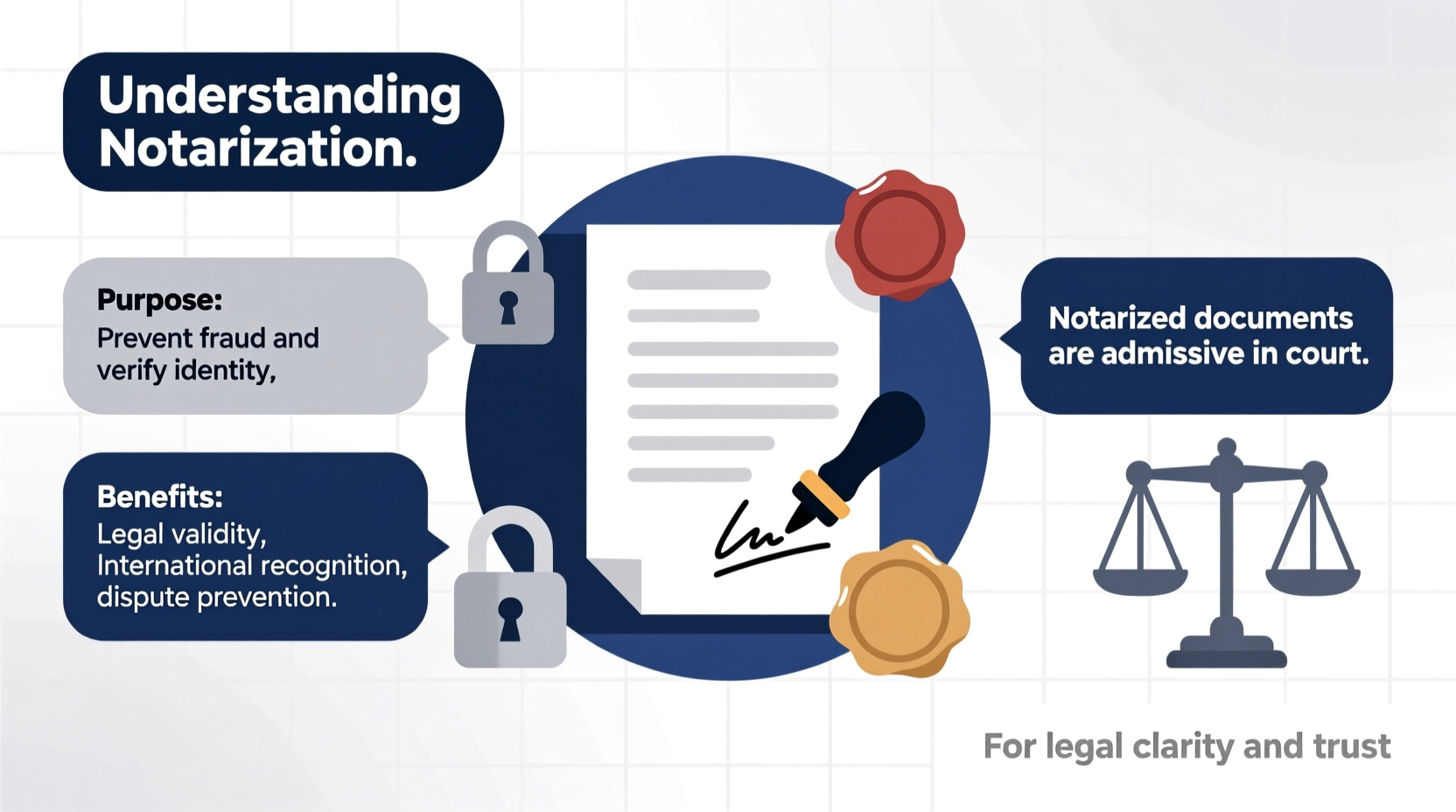
At its core, notarization exists to prevent deception and forgery. A notary public is a state-commissioned official authorized to act as an impartial witness during the signing of crucial documents. Their primary role is not to review the content of the document but to verify the identity of the signers, ensure they are signing voluntarily, and confirm they understand the document’s implications.
This process adds a layer of authenticity that courts, government agencies, and financial institutions rely on. Without notarization, it would be far easier for individuals to forge signatures, impersonate others, or claim they were coerced into signing agreements. In legal disputes, a properly notarized document carries greater weight because it includes verified proof of execution.
“Notarization doesn’t make a document ‘legal,’ but it does make it more credible and harder to challenge in court.” — James R. Thompson, Former State Notary Public Administrator
Key Benefits of Notarizing Documents
While not every document requires notarization, those that do benefit from several critical advantages:
- Fraud Prevention: Notaries verify photo ID and may use biometric checks or knowledge-based authentication to confirm identity, making impersonation significantly more difficult.
- Legal Recognition: Many jurisdictions require certain documents—such as wills, deeds, and affidavits—to be notarized before they can be filed or enforced.
- Enhanced Credibility: A notarized signature signals that due diligence was performed, increasing trust among parties, especially in cross-border or high-value transactions.
- Admissibility in Court: Courts often accept notarized affidavits and declarations without requiring the signer to appear in person, streamlining legal proceedings.
- Prevention of Coercion: Notaries assess whether signers appear under duress or lack mental capacity, helping protect vulnerable individuals.
Common Documents That Require Notarization
Not all paperwork needs a notary, but certain types routinely do. Below is a table summarizing frequently notarized documents and their typical use cases:
| Document Type | Purpose | When Notarization Is Required |
|---|---|---|
| Real Estate Deeds | Transferring property ownership | Always required for recording with county offices |
| Power of Attorney | Authorizing someone to act on your behalf | In most states, durable POAs must be notarized |
| Wills and Living Wills | Outlining end-of-life wishes or asset distribution | Often notarized (though some states allow witnesses only) |
| Affidavits | Sworn written statements used in court | Must be notarized to be admissible |
| Loan Agreements | Binding repayment terms between parties | Required by lenders for enforceability |
| International Documents | Used abroad (e.g., adoption papers, visas) | Often require notarization plus apostille certification |
Step-by-Step Guide to Getting a Document Notarized
Understanding the notarization process can help you prepare efficiently and avoid delays. Follow these steps:
- Confirm if Notarization Is Needed: Check legal requirements based on document type and jurisdiction. Some forms specify “must be notarized” at the bottom.
- Prepare the Document: Fill out all sections except the signature line. Never sign before meeting the notary.
- Gather Identification: Bring a current government-issued ID (e.g., driver’s license, passport) with your photo, signature, and expiration date.
- Visit a Notary Public: Find one at banks, law offices, UPS stores, or through mobile notary services. Appointments are recommended.
- Sign in the Notary’s Presence: The notary will watch you sign and complete their official certificate, including date, commission number, and seal.
- Receive the Completed Document: Keep the original in a secure location; provide copies as needed.
Mini Case Study: Preventing Identity Theft in Real Estate
In 2022, a homeowner in Arizona discovered that someone had attempted to refinance her home using a forged deed. Fortunately, the title company required notarization—and the notary flagged discrepancies in the ID presented. Further investigation revealed the imposter had used a fake driver’s license. Because the notary followed protocol, the fraudulent transaction was halted before closing.
This case illustrates how a simple verification step prevented significant financial loss and potential eviction. Without notarization, the forgery might have gone undetected until it was too late.
Do’s and Don’ts of Notarization
| Do’s | Don’ts |
|---|---|
| Bring a valid, unexpired photo ID | Never sign the document before meeting the notary |
| Ensure all blanks are filled or marked “N/A” | Don’t let the notary advise on legal content or wording |
| Verify the notary’s commission is current | Don’t assume all notaries offer the same services (e.g., electronic notarization) |
| Ask for a receipt or copy of the notarial journal entry if allowed | Don’t allow notarization if you’re unsure about the document’s meaning |
Frequently Asked Questions
Can a notary public refuse to notarize a document?
Yes. Notaries can and should refuse if the signer cannot prove identity, appears confused or coerced, the document is incomplete, or if the notary has a personal interest in the transaction. They are not permitted to notarize documents in which they are a party.
Is a notarized document legally binding?
Notarization itself does not make a document legally binding. The legality comes from proper formation—offer, acceptance, and consideration. However, notarization confirms the authenticity of signatures, which strengthens enforceability in court.
What’s the difference between notarization and legalization?
Notarization verifies the identity and willingness of a signer within a country. Legalization, such as an apostille under the Hague Convention, is an additional step that authenticates the notary’s authority for use in foreign countries.
Conclusion: Take Notarization Seriously
Notarization is more than a formality—it's a safeguard built into our legal system to uphold honesty and accountability. From protecting against fraud to enabling smoother legal processes, the role of a notary public is both practical and essential. Whether you're buying a home, planning your estate, or handling business contracts, taking the time to properly notarize documents protects your rights and ensures your intentions are clearly documented.




 浙公网安备
33010002000092号
浙公网安备
33010002000092号 浙B2-20120091-4
Comments
No comments yet. Why don't you start the discussion?