
Egg prices in the United States and many other countries have surged dramatically over the past few years, leaving consumers surprised at grocery checkout lines. Once a budget-friendly staple, eggs now often cost two or three times more than they did just a few years ago. This isn't due to a single cause but rather a convergence of several powerful economic, biological, and logistical forces. Understanding these factors helps clarify why such a basic food item has become unexpectedly expensive.
Avian Influenza Outbreaks and Flock Losses
The most immediate driver of egg price spikes has been the recurring outbreaks of highly pathogenic avian influenza (HPAI), commonly known as bird flu. Since 2022, the U.S. has experienced one of the worst bird flu epidemics in history, affecting tens of millions of commercial and backyard birds.
When an outbreak is detected, entire flocks must be culled to prevent further spread. The USDA reported that over 58 million birds were lost during the 2022–2023 outbreak alone — nearly 40% of which were egg-laying hens. This massive depopulation drastically reduced the number of laying hens, directly shrinking the national egg supply.
Rebuilding flocks takes time. It can take up to five months for new pullets (young hens) to mature and begin laying eggs consistently. During this gap, demand remains steady or even increases, creating upward pressure on prices.
“Avian flu has disrupted egg production like nothing we’ve seen since the 1980s. Recovery isn’t instant — it’s a months-long process.” — Dr. John Oxford, Virologist and Poultry Health Consultant
Inflation and Rising Production Costs
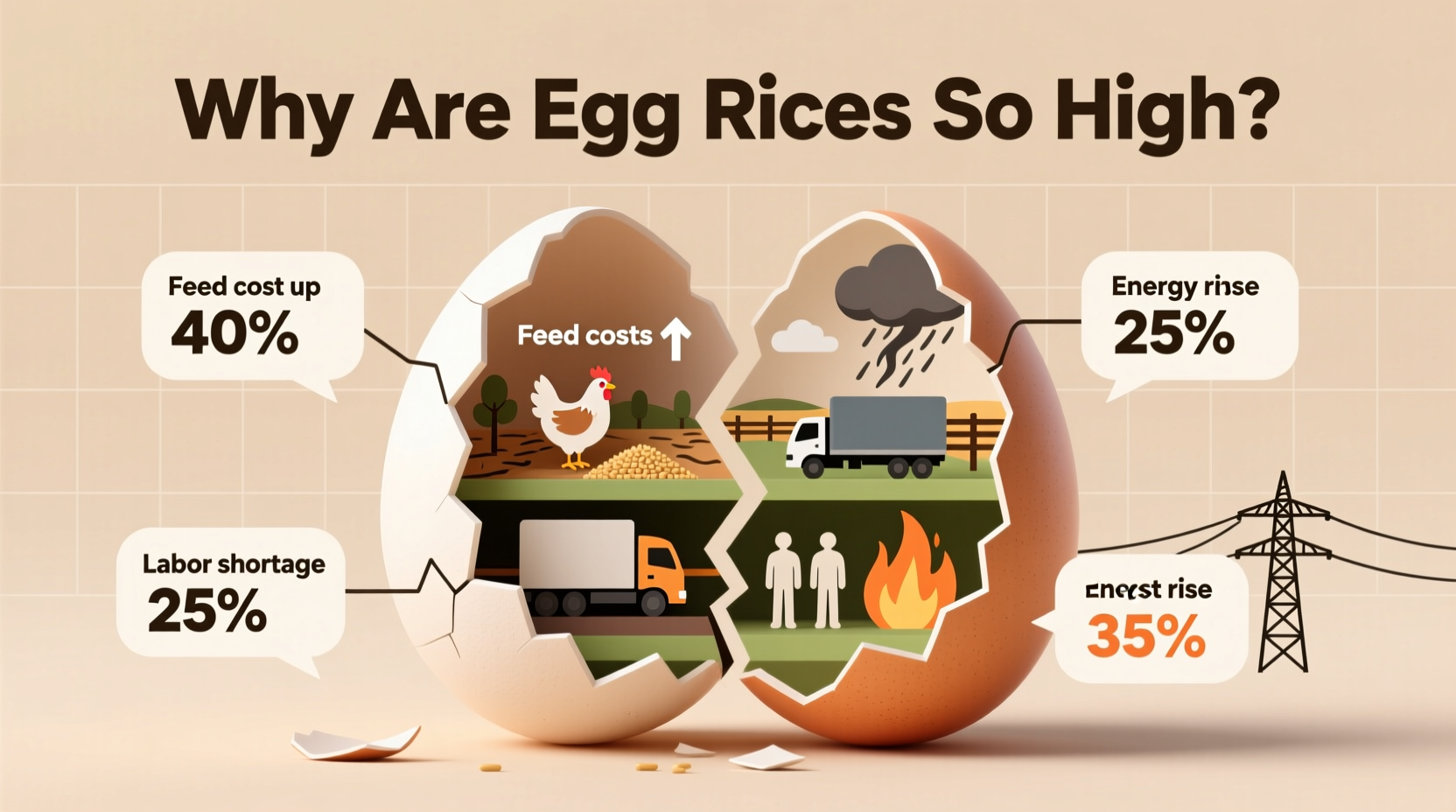
Beyond disease, broader economic trends have played a significant role. Inflation has driven up the cost of nearly every input required in egg production.
- Feed costs: Chickens consume large amounts of corn and soybean meal. Between 2020 and 2023, corn prices rose by over 50%, and soybeans increased by nearly 40% due to global supply disruptions and increased demand.
- Fuel and transportation: Distributing eggs requires refrigerated transport. With diesel prices spiking during global energy crises, shipping costs have risen substantially.
- Labor: Like many agricultural sectors, egg farms face labor shortages and increasing wages, further adding to operational expenses.
These cumulative costs are passed on to consumers. Even if supply had remained stable, egg prices would likely have increased due to inflationary pressures alone.
Supply Chain Disruptions and Processing Delays
The pandemic revealed vulnerabilities in food supply chains, and the egg industry was no exception. Processing plants faced temporary shutdowns due to worker illness, safety protocols, and equipment shortages. These delays created bottlenecks — eggs couldn’t be packed, graded, or shipped efficiently.
Additionally, the shift toward cage-free egg production, mandated by some states and retailers, required costly barn retrofits and slower transition timelines. While ethically positive, this transition temporarily reduced available laying space and added capital expenses for producers.
Smaller farms were hit hardest. Without the resources to absorb sudden losses or upgrade facilities quickly, many exited the market, reducing overall competition and concentrating supply among fewer, larger producers who could better manage volatility.
Consumer Demand Shifts and Panic Buying
Demand also plays a crucial role. Eggs are a versatile, protein-rich food popular across income levels. During economic uncertainty, people often turn to affordable proteins — ironically making eggs *more* desirable even as prices rise.
Seasonal spikes add further strain. For example, Easter traditionally sees a surge in demand for eggs used in baking and decorating. In 2022 and 2023, these seasonal peaks coincided with low supply due to bird flu, leading to extreme price hikes — in some regions, cartons exceeded $7 or $8.
Panic buying worsened the situation. When news of shortages spreads, consumers stock up, depleting shelves faster and distorting actual scarcity. Retailers respond by raising prices or imposing purchase limits, reinforcing the perception of shortage.
Environmental and Regulatory Pressures
Climate change is increasingly impacting agriculture. Extreme weather events — droughts affecting feed crops, heatwaves stressing hens — reduce productivity. Hens lay fewer eggs in high temperatures, and prolonged heat can increase mortality rates.
Regulatory changes also contribute. California’s Proposition 12 and similar laws in states like Massachusetts require more space per hen, effectively reducing the number of hens farms can house without costly infrastructure changes. Compliance is essential but expensive, especially for mid-sized operations.
Meanwhile, export demand has grown. The U.S. exported record volumes of eggs and egg products in 2022, partly to fill gaps in countries also affected by bird flu. While beneficial for farmers, exports reduce domestic availability and support higher prices at home.
| Factor | Impact on Egg Prices | Duration of Effect |
|---|---|---|
| Avian Influenza | Severe (reduced supply) | Months to years (flock recovery) |
| Feed & Energy Costs | High (ongoing inflation) | Ongoing |
| Supply Chain Issues | Moderate (processing delays) | Temporary, but recurring |
| Consumer Demand | High (panic buying, dietary shifts) | Short-term spikes |
| Regulatory Changes | Moderate (cage-free mandates) | Long-term structural |
How Long Will High Egg Prices Last?
The outlook is cautiously improving. As of late 2023 and into 2024, bird flu cases have declined, and flock numbers are recovering. The USDA reports that the national layer flock has returned to about 95% of pre-outbreak levels. However, full price normalization may take time.
Experts suggest that while prices may not return to pre-2022 levels permanently, they should stabilize between $3 and $5 per dozen for conventional eggs, depending on region and season. Organic and specialty eggs will likely remain higher due to greater production costs.
Step-by-Step: What You Can Do to Manage Egg Costs
- Buy in bulk when prices drop: Monitor weekly ads and stock up during promotions, freezing extra eggs if needed.
- Consider store brands: Generic labels often source from the same suppliers as name brands but cost less.
- Freeze raw eggs: Crack and beat eggs before freezing in ice cube trays (one cube ≈ one egg), then transfer to bags. They last up to a year.
- Switch formats: Liquid eggs or dried egg products can be more economical for cooking and baking.
- Check alternative stores: Warehouse clubs, ethnic markets, or local farms sometimes offer lower prices than supermarkets.
Mini Case Study: The Smith Family’s Grocery Adjustment
The Smiths, a family of four in Ohio, noticed their monthly egg spending jumped from $12 to over $30 in early 2023. After researching the causes, they adjusted their habits. They began buying generic large white eggs in 18-packs when on sale, froze beaten eggs for weekend breakfasts, and substituted applesauce or yogurt in recipes calling for eggs. They also joined a local farm co-op, where they now get a dozen pasture-raised eggs for $4.50 — below retail prices. Within three months, their egg-related costs dropped by 40%, despite continued high market prices.
FAQ
Are organic eggs worth the higher price?
It depends on your priorities. Organic eggs come from hens fed non-GMO, pesticide-free feed and typically have better living conditions. However, nutritionally, they are very similar to conventional eggs. If budget is tight, conventional eggs remain a nutritious and safe choice.
Can I substitute eggs in baking?
Yes. Common substitutes include mashed banana, unsweetened applesauce, yogurt, or commercial egg replacers. One-quarter cup usually replaces one egg. Results vary by recipe, so test in small batches first.
Why do egg prices vary so much between stores?
Retailers use eggs as loss leaders — selling below cost to attract customers. Others mark them up due to location, brand, or lack of competition. Always compare unit prices (price per ounce or per egg) rather than total package cost.
Conclusion: Staying Smart in a Volatile Market
Egg prices are high due to a perfect storm of disease, inflation, supply constraints, and shifting consumer behavior. While some factors are beyond individual control, informed choices can help mitigate the impact on household budgets. By understanding the reasons behind price increases, adjusting purchasing habits, and exploring alternatives, consumers can navigate this challenging landscape without sacrificing nutrition or convenience.




 浙公网安备
33010002000092号
浙公网安备
33010002000092号 浙B2-20120091-4
Comments
No comments yet. Why don't you start the discussion?