
In recent years, many shoppers have walked into grocery stores only to find empty shelves where cartons of eggs once stood. What was once a staple item available in abundance has become increasingly difficult to locate—often accompanied by steep price hikes. The phenomenon isn’t isolated to one region or store; it’s part of a broader national and global issue affecting food security and household budgets. Understanding why eggs are hard to find requires examining a complex web of factors including disease outbreaks, climate pressures, economic shifts, and supply chain fragility.
The Role of Avian Influenza in Egg Supply Disruptions
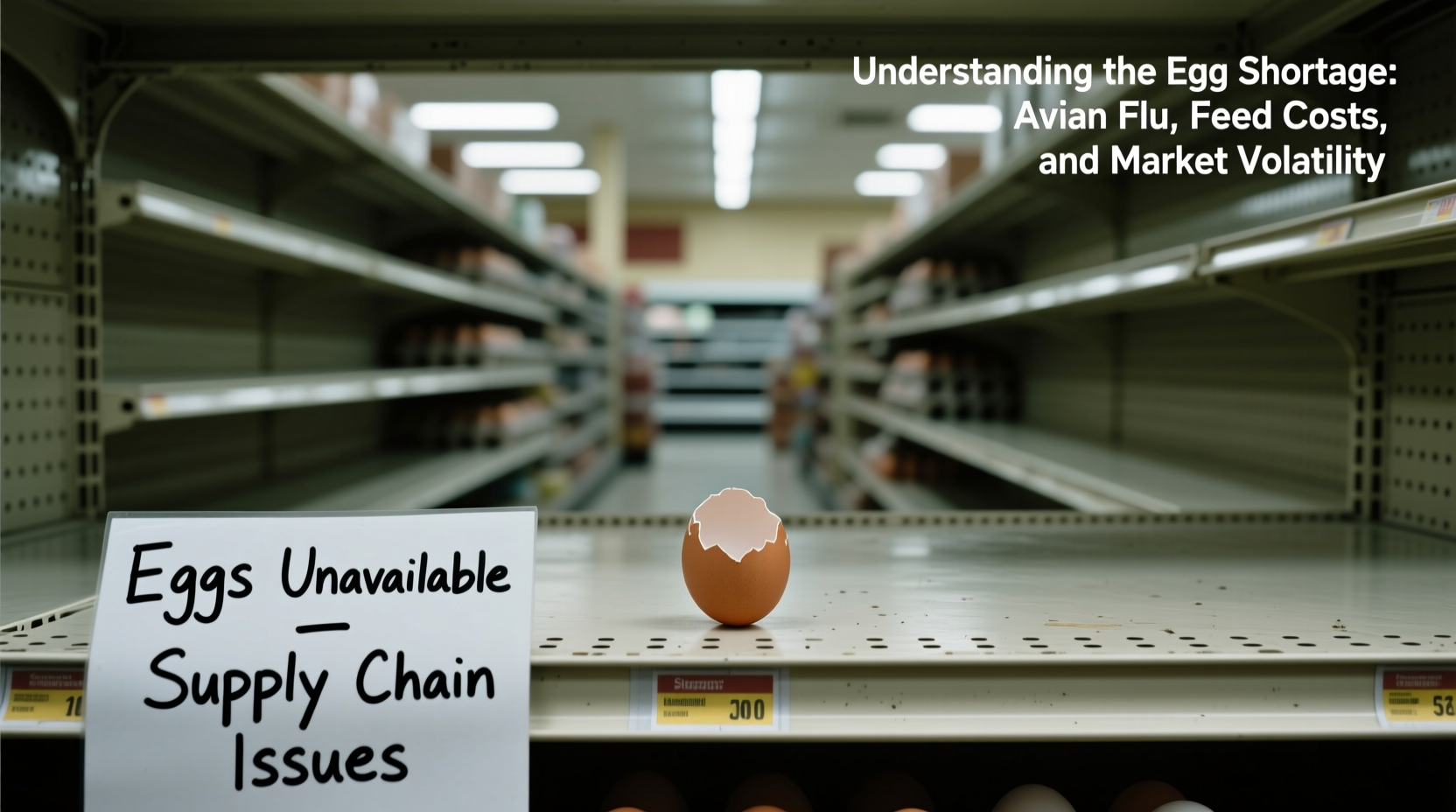
The most significant driver behind recent egg shortages is the recurring outbreak of highly pathogenic avian influenza (HPAI), commonly known as bird flu. Since 2022, the United States has faced one of the worst bird flu epidemics in its history, affecting tens of millions of commercial laying hens and backyard flocks alike. According to the U.S. Department of Agriculture (USDA), over 58 million birds were culled during the 2022–2023 outbreak alone—more than any previous year on record.
When bird flu spreads through poultry farms, entire flocks must be depopulated to prevent further transmission. This immediate loss reduces egg production capacity overnight. Rebuilding flocks takes time—typically four to six months for new pullets (young hens) to mature and begin laying eggs at full capacity. During this recovery window, supply remains constrained while demand stays steady or even increases.
“Avian flu doesn’t just kill birds—it disrupts the entire production pipeline. Even after farms are declared clean, regaining pre-outbreak output levels can take nearly half a year.” — Dr. Linda Chen, Veterinary Epidemiologist at Iowa State University
Economic Pressures on Farmers and Production Costs
Beyond disease, egg producers face mounting financial challenges that discourage rapid scaling or reinvestment. Feed costs—primarily corn and soybeans—account for up to 70% of total production expenses. Over the past few years, these prices have surged due to droughts, geopolitical conflicts affecting grain exports, and inflationary pressure across agricultural inputs.
Farmers also contend with rising energy bills needed to heat coops, operate ventilation systems, and run automated egg collection lines. When combined with labor shortages in rural areas and tighter environmental regulations, many small-to-midsize operations find it unsustainable to maintain or expand their flocks.
As a result, some farms have exited the industry entirely. Fewer producers mean less redundancy in the system, making the overall supply chain more vulnerable to shocks. With fewer players absorbing disruptions, any single event—like a regional disease outbreak—can ripple across the country.
Climate Change and Environmental Stressors
Chickens are sensitive to temperature fluctuations. Extreme heat waves, which have become more frequent and intense due to climate change, reduce egg production significantly. Hens under heat stress eat less, lay fewer eggs, and are more susceptible to illness.
In 2023, several major egg-producing states—including Texas and California—experienced prolonged periods of triple-digit temperatures. These conditions led to temporary drops in output even in unaffected flocks. Similarly, severe winter storms can disrupt transportation networks, delaying feed deliveries and halting egg shipments from processing plants to warehouses.
Water scarcity is another growing concern. Poultry farms require substantial water for drinking, cleaning, and cooling. Drought-stricken regions face increasing regulatory and operational constraints, forcing some producers to downsize or relocate.
Supply Chain Fragility and Distribution Bottlenecks
Egg logistics involve a tightly coordinated network: farms → grading stations → packaging facilities → distributors → retailers. Each step depends on timely movement and precise coordination. Any delay—whether due to trucking shortages, equipment failure, or labor strikes—can cause cascading delays.
The pandemic exposed weaknesses in just-in-time inventory models, and the egg industry remains particularly vulnerable because eggs are perishable and cannot be stockpiled long-term. Unlike canned goods or dry staples, there’s no buffer inventory to fall back on during crises.
Additionally, consolidation in the egg industry has reduced competition. A handful of large companies now control a majority of U.S. egg production. While this improves efficiency under normal conditions, it limits flexibility when disruptions occur. There are fewer alternative suppliers to turn to when one major producer goes offline.
A Real-World Example: The 2022 Midwest Outbreak
In early 2022, an Iowa farm detected HPAI in its flock. Within weeks, neighboring farms reported infections. The state, responsible for nearly one-third of all U.S. egg production, lost over 20 million hens in two months. Supermarkets in the Midwest began limiting egg purchases. Prices at retail jumped from an average of $1.99 per dozen to over $4.50 nationally by spring 2023.
Distributors scrambled to source eggs from unaffected regions like the Pacific Northwest, but those areas lacked the surplus capacity to meet national demand. Consumers noticed both scarcity and quality variation, as some stores substituted cage-free or organic eggs with conventional ones due to availability.
What Can Consumers Do? Practical Strategies
While individuals can't control disease outbreaks or global commodity prices, they can adapt their habits to navigate shortages more effectively.
Checklist: How to Manage During an Egg Shortage
- Buy frozen or liquid egg products, which often remain available when shell eggs are scarce
- Explore plant-based egg alternatives for baking and scrambles
- Purchase directly from local farms or CSAs to bypass retail bottlenecks
- Store eggs properly: keep them in the coldest part of the fridge (not the door) to extend shelf life
- Freeze whisked eggs for future use—up to one year when stored correctly
- Monitor sales cycles; restocking often happens mid-week, so shop Tuesday–Thursday for best selection
| Factor | Impact on Egg Supply | Duration of Effect |
|---|---|---|
| Avian Influenza | Mass culling of flocks, delayed replenishment | 6–12 months per outbreak |
| Feed & Energy Costs | Reduced profitability, farm closures | Ongoing, fluctuates with markets |
| Extreme Weather | Heat stress, transport delays | Short-term (days to weeks) |
| Labor Shortages | Slower processing, reduced operational hours | Moderate to long-term |
| Supply Chain Disruptions | Delayed delivery, uneven distribution | Variable (hours to months) |
Frequently Asked Questions
Are organic or cage-free eggs more likely to be unavailable during shortages?
Yes, often. Organic and specialty eggs typically come from smaller flocks with longer production cycles. They’re also more expensive to produce, so fewer backup supplies exist. During shortages, conventional eggs may be prioritized for mass distribution.
Is the egg shortage permanent?
No, but recurring outbreaks and structural vulnerabilities mean periodic shortages will likely continue. Recovery is possible, but resilience requires investment in biosecurity, diversified farming, and improved supply chain redundancy.
Can I substitute eggs in recipes?
Yes. For baking, common substitutes include mashed banana, applesauce, yogurt, flaxseed meal mixed with water, or commercial egg replacers. In savory dishes, tofu or legumes can mimic texture. Experimentation may be needed depending on the recipe.
Looking Ahead: Building a More Resilient Egg System
Solving the egg shortage problem requires action at multiple levels. On the policy side, increased funding for veterinary surveillance, faster compensation for depopulated flocks, and support for small farms can stabilize supply. Technological advances—such as vaccines tailored to circulating bird flu strains—offer hope, though widespread deployment remains limited.
Consumers can play a role by supporting local agriculture, accepting minor imperfections in appearance, and reducing food waste. Nearly 30% of edible eggs are discarded due to cosmetic flaws or confusion over expiration dates—a preventable loss that exacerbates scarcity.
Conclusion
The disappearance of eggs from supermarket shelves is not random—it reflects deep systemic challenges in how we produce and distribute one of our most essential foods. From bird flu to climate stress, economic strain to fragile logistics, each factor compounds the other. But awareness leads to adaptation. By understanding the roots of the shortage, adjusting purchasing behaviors, and advocating for sustainable solutions, households can better weather current and future disruptions.




 浙公网安备
33010002000092号
浙公网安备
33010002000092号 浙B2-20120091-4
Comments
No comments yet. Why don't you start the discussion?