
The average height of Filipinos has long been a topic of interest among public health experts, anthropologists, and everyday citizens. Compared to global averages—especially in Western and Northern European countries—Filipinos rank among the shorter populations. But why? Height is not solely determined by genetics; it’s a complex interplay of biology, environment, and social conditions. Understanding why Filipinos are relatively short requires examining historical, nutritional, economic, and medical factors that have shaped generations.
Genetic Background and Ancestral Influences
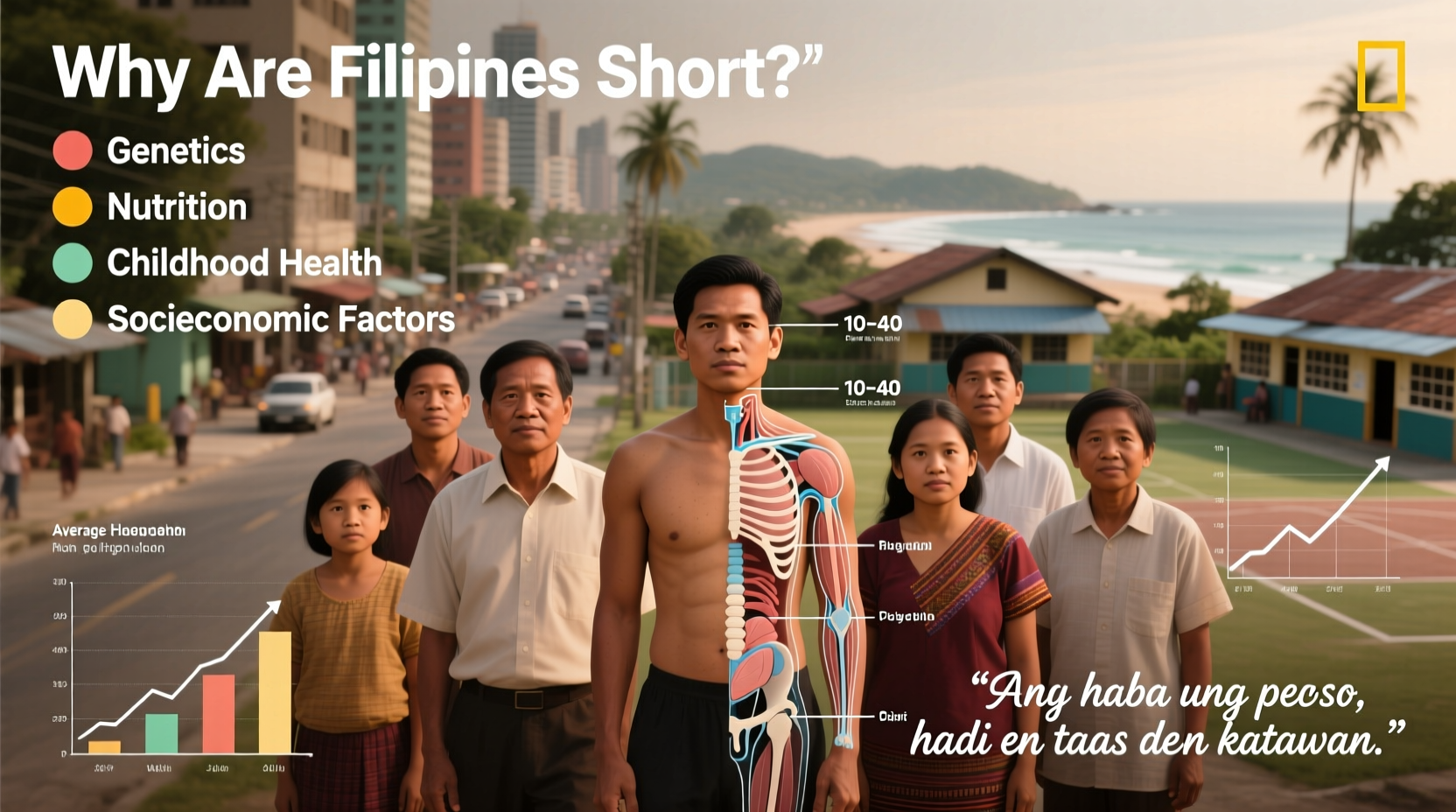
Human height is approximately 60–80% hereditary, meaning genetic lineage plays a dominant role. The Filipino population descends primarily from Austronesian-speaking peoples who migrated from Taiwan thousands of years ago. These ancestral groups were generally of smaller stature, a trait common across many Southeast Asian populations.
Studies in population genetics show that East and Southeast Asians tend to have lower frequencies of certain growth-related genes, such as those affecting the GH-IGF-1 axis (growth hormone-insulin-like growth factor 1), which regulate childhood development. While these differences are subtle, they contribute to regional variations in average height.
“Population height reflects both evolutionary adaptation and environmental pressures. In tropical regions like the Philippines, smaller body size may have conferred metabolic advantages.” — Dr. Luisa Mendiola, Anthropologist, University of the Philippines
Smaller frames require fewer calories and dissipate heat more efficiently—beneficial traits in a hot, humid climate with historically limited food surplus. Over millennia, natural selection may have favored compact builds, contributing to the genetic predisposition for shorter stature among Filipinos.
Nutrition: The Critical Window in Early Development
If genetics sets the potential, nutrition determines how much of that potential is realized. Chronic malnutrition during critical growth periods—particularly prenatal development and early childhood—is one of the most significant contributors to stunted growth.
The World Health Organization defines stunting as impaired growth and development in children under five due to poor nutrition, repeated infections, and inadequate psychosocial stimulation. In the Philippines, the 2023 National Nutrition Survey revealed that **28.7% of children under five are stunted**—a figure that has improved slightly over the past decade but remains alarmingly high.
Diets in low-income households often rely heavily on rice with minimal access to animal-source proteins, dairy, or diverse vegetables. This lack of nutrient density affects bone development and hormonal regulation essential for linear growth. Even when caloric intake is sufficient, poor diet quality leads to “hidden hunger”—micronutrient deficiencies that impair physical development.
Socioeconomic Conditions and Access to Healthcare
Poverty remains a persistent barrier to optimal growth. As of 2023, about 18.1% of Filipinos live below the national poverty line. Families with limited income face challenges in accessing nutritious food, clean water, sanitation, and consistent healthcare—all of which influence child development.
Children in rural areas or informal urban settlements are disproportionately affected. Poor sanitation increases exposure to intestinal parasites and chronic infections like diarrhea, which reduce nutrient absorption and divert energy from growth. Repeated illness during early childhood compounds the effects of poor nutrition, creating a cycle that’s difficult to break without systemic intervention.
| Factor | Impact on Height | Prevalence in PH |
|---|---|---|
| Childhood Stunting | Reduces adult height by 2–5 cm on average | 28.7% (under 5) |
| Household Poverty | Limits access to diverse foods and care | 18.1% of population |
| Exclusive Breastfeeding | Supports immune function and growth | Only 34% for first 6 months |
| Access to Prenatal Care | Improves birth weight and development | ~90% attend at least one visit |
While prenatal care attendance is relatively high, the quality and frequency of visits vary. Many mothers still suffer from anemia and undernutrition during pregnancy, directly affecting fetal growth and birth length—key predictors of adult height.
Generational Shifts and Modern Trends
There is evidence of a slow but steady increase in average height among younger Filipinos. Data from the Department of Health shows that the average height of Filipino males born in the 1950s was around 158 cm (5’2”), while those born after 2000 average closer to 163–165 cm (5’4”–5’5”). Female averages have similarly risen from about 148 cm to 153–155 cm.
This trend mirrors improvements in public health, education, and economic development. Urbanization has expanded access to fortified foods, school feeding programs, and vaccination campaigns. Government initiatives like the Kalusugan sa Pamayanan program and expanded maternal care aim to address root causes of stunting.
However, progress is uneven. Wealthier families in Metro Manila may provide nutrient-rich diets and private healthcare, enabling their children to reach greater heights. Meanwhile, children in conflict-affected regions like parts of Mindanao continue to face food insecurity and disrupted services, limiting their growth potential.
“We’re seeing taller generations, but the gap between rich and poor is also reflected in height disparities.” — Dr. Rafael Tan, Pediatric Nutrition Specialist
Case Study: The Island Community of Siquijor
In a small municipality in Siquijor, local health workers noticed persistently high stunting rates despite national campaigns. A 2021 community assessment found that 42% of children under five were stunted—well above the national average.
Root causes included heavy reliance on rice and canned sardines, limited vegetable gardens, and widespread open defecation leading to parasitic infections. With support from a non-governmental organization, the barangay implemented a multi-pronged strategy:
- Distribution of backyard poultry kits to increase egg consumption
- Training on kitchen gardening for leafy greens
- Construction of sanitary toilets
- Monthly deworming and nutrition monitoring
Within two years, stunting dropped to 29%. Children showed visible improvements in energy levels and growth velocity. This case illustrates that even in resource-limited settings, targeted interventions can make a measurable difference in physical development.
Action Plan: Supporting Healthy Growth in Filipino Children
Addressing the factors behind shorter average stature requires sustained, coordinated efforts. Here’s a checklist for families, communities, and policymakers:
- Promote exclusive breastfeeding for the first six months of life.
- Introduce diverse complementary foods at six months, including eggs, fish, legumes, and dark green vegetables.
- Ensure regular deworming every six months starting at age one.
- Improve sanitation by using toilets and safe water sources to prevent infection.
- Monitor growth through regular check-ups at health centers.
- Support maternal nutrition before and during pregnancy.
- Advocate for school-based nutrition programs and fortified food policies.
Frequently Asked Questions
Are Filipinos genetically destined to be short?
No. While genetics play a role, environmental factors like nutrition and health have a powerful influence. Populations once considered short—like South Koreans—have experienced dramatic height increases within a few generations due to improved living conditions.
Why are younger Filipinos taller than older generations?
Better access to healthcare, improved diets, and nationwide nutrition programs have allowed recent generations to reach closer to their genetic height potential. Economic development and education also contribute to healthier parenting practices.
Can adults increase their height?
Once the growth plates in bones close (usually by late teens), natural height gain is not possible. However, improving posture, managing spinal health, and avoiding malnutrition can help individuals appear taller and maintain their maximum height.
Conclusion: Building a Taller Future Through Better Foundations
The relatively short stature of Filipinos is not a fixed trait but a reflection of historical and ongoing challenges in nutrition, health, and equity. Genetics set the stage, but environment writes much of the story. The progress seen in younger generations proves that change is possible with the right investments.
Every child deserves the chance to grow to their full potential—not just in height, but in health and opportunity. By prioritizing early nutrition, sanitation, and equitable access to care, the Philippines can build a future where stature is no longer limited by circumstance.




 浙公网安备
33010002000092号
浙公网安备
33010002000092号 浙B2-20120091-4
Comments
No comments yet. Why don't you start the discussion?