
Flags flying at half-mast are a solemn sight, often signaling national mourning, remembrance, or respect for individuals who have made significant contributions to the country. While many people notice the lowered flags and wonder about their meaning, few know where to find accurate, timely explanations. Understanding the reasons behind this symbolic gesture—and knowing how to verify official notifications—ensures you stay informed with credible information during moments of collective reflection.
The tradition of flying flags at half-mast dates back centuries and is deeply embedded in military and civic customs. In the United States, the decision to lower the flag typically comes from the President, a state governor, or other authorized officials. These directives are not arbitrary; they follow established protocols tied to tragedies, national losses, or acts of honor. Yet, because these announcements can be issued rapidly and sometimes apply only regionally, confusion often arises about when and why flags are lowered.
This guide explains the significance of half-mast flag displays, outlines reliable methods for checking official notifications, and provides practical tools to help you understand current and future flag status across federal, state, and local levels.
Understanding Half-Mast vs. Half-Staff
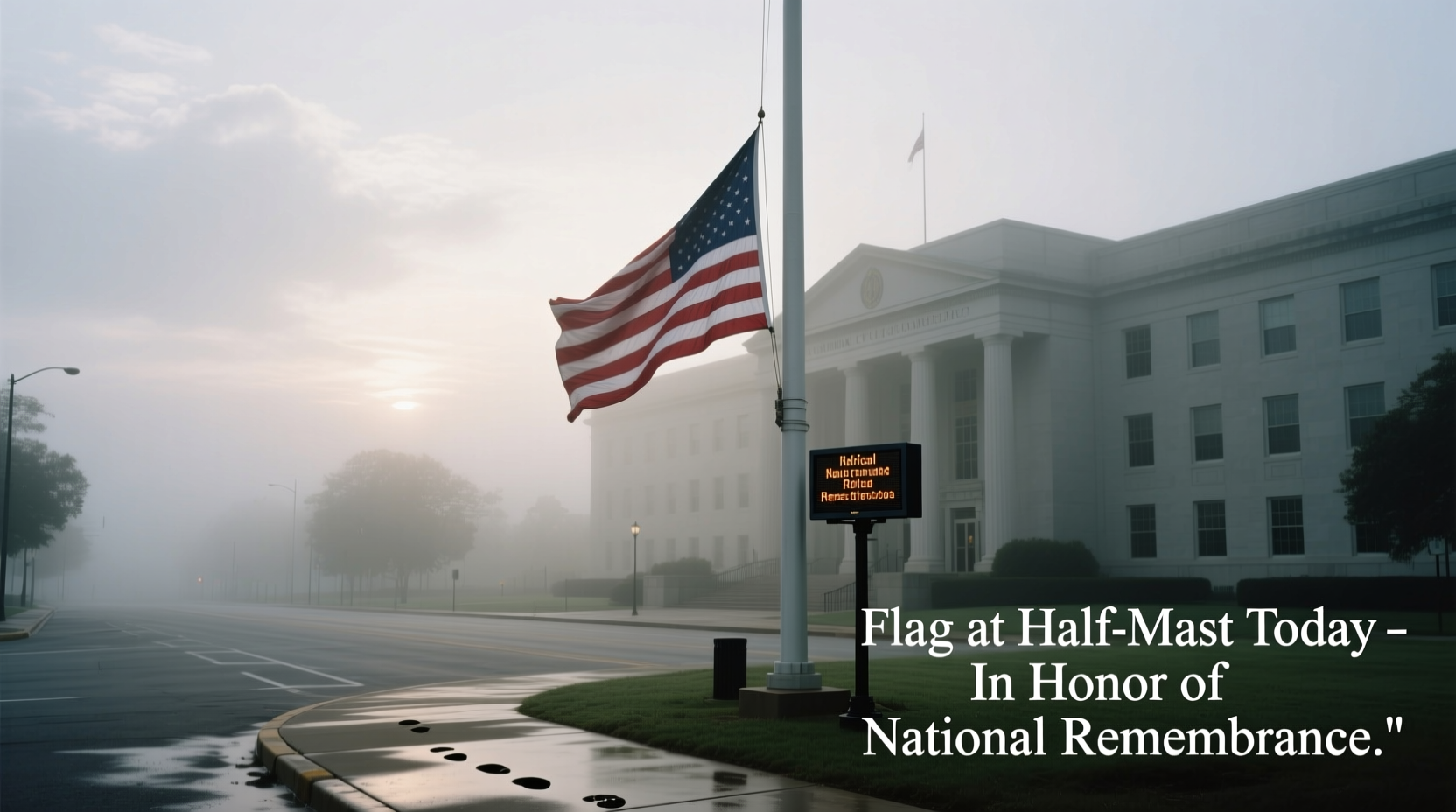
Before exploring how to check flag status, it’s important to clarify terminology. Although often used interchangeably, “half-mast” and “half-staff” have distinct meanings under U.S. flag code.
- Half-mast: Refers to flags flown on ships or naval installations. The term originates from nautical traditions where lowering the mast symbolized mourning at sea.
- Half-staff: Applies to flags on land-based flagpoles, such as those at government buildings, schools, and memorials.
In common usage, especially in media and public discourse, “half-mast” is frequently used regardless of location. However, official proclamations issued by the White House or governors typically use “half-staff” when referring to land-based observances.
“Flying the flag at half-staff is one of the most visible expressions of national unity in grief.” — Admiral James Stavridis, Former NATO Supreme Allied Commander
Common Reasons Flags Are Lowered
There are several recognized circumstances under which the U.S. flag is flown at half-staff. These include:
- National Tragedies: Events such as terrorist attacks, mass shootings, or natural disasters that result in significant loss of life.
- Death of Government Officials: This includes the President, former Presidents, Vice Presidents, Supreme Court Justices, members of Congress, and high-ranking military leaders.
- Memorial Observances: Designated days like Peace Officers Memorial Day (May 15), Patriot Day (September 11), and Pearl Harbor Remembrance Day (December 7).
- State-Level Mourning: Governors may order flags lowered to honor fallen first responders, local heroes, or victims of regional incidents.
- Presidential Proclamation: The President has discretion to issue orders for unexpected events or international figures whose passing affects U.S. interests.
For example, following the death of Supreme Court Justice Ruth Bader Ginsburg in 2020, President Trump issued a proclamation ordering all U.S. flags to be flown at half-staff until the day of her interment. Similarly, after the Sandy Hook Elementary School shooting in 2012, flags were lowered nationwide for a week.
How to Check Official Flag Status Notifications
Reliable information about flag status comes from authoritative sources. Here’s how to access real-time updates through verified channels:
1. The White House Website – Presidential Proclamations
All federal flag-lowering orders originate from the President. These are published as formal proclamations on the official White House website.
Steps to find current proclamations:
- Visit whitehouse.gov.
- Navigate to “Briefings & Statements” > “Proclamations”.
- Search for recent entries containing keywords like “flag,” “half-staff,” or “mourning.”
- Review the effective dates and geographic scope (national or specific locations).
These documents specify exactly when and where the directive applies, including overseas embassies and military bases.
2. State Governor Websites
States often lower flags independently of federal orders. For instance, a governor might issue a proclamation honoring a fallen police officer within their jurisdiction.
To stay updated:
- Search “[Your State] + governor + flag at half-staff” (e.g., “California governor flag at half-staff”).
- Visit your state’s official government portal (e.g.,
ca.gov,ny.gov) and look for press releases or executive orders. - Subscribe to email alerts or news feeds from the governor’s office.
3. U.S. Code and Federal Guidelines
Title 36, Chapter 1, Section 9 of the U.S. Code outlines flag etiquette, including mandatory half-staff observances. Certain dates trigger automatic flag-lowering without new proclamations.
| Date | Observance | Duration |
|---|---|---|
| May 15 | Peace Officers Memorial Day | Sunset to sunrise |
| September 11 | Patriot Day | Full day |
| December 7 | Pearl Harbor Remembrance Day | Full day |
| Last Monday in May | Memorial Day (until noon) | Morning only |
Note: On Memorial Day, flags are flown at half-staff until noon, then raised to full-staff to symbolize living veterans carrying forward the legacy of the fallen.
Real-Time Monitoring Tools and Alerts
While checking official websites manually works, proactive monitoring ensures you don’t miss time-sensitive announcements.
Digital Notification Services
- Federal Register Alerts: Subscribe at federalregister.gov to receive emails about new executive actions, including flag-related proclamations.
- News Aggregators: Use Google News alerts with queries like “U.S. flag half-staff site:whitehouse.gov” to get instant updates.
- Local Government Apps: Many cities and counties offer mobile apps that push emergency and ceremonial notifications, including flag status changes.
Case Study: Tracking a Sudden National Response
In January 2024, following the death of former First Lady Rosalynn Carter, the White House issued a proclamation ordering flags to half-staff for 30 days. Within hours, major news outlets reported the story, but conflicting details circulated online about whether the order applied to private citizens.
A resident in Atlanta wanted to confirm the protocol. She visited whitehouse.gov, searched “Rosalynn Carter,” and found the official document stating: “The flag shall be flown at half-staff at all federal facilities… and the President urges all Americans to do the same.”
Armed with this knowledge, she correctly displayed her home flag at half-staff and shared the link with neighbors who had questions. This example underscores the importance of verifying through primary sources rather than relying solely on secondary reports.
Common Misconceptions and Mistakes to Avoid
Even well-intentioned flag displays can go wrong due to misunderstanding proper procedures.
- Misconception 1: Only Government Buildings Must Comply
- While federal law only mandates compliance on government property, the President often “urges” private citizens and organizations to participate. There is no penalty for non-compliance on private flags, but participation shows solidarity.
- Misconception 2: Flags Should Stay Down Indefinitely After a Tragedy
- Most proclamations specify exact durations—ranging from one day to 30 days. Leaving a flag at half-staff beyond the designated period violates flag etiquette.
- Misconception 3: Any Sad Event Qualifies
- Not every tragedy results in a national flag-lowering. Decisions are made based on precedent, impact, and the role of the individual involved.
- ✅ Observe if flags are at half-staff locally.
- ✅ Search the White House proclamations page.
- ✅ Check your state governor’s official website.
- ✅ Confirm dates and duration of the order.
- ✅ Verify whether private display is recommended.
- ✅ Set calendar reminders to raise the flag again after the period ends.
Frequently Asked Questions
Can I fly my flag at half-staff anytime to show support?
No. According to the U.S. Flag Code, private citizens should only fly the flag at half-staff when directed by the President or a state governor. Unauthorized use diminishes the solemnity of the gesture.
What if my flagpole doesn’t allow partial raising?
If your flagpole lacks a halyard system that allows secure half-staff positioning, it’s acceptable not to display the flag during such periods. Alternatively, attach a black ribbon to the top of the flagpole as a sign of mourning.
Do embassies and military bases abroad follow the same rules?
Yes. U.S. diplomatic missions and armed forces installations overseas are required to comply with presidential proclamations regarding flag status.
Final Thoughts: Staying Informed with Respect and Accuracy
Seeing the American flag at half-staff evokes emotion and prompts questions. Rather than guessing or sharing unverified claims, take a moment to consult official sources. Doing so honors both the symbolism of the flag and the memory of those being mourned.
By understanding the reasons behind flag-lowering ceremonies and knowing how to verify them, you contribute to a more informed and respectful public dialogue. Whether it's a national leader, a service member, or a community hero, each instance reflects a shared value: remembering sacrifice and unity in times of loss.




 浙公网安备
33010002000092号
浙公网安备
33010002000092号 浙B2-20120091-4
Comments
No comments yet. Why don't you start the discussion?