
Seeing a flag flying at half-mast often prompts curiosity, respect, and sometimes concern. Whether observed on government buildings, military installations, or private homes, the gesture carries deep symbolic weight. It signals national mourning, remembrance, or tribute to those who have made significant sacrifices. Understanding why flags are at half-mast today—and what \"Flag Status 7\" may refer to—requires knowledge of U.S. flag protocol, presidential proclamations, and historical traditions.
The practice of lowering the flag is not arbitrary. It follows specific guidelines established by the U.S. Code and enforced through executive orders. While “Flag Status 7” isn’t an official designation in federal regulations, it may be used informally within certain organizations or communication systems to denote a particular level of observance or alertness related to flag display. This article clarifies common reasons for half-staff displays, explains how decisions are made, and provides guidance on appropriate responses.
What Does Flying a Flag at Half-Mast Mean?
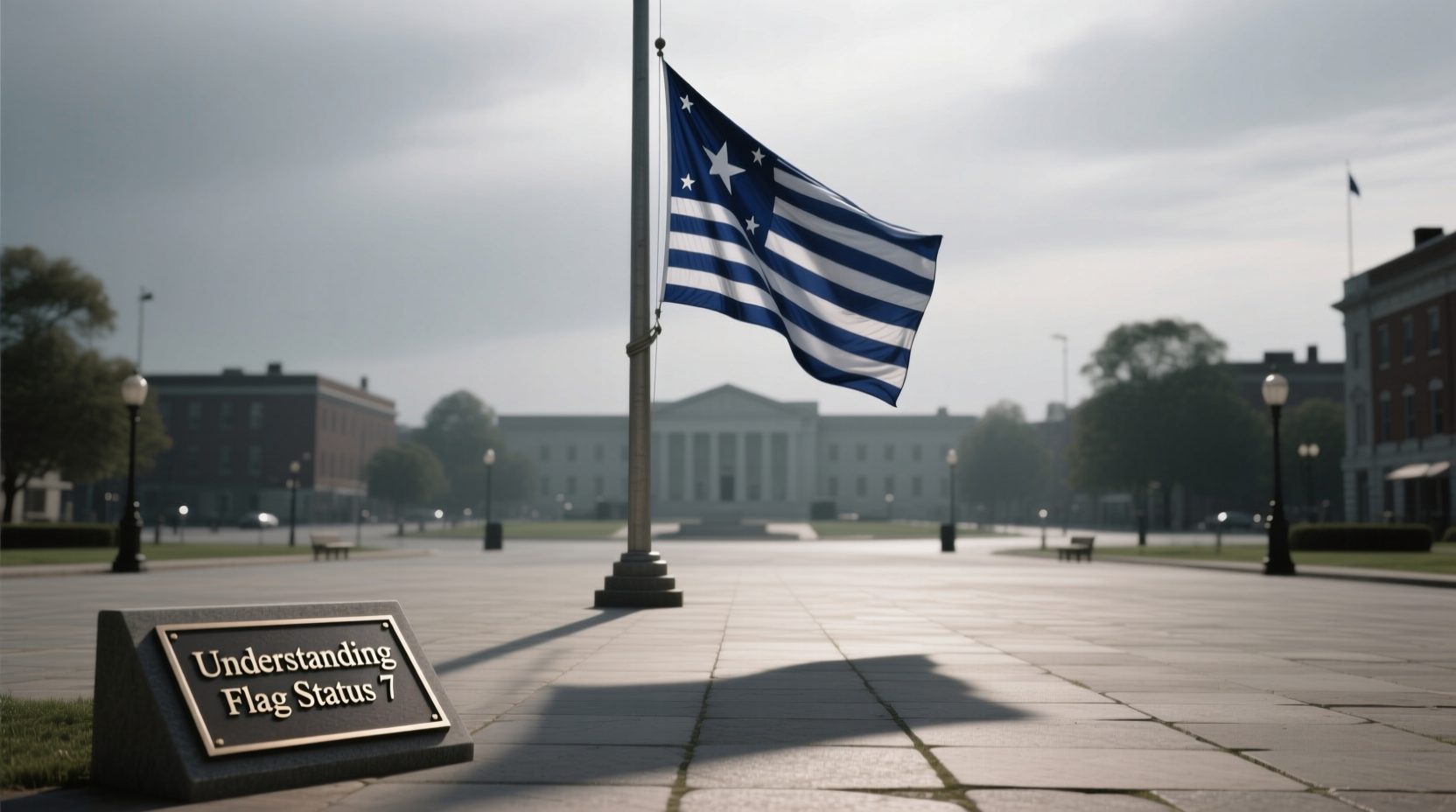
Flying a flag at half-mast (or half-staff, depending on context) is a sign of mourning, respect, or national tragedy. The position—exactly halfway between the top and bottom of the flagpole—is symbolic: the invisible presence of Death standing above the nation’s colors.
This tradition dates back centuries. One widely accepted origin comes from 17th-century maritime custom, where ships lowered their flags to make room for the \"invisible flag of death\" when a captain died at sea. Over time, the practice was adopted ashore as a gesture of collective grief.
In modern usage, the United States flies its flag at half-staff under specific circumstances:
- Death of a current or former U.S. President or Vice President
- Passing of a Supreme Court Justice, Cabinet member, or congressional leader
- National tragedies such as terrorist attacks or mass shootings
- Memorial Day (from sunrise until noon)
- Peace Officers Memorial Day, Patriot Day, National Pearl Harbor Remembrance Day
- Presidentially declared periods of mourning
“Lowering the flag is one of the most solemn acts a nation can perform. It speaks without words of unity, sorrow, and reverence.” — Dr. James Peterson, Historian of American Symbols
How Are Decisions Made to Lower the Flag?
The authority to order flags flown at half-staff lies primarily with the President of the United States. Under 4 U.S.C. § 7(m), the president may issue proclamations directing that the flag be flown at half-staff “on all federal facilities, grounds, and vessels” for designated periods.
State governors also have the power to lower flags over state buildings and properties. For example, after the death of a prominent local figure or during a statewide tragedy, a governor may issue a proclamation independent of federal action.
These declarations are typically published through official channels such as:
- The White House website (whitehouse.gov)
- Executive Office press releases
- Department of Defense announcements
- State government websites and emergency alert systems
It's important to note that while federal directives apply to federal installations, private citizens and businesses are encouraged—but not required—to follow suit out of respect.
Demystifying 'Flag Status 7'
The term “Flag Status 7” does not appear in the U.S. Flag Code or standard federal directives. However, some military branches, emergency management agencies, or internal security systems use numbered flag status levels as part of broader alert frameworks.
For instance, the Department of Homeland Security previously used a color-coded Homeland Security Advisory System (HSAS), which has since been replaced by the National Terrorism Advisory System (NTAS). Similarly, individual institutions may assign numeric or coded statuses internally for operational purposes.
If “Flag Status 7” appears in a news report, social media post, or organizational bulletin, it likely refers to a non-standardized classification—possibly indicating a high level of mourning, readiness, or ceremonial observance within a specific group.
To avoid confusion:
- Verify whether the term originates from a credible government source
- Look for accompanying presidential or gubernatorial proclamations
- Consult official flag status trackers like those maintained by the National Association of State Directors of Veterans Affairs
When Are Flags Lowered: Key Dates and Triggers
Beyond spontaneous proclamations, several fixed annual observances require flags to be flown at half-staff.
| Date | Occasion | Duration |
|---|---|---|
| May 15 | Peace Officers Memorial Day | All day |
| September 11 | Patriot Day | All day |
| December 7 | National Pearl Harbor Remembrance Day | All day |
| May 31 | Memorial Day (until noon) | Sunrise to noon only |
In addition to these scheduled events, unscheduled flag-lowering occurs following unexpected losses. Recent examples include:
- January 12, 2024 – Flags lowered in honor of former First Lady Rosalynn Carter
- February 2, 2023 – Tribute to astronaut and Senator John Glenn
- August 27, 2022 – Mourning the passing of Secretary of State Madeleine Albright
Proper Etiquette When the Flag Is at Half-Mast
Respecting the flag goes beyond simply noticing its position. Observers should understand correct procedures if they display the flag themselves.
Step-by-Step Guide to Raising a Flag to Half-Staff
- Begin at full mast: Start by raising the flag briskly to the peak of the pole.
- Lower slowly: Then, lower it ceremoniously to half-mast. This honors the flag’s position before descent.
- Secure properly: Ensure the halyard is tied so the flag remains stable and doesn't touch the ground.
- Return respectfully: At the end of the day, raise the flag to full mast again before lowering and folding it.
Note: The flag should never be displayed flat or draped over objects while at half-staff.
Common Mistakes to Avoid
| Do | Don't |
|---|---|
| Raise to the top first, then lower to half-staff | Leave the flag permanently at half-staff without authorization |
| Follow presidential or gubernatorial proclamations | Lower the flag for unofficial or personal reasons without community consensus |
| Honor recognized national days of remembrance | Allow the flag to become tangled, torn, or soiled during display |
Real Example: National Response After the Uvalde Shooting
On May 24, 2022, a mass shooting at Robb Elementary School in Uvalde, Texas, claimed the lives of 19 children and two teachers. In response, President Joe Biden issued a proclamation ordering all U.S. flags to fly at half-staff until sunset on May 30.
The directive applied to all federal buildings, military posts, naval vessels, and embassies worldwide. Governors across all 50 states followed suit, lowering state flags as well. Schools, fire stations, and private homes joined in the gesture.
This unified act of mourning demonstrated how the simple visual of a lowered flag can convey profound empathy and solidarity. Media coverage highlighted images of flags at half-mast beside makeshift memorials, reinforcing the emotional resonance of the symbol.
Frequently Asked Questions
Why are flags at half-mast today?
Flags may be at half-mast due to the death of a national leader, a tragic event, or a designated day of remembrance. Check the latest proclamation from the White House or your state government for specific reasons.
Is half-mast the same as half-staff?
Yes, but usage differs slightly. “Half-staff” applies to flags on land (government buildings); “half-mast” traditionally refers to ships at sea. Both terms are often used interchangeably in everyday language.
Can I fly my flag at half-staff anytime?
While you're not legally prohibited from doing so as a private citizen, it's recommended to follow official proclamations. Unauthorized or prolonged use may dilute the significance of the gesture.
Conclusion: Honoring the Symbol With Awareness
The sight of a flag at half-mast is more than a routine change in display—it is a moment of collective reflection. Each time the Stars and Stripes hang lower on the pole, it reminds us of sacrifice, loss, and the shared values that bind the nation.
Understanding why flags are lowered—and distinguishing official actions from informal terminology like “Flag Status 7”—helps ensure that this powerful symbol is treated with the dignity it deserves. Stay informed, observe with respect, and pass on the knowledge of proper flag etiquette to future generations.




 浙公网安备
33010002000092号
浙公网安备
33010002000092号 浙B2-20120091-4
Comments
No comments yet. Why don't you start the discussion?