
Few insects provoke such universal irritation as the common housefly. They appear without warning, hover with relentless precision near food, land on skin, and vanish just when you're ready to swat. While they may seem like random nuisances, their behaviors follow predictable patterns rooted in biology, survival, and reproduction. Understanding why flies behave the way they do isn’t just a curiosity—it’s the first step toward reducing their presence and impact. From their attraction to odors to their rapid breeding cycles, uncovering the science behind fly annoyance reveals both their ecological role and the practical steps we can take to coexist more peacefully.
The Biology Behind the Buzz
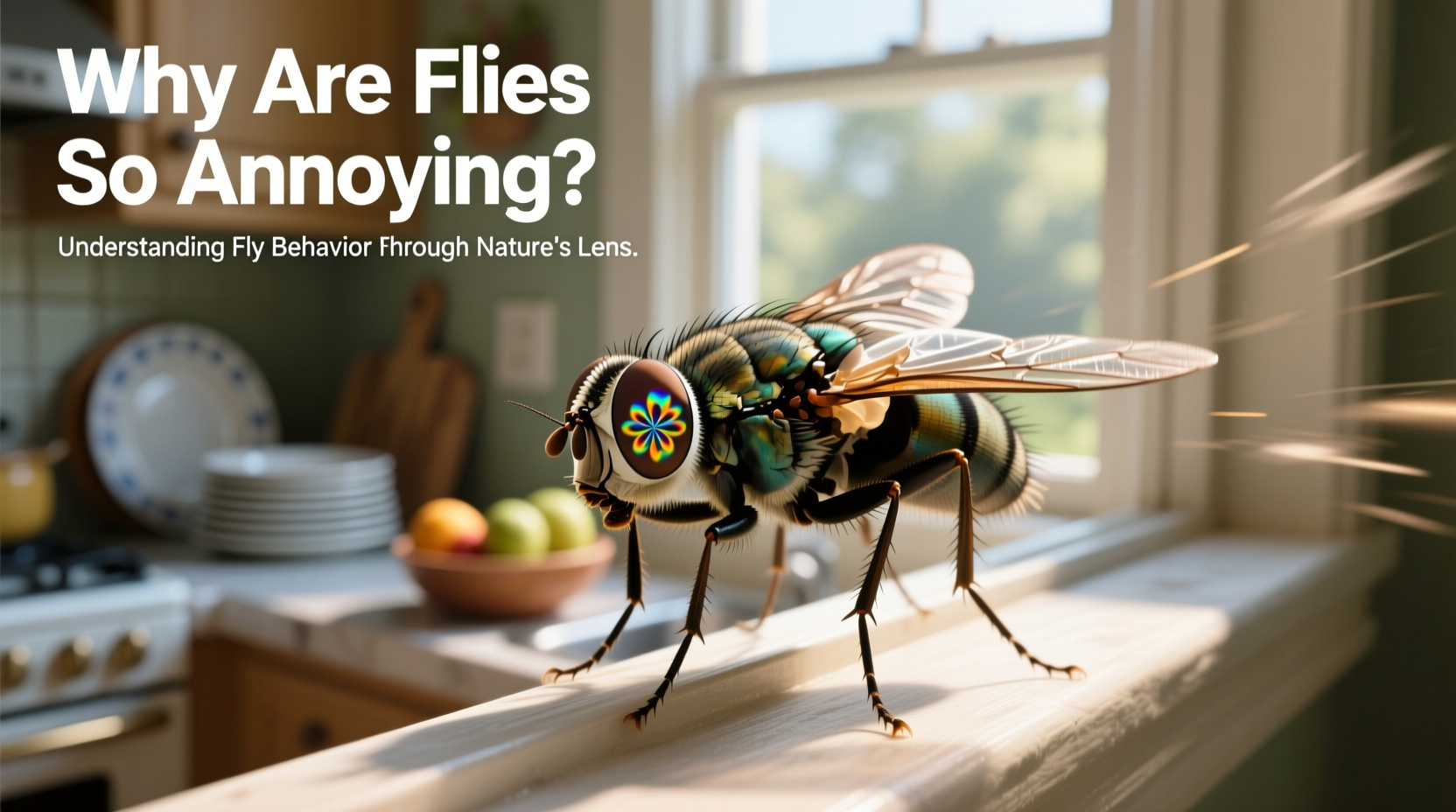
Flies belong to the order Diptera, which includes over 150,000 species worldwide. The most familiar, *Musca domestica*, or the housefly, thrives in human environments due to its adaptability and opportunistic feeding habits. Unlike many insects, flies don’t chew food. Instead, they regurgitate digestive enzymes onto surfaces to liquefy solids before sucking them up through a sponge-like mouthpart called a labellum. This process alone explains much of their unhygienic reputation—each landing is potentially a contamination event.
Flies possess compound eyes with thousands of lenses, granting them nearly 360-degree vision and an exceptional ability to detect motion. This makes them incredibly difficult to approach or swat. Their wings beat between 150 and 300 times per second, enabling sudden directional changes mid-flight. These physical traits evolved not for annoyance but for survival—avoiding predators in open environments. In homes, however, these same adaptations make them exceptionally good at evading humans.
“Flies are not merely pests; they’re highly evolved organisms optimized for speed, detection, and reproduction in dynamic environments.” — Dr. Lena Pruitt, Entomologist, University of California, Riverside
What Attracts Flies? Decoding Their Sensory World
Flies are drawn to specific stimuli that signal food, mating opportunities, or breeding sites. Their primary attractants include:
- Odors from decaying organic matter – Rotting fruit, garbage, pet waste, and compost emit volatile chemicals like ammonia and sulfur compounds that flies detect from meters away.
- Sweet substances – Nectar, spilled soda, ripe fruit, and syrup provide quick energy sources.
- Moisture and warmth – Flies thrive in humid conditions and seek out damp areas for laying eggs.
- Certain colors and light patterns – Studies show flies are more attracted to dark surfaces and UV-reflective materials, possibly mistaking them for food or shade.
Interestingly, flies use their feet to taste. Chemoreceptors on their tarsi (feet) allow them to sample surfaces instantly upon landing. This explains why they hop across multiple spots on your plate—they’re “tasting” each area to determine if it’s worth feeding on.
The Breeding Cycle: Why One Fly Becomes Many
A single fly sighting often means an infestation is already underway. Female houseflies lay between 75 and 150 eggs at a time, usually in warm, moist organic material like manure, compost, or rotting food. These eggs hatch into larvae (maggots) within 8–20 hours. Maggots feed voraciously for 3–7 days before pupating. The entire life cycle—from egg to adult—can be completed in as little as seven days under ideal conditions.
This explosive reproductive rate explains why fly populations can surge overnight. A forgotten bag of kitchen scraps or a clogged drain with organic buildup can serve as a hidden nursery. Once adults emerge, they begin seeking food and new breeding sites, perpetuating the cycle.
Timeline of a Housefly Life Cycle
- Day 1: Female lays eggs in suitable organic substrate.
- Day 1–2: Eggs hatch into larvae; maggots begin feeding.
- Day 3–7: Larvae grow rapidly, molting twice.
- Day 7–10: Larvae migrate to drier areas and form pupae.
- Day 10–14: Adult flies emerge, ready to mate and feed.
- Lifespan: Adults live 15–30 days, during which a female may lay up to 500 eggs.
Why Flies Are More Than Just Annoying: Health and Hygiene Risks
Beyond irritation, flies pose real health risks. They breed and feed in unsanitary environments—sewage, feces, garbage—and then land on food, utensils, and surfaces in homes. In doing so, they transfer pathogens such as *Salmonella*, *E. coli*, *Shigella*, and even parasitic worm eggs.
According to the World Health Organization, flies contribute to the transmission of diseases including typhoid, cholera, dysentery, and trachoma—particularly in regions with poor sanitation. Even in developed countries, they remain vectors for foodborne illness, especially in kitchens, restaurants, and outdoor dining areas.
| Aspect | Housefly Risk | Prevention Strategy |
|---|---|---|
| Pathogen Transfer | Carry bacteria on body and legs from waste to food | Use covered containers, sanitize surfaces regularly |
| Breeding Sites | Thrives in damp organic debris (e.g., compost, drains) | Inspect and clean potential breeding zones weekly |
| Flight Range | Can travel up to several kilometers | Community-wide sanitation reduces local populations |
| Feeding Behavior | Regurgitates and defecates while feeding | Never leave food uncovered outdoors |
Real-World Example: A Restaurant’s Summer Fly Crisis
A small café in Austin, Texas, began receiving customer complaints every summer about flies hovering around outdoor seating and food prep areas. Despite daily cleaning, the issue persisted. An environmental inspection revealed that a cracked pipe beneath the dumpster pad was leaking wastewater, creating a hidden breeding ground. Organic sludge had accumulated underground, invisible from the surface but ideal for fly reproduction.
After repairing the pipe, removing contaminated soil, and installing a sealed waste enclosure, fly sightings dropped by 90% within two weeks. The case underscores a key principle: effective fly control requires identifying and eliminating root causes, not just reacting to adult presence.
Proven Strategies to Reduce Fly Presence
Managing flies isn’t about constant swatting—it’s about disrupting their lifecycle and removing incentives to enter your space. Here’s a checklist of actionable steps:
- ✅ Empty indoor and outdoor trash bins daily, especially in warm weather.
- ✅ Clean drains monthly with enzyme-based cleaners to break down biofilm.
- ✅ Install tight-fitting screens on windows and doors.
- ✅ Use yellow \"bug\" lights outdoors—they attract fewer flies than white bulbs.
- ✅ Store ripe fruit in the refrigerator or sealed containers.
- ✅ Remove pet waste from yards immediately.
- ✅ Seal cracks and gaps around foundations and utility entries.
Frequently Asked Questions
Do flies serve any useful purpose in nature?
Yes. While often seen as pests, flies play critical ecological roles. As decomposers, they break down dead organic matter, returning nutrients to the soil. Many species are also pollinators—especially for plants that bloom in cooler seasons or emit foul odors. Additionally, flies are a food source for birds, bats, spiders, and other insects.
Why do flies keep landing on me?
Flies are attracted to humans because of body heat, carbon dioxide from breath, sweat (which contains salts and sugars), and the natural oils and bacteria on skin. They don’t bite (unless they’re biting flies like horseflies), but they may probe the skin looking for moisture or edible residues.
Are electric fly zappers effective?
They can reduce numbers but come with drawbacks. Zappers kill indiscriminately, including beneficial insects. Worse, when a fly explodes on contact, it can aerosolize bacteria from its gut, potentially contaminating nearby surfaces. More targeted methods—like sticky traps or baited traps—are often safer and more effective.
Conclusion: Turning Knowledge Into Action
Flies aren’t malicious—they’re simply following instincts honed over millions of years. But understanding their behavior transforms frustration into strategy. By recognizing what draws them in, how quickly they reproduce, and the risks they carry, we gain the upper hand. Prevention beats reaction. Consistent hygiene, structural maintenance, and smart environmental choices create spaces where flies have no reason to stay.




 浙公网安备
33010002000092号
浙公网安备
33010002000092号 浙B2-20120091-4
Comments
No comments yet. Why don't you start the discussion?