
If you've tried booking a flight recently, you’ve likely been met with sticker shock. Prices that once seemed reasonable have ballooned—sometimes doubling or tripling within days. While inflation, fuel costs, and labor shortages contribute, the real engine behind volatile airfare is something far less visible: dynamic pricing algorithms. These sophisticated systems continuously adjust ticket prices based on demand, timing, competition, and even your browsing behavior. Understanding how they work isn’t just fascinating—it’s essential for making smarter travel decisions.
How Airlines Price Flights in the Digital Age
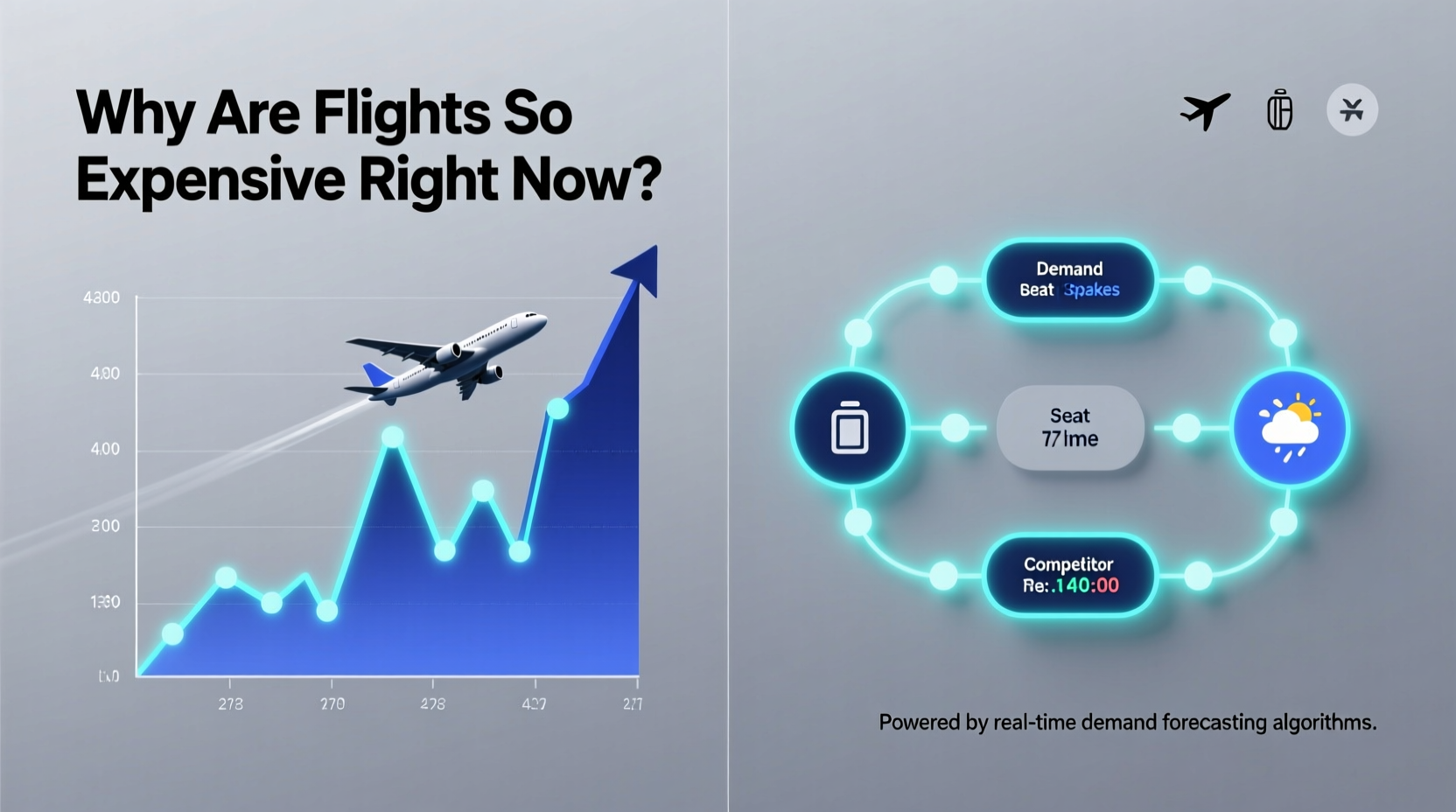
Gone are the days when airlines set fixed fares for routes. Today, most carriers use dynamic pricing models powered by artificial intelligence and big data analytics. Instead of assigning one price per route, airlines segment each flight into multiple fare classes (e.g., Basic Economy, Main Cabin, Premium Select), each with its own availability and pricing rules.
These algorithms analyze hundreds of variables in real time:
- Time until departure
- Historical demand for the route
- Competitor pricing
- Booking pace (how quickly seats are selling)
- Passenger profile (frequent flyer status, origin city, device used)
- Day of week and seasonality
The goal is simple: maximize revenue by charging each passenger the highest price they’re willing to pay. This isn’t speculation—it’s a calculated strategy rooted in behavioral economics and predictive modeling.
“Dynamic pricing allows airlines to treat every seat as a unique product with fluctuating value based on scarcity and demand.” — Dr. Nathan Hubbell, Aviation Economist at MIT Transport Lab
The Mechanics Behind Dynamic Pricing Algorithms
At the core of modern airfare pricing are yield management systems—software platforms like Sabre’s RM Studio or Amadeus Altéa—that process vast datasets to forecast demand and optimize inventory.
Here’s how it works step-by-step:
- Data Ingestion: The system pulls in historical sales, current bookings, competitor prices, holidays, local events, and even weather forecasts.
- Demand Forecasting: Machine learning models predict how many people will want to fly a given route on a specific date.
- Fare Bucket Allocation: Each flight has limited slots in lower fare classes. Once those sell out, only higher-priced options remain.
- Real-Time Adjustments: If bookings accelerate faster than expected, prices rise. If sales lag, discounts may appear to stimulate demand.
- User-Level Personalization: Some evidence suggests that repeated searches from the same device/IP can trigger higher quotes, though this remains debated.
This creates a feedback loop where early bookers often get the best deals—not because airlines are generous, but because the algorithm hasn’t yet determined strong demand. As departure nears and uncertainty grows, prices spike to capture last-minute travelers who typically have fewer alternatives.
External Factors Amplifying Algorithmic Pricing
While dynamic pricing is the mechanism, several external forces have pushed baseline fares higher since 2020, giving algorithms more room to inflate prices:
- Post-pandemic travel surge: Pent-up demand led to record passenger volumes, especially during summer and holiday seasons.
- Reduced fleet capacity: Many airlines retired older planes and delayed new deliveries, shrinking supply relative to demand.
- Higher operating costs: Jet fuel prices remain elevated, and pilot/crew shortages increase labor expenses.
- Consolidated industry: With fewer major carriers competing on certain routes, there’s less pressure to undercut prices.
These conditions create an environment where pricing algorithms detect high willingness-to-pay and respond accordingly. For example, a round-trip from New York to Los Angeles might start at $320 two months out but climb to $700+ if booked within three weeks—despite no change in actual service cost.
Case Study: Miami to London in June
Sophia planned her vacation six months in advance. She first checked prices for a June flight from Miami to London in January and saw nonstop options around $650 round-trip. By March, after spring break demand spiked, the same flights were listed at $980. She waited too long, thinking prices would drop closer to departure. They didn’t.
In May, only premium economy and business class remained, priced at $1,400+. Eventually, she found a slightly cheaper option via Charlotte—but still paid $1,100 due to limited availability. Her mistake wasn’t poor timing alone; it was not understanding that the algorithm had already classified June as “high-yield” based on prior years’ data. Once low-fare buckets closed, there was no going back.
This is typical. Algorithms lock in profitability early, especially on transatlantic routes where leisure demand is predictable and elastic.
What You Can Do: A Practical Checklist to Beat the System
You can’t dismantle the algorithm, but you can learn to navigate it. Here’s a checklist of proven strategies:
- ✅ Use incognito mode when searching to minimize potential tracking effects
- ✅ Set up price alerts on Google Flights, Hopper, or Skyscanner
- ✅ Be flexible with dates—shifting by even one day can save hundreds
- ✅ Consider alternative airports (e.g., Newark instead of JFK, Oakland instead of SFO)
- ✅ Book mid-week (Tuesdays and Wednesdays) when fewer people travel
- ✅ Avoid booking during holiday blackout periods unless absolutely necessary
- ✅ Check regional carriers and ultra-low-cost airlines like Spirit or Frontier
- ✅ Use frequent flyer miles or credit card points to bypass cash pricing entirely
| Strategy | Effectiveness | Best For |
|---|---|---|
| Booking 1–3 months in advance | High | Domestic & short-haul international |
| Flying on Tues/Wed | Moderate to High | All travelers |
| Using price alert tools | Very High | Flexible planners |
| Choosing alternate airports | Moderate | Urban area residents |
| Booking through consolidator sites | Low (risk varies) | Experienced travelers |
Myths vs. Reality: Common Misconceptions About Flight Pricing
Not everything you’ve heard about flight prices is true. Let’s clarify some widespread myths:
- Myth: Airlines raise prices because they know you’ve searched before.
Reality: While cookies don’t directly raise prices, repeated searches signal intent, and algorithms may prioritize showing higher-tier fares. - Myth: Last-minute deals are common.
Reality: True bargains are rare. Most last-minute bookings are urgent, business-related, or inflexible—exactly whom airlines target with premium pricing. - Myth: Calling the airline gets you a better price.
Reality: Call centers usually display the same fares as websites. Exceptions include complex itineraries or award bookings.
The truth is simpler: airlines aren’t trying to trick individuals. They’re optimizing for aggregate profit across thousands of flights. If the model predicts strong demand, prices go up—regardless of who’s clicking.
FAQ: Your Top Questions Answered
Do flight prices really change based on my device or browser?
There’s little evidence that airlines dynamically adjust base fares based on your device. However, personalized marketing—like highlighting premium cabins or add-ons—can vary. Using incognito mode helps ensure you see standard pricing without behavioral nudges.
Is it cheaper to book one-way tickets separately?
Sometimes. On competitive routes with budget carriers, splitting tickets can yield savings. But on complex international trips, round-trip bundles often include hidden discounts. Always compare both options.
Why are some empty flights still expensive?
An algorithm doesn’t just look at current occupancy—it forecasts future demand. A flight may appear empty early on, but if historical data shows rapid sell-out rates, prices will rise preemptively. Conversely, a full flight on a low-demand route might stay cheap to fill remaining seats.
Conclusion: Take Control of the Algorithm, Not Just the Cost
Flight prices today aren’t arbitrary—they’re engineered. Dynamic pricing algorithms turn every seat into a data point, adjusting value in real time to extract maximum revenue. While factors like fuel and staffing play a role, the real reason flights feel unaffordable is that the system is designed to charge more when it knows you’ll pay.
But awareness changes outcomes. By understanding how these systems operate—when to search, how to track, and where to compromise—you shift from being a passive target to an informed participant. The cheapest fare isn’t always the one advertised; it’s the one you catch at the right moment, with the right tools, and the right strategy.




 浙公网安备
33010002000092号
浙公网安备
33010002000092号 浙B2-20120091-4
Comments
No comments yet. Why don't you start the discussion?