
The giant panda, with its distinctive black-and-white fur and gentle demeanor, has become one of the most recognizable symbols of wildlife conservation. Yet behind its beloved image lies a fragile existence. Once on the brink of extinction, the giant panda remains vulnerable due to a combination of environmental, biological, and human-driven factors. While recent conservation successes have improved their status from “Endangered” to “Vulnerable” on the IUCN Red List, significant challenges persist. Understanding why giant pandas are endangered—and what is being done to protect them—is crucial for ensuring their long-term survival.
Habitat Loss: The Primary Threat
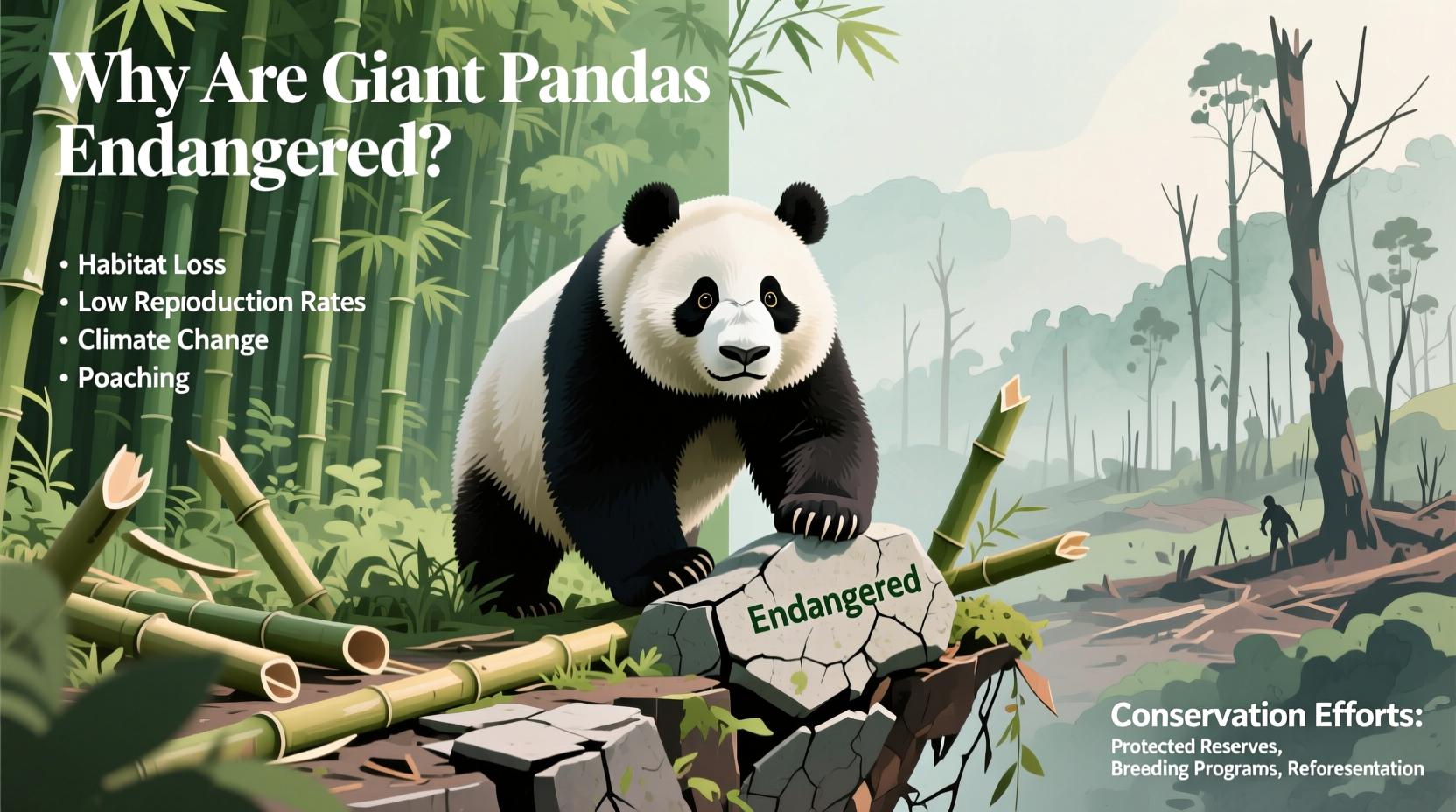
The most significant factor contributing to the decline of giant pandas is habitat loss. Native to the mountainous regions of central China—primarily Sichuan, Shaanxi, and Gansu provinces—pandas rely on vast stretches of temperate bamboo forests for food and shelter. Over the past several decades, rapid deforestation, agricultural expansion, and infrastructure development have fragmented these forests into isolated patches.
When habitats become fragmented, panda populations are cut off from one another, reducing genetic diversity and making it harder for individuals to find mates. A 2020 study by the Chinese Academy of Sciences found that over 50% of historical panda habitat has been lost or degraded since the 1950s. Roads, railways, and human settlements act as barriers, further isolating subpopulations and increasing the risk of local extinctions.
Bamboo Dependency and Climate Vulnerability
Giant pandas have an unusual diet for a bear—they consume almost exclusively bamboo, which makes up 99% of their food intake. An adult panda eats between 12 to 38 kilograms (26 to 84 pounds) of bamboo daily. This extreme dietary specialization creates a unique vulnerability: if bamboo fails, so does the panda.
Bamboo plants undergo natural mass flowering and die-off cycles every 30 to 120 years, depending on the species. When large swaths of bamboo die simultaneously, pandas must migrate to new areas to survive. However, with fragmented habitats and human development blocking migration routes, many pandas cannot relocate in time.
Climate change intensifies this threat. Rising temperatures and shifting rainfall patterns could alter the distribution of bamboo forests, potentially rendering current panda habitats unsuitable within the next 80 years. A 2012 study published in *Nature Climate Change* projected that more than 35% of existing bamboo forests could vanish by 2070 due to climate shifts.
“Pandas aren’t just victims of habitat destruction—they’re also trapped by their own evolutionary choices. Their reliance on bamboo makes them exceptionally sensitive to ecological changes.” — Dr. Fang Li, Senior Conservation Biologist at Chengdu Research Base
Low Reproductive Rates and Biological Challenges
Even under ideal conditions, giant pandas face inherent biological obstacles to population growth. Female pandas ovulate only once a year, with a fertile window lasting just 24 to 72 hours. Cubs are born extremely underdeveloped—blind, hairless, and weighing only about 90 to 130 grams (3 to 4.5 ounces)—making infant mortality high in the wild.
In captivity, breeding programs have made remarkable progress using artificial insemination and behavioral monitoring. The Chengdu Research Base and the Wolong National Nature Reserve have achieved consistent cub births since the early 2000s. However, reintroducing captive-bred pandas into the wild remains challenging due to limited suitable habitat and the need for extensive pre-release training.
Conservation Successes and Ongoing Efforts
China’s commitment to panda conservation over the past 30 years has led to measurable improvements. The government has established 67 panda reserves covering more than 1.4 million hectares (3.5 million acres), protecting over two-thirds of the wild population. Legal protections against poaching and logging have been strengthened, and reforestation initiatives have restored thousands of hectares of bamboo forest.
International collaboration has also played a vital role. Organizations like the World Wildlife Fund (WWF), which adopted the panda as its logo in 1961, have funded research, supported anti-poaching patrols, and advocated for sustainable land-use policies. Captive breeding programs in China and partner zoos abroad have increased the global panda population significantly.
As of 2023, there are approximately 1,864 giant pandas living in the wild, up from around 1,100 in the 1980s. An additional 600 pandas reside in captivity worldwide. These numbers reflect decades of coordinated effort—but they also underscore how far the species still has to go.
Panda Conservation Timeline: Key Milestones
- 1961: WWF is founded with the panda as its symbol.
- 1980s: China launches the first national panda survey and begins creating nature reserves.
- 1992: The Natural Forest Protection Program bans commercial logging in panda habitats.
- 2008: The Wolong Panda Center rebuilds after earthquake damage, enhancing breeding capabilities.
- 2016: IUCN downlists giant panda from “Endangered” to “Vulnerable.”
- 2021: China designates the Giant Panda National Park, unifying 67 existing reserves across three provinces.
What Still Needs to Be Done?
Despite progress, critical gaps remain. The newly established Giant Panda National Park aims to consolidate fragmented reserves and improve connectivity, but enforcement, funding, and community engagement will determine its success. Local communities living near panda habitats often depend on forest resources for fuel, grazing, and agriculture, creating potential conflict.
Sustainable development programs that provide alternative livelihoods—such as eco-tourism, beekeeping, or handicraft cooperatives—are essential for reducing pressure on panda habitats. Education campaigns help shift public attitudes and foster stewardship among rural populations.
Checklist: How You Can Support Panda Conservation
- Donate to reputable organizations like WWF or the Chengdu Research Base.
- Choose sustainably sourced bamboo or FSC-certified wood products.
- Advocate for climate action to reduce long-term habitat risks.
- Support eco-tourism initiatives that benefit local communities near panda reserves.
- Spread awareness about the ongoing challenges pandas face—even in “recovery.”
Mini Case Study: The Story of Qian Qian
In 2017, a female panda named Qian Qian was released into the Liziping Nature Reserve after two years of wilderness training. Raised in captivity, she had to learn how to avoid humans, find food, and evade predators. GPS tracking showed she survived her first year, marking a milestone in China’s soft-release program. However, her movements revealed limitations—she stayed close to release sites, avoiding deeper forest areas likely due to noise from nearby roads. Her case illustrates both the promise and complexity of reintroducing captive animals into human-altered landscapes.
Frequently Asked Questions
Are giant pandas still endangered?
No, giant pandas are no longer classified as “Endangered.” In 2016, the IUCN Red List reclassified them as “Vulnerable” due to population growth and habitat recovery. However, they still face serious threats and require ongoing protection.
Why don’t giant pandas reproduce easily?
Female pandas are fertile for only 2–3 days per year, and mating behaviors in captivity were historically difficult to stimulate. Cubs are born extremely undeveloped and require intensive maternal care. While artificial insemination has improved breeding success, natural reproduction rates remain low.
Can pandas survive without bamboo?
While pandas may occasionally eat small animals or other plants, bamboo is essential to their digestive system and energy needs. Their gut microbiome is adapted specifically to break down cellulose in bamboo. Without it, they cannot thrive.
Conclusion: A Symbol of Hope and Responsibility
The journey of the giant panda—from the edge of extinction to cautious recovery—demonstrates that dedicated conservation can yield results. But their future is not guaranteed. Habitat fragmentation, climate change, and human encroachment continue to pose real dangers. The panda’s story is not just about saving a single species; it’s about preserving entire ecosystems and rethinking our relationship with nature.




 浙公网安备
33010002000092号
浙公网安备
33010002000092号 浙B2-20120091-4
Comments
No comments yet. Why don't you start the discussion?