
The giant panda, with its distinctive black-and-white coat and gentle demeanor, has become one of the most iconic symbols of wildlife conservation. Yet behind its global fame lies a troubling reality: this beloved species remains vulnerable to extinction. While conservation efforts have led to a modest recovery in recent decades, giant pandas still face a complex web of threats that challenge their long-term survival. Understanding these dangers—ranging from habitat fragmentation to biological limitations—is essential for ensuring the panda’s future in the wild.
Habitat Loss and Fragmentation
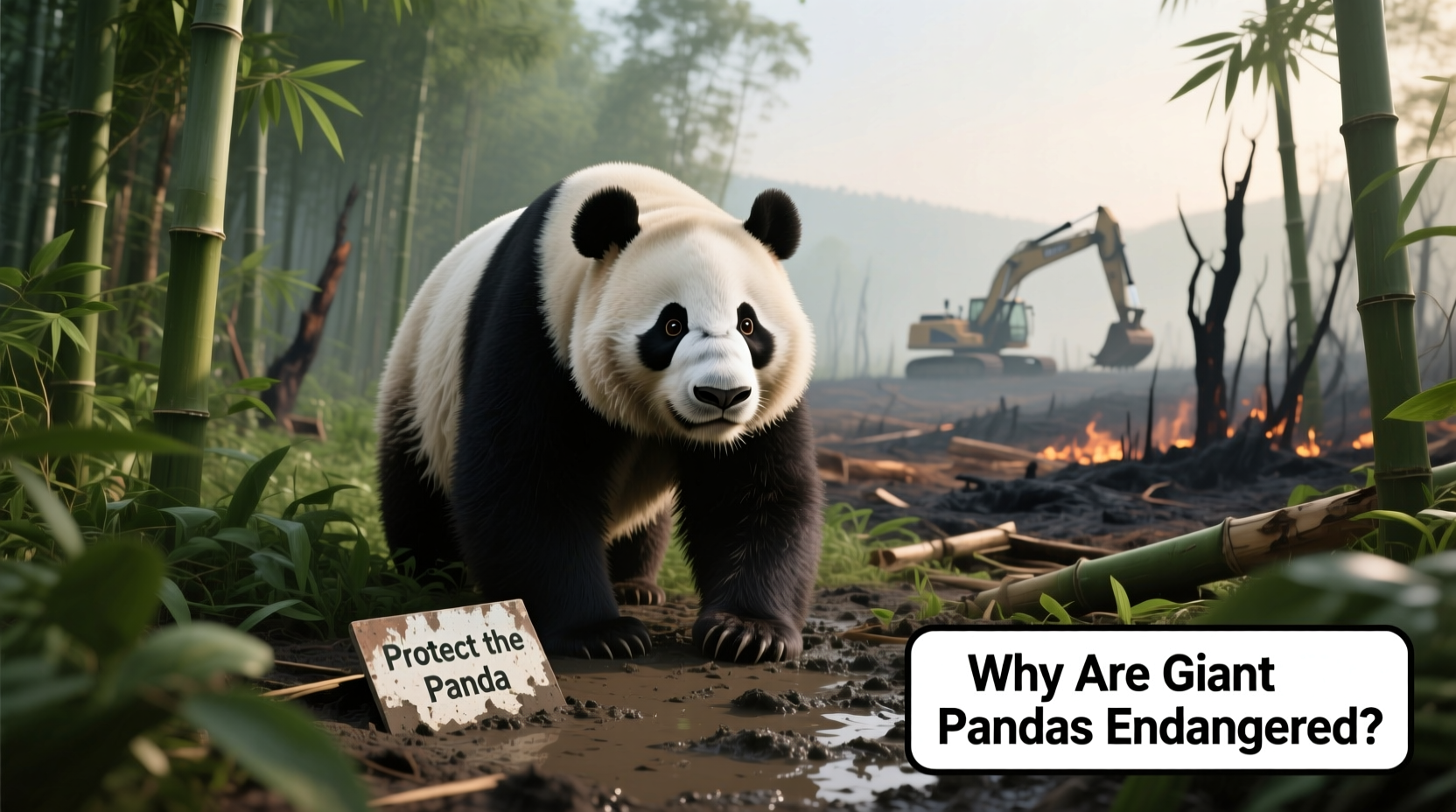
One of the most significant factors contributing to the panda’s endangered status is the destruction and fragmentation of its natural habitat. Giant pandas live almost exclusively in the mountainous bamboo forests of central China, primarily in Sichuan, Shaanxi, and Gansu provinces. Over the past century, rapid human development—including agriculture, logging, road construction, and urban expansion—has drastically reduced and divided these forest ecosystems.
As forests are cleared or degraded, panda populations become isolated in small, disconnected patches. This fragmentation limits their ability to find mates, access sufficient food, and migrate in response to environmental changes. A 2020 study published in *Biological Conservation* found that over 60% of remaining panda habitats are separated by roads, farmland, or settlements, making gene flow between subpopulations increasingly difficult.
Dependence on Bamboo and Food Scarcity
Giant pandas have an unusual dietary specialization—they rely almost entirely on bamboo, which makes up 99% of their diet. An adult panda consumes between 12 to 38 kilograms (26 to 84 pounds) of bamboo daily to meet its energy needs. However, bamboo species undergo natural flowering cycles every 30 to 120 years, after which large stands die off simultaneously. These mass die-offs leave pandas without adequate food sources unless they can migrate to new areas.
With habitat fragmentation restricting movement, pandas often cannot escape regions where bamboo has died. In the 1980s, a widespread bamboo die-off in the Qinling Mountains led to the starvation of an estimated 138 pandas—a stark reminder of how precarious their food supply truly is.
“Pandas’ survival hinges not just on protecting individual animals, but on preserving entire forest ecosystems that support bamboo regeneration.” — Dr. Fuwen Wei, Chinese Academy of Sciences, panda ecology researcher
Low Reproductive Rates and Biological Challenges
Natural reproduction poses another major obstacle to panda population growth. Female pandas ovulate only once a year, with a fertile window lasting just 24 to 72 hours. Moreover, they typically give birth to one cub every two to three years, and even then, infant mortality remains high in the wild.
Cubs are born extremely underdeveloped—blind, hairless, and weighing only about 100 grams (3.5 ounces). They depend entirely on their mothers for the first few months. If a female gives birth to twins, she often abandons the weaker cub due to the immense energy demands of raising offspring.
While captive breeding programs have improved significantly since the 1990s, successfully reintroducing pandas into the wild remains challenging. Many lack the survival skills needed to forage and avoid predators independently.
Key Biological Factors Limiting Panda Recovery
| Factor | Description | Impact on Survival |
|---|---|---|
| Seasonal Breeding | Females fertile only once per year | Limits annual reproductive opportunities |
| Small Litter Size | Usually one cub; twins rare and hard to raise | Slows population growth |
| High Cub Mortality | Vulnerable to cold, predation, and abandonment | Reduces number reaching adulthood |
| Dietary Specialization | Reliance on nutrient-poor bamboo | Requires constant feeding, limits energy for reproduction |
Human-Wildlife Conflict and Historical Exploitation
Historically, giant pandas were hunted for their pelts, despite cultural reverence in parts of China. Though hunting is now illegal and heavily penalized, accidental trapping in snares set for other animals—such as wild boars or musk deer—still occurs in remote regions. Local communities sometimes view pandas as competitors for land or threats to crops when they wander near villages.
In addition, tourism, while beneficial for funding conservation, can disturb panda behavior if not managed responsibly. Unregulated visitor access to reserves may lead to noise pollution, littering, and stress-induced health issues in sensitive individuals.
Mini Case Study: The Wolong Nature Reserve
The Wolong National Nature Reserve in Sichuan, established in 1963, became a cornerstone of panda conservation. After the devastating 2008 Wenchuan earthquake destroyed much of its infrastructure and fragmented key habitats, researchers observed a decline in panda movement across the reserve. In response, Chinese authorities partnered with international organizations to rebuild eco-friendly research centers and construct bamboo corridors over highways. By 2020, panda sightings in the area increased by 30%, demonstrating how targeted restoration can reverse habitat isolation.
Conservation Successes and Ongoing Efforts
Despite persistent challenges, coordinated conservation strategies have yielded measurable progress. The International Union for Conservation of Nature (IUCN) upgraded the giant panda from “Endangered” to “Vulnerable” in 2016, reflecting a 17% increase in wild population over the previous decade. As of 2023, there are approximately 1,864 giant pandas living in the wild, up from around 1,000 in the 1970s.
This improvement stems from several key actions:
- Establishment of over 67 panda reserves covering more than 1.4 million hectares
- National logging bans implemented in the late 1990s
- Community-based programs that compensate farmers for protecting forests
- International collaborations supporting research and breeding
Action Checklist: How You Can Support Panda Conservation
- Donate to reputable wildlife organizations focused on panda protection
- Avoid products linked to deforestation in China, such as unsustainable timber or paper
- Choose eco-tourism operators committed to low-impact practices
- Educate others about the importance of biodiversity and habitat connectivity
- Support policies that promote green infrastructure and wildlife corridors
Frequently Asked Questions
Are giant pandas still endangered?
No longer classified as “Endangered,” giant pandas are currently listed as “Vulnerable” by the IUCN. While their numbers are increasing, they remain at risk due to habitat constraints and climate change impacts on bamboo forests.
Why don’t pandas eat other foods?
Although pandas are technically carnivores, they evolved to digest bamboo over millions of years. Their digestive systems remain inefficient at processing plant material, forcing them to consume massive quantities daily. Attempts to introduce alternative foods in captivity have shown limited success.
Can climate change affect giant pandas?
Yes. Studies project that climate change could eliminate over 35% of suitable bamboo habitat by 2070 due to shifting temperature and rainfall patterns. Without adaptive conservation planning, pandas may lose critical food sources faster than they can adapt.
Conclusion: A Symbol of Hope and Responsibility
The story of the giant panda is one of resilience—and a powerful testament to what dedicated conservation can achieve. From the brink of extinction, their populations have begun to recover thanks to science, policy, and public awareness. But their future is not yet secure. Habitat fragmentation, climate instability, and biological vulnerabilities continue to threaten their long-term survival.
Protecting giant pandas means protecting entire ecosystems—the forests, rivers, and biodiversity that sustain not only pandas but also local communities and global ecological balance. Every effort counts, whether it's supporting sustainable forestry, advocating for protected corridors, or simply spreading knowledge about this extraordinary species.




 浙公网安备
33010002000092号
浙公网安备
33010002000092号 浙B2-20120091-4
Comments
No comments yet. Why don't you start the discussion?