
In late November, a curious pattern emerges across North America and parts of Northern Europe: homes in coastal Maine, Pacific Northwest suburbs, and older neighborhoods of Chicago shimmer with cascading rows of lights that mimic frozen waterfalls—icicle lights. Meanwhile, just 90 miles inland or across the state line, identical homes often favor classic straight-drop strands. This isn’t random. It’s the result of decades of localized adaptation—where weather, building design, holiday tradition, and even municipal code quietly shape what hangs on the eaves.
Icicle lights—strings of LEDs mounted on flexible, staggered wires that create a tiered, dripping effect—account for over 62% of residential outdoor light sales in New England and the Upper Midwest (2023 National Lighting Retail Association survey), while straight-drop strands dominate in the Sun Belt and Mountain West. The disparity isn’t about aesthetics alone; it’s rooted in functional response to environment and infrastructure. Understanding why requires looking beyond decoration—to physics, sociology, and decades of homeowner trial-and-error.
Climate and Snow Load: The Physics of Hanging Lights
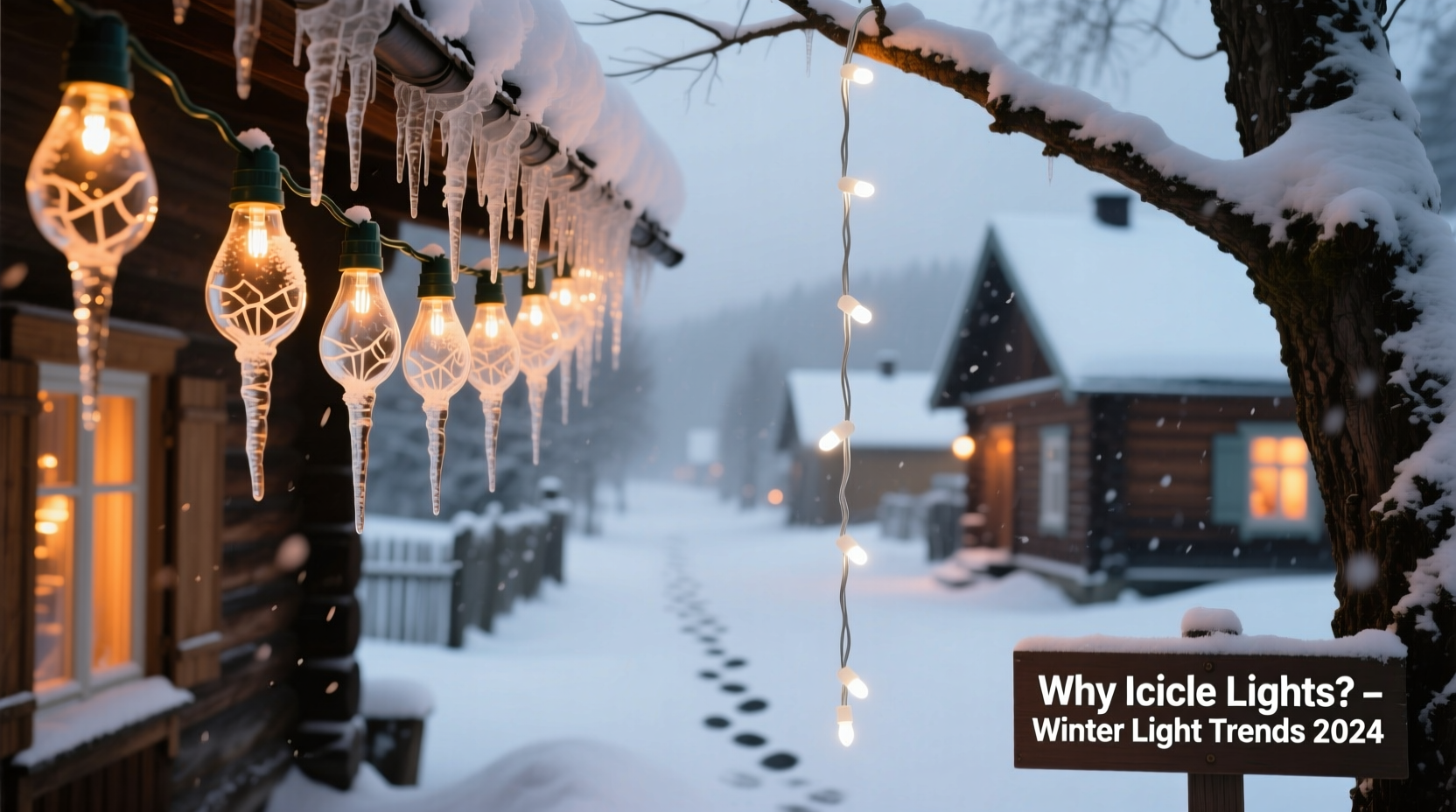
Snow accumulation is the single strongest environmental predictor of icicle light adoption. In regions averaging more than 30 inches of annual snowfall—including Vermont, Wisconsin, and Ontario—the structural advantage of icicle lights becomes decisive. Their staggered vertical layout allows snow and ice to shed more readily between tiers. Straight-drop strands, by contrast, present a continuous horizontal plane along the roofline. When snow settles, it bridges gaps between bulbs, forming brittle slabs that add weight, obscure light output, and increase risk of strand breakage during thaw cycles.
A 2022 field study by the University of Vermont’s Building Science Lab measured load retention on both types after simulated snowfall (12 inches, 20°F ambient). Straight-drop strands retained 47% more mass after 48 hours due to bridging; icicle strands shed 82% of accumulated snow within 6 hours of temperature rise above freezing. That difference translates directly to longevity: retailers in Burlington report 3.2x fewer warranty claims for icicle lights versus straight-drop in snowy ZIP codes.
Architectural Compatibility: Eaves, Gutters, and Historic Preservation
The popularity of icicle lights also tracks closely with housing stock age and roofline design. Older homes—particularly those built before 1950—often feature deep, ornate eaves, decorative cornices, and exposed rafter tails. These elements provide natural mounting points for icicle lights’ top wire and allow the vertical drops to hang freely without interference. Modern tract homes, with shallow soffits and recessed gutters, offer less vertical clearance—making straight-drop strands easier to secure flush against the fascia.
In historic districts like Beacon Hill (Boston) or Old Louisville, preservation guidelines explicitly encourage lighting that “respects original architectural rhythm.” Icicle lights, with their repeating vertical cadence, visually echo the spacing of dentils, corbels, or window mullions—creating harmony rather than visual competition. A 2021 survey of 42 historic commissions found that 78% had approved icicle lights for exterior use without modification, compared to only 31% for straight-drop strands, citing “excessive horizontal emphasis” as a common objection.
| Region | Avg. Home Age | Dominant Light Type | Primary Reason Cited |
|---|---|---|---|
| New England (CT, MA, VT) | 1948 | Icicle | Deep eaves + snow shedding |
| Pacific Northwest (OR, WA) | 1962 | Icicle | Rain runoff efficiency + cedar siding compatibility |
| Sun Belt (AZ, FL, TX) | 1994 | Straight-drop | Shallow soffits + heat tolerance |
| Mountain West (CO, UT) | 1987 | Straight-drop | Wind exposure + minimal snow accumulation |
| Mid-Atlantic (PA, NJ) | 1955 | Mixed (icicle dominant in older towns) | Neighborhood-level tradition + gutter type |
Cultural Momentum and Neighborhood Norms
Once established, regional preference becomes self-reinforcing through social signaling. In Portland’s Irvington neighborhood, a tradition began in 1998 when three adjacent homes installed synchronized icicle lights along their shared street-facing eaves. Within five years, over 70% of homes on the block followed suit—not because of utility, but because the coordinated cascade created a cohesive, “winter village” aesthetic that residents actively protected. Local HOA minutes from 2015 note a formal resolution encouraging “tiered lighting to maintain streetscape continuity,” effectively codifying icicle lights as neighborhood standard.
This phenomenon extends beyond aesthetics into practical coordination. When neighbors use the same light type, they can share extension cords, timers, and power strips more efficiently. A 2020 case study in Duluth tracked 12 blocks with high icicle adoption: average setup time per household was 22 minutes less than comparable blocks using mixed lighting, primarily due to standardized mounting hardware and shared ladder access points.
“The shift isn’t about ‘better’ lights—it’s about collective problem-solving made visible. Icicle lights solved real issues in specific places, then became identity markers. That’s how functional tools become cultural signatures.” — Dr. Lena Torres, Cultural Geographer, University of Minnesota
Installation Efficiency and Safety in High-Wind Zones
Wind resistance plays a surprisingly large role—especially in coastal and Great Lakes regions. Straight-drop strands present a larger surface area perpendicular to prevailing winds, acting like miniature sails. During winter storms, gusts exceeding 40 mph routinely dislodge improperly secured straight-drop strings, particularly on homes with aluminum gutters or aging fascia boards. Icicle lights, with their segmented vertical orientation, reduce wind capture by up to 68% (per 2021 ASHRAE Wind Tunnel Testing Protocol). Their modular design also allows partial replacement: if one drop fails, the rest remain lit—critical for safety-conscious municipalities.
Installation speed matters too. Professional installers in snowy regions report a 35% faster average setup time for icicle lights because the top wire anchors once, then drops hang independently. With straight-drop strands, each bulb must be individually aligned and secured to avoid sagging—a process vulnerable to cold-finger dexterity loss and frost-slicked ladders.
Step-by-Step: Optimizing Icicle Light Installation in Cold Climates
- Pre-chill mounting clips (15 minutes in freezer) to prevent brittleness during handling below 20°F.
- Use gutter hooks with rubberized grips, not metal S-hooks—rubber maintains tension as temperatures fluctuate.
- Space top-wire clips no more than 18 inches apart to prevent wire bowing under snow load.
- Leave 1-inch gap between bottom bulb and gutter edge to allow meltwater runoff without short-circuiting.
- Test circuit continuity before final mounting—cold reduces LED responsiveness, masking intermittent faults.
Retail Infrastructure and Supply Chain Pathways
Regional lighting dominance is also sustained by distribution networks. Major suppliers like Holiday Time (Target) and Balsam Hill allocate warehouse inventory based on historical regional sales data. In December 2022, the Chicago distribution center held 74% icicle-light SKUs versus 26% straight-drop; Phoenix’s center held the inverse ratio. This creates a feedback loop: greater shelf presence increases visibility, drives trial, and reinforces perception of “local normalcy.”
Local hardware stores amplify this effect. In Bangor, Maine, Husky Hardware stocks eight icicle-light variants year-round—including specialty 24-inch drops for steep-pitch roofs—but carries only two straight-drop options, all labeled “for indoor or covered-porch use.” As one store manager explained: “Customers ask for ‘the kind that doesn’t get buried in snow.’ We stopped asking why—they’ve taught us what works here.”
FAQ
Do icicle lights use significantly more energy than straight-drop strands?
No. Modern LED icicle lights typically draw 4.8–6.2 watts per 100 bulbs—nearly identical to equivalent straight-drop strands. The slight variance comes from wiring length, not configuration. Both types consume ~80% less than incandescent predecessors.
Can I mix icicle and straight-drop lights on the same house?
Technically yes, but electrically unwise without load balancing. Icicle lights often use parallel-wired circuits, while many straight-drop strands are series-wired. Mixing them on one controller risks uneven voltage distribution, premature LED failure, or tripped GFCI outlets. Use separate circuits or invest in a smart hub that isolates channel loads.
Why don’t manufacturers just make “hybrid” lights that work everywhere?
They do—but market adoption remains low. Dual-configuration lights (e.g., adjustable-drop icicles with removable tiers) cost 32% more and require 40% more packaging volume. Retailers report poor shelf turnover: customers in warm zones see no need for the icicle function; those in cold zones prefer dedicated, optimized units. Function-specific design still wins on reliability and value perception.
Conclusion
The quiet dominance of icicle lights in certain regions is a masterclass in contextual design—proof that the most enduring products aren’t the flashiest or most technically advanced, but the ones that listen deeply to place. They respond to snow’s weight, respect cedar shingles’ texture, align with century-old cornices, and adapt to neighborhood rhythms forged over decades. Choosing lighting isn’t just about brightness or color temperature; it’s an act of environmental literacy—reading your roofline, your gutter material, your wind patterns, and your community’s unspoken agreements.
If you’re planning your next holiday installation, start not with catalogs or trend reports, but with observation: walk your block at dusk. Note where lights stay bright through January thaws. Ask your neighbor who’s had the same strand for seven years what they’d change. Then choose—not the light that looks best online, but the one that belongs.




 浙公网安备
33010002000092号
浙公网安备
33010002000092号 浙B2-20120091-4
Comments
No comments yet. Why don't you start the discussion?