
In an era of rapid information flow and digital noise, the role of journalists is often questioned. With social media enabling anyone to share news, some wonder if professional journalism still matters. The answer is a resounding yes. Journalists remain vital to democratic societies, not merely as storytellers but as watchdogs, investigators, and educators who help citizens make sense of complex realities. Their work underpins transparency, accountability, and informed decision-making—cornerstones of any functioning democracy.
From uncovering corruption to amplifying marginalized voices, journalists operate at the intersection of power and public interest. They don’t just report events; they verify facts, provide context, and challenge misinformation. In doing so, they fulfill a civic duty that extends far beyond headlines and breaking news alerts.
The Role of Journalists in Democracy
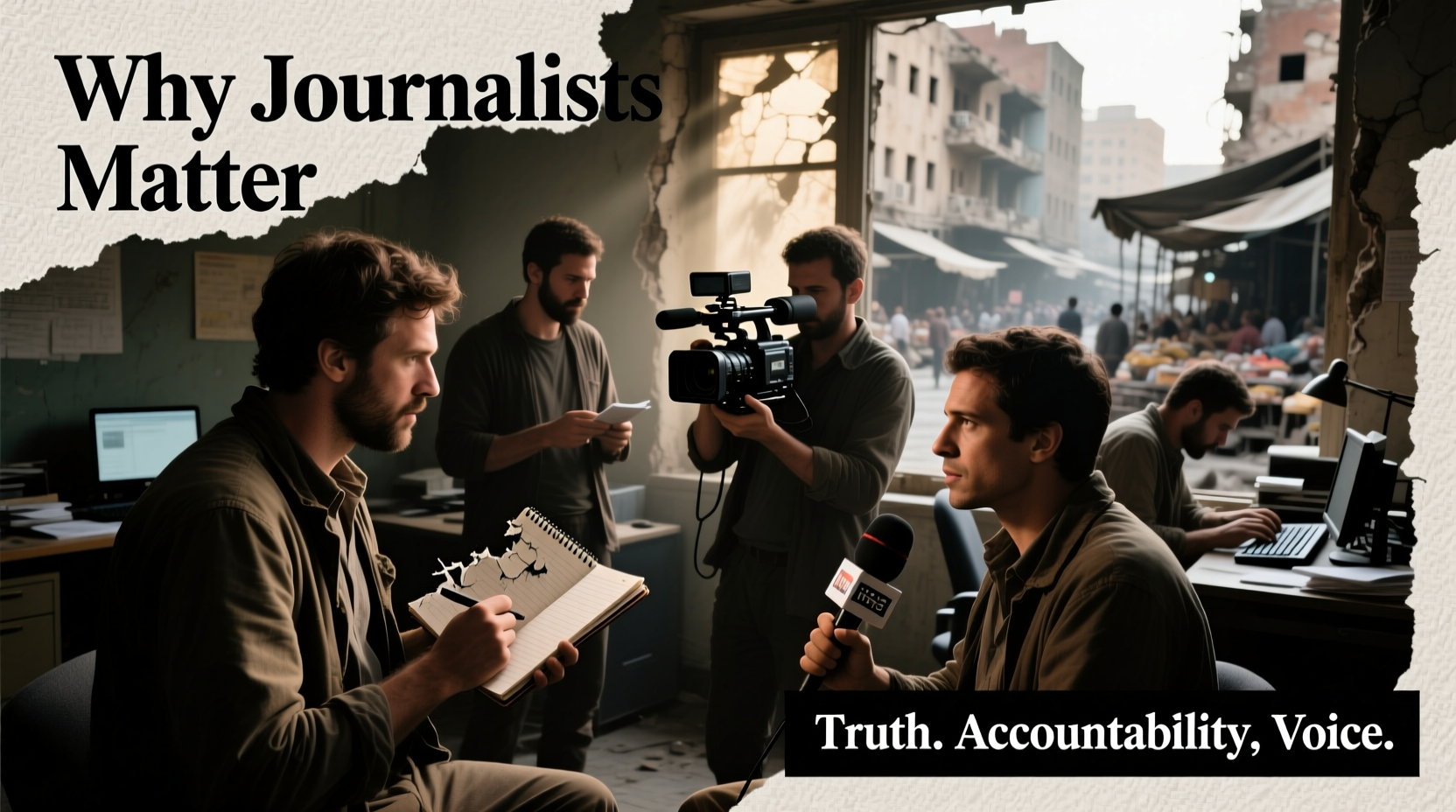
Democracy thrives on information. Without access to accurate, timely, and relevant news, citizens cannot hold leaders accountable or participate meaningfully in governance. Journalists serve as intermediaries between institutions and the public, translating policies, scandals, and societal shifts into accessible narratives.
One of the most critical functions of journalism is its watchdog role. Investigative reporters spend months—or even years—uncovering abuses of power. Consider the Watergate scandal, exposed by Washington Post journalists Bob Woodward and Carl Bernstein, which ultimately led to President Richard Nixon’s resignation. This case remains a landmark example of how journalism can alter the course of history when it holds authority to account.
“Journalism is the oxygen of democracy. Without it, transparency suffocates.” — Maria Ressa, Nobel Peace Prize Laureate and investigative journalist
Today, similar investigations continue globally: from exposing offshore tax havens in the Panama Papers to revealing systemic failures during public health crises. These efforts rely on trained professionals who adhere to ethical standards, source verification, and editorial oversight—qualities often absent in user-generated content.
Combatting Misinformation and Building Trust
In the digital age, misinformation spreads faster than ever. False claims, manipulated images, and conspiracy theories circulate widely on platforms where algorithms prioritize engagement over accuracy. This environment makes the work of credible journalists more crucial than ever.
Professional journalists follow rigorous fact-checking protocols. They cite sources, cross-reference data, and submit stories to editorial review before publication. While no system is perfect, this process significantly reduces the risk of spreading falsehoods compared to unverified social media posts.
Moreover, responsible journalism helps build public trust through consistency and transparency. When audiences know a news outlet corrects errors, discloses conflicts of interest, and explains its reporting methods, they are more likely to view it as reliable.
Amplifying Underrepresented Voices and Communities
Journalism also plays a transformative role in giving voice to those often excluded from mainstream discourse. Reporters embedded in local communities highlight issues such as housing insecurity, educational disparities, and environmental injustice that might otherwise go unnoticed by policymakers.
For example, coverage of the Flint water crisis began with local journalists who persisted despite initial dismissal from state officials. Their reporting brought national attention to lead contamination affecting thousands of residents, most of whom were low-income and Black. Without their persistence, the crisis may have remained hidden for years longer.
This kind of community-centered journalism fosters empathy and drives policy change. It reminds us that news isn't just about distant wars or celebrity scandals—it's about real people navigating real challenges every day.
How Journalism Educates and Informs Public Discourse
Beyond breaking news, journalists contribute to long-term public understanding through explanatory and solutions-based reporting. Complex topics like climate change, healthcare reform, or artificial intelligence require more than soundbites—they demand context, historical background, and expert analysis.
Well-researched articles break down intricate systems into digestible insights. For instance, a series on renewable energy might explain not only technological advances but also economic trade-offs, regulatory hurdles, and global equity implications. This depth enables readers to form nuanced opinions rather than relying on slogans or partisan talking points.
Furthermore, journalistic storytelling humanizes abstract issues. A profile of a family displaced by wildfires makes climate change tangible in ways that statistics alone cannot. Emotionally resonant narratives deepen engagement and motivate action.
A Real Example: The Impact of Investigative Reporting on Public Health
In 2018, reporter Brian Mann of NPR published a series on the opioid epidemic in rural New York. Through interviews with addicts, doctors, and law enforcement, he revealed how pharmaceutical companies targeted vulnerable communities while regulators failed to intervene. His reporting prompted a congressional hearing and inspired local harm reduction programs.
This case illustrates how sustained, empathetic journalism can shift both public perception and institutional response. It wasn’t viral outrage that drove change—it was meticulous, patient reporting grounded in facts and lived experience.
Supporting Ethical Journalism: A Checklist for the Public
The sustainability of quality journalism depends not only on reporters but on audience behavior. Here’s what individuals can do to support trustworthy news ecosystems:
- Subscribe to reputable outlets: Paid subscriptions fund investigative teams and reduce reliance on click-driven advertising.
- Share responsibly: Avoid amplifying unverified claims, even if they align with your views.
- Diversify your news diet: Consume content from multiple perspectives to avoid echo chambers.
- Engage critically: Ask questions about sourcing, methodology, and potential biases.
- Support press freedom initiatives: Advocate for laws protecting journalists and oppose censorship.
Common Challenges Facing Modern Journalism
Despite their importance, journalists face growing threats. Economic pressures have led to newsroom layoffs and closures, especially at the local level. According to the Pew Research Center, newspaper employment in the U.S. has declined by over 60% since 2008.
At the same time, political hostility toward the press has intensified. Terms like “fake news” are weaponized to discredit legitimate reporting, putting journalists at risk of harassment, legal action, or physical violence. Reporters Without Borders ranks press freedom annually, noting declines in countries once considered stable democracies.
| Challenge | Description | Potential Solution |
|---|---|---|
| Economic Sustainability | Fewer ad revenues, declining print sales | Reader-funded models, nonprofit journalism |
| Disinformation | False narratives spread rapidly online | Media literacy education, platform accountability |
| Safety Risks | Threats to journalists covering protests or corruption | Legal protections, international advocacy |
| Public Distrust | Misconceptions about bias or agenda | Transparency in reporting processes |
FAQ
Why can’t we just rely on social media for news?
Social media lacks consistent editorial standards. While it can surface important events quickly, it often spreads unverified or misleading content. Professional journalists apply verification techniques and ethical guidelines that social media users typically don’t follow.
Are all journalists unbiased?
No individual is completely free of perspective, but ethical journalists strive for fairness, accuracy, and balance. Reputable outlets disclose potential conflicts and distinguish clearly between news reporting and opinion. Bias becomes problematic when it replaces factual integrity—which is why supporting high-standard journalism matters.
How can I tell if a news source is trustworthy?
Look for signs of professionalism: named authors, cited sources, corrections policies, and separation of news and opinion sections. Organizations affiliated with press councils or ethics boards (like the Society of Professional Journalists) are generally more accountable.
Conclusion: Upholding the Value of Truth-Telling
Journalists are not perfect, but their role in society is indispensable. They inform, investigate, challenge power, and give voice to the voiceless. In a world awash with information, their commitment to truth and accountability acts as a stabilizing force.
Protecting and supporting journalism isn’t just the responsibility of newsrooms—it’s a collective civic duty. By choosing credible sources, advocating for press freedom, and valuing depth over speed, we all contribute to a healthier information ecosystem.




 浙公网安备
33010002000092号
浙公网安备
33010002000092号 浙B2-20120091-4
Comments
No comments yet. Why don't you start the discussion?