
The spotted lanternfly (Lycorma delicatula) may look like a delicate, colorful insect with its speckled wings and striking red underbelly, but appearances can be deceiving. Native to parts of China, India, and Vietnam, this invasive species has made its way to the United States—first detected in Pennsylvania in 2014—and is now spreading rapidly across multiple states. What makes this seemingly harmless bug such a serious threat? The answer lies in its destructive feeding habits, rapid reproduction, and broad host range, all of which pose significant risks to agriculture, forestry, and local economies.
Ecological Disruption and Tree Damage
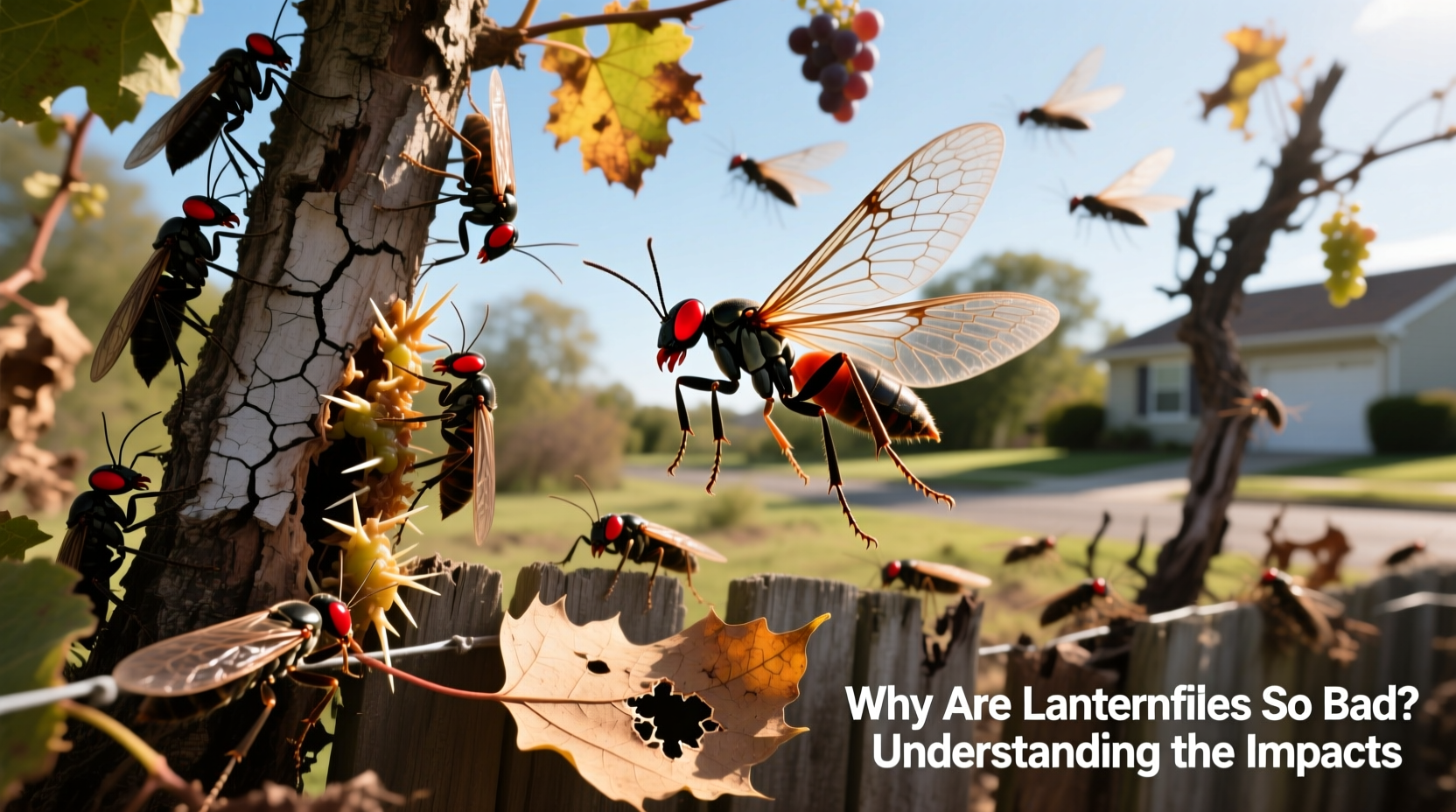
Spotted lanternflies feed by piercing the stems, branches, and trunks of plants and trees, then sucking out sap. This process weakens the plant, reducing its ability to transport nutrients and water. Unlike many insects that target leaves or fruit, lanternflies attack vascular systems directly, making their impact far more severe.
One of the most commonly affected trees is the tree-of-heaven (Ailanthus altissima), another invasive species that serves as the lanternfly’s preferred host. However, lanternflies do not stop there. They have been documented on over 70 different plant species, including maples, walnuts, willows, and especially grapevines.
When lanternflies feed, they excrete a sugary substance called honeydew. While this might sound harmless, it promotes the growth of sooty mold—a black fungus that coats leaves and bark. Sooty mold blocks sunlight, impairing photosynthesis and further weakening the plant. In dense infestations, trees can experience dieback, reduced growth, and even death within a few seasons.
Agricultural and Economic Threats
The economic implications of lanternfly infestations are profound, particularly for the grape, orchard, and nursery industries. Grapevines are especially vulnerable; heavy feeding can reduce yields, weaken vines, and in extreme cases, kill entire crops. The wine industry, concentrated in regions like Pennsylvania, New York, and Virginia, faces millions of dollars in potential losses if infestations are not controlled.
According to the Pennsylvania Department of Agriculture, the state’s grape, tree fruit, hardwood, and nursery industries contribute over $18 billion annually to the economy. A widespread lanternfly invasion could jeopardize thousands of jobs and disrupt supply chains.
“Without aggressive management, the spotted lanternfly could become one of the most economically damaging invasive pests in U.S. history.” — Dr. Julie Urban, Entomologist at Penn State University
Beyond direct crop damage, the presence of lanternflies increases production costs. Farmers must invest in monitoring, pesticide applications, and labor-intensive removal efforts. Quarantine zones have been established in several states, requiring businesses to obtain permits and conduct inspections before moving equipment or materials—adding regulatory and logistical burdens.
Spread Mechanisms and Rapid Expansion
One reason lanternflies are so difficult to control is their ability to spread quickly. Adult lanternflies can fly short distances, but their primary mode of long-distance dispersal is through human activity. Egg masses, which resemble smears of mud, are laid on nearly any hard surface: vehicles, outdoor furniture, firewood, shipping containers, and railroad cars.
Because these egg masses are easily overlooked, people unknowingly transport them across state lines. Once hatched, nymphs mature quickly and begin feeding, establishing new populations in previously unaffected areas. Since their introduction, lanternflies have spread to at least 15 U.S. states, including New Jersey, Maryland, Virginia, Ohio, and Indiana.
The lack of natural predators in North America compounds the problem. In their native range, lanternflies are kept in check by parasitic wasps and other insects. These biological controls are largely absent in the U.S., allowing populations to grow unchecked.
Step-by-Step: How to Prevent Spreading Lanternflies
- Inspect vehicles and outdoor gear before traveling from quarantined areas.
- Scrape off egg masses found on trees, stones, or structures using a blade or putty knife.
- Dispose of egg debris properly—place in a sealed bag with rubbing alcohol or hand sanitizer to kill eggs.
- Report sightings to your state’s department of agriculture or use official reporting apps.
- Use traps cautiously, ensuring they don’t harm beneficial insects or birds.
Urban and Residential Impacts
Lanternflies aren’t just a rural or agricultural concern—they’re increasingly affecting suburban and urban environments. Homeowners report swarms of lanternflies gathering on patios, decks, and side yards during late summer and fall. The constant dripping of honeydew creates slippery, sticky surfaces, making outdoor spaces unpleasant or unusable.
Backyard fruit trees, ornamental plants, and shade trees are all at risk. Residents often notice ants, wasps, and flies attracted to the honeydew, creating additional nuisance issues. In some neighborhoods, property values could be indirectly impacted if trees decline or outdoor living becomes less enjoyable.
Local governments and municipalities are spending taxpayer funds on public awareness campaigns, tree treatments, and trap installations. These costs divert resources from other community needs, highlighting how an invasive species can ripple through every level of society.
Case Study: A Vineyard’s Battle Against Lanternflies
In Lancaster County, Pennsylvania, a family-run vineyard noticed a sharp decline in grape yield over two consecutive growing seasons. Vines appeared stressed, with curled leaves and dark streaks on the bark. Upon inspection, entomologists discovered hundreds of lanternfly nymphs clustered at the base of the plants.
The vineyard responded by implementing an integrated pest management (IPM) strategy: installing sticky bands on trees to monitor nymph movement, applying targeted insecticides during peak hatching periods, and removing nearby tree-of-heaven hosts. They also began training staff to identify and report egg masses.
After three years of consistent effort, lanternfly numbers dropped significantly, and grape production began to recover. However, the cost of intervention—including lost revenue and treatment expenses—exceeded $50,000. The experience underscored both the severity of the threat and the importance of early action.
Do’s and Don’ts: Managing Lanternflies Responsibly
| Do | Don't |
|---|---|
| Report lanternfly sightings to local authorities | Ignore egg masses on outdoor structures |
| Remove tree-of-heaven carefully (with herbicide follow-up) | Move firewood from quarantined areas |
| Use approved insecticides responsibly | Kill lanternflies indiscriminately without identification |
| Support research and biocontrol initiatives | Assume the problem will resolve itself |
Frequently Asked Questions
Are spotted lanternflies dangerous to humans or pets?
No, lanternflies do not bite, sting, or carry diseases harmful to humans or animals. Their danger lies in their environmental and economic impact, not direct health threats.
Can I crush spotted lanternflies?
Yes, crushing adults or nymphs is a recommended control method, especially when populations are small. However, be cautious not to leave behind egg masses, which require specific removal techniques.
What should I do if I find an egg mass?
Scrape it off with a rigid object into a container filled with rubbing alcohol or hand sanitizer. This ensures the eggs are destroyed. Reporting the location to your state’s agricultural department is also encouraged.
Conclusion: Taking Action Before It’s Too Late
The spotted lanternfly is more than a seasonal annoyance—it’s a persistent, escalating threat to ecosystems, agriculture, and communities. Its ability to thrive in diverse environments, reproduce rapidly, and hitchhike across regions demands coordinated, proactive responses from individuals, industries, and governments alike.
Understanding why lanternflies are so bad is the first step toward effective prevention. Whether you're a farmer, homeowner, or traveler, your actions matter. By staying informed, inspecting for signs of infestation, and participating in eradication efforts, you contribute to a broader defense against one of the most challenging invasive species of our time.




 浙公网安备
33010002000092号
浙公网安备
33010002000092号 浙B2-20120091-4
Comments
No comments yet. Why don't you start the discussion?