
Leaves are one of nature’s most efficient solar panels—quietly converting sunlight into energy while painting landscapes in vibrant shades of green. But have you ever paused to wonder why leaves are green in the first place? The answer lies in a complex interplay of chemistry, biology, and physics that not only sustains plant life but also shapes entire ecosystems. Understanding the science behind leaf color reveals how plants interact with light, adapt to seasons, and even respond to environmental stress.
The Role of Chlorophyll: Nature’s Solar Harvester
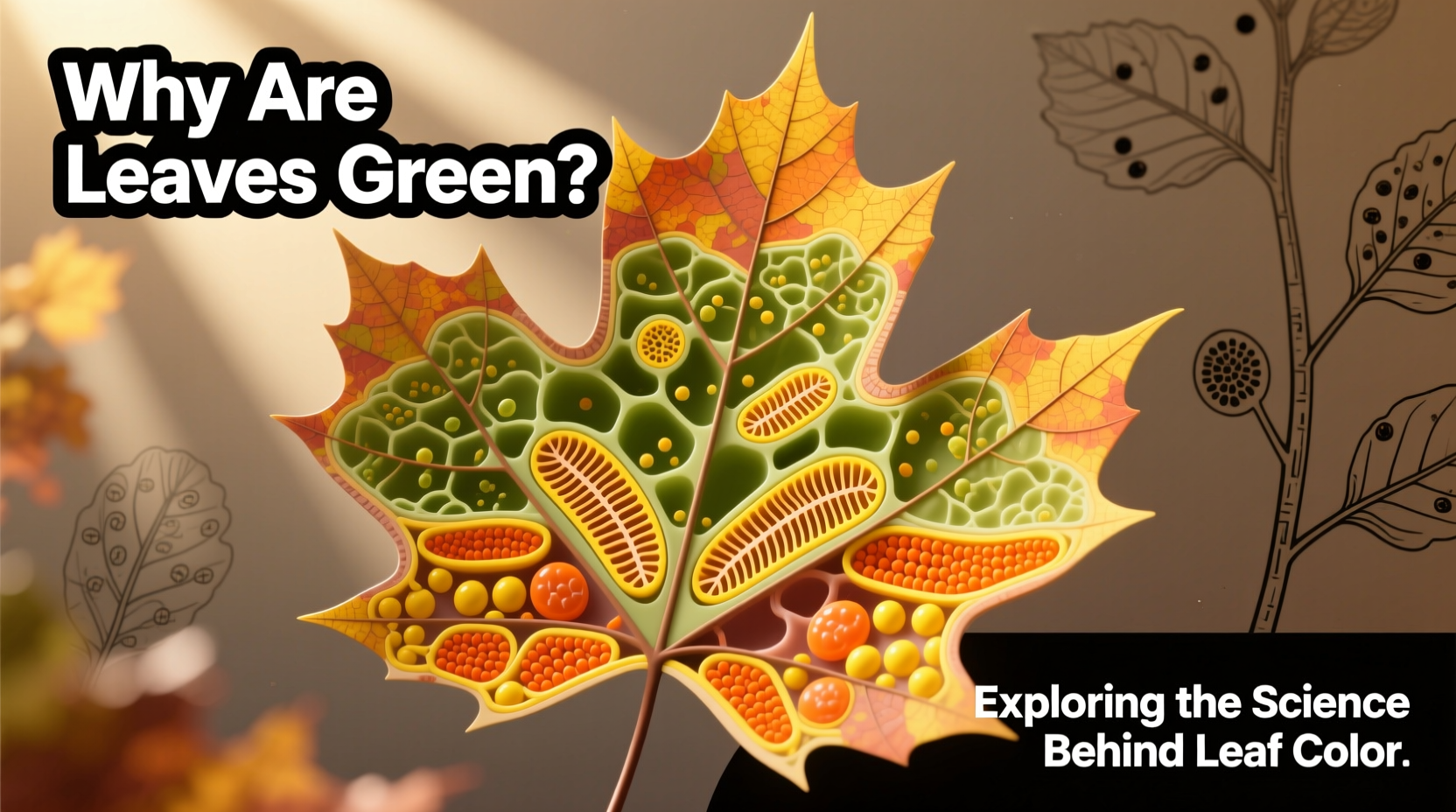
At the heart of a leaf’s green hue is a pigment called chlorophyll. This molecule is essential for photosynthesis—the process by which plants convert sunlight, carbon dioxide, and water into glucose (a form of sugar) and oxygen. Chlorophyll absorbs light most efficiently in the blue and red parts of the visible light spectrum but reflects green light. It's this reflected green light that our eyes detect, making leaves appear green.
There are two primary types of chlorophyll in most plants: chlorophyll-a and chlorophyll-b. Chlorophyll-a is directly involved in the light reactions of photosynthesis, while chlorophyll-b acts as an accessory pigment, broadening the range of light wavelengths the plant can absorb. Together, they maximize energy capture from sunlight.
How Light Interaction Determines Color
Visible light spans a spectrum of wavelengths, each corresponding to a different color. When sunlight hits a leaf, pigments within the cells absorb certain wavelengths and reflect others. Chlorophyll strongly absorbs violet-blue (around 430 nm) and red-orange (around 660 nm) light but poorly absorbs green light (500–570 nm), which is scattered back to our eyes.
This selective absorption isn’t inefficient—it’s strategic. By reflecting green light, plants avoid absorbing too much energy at once, which could damage sensitive cellular structures. In essence, green is not a sign of inefficiency but a built-in safety mechanism.
Beyond Green: The Hidden Pigments in Leaves
While chlorophyll dominates during the growing season, it's not the only pigment present. Leaves contain a palette of other compounds that become visible when chlorophyll breaks down. These include:
- Carotenoids: Yellow, orange, and brown pigments responsible for colors in carrots and autumn leaves.
- Xanthophylls: A subclass of carotenoids that contribute bright yellows and help protect leaves from excess light.
- Anthocyanins: Red, purple, and blue pigments produced in some plants under stress or in fall conditions.
These pigments often work alongside chlorophyll year-round but are masked by its overwhelming presence. As days shorten and temperatures drop, trees begin breaking down chlorophyll to reclaim valuable nutrients like nitrogen and magnesium before shedding their leaves.
“Chlorophyll is the cornerstone of life on Earth—it powers nearly all food webs through photosynthesis.” — Dr. Lena Patel, Plant Physiologist, University of California
Seasonal Shifts: Why Leaves Change Color in Fall
In temperate regions, the transition from summer to fall triggers dramatic changes in leaf color. As daylight decreases, trees form a layer of corky cells at the base of each leaf stem, gradually cutting off water and nutrient flow. With chlorophyll no longer being replenished, it degrades, revealing the underlying carotenoids and xanthophylls.
Meanwhile, some trees actively produce anthocyanins in response to bright autumn light and cool nights. These pigments act as a kind of “sunscreen,” protecting the leaf as it recycles nutrients. Species like maples, oaks, and dogwoods display brilliant reds and purples thanks to this process.
| Pigment Type | Color Produced | When Visible | Function |
|---|---|---|---|
| Chlorophyll | Green | Spring & Summer | Photosynthesis |
| Carotenoids | Yellow, Orange | Fall (after chlorophyll breakdown) | Light harvesting & photoprotection |
| Xanthophylls | Yellow-Gold | Year-round, more visible in fall | Prevent oxidative damage |
| Anthocyanins | Red, Purple, Blue | Fall (newly synthesized) | Protect against UV and cold stress |
Why Aren’t All Leaves Bright Green?
Not all leaves are uniformly green. Some appear bluish-green, grayish, or even purple. This variation stems from differences in pigment composition, leaf structure, and environmental adaptation. For example:
- Blue-green leaves: Often due to a waxy coating that scatters light, giving a glaucous appearance (e.g., eucalyptus).
- Purple or red leaves: High concentrations of anthocyanins can mask chlorophyll, as seen in ornamental plum or cabbage varieties.
- Variegated leaves: Genetic mutations or viral infections can cause patches without chlorophyll, resulting in white or yellow streaks.
In hot, sunny climates, some plants use non-green pigments to reduce heat absorption and prevent photo-damage. Others may develop reddish hues early in life to shield young, vulnerable leaves from intense sunlight.
Mini Case Study: The Sugar Maple’s Autumn Display
Consider the sugar maple (*Acer saccharum*), a tree renowned for its fiery fall foliage. During summer, its leaves are rich in chlorophyll, masking other pigments. As autumn approaches, cooler temperatures and shorter days trigger hormonal changes. The tree begins sealing off the leaf stems, halting nutrient flow.
Simultaneously, bright autumn sunlight interacting with trapped sugars in the leaf prompts the synthesis of anthocyanins. The result? A stunning transformation from green to crimson. Regions with crisp, sunny fall days and cool (but not freezing) nights produce the most vivid displays—proof that both genetics and environment shape leaf color.
Common Misconceptions About Leaf Color
Several myths persist about why leaves change color. One common belief is that temperature alone causes the shift. While cold plays a role, the primary driver is photoperiod—the length of daylight. Another misconception is that fallen leaves are “dead.” In reality, leaf abscission is a highly regulated process allowing trees to conserve resources.
Additionally, some assume that colorful autumn leaves are a sign of plant decline. On the contrary, vibrant fall colors often indicate healthy nutrient recovery and effective stress management.
Step-by-Step: Observing Leaf Pigments at Home
You can explore leaf pigments firsthand with a simple chromatography experiment:
- Collect green leaves from different plants.
- Crumble a few leaves into a small glass or test tube.
- Add just enough rubbing alcohol to cover them.
- Let the mixture sit for 30 minutes, swirling occasionally.
- Place a strip of coffee filter or chromatography paper into the liquid, ensuring one end touches the solution.
- Wait 20–30 minutes as the liquid climbs the paper.
- Observe distinct bands of color—green (chlorophyll), yellow (carotenoids), and possibly red (anthocyanins).
This hands-on activity demonstrates how multiple pigments coexist in a single leaf, invisible until separated.
FAQ
Can leaves be other colors and still perform photosynthesis?
Yes. Even red or purple leaves contain chlorophyll beneath the surface pigments. Photosynthesis continues as long as chlorophyll is present and exposed to light.
Do evergreen trees have chlorophyll?
Absolutely. Evergreens like pines and spruces retain their needles year-round and maintain chlorophyll throughout winter, allowing limited photosynthesis even in cold months.
Why do some leaves turn yellow before falling?
Yellowing occurs when chlorophyll breaks down faster than carotenoids. This signals the tree is reabsorbing nutrients from the leaf prior to shedding it.
Conclusion
The greenness of leaves is far more than a simple aesthetic—it’s a window into the fundamental processes that sustain life on Earth. From the molecular dance of chlorophyll capturing sunlight to the seasonal spectacle of autumn foliage, leaf color tells a story of adaptation, efficiency, and resilience. By understanding the science behind these colors, we gain deeper appreciation for the quiet brilliance of the natural world.




 浙公网安备
33010002000092号
浙公网安备
33010002000092号 浙B2-20120091-4
Comments
No comments yet. Why don't you start the discussion?