
Locusts, though small in size, can unleash devastation on a scale few insects can match. Unlike most grasshoppers, which live solitary lives, locusts have the ability to transform into a gregarious phase under certain environmental conditions, forming massive swarms that can span hundreds of square kilometers. These swarms do not merely pass through landscapes—they consume them. From East Africa to South Asia, locust outbreaks have triggered food crises, economic setbacks, and long-term agricultural damage. Understanding why locusts are bad goes beyond their appetite; it involves recognizing their capacity to destabilize ecosystems, economies, and human livelihoods.
The Biology Behind the Threat
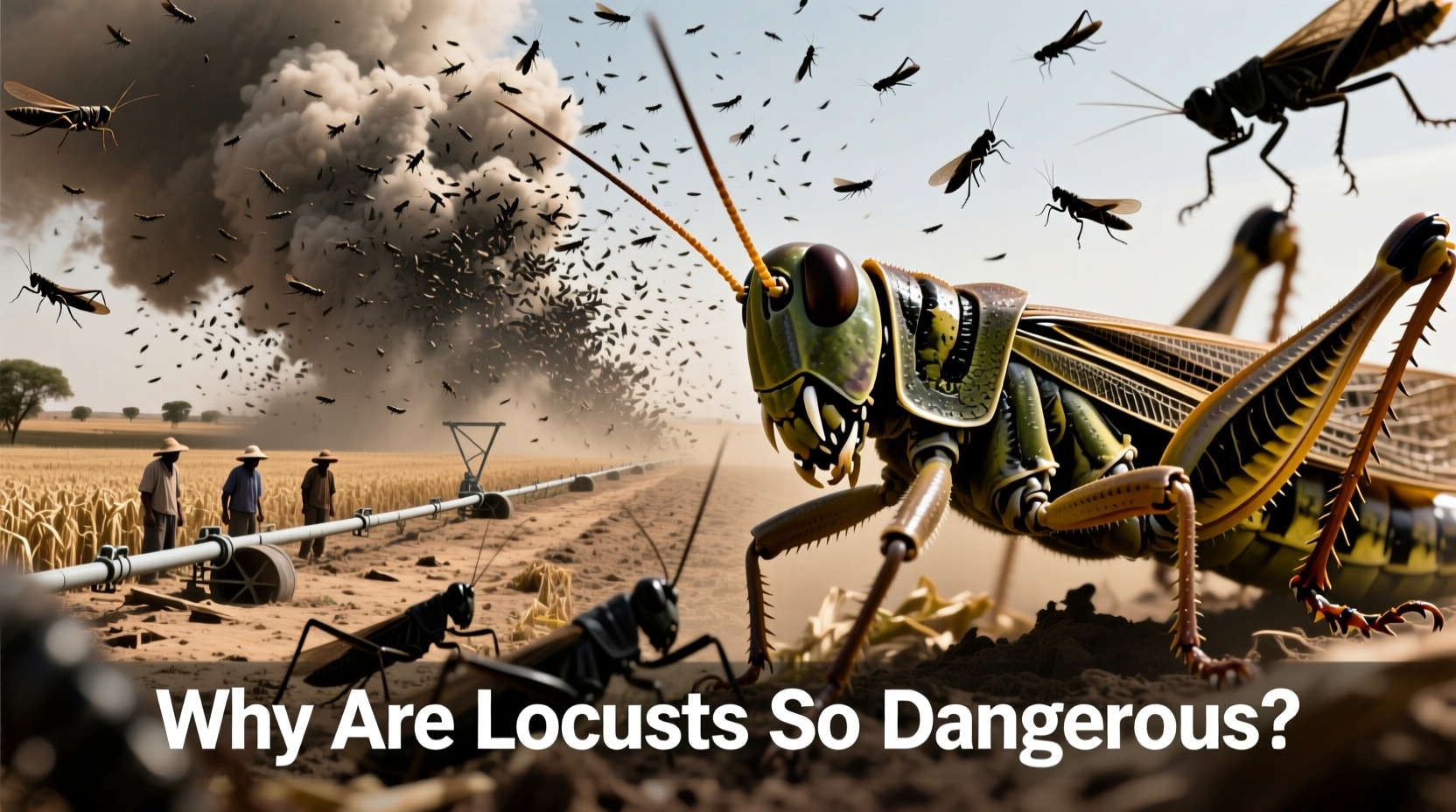
Locusts belong to the Acrididae family and are closely related to grasshoppers. What sets them apart is their unique ability to change behavior and physiology in response to population density—a phenomenon known as phase polyphenism. When rainfall increases vegetation, locust populations surge. As nymphs crowd together, tactile stimulation triggers hormonal changes, causing them to become more social, change color, and eventually form cohesive bands and swarms.
A single desert locust, the most notorious species, consumes roughly its body weight—about 2 grams—of fresh plant matter per day. While this may seem negligible, a swarm of one billion locusts can eat the equivalent of what 35,000 people would consume in a day. Swarms can travel up to 150 kilometers in a single day, carried by wind currents, making containment extremely difficult once they take flight.
Economic and Agricultural Impact
The most immediate danger posed by locusts lies in their destruction of crops and pasturelands. A medium-sized swarm can devour thousands of tons of vegetation within hours. Staple crops such as maize, sorghum, millet, rice, and wheat are particularly vulnerable. In pastoral regions, locusts decimate grazing lands, leading to livestock malnutrition and reduced milk production.
The economic toll extends far beyond the farm. Smallholder farmers, who constitute the majority of agricultural producers in affected regions, often lack insurance or financial buffers. Crop loss means lost income, increased debt, and reduced food availability for families. According to the Food and Agriculture Organization (FAO), a major locust outbreak can cost affected countries hundreds of millions of dollars in control operations and lost production.
| Sector | Impact of Locust Swarms |
|---|---|
| Agriculture | Complete crop loss in infested areas; delayed planting due to fear of reinfestation |
| Livestock | Pasture depletion leads to lower animal productivity and higher feed costs |
| Trade | Export restrictions due to contamination concerns; import dependency increases |
| Public Health | Food insecurity contributes to malnutrition, especially in children |
Ecological Consequences
While locusts are a natural part of many ecosystems, large-scale outbreaks disrupt ecological balance. Their feeding habits strip vegetation rapidly, leaving soil exposed and vulnerable to erosion. In arid and semi-arid regions, where plant recovery is already slow, this defoliation can lead to long-term land degradation.
Biodiversity also suffers. Native plant species may be outcompeted by invasive ones that recover faster post-swarm, altering habitat structures. Insectivorous birds and reptiles may initially benefit from abundant prey, but the collapse of plant cover ultimately reduces their nesting and foraging grounds.
“Locust swarms are not just an agricultural emergency—they are an ecosystem shock. The ripple effects can last for years.” — Dr. Fatima Ndiaye, Ecologist at the African Union InterAfrican Bureau for Animal Resources
Humanitarian and Social Ramifications
In regions like the Horn of Africa, where communities already face poverty, conflict, and climate instability, locust invasions can push populations over the edge into crisis. The 2019–2022 upsurge, exacerbated by cyclonic rains in the Arabian Peninsula, affected over 20 countries and threatened the food security of 25 million people.
When crops fail, families resort to negative coping strategies: selling assets, pulling children from school, or migrating in search of work. Women and children are disproportionately affected, as food scarcity often leads to unequal distribution within households. Moreover, government resources diverted to locust control reduce funding for health, education, and infrastructure.
Mini Case Study: Kenya’s 2020 Locust Crisis
In early 2020, northern Kenya faced its worst locust invasion in 70 years. Swarms originating from Yemen crossed into Ethiopia and Somalia before spreading southward. Pastoralists in Marsabit County watched helplessly as locusts stripped acacia trees and grasslands—their primary source of fodder.
Local authorities struggled to respond due to limited surveillance and pesticide supplies. By the time aerial spraying began, much of the vegetation was gone. Families reported a 60% drop in milk yields, forcing them to purchase food at inflated prices. International aid eventually helped contain the outbreak, but the recovery process took over two years, with lasting impacts on herd sizes and household resilience.
Prevention and Control: A Step-by-Step Approach
Effective locust management requires a proactive, coordinated strategy. Reactive measures alone are insufficient given the speed and scale of swarm development. The following timeline outlines best practices for minimizing locust damage:
- Monitor Environmental Conditions: Track rainfall patterns and vegetation growth using satellite data to predict breeding hotspots.
- Deploy Ground Surveillance: Train local scouts to report hopper bands in real time via mobile apps.
- Apply Targeted Pesticides: Use biopesticides like Green Muscle (based on Metarhizium acridum) in early stages to minimize environmental harm.
- Coordinate Regional Response: Share intelligence across borders through platforms like the FAO’s Desert Locust Information Service (DLIS).
- Conduct Aerial Spraying: When swarms form, use aircraft to apply ultra-low-volume insecticides over large areas.
- Support Affected Communities: Provide emergency seeds, cash transfers, and veterinary support to mitigate socioeconomic fallout.
Frequently Asked Questions
Can locusts harm humans directly?
No, locusts do not bite or sting humans. They are herbivorous and pose no direct physical threat. However, their indirect impact through food shortages and economic stress can severely affect human health and safety.
Are pesticides used against locusts safe for the environment?
Traditional chemical pesticides can harm non-target species and pollute water sources. However, newer biopesticides are species-specific and degrade quickly, offering a safer alternative. Proper application techniques and timing are crucial to minimizing ecological side effects.
Why don’t we eliminate locusts completely?
Locusts play a role in natural ecosystems, serving as food for birds, reptiles, and other predators. Total eradication is neither feasible nor ecologically advisable. Instead, the focus should be on managing outbreaks before they escalate.
Actionable Checklist for Farmers and Communities
- Stay informed through national agricultural advisories and early warning systems.
- Report any sighting of hopper bands or adult swarms to local extension officers immediately.
- Protect stored seeds and fodder from potential contamination during spraying operations.
- Participate in community training on locust identification and reporting protocols.
- Diversify crops and income sources to reduce vulnerability to pest-related losses.
Conclusion: Turning Awareness into Resilience
Understanding why locusts are bad is the first step toward building resilience against their recurring threats. These insects are not merely pests—they are indicators of broader environmental and systemic vulnerabilities. Climate change, weak surveillance networks, and underfunded agricultural systems all contribute to the growing frequency and severity of locust outbreaks.
But knowledge empowers action. By investing in early warning technologies, strengthening regional cooperation, and supporting vulnerable communities, we can reduce the devastation caused by locust swarms. Governments, scientists, and citizens must work together—not just to respond when disaster strikes, but to prevent it before it begins.




 浙公网安备
33010002000092号
浙公网安备
33010002000092号 浙B2-20120091-4
Comments
No comments yet. Why don't you start the discussion?