
In the not-so-distant past, driving a car with a manual transmission was the norm. Learning to shift gears smoothly was a rite of passage for teenage drivers in many countries. Today, however, finding a new car with a stick shift is increasingly rare—especially in North America. While manuals still hold a loyal following among driving enthusiasts, their presence on dealership lots continues to shrink. What exactly caused this shift? The decline of manual transmissions isn't due to a single factor, but rather a confluence of technological, economic, and cultural changes that have reshaped the automotive landscape.
The Rise of Automatic Efficiency
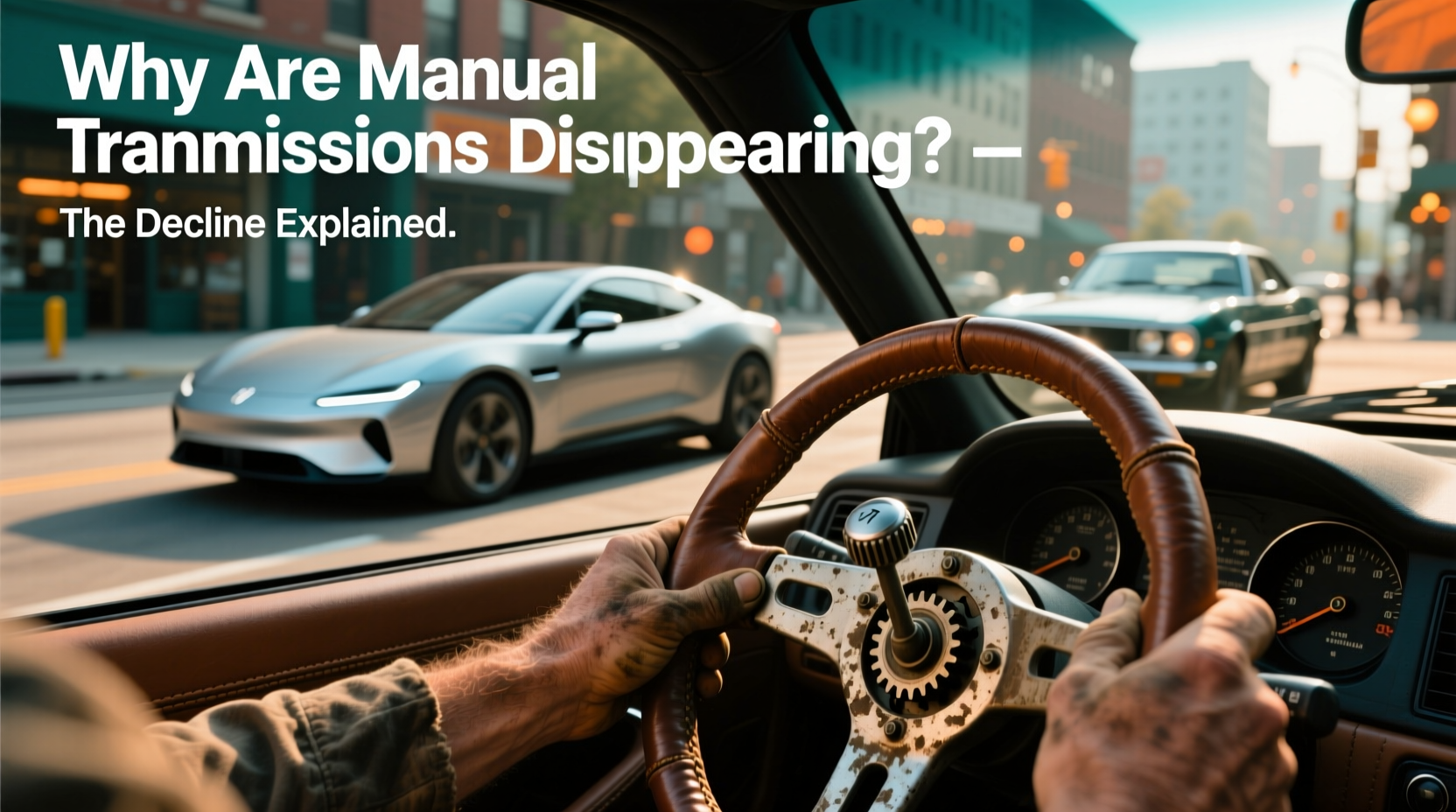
One of the most significant reasons for the decline of manual transmissions is the dramatic improvement in automatic transmission technology. In the 1980s and 1990s, automatics were often criticized for being sluggish, less fuel-efficient, and more expensive to maintain than manuals. But modern automatics—particularly dual-clutch transmissions (DCT), continuously variable transmissions (CVT), and advanced torque-converter autos with eight or more speeds—have closed that gap and in many cases surpassed manuals.
Today’s automatics can shift faster than any human driver, optimize gear selection for maximum fuel economy, and adapt to driving conditions in real time. For example, a 2023 Honda Civic equipped with a CVT achieves nearly identical fuel economy to its manual counterpart, despite requiring no driver input. In performance vehicles like the Porsche 911, the PDK dual-clutch transmission shifts in milliseconds, outperforming even professional race drivers.
Changing Consumer Preferences
Convenience has become a top priority for car buyers. With increasing urban congestion, long commutes, and multitasking lifestyles, drivers prefer systems that reduce cognitive load. Operating a clutch and shifting gears in stop-and-go traffic is not only tiring but seen as outdated by many consumers.
A 2022 survey by Edmunds found that fewer than 15% of new car buyers expressed interest in a manual transmission. Among compact cars—a traditional stronghold for manuals—less than 1% of sales involved a stick shift. Even in performance segments, where manuals once thrived, automakers report low take rates. For instance, Chevrolet discontinued the manual option for the Corvette C8 after realizing that less than 10% of buyers chose it over the lightning-fast 8-speed automatic.
This shift in preference is global. In Europe, where manuals were historically more common due to higher fuel prices and driving culture, automatics now dominate new car registrations. By 2023, over 70% of new cars sold in Germany came with automatic transmissions, up from just 30% two decades earlier.
Emissions Regulations and Engineering Constraints
Stricter emissions standards around the world have also contributed to the manual’s decline. Automakers are under pressure to reduce CO₂ output and improve fleet-wide fuel efficiency. Modern automatic transmissions, with their ability to keep engines in optimal RPM ranges and integrate seamlessly with start-stop systems and hybrid powertrains, offer greater precision in meeting these targets.
Manuals, by contrast, rely heavily on driver behavior. An aggressive driver might burn extra fuel through poor shifting habits, while an eco-conscious one could achieve excellent mileage. This variability makes it harder for manufacturers to guarantee consistent emissions compliance across all units of a model.
“Automated transmissions give engineers full control over gear selection, which is critical for hitting emissions benchmarks in real-world conditions.” — Dr. Lena Torres, Automotive Systems Engineer at TU Munich
Additionally, integrating manual transmissions with electrified powertrains—such as plug-in hybrids or mild-hybrid systems—is complex and costly. Most hybrid systems rely on seamless, computer-controlled transitions between electric and combustion power, which don’t align well with manual clutch engagement.
Cost and Manufacturing Realities
From a production standpoint, offering a manual transmission option adds complexity and cost. Each variant requires separate assembly lines, training, parts inventory, and quality control processes. For low-volume configurations, this can erode profit margins significantly.
Consider the Ford Focus: when Ford discontinued the manual option in North America, it cited “minimal customer demand” and the need to streamline production. Maintaining a single drivetrain configuration simplified logistics and reduced overhead. Similarly, Subaru quietly dropped the manual from its popular Outback wagon in 2021, keeping it only in the base trim of the WRX—a niche performance model.
Ironically, manuals are often priced lower than automatics, but the engineering and logistical burden outweighs the price advantage. As automakers consolidate platforms and push toward electric vehicles, legacy components like clutch pedals and gear linkages are being phased out in favor of unified, scalable designs.
Real-World Example: The Last Stand of the Manual Mustang
In 2023, Ford announced that the upcoming seventh-generation Mustang would no longer offer a manual transmission in certain international markets. While U.S. buyers could still opt for a six-speed stick in the base V8 model, the decision signaled a turning point. Enthusiasts rallied online, with petitions and social media campaigns demanding Ford preserve the manual option.
Yet data told a different story. Ford reported that only about 5% of Mustang buyers selected the manual in recent years. Dealerships often struggled to sell manually equipped models, leading to longer lot times and discounting. Despite emotional attachment, market forces made the business case for discontinuation clear.
This mirrors broader industry trends. BMW, once proud of its “Ultimate Driving Machine” tagline tied to engaging manual dynamics, now offers stick shifts in only a handful of M2 and Z4 models—and even those may not survive the next redesign cycle.
Tips for Manual Transmission Owners and Enthusiasts
- Practice rev-matching when downshifting to reduce wear on synchronizers.
- Avoid riding the clutch in traffic; use neutral and release the pedal when stopped.
- Check fluid levels in the transmission regularly—low fluid can cause grinding and hard shifts.
- Warm up the car gently in cold weather before aggressive driving.
- Keep spare parts like clutch master cylinders on hand, especially for older or imported models.
Comparison: Manual vs. Automatic Transmissions (2023)
| Feature | Manual Transmission | Automatic Transmission |
|---|---|---|
| Fuel Efficiency | Varies by driver skill | Optimized by software |
| Maintenance Cost | Lower (but clutch replacement is expensive) | Higher long-term, but less frequent |
| Driving Engagement | High | Low to moderate |
| Urban Driving Comfort | Poor in heavy traffic | Excellent |
| Availability in New Cars | Less than 5% | Over 95% |
| Integration with EVs/Hybrids | Limited | Native compatibility |
FAQ: Common Questions About Manual Transmission Decline
Will manual transmissions disappear completely?
While they’re unlikely to vanish entirely, manuals will likely remain limited to niche performance or enthusiast models. Some automakers may continue offering them in small volumes to preserve brand identity, but mass-market availability will continue to shrink.
Are manual cars cheaper to insure?
Not necessarily. Insurance costs depend more on vehicle value, safety ratings, and driver profile than transmission type. However, some insurers note that manual drivers tend to be more engaged, potentially reducing accident risk slightly.
Can I still learn to drive stick in 2024?
Yes, though opportunities are dwindling. Some driving schools still offer manual instruction, and purchasing a used manual car remains a viable way to learn. It’s a valuable skill, especially for driving abroad where manuals are still common.
Conclusion: Embracing Change Without Losing Passion
The disappearance of manual transmissions reflects broader shifts in how we interact with technology. Cars are no longer just machines to operate—they’re intelligent companions designed for comfort, safety, and sustainability. While the tactile joy of rowing through gears may fade from mainstream driving, it hasn’t disappeared. Enthusiast communities, motorsports, and classic car culture ensure that the manual experience lives on.
For those who still cherish the connection between driver and machine, now is the time to appreciate, preserve, and pass on the skill. Whether you're maintaining a beloved manual car or teaching someone else to drive stick, every shift keeps the tradition alive.




 浙公网安备
33010002000092号
浙公网安备
33010002000092号 浙B2-20120091-4
Comments
No comments yet. Why don't you start the discussion?