
There’s nothing more frustrating during the holidays than stringing up your favorite Christmas lights, only to find them flickering or pulsing erratically. While a few twinkles are part of the charm, constant or uneven flickering usually signals an underlying issue—ranging from loose bulbs to overloaded circuits. The good news is that most problems are simple to diagnose and even easier to fix. With a little troubleshooting and some basic electrical awareness, you can restore a steady, reliable glow to your holiday display.
Understanding Why Flickering Happens
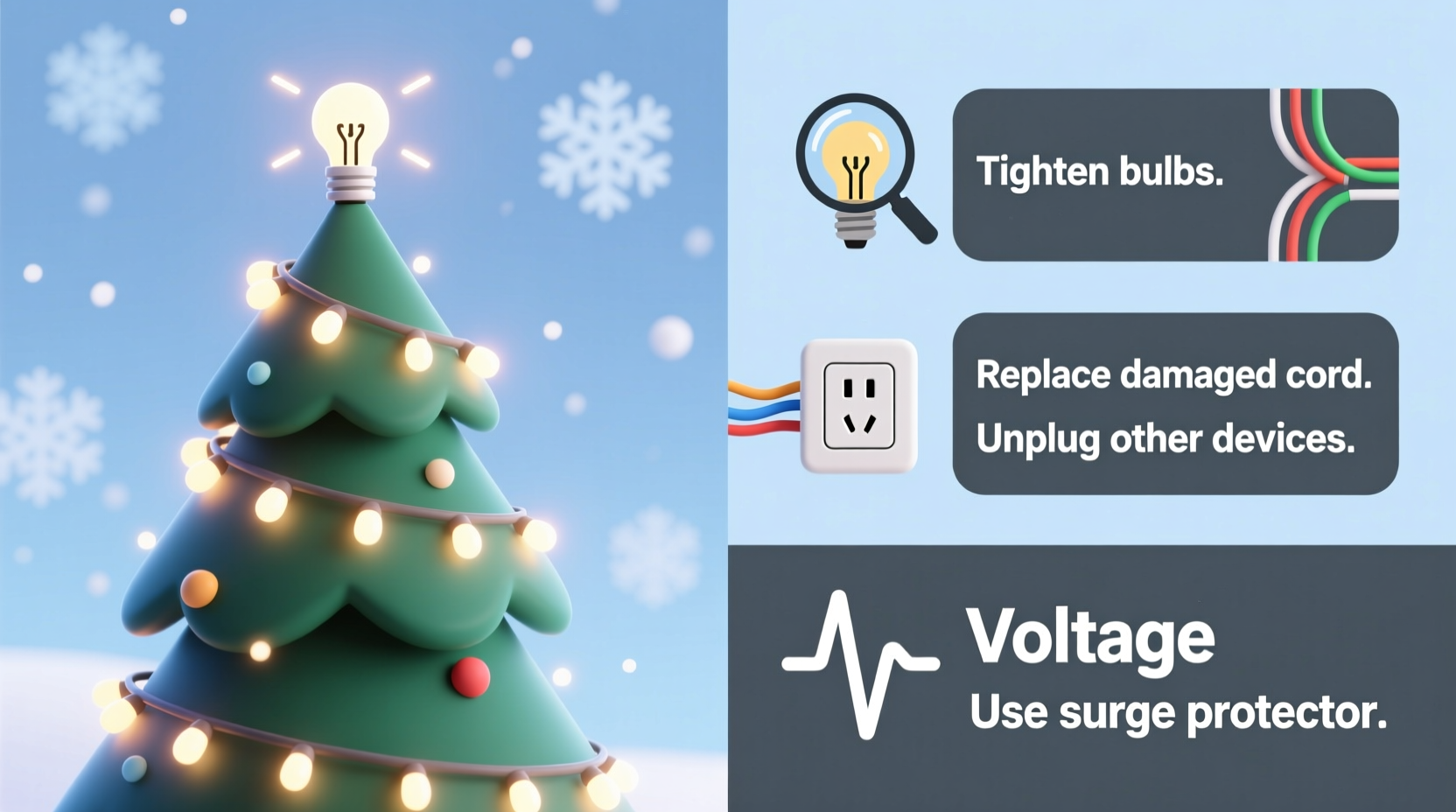
Flickering in Christmas lights isn’t always a sign of danger, but it should never be ignored. Unlike smart LED systems designed to twinkle on command, unintended flickering often stems from interruptions in power flow. This can occur due to poor connections, incompatible dimmers, voltage fluctuations, or aging components. Identifying the root cause is essential—not just for aesthetics, but also for safety.
Older incandescent mini-lights and modern LED strands behave differently under stress. Incandescent strings may dim or flicker when one bulb burns out, disrupting the entire circuit. LEDs, while more energy-efficient, are sensitive to voltage inconsistencies and can flicker if connected to incompatible power sources or controllers.
“Flickering lights are often the first warning sign of a deeper electrical issue. Addressing them early prevents potential fire hazards.” — Robert Langley, Certified Electrician and Home Safety Inspector
Common Causes of Flickering and How to Diagnose Them
Before reaching for tools or replacements, start by isolating the problem. Is the flickering isolated to one strand? Does it happen indoors or outdoors? Does it coincide with other appliances turning on? These clues help narrow down the cause.
1. Loose or Burned-Out Bulbs
In traditional series-wired light strings, each bulb acts as a link in a chain. If one bulb becomes loose, broken, or burnt out, it breaks the circuit, causing partial or full flickering. This is especially common with older incandescent sets.
2. Faulty or Overloaded Outlets
An outlet that powers multiple light strings may become overloaded, especially if it shares the circuit with refrigerators, space heaters, or other high-draw devices. When demand exceeds capacity, voltage drops occur, leading to visible flickering.
3. Damaged Wires or Connectors
Outdoor lights are exposed to weather, foot traffic, and animals. Frayed wires, cracked insulation, or corroded plug ends can interrupt current flow. Inspect cords carefully, especially where they connect to stakes, gutters, or extension cords.
4. Incompatible Dimmer Switches or Timers
Many homes use dimmer switches or digital timers for holiday lighting. However, not all Christmas lights—especially LEDs—are compatible with these devices. Mismatches can cause buzzing, strobing, or rapid flickering.
5. Voltage Fluctuations in the Grid
If multiple fixtures in your home flicker simultaneously—not just the lights—it could indicate broader voltage instability. This is more likely in older homes or rural areas with inconsistent grid supply.
Step-by-Step Guide to Fix Flickering Lights
Follow this systematic approach to identify and resolve flickering issues efficiently and safely.
- Unplug the light string before inspection. Never handle electrical components while powered.
- Check each bulb visually and by touch (after cooling). Look for darkened filaments, cracked glass, or loose seating.
- Replace any defective bulbs with manufacturer-recommended spares. Using mismatched wattage can worsen performance.
- Inspect the wiring and connectors along the entire length. Pay attention to areas near bends, staples, or ground contact.
- Test the outlet using a lamp or phone charger. If other devices flicker or fail, the outlet may be faulty.
- Use a circuit tester to verify proper grounding and polarity, especially for outdoor outlets.
- Reduce load by unplugging non-essential devices on the same circuit. Avoid daisy-chaining more than three light strings unless rated for it.
- Bypass dimmers or timers temporarily to see if flickering stops. Replace with compatible models if needed.
- Try a different outlet on a separate circuit. This helps isolate whether the issue is localized or systemic.
- Upgrade to LED strings with shunt technology, which maintains continuity even if a bulb fails.
Troubleshooting Table: Common Issues vs. Solutions
| Issue | Likely Cause | Solution |
|---|---|---|
| One section flickers | Loose or dead bulb | Reseat or replace the bulb |
| Entire string pulses | Incompatible dimmer/timer | Remove device or use LED-compatible model |
| Lights dim when appliance turns on | Overloaded circuit | Distribute load across circuits |
| Intermittent flicker outdoors | Moisture in connector | Seal with waterproof tape or silicone |
| All holiday lights flicker together | Main voltage fluctuation | Contact electrician or utility provider |
Real-World Example: The Case of the Flickering Front Porch
When Sarah in Portland strung her new LED icicle lights along the eaves, they flickered wildly every evening at 6 p.m. She replaced bulbs, checked connections, and tried a different outlet—all without success. Then she noticed her furnace kicked on at the same time. Using a multimeter, she discovered a 15-volt drop whenever the HVAC system started. The solution? An electrician relocated the porch outlet to a dedicated lighting circuit, eliminating interference. The lights now shine steadily, and her energy bills dropped slightly due to reduced circuit strain.
This case illustrates how flickering isn’t always about the lights themselves—it can reflect broader household electrical dynamics.
Prevention Checklist: Keep Your Lights Steady Year After Year
- ✅ Store lights on cardboard reels or plastic organizers to prevent wire kinks
- ✅ Label indoor vs. outdoor sets to avoid misapplication
- ✅ Use only UL-listed extension cords rated for outdoor use
- ✅ Limit daisy-chained strings to manufacturer specifications (usually 3–5 max)
- ✅ Test all strands before installation each season
- ✅ Install GFCI (Ground Fault Circuit Interrupter) outlets for outdoor circuits
- ✅ Upgrade to commercial-grade LED strings with built-in surge protection
- ✅ Avoid running cords under rugs, through doors, or near heat sources
Frequently Asked Questions
Can LED Christmas lights flicker even when they’re new?
Yes. Even brand-new LED strings can flicker if connected to a dimmer switch not designed for low-wattage loads. Many older dimmers require a minimum wattage (e.g., 40W) to function properly. Since LEDs draw far less power, they may not meet this threshold, causing erratic behavior. Solution: Use non-dimming switches or install trailing-edge (ELV) dimmers compatible with LEDs.
Is it safe to leave flickering Christmas lights on overnight?
No. Persistent flickering can indicate overheating, arcing, or short circuits—potential fire hazards. The U.S. Consumer Product Safety Commission reports over 7,000 home fires annually related to holiday decorations. Always unplug lights before sleeping or leaving the house, and address flickering immediately.
Why do my lights flicker only when it rains?
Moisture intrusion is the likely culprit. Water can seep into damaged connectors or outlets, creating intermittent shorts. Use weatherproof outlet covers and seal connections with dielectric grease or waterproof tape. For permanent installations, consider installing a covered junction box.
Expert Insight: What Electricians Want You to Know
“Most holiday electrical issues stem from convenience over caution. People plug six light strings into one outlet because it’s easier—but that’s how circuits overload. Plan your layout ahead, use multiple circuits, and never ignore flickering.” — Marcus Tran, Master Electrician and NFPA Contributor
Professionals emphasize proactive habits: inspecting cords annually, avoiding makeshift repairs, and understanding circuit limits. A standard 15-amp household circuit can safely handle about 1,440 watts (80% of 1,800W). A single incandescent string might use 40W; LEDs use as little as 4W. But when multiplied across dozens of strands, the load adds up quickly.
Conclusion: Shine Bright and Stay Safe This Holiday Season
Flickering Christmas lights are more than a nuisance—they’re a signal. Whether it’s a loose bulb, an overloaded outlet, or incompatible hardware, the fix is often within reach. By understanding the causes, applying practical solutions, and adopting preventive habits, you can ensure your holiday display remains bright, beautiful, and safe.
Take the time this year to inspect your lights before hanging them. Test each string, check your outlets, and plan your power usage wisely. Small efforts now prevent frustration—and risk—later. A well-maintained lighting setup doesn’t just look better; it lasts longer and keeps your home safer.




 浙公网安备
33010002000092号
浙公网安备
33010002000092号 浙B2-20120091-4
Comments
No comments yet. Why don't you start the discussion?