
Tight hamstrings are one of the most common musculoskeletal complaints among people of all activity levels—from office workers to elite athletes. The sensation can range from mild stiffness after sitting too long to sharp pain during physical activity. While stretching is often the go-to remedy, simply pulling your leg up into a stretch without understanding the root cause may offer only temporary relief. True improvement comes from identifying why your hamstrings feel tight in the first place and applying targeted, consistent strategies.
Understanding the Hamstring Complex
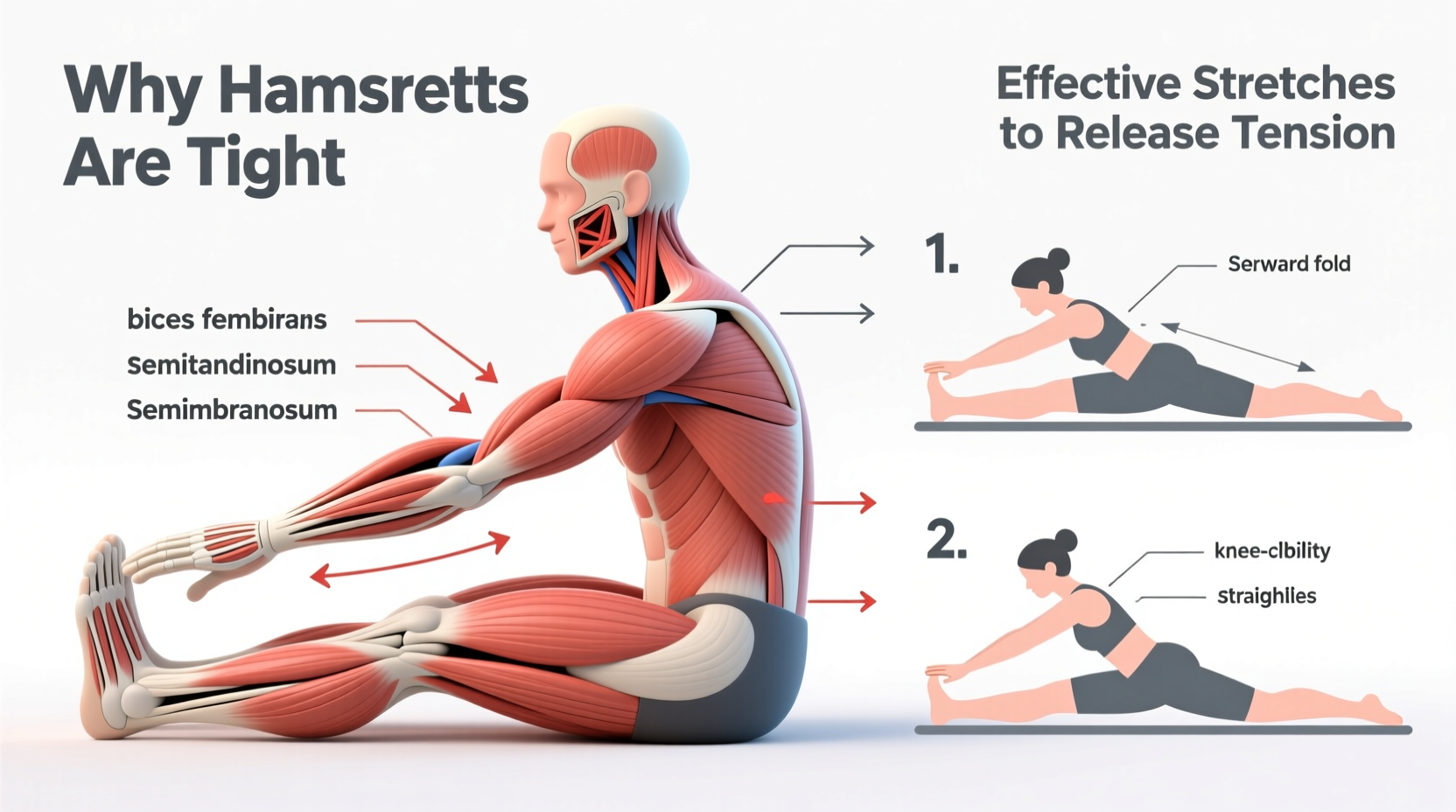
The hamstring muscle group consists of three muscles located at the back of the thigh: the biceps femoris, semitendinosus, and semimembranosus. These muscles cross both the hip and knee joints, meaning they play a dual role in extending the hip and flexing the knee. Because of this biomechanical complexity, hamstring tension isn’t always due to shortness—it can be a protective response from the nervous system or compensation for weakness elsewhere.
When people say their hamstrings are “tight,” they’re often describing one or more sensations: reduced range of motion when bending forward, a pulling feeling during movement, or even chronic low-grade soreness. But not all tightness is created equal. Distinguishing between actual muscle shortening, neural tension, and muscular guarding is essential for choosing the right intervention.
Common Causes of Tight Hamstrings
Several interrelated factors contribute to persistent hamstring tightness. Addressing these root causes leads to longer-lasting results than stretching alone.
Sedentary Lifestyle and Prolonged Sitting
Spending hours seated keeps the hamstrings in a lengthened position while the hip flexors shorten. This altered posture can lead to pelvic tilt changes, increasing strain on the posterior chain. Over time, the nervous system adapts by increasing resting tone in the hamstrings as a stabilizing mechanism.
Muscle Imbalances and Gluteal Inhibition
Weak glutes force the hamstrings to overwork during movements like walking, running, or lifting. When primary hip extensors aren’t firing properly, the hamstrings compensate, leading to fatigue and perceived tightness. This is especially common in individuals with anterior pelvic tilt or poor core engagement.
Lack of Eccentric Strength
Many people focus on static stretching but neglect eccentric (lengthening under load) training. Without strength through full range, the nervous system limits mobility as a protective measure. A hamstring that feels tight may actually be weak when lengthened.
Neural Tension (Sciatic Irritation)
In some cases, what feels like hamstring tightness is actually referred tension from the sciatic nerve. Nerve tissue needs mobility just like muscle. If there's compression or irritation—due to disc issues, piriformis syndrome, or prolonged postures—the nerve can become hypersensitive, mimicking muscular tightness.
Poor Warm-Up or Recovery Habits
Rushing into activity without proper preparation or skipping recovery protocols increases microtrauma accumulation. This leads to inflammation, delayed onset muscle soreness (DOMS), and increased muscle guarding—all contributing to stiffness.
“Persistent hamstring tightness is rarely just about flexibility. It’s often the body’s way of saying, ‘I don’t feel safe moving this far.’” — Dr. Jessica Wong, Physical Therapist and Movement Specialist
Effective Stretching Techniques for Long-Term Relief
Stretching can help—but only when applied correctly and consistently. The key is matching the type of stretch to the underlying issue.
Static Stretches (Best for Daily Maintenance)
Hold each stretch for 30–45 seconds, breathing deeply to encourage relaxation. Perform 2–3 sets per side.
- Seated Forward Fold: Sit with legs extended, hinge at hips to reach toward toes. Keep back straight; avoid rounding.
- Supine Hamstring Stretch: Lie on back, loop a towel around one foot, and gently straighten the leg upward until a stretch is felt.
- Standing Hamstring Stretch: Place one heel on a low surface, hinge forward from hips with flat back.
Dynamic and Active Stretches (Ideal Pre-Workout)
These prepare the muscle for movement and improve neuromuscular control.
- Leg Swings (Forward/Back): Hold onto a wall and swing one leg forward and backward in a controlled manner (10–15 reps).
- Lying Leg Lowering: Lie on back with both legs raised 90 degrees, slowly lower one leg toward floor while keeping pelvis stable.
Nerve Glides (For Neural Tension)
If stretching doesn’t relieve symptoms or worsens them, neural tension might be involved. Nerve flossing techniques can help mobilize the sciatic nerve.
- Lie on back, extend one leg upward.
- Gently point and flex the foot while slightly tilting the head forward and back.
- Move slowly—only to the point of mild tension, never pain.
- Repeat 10 times daily.
Do’s and Don’ts of Hamstring Flexibility
| Action | Recommendation | Reason |
|---|---|---|
| Stretch cold muscles | ❌ Avoid | Increases risk of strain; warm up first with light cardio |
| Bounce during stretch | ❌ Avoid | Triggers stretch reflex, increasing tension |
| Breathe deeply during hold | ✅ Do | Signals nervous system to relax, improving stretch tolerance |
| Stretch daily | ✅ Do | Consistency improves long-term flexibility |
| Ignore pain | ❌ Avoid | Pain indicates potential injury or neural involvement |
| Pair stretching with strengthening | ✅ Do | Builds confidence in end-range positions |
Step-by-Step Routine to Loosen Tight Hamstrings (5 Minutes Daily)
This quick routine combines activation, mobility, and stretching for balanced improvement.
- Glute Activation – 1 minute
Perform 15 double-leg bridges. Focus on squeezing glutes at the top. This helps reduce hamstring compensation. - Dynamic Warm-Up – 1 minute
Do 10 slow lying leg lowers per side. Maintain pelvic stability throughout. - Static Stretch – 2 minutes
Hold a supine hamstring stretch (with strap) for 45 seconds per leg. Repeat once. - Nerve Mobility – 1 minute
Perform seated slump nerve glides: Sit tall, extend one leg, round spine, look down, then reverse. 10 reps per side.
Real Example: Office Worker with Chronic Tightness
Mark, a 38-year-old software developer, complained of daily hamstring tightness despite regular yoga classes. He could barely touch his toes and often felt a pulling sensation when standing up after coding sessions.
After assessment, it was clear his glutes were underactive, his hip flexors were tight from sitting, and he lacked eccentric hamstring strength. His stretching routine was aggressive but isolated—no activation prep, no strength work.
His new protocol included daily glute bridges, seated nerve glides, and replacing aggressive forward folds with supported stretches using a strap. Within four weeks, his toe-touch improved by 12 inches, and the constant tightness faded. The change wasn’t from more stretching—but from smarter movement sequencing.
FAQ
Can tight hamstrings cause lower back pain?
Yes. Overly tight or overactive hamstrings can pull on the ischial tuberosity (sit bones), altering pelvic alignment and increasing shear forces on the lumbar spine. This often contributes to posterior pelvic tilt and mechanical low back pain.
How long does it take to loosen tight hamstrings?
With consistent daily effort—including stretching, activation, and addressing lifestyle factors—noticeable improvements typically occur within 2–6 weeks. Full functional restoration may take 8–12 weeks depending on severity and adherence.
Should I stretch if my hamstrings are sore?
Mild soreness (DOMS) responds well to gentle movement and light stretching. However, if there’s sharp pain, swelling, or bruising, stretching should be avoided—this could indicate a strain or tear requiring medical evaluation.
Final Thoughts and Call to Action
Tight hamstrings are rarely just about inflexibility—they’re often a symptom of deeper movement imbalances. Whether you sit all day, train intensely, or do a bit of both, lasting relief comes from a holistic approach: restore mobility, build strength, retrain motor patterns, and adjust habits.
Don’t just stretch mindlessly. Be intentional. Listen to what your body is really telling you. Start today with the 5-minute routine, track your progress weekly, and notice how small, consistent actions compound into real change.




 浙公网安备
33010002000092号
浙公网安备
33010002000092号 浙B2-20120091-4
Comments
No comments yet. Why don't you start the discussion?