
It’s not uncommon to glance down at your hands and notice prominent veins snaking across the back of your skin. For some, this is a lifelong trait; for others, it’s a recent change that raises questions. Visible hand veins can be completely normal, but in certain cases, they may signal an underlying health concern. Understanding the difference between benign causes and warning signs is essential for peace of mind and timely medical care.
Veins become more visible due to a combination of factors including body composition, age, genetics, and activity level. While most people don’t need to worry, knowing what to look for—and when to consult a healthcare provider—can help you stay informed and proactive about your vascular health.
Common Causes of Prominent Hand Veins
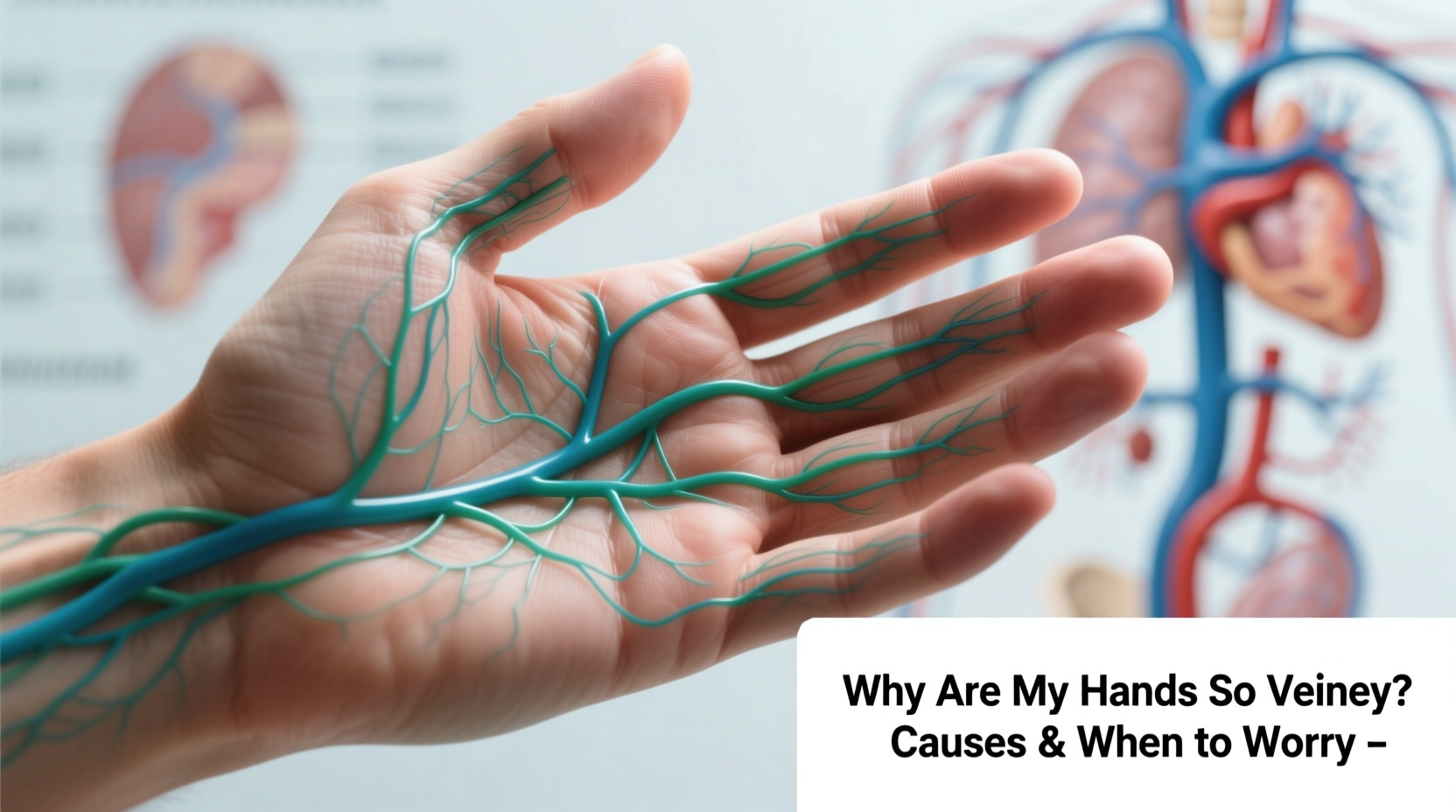
Visible veins in the hands are often harmless and stem from natural physiological processes. The following are among the most frequent reasons why hand veins appear more pronounced:
- Low body fat: Individuals with lower body fat percentage tend to have more visible veins because there is less subcutaneous tissue covering them.
- Genetics: Some people inherit thinner skin or more superficial veins, making them naturally more visible.
- Aging: As we age, skin loses elasticity and becomes thinner, while fat pads in the hands diminish. This makes veins more apparent over time.
- Exercise and muscle gain: Regular strength training increases blood flow and can temporarily engorge veins. Over time, increased muscle mass combined with reduced fat accentuates vein visibility.
- Heat exposure: Warm temperatures cause blood vessels to dilate, increasing blood volume in the extremities and making veins more prominent.
- Hydration status: Dehydration can make veins more noticeable as blood volume shifts and skin turgor decreases.
When Should You Be Concerned?
While visible veins are usually a cosmetic issue, certain changes warrant medical evaluation. You should seek professional advice if you observe any of the following:
- Sudden appearance of bulging or twisted veins (resembling cords)
- Pain, tenderness, warmth, or redness along the vein
- Swelling in the hand or arm
- Hardening or roping of the vein
- One-sided prominence without a clear reason
- History of blood clots or vascular disease
These symptoms could indicate conditions such as thrombophlebitis (inflammation of a vein due to a clot), deep vein thrombosis (DVT), or venous insufficiency. Although rare in the hands, DVT in upper extremities—sometimes called “effort-induced thrombosis” or Paget-Schroetter syndrome—can occur in athletes or individuals who perform repetitive upper-limb activities.
“Not all visible veins are problematic, but sudden onset of pain, swelling, or asymmetry should prompt a clinical assessment.” — Dr. Lena Patel, Vascular Medicine Specialist
Medical Conditions Linked to Vein Prominence
In some cases, prominent hand veins may be associated with systemic conditions. These are less common but important to recognize:
| Condition | Description | Associated Symptoms |
|---|---|---|
| Superficial Thrombophlebitis | Inflammation of a surface vein with possible clot formation | Red, warm, painful vein; localized swelling |
| Deep Vein Thrombosis (Upper Limb) | Blood clot in a deep vein of the arm | Swelling, pain, discoloration, heavy feeling in arm |
| Chronic Venous Insufficiency | Valve dysfunction leading to poor blood return | Heaviness, cramping, swelling, skin changes |
| Connective Tissue Disorders | Conditions like EDS that affect skin and vessel structure | Hypermobile joints, fragile skin, easy bruising |
| Heart or Lung Disease | Can increase venous pressure systemically | Fatigue, shortness of breath, cyanosis |
It’s worth noting that isolated vein visibility—without other symptoms—is rarely linked to serious illness. However, if you have risk factors such as prolonged IV use, central lines, cancer, or clotting disorders, even subtle vascular changes deserve attention.
Real-Life Scenario: When Exercise Crossed a Line
Mark, a 32-year-old competitive weightlifter, began noticing one of his hand veins becoming increasingly swollen and tender after intense bench press sessions. At first, he dismissed it as a sign of improved circulation. But within weeks, his right hand swelled significantly, and the vein felt hard and cord-like.
He consulted a vascular specialist who diagnosed effort-induced deep vein thrombosis in his subclavian vein—a condition sometimes seen in athletes who repeatedly strain their upper bodies. After anticoagulant therapy and physical therapy adjustments, Mark recovered fully. His case underscores how seemingly benign changes can mask serious issues, especially in high-performance individuals.
What You Can Do: A Practical Checklist
If you're concerned about your hand veins or want to maintain healthy circulation, follow this actionable checklist:
- Monitor changes: Take note of when veins became more visible and whether they’re symmetrical.
- Check for symptoms: Look for pain, redness, warmth, or swelling alongside vein prominence.
- Stay hydrated: Proper fluid balance supports healthy blood volume and vessel function.
- Protect your skin: Use sunscreen and moisturizer to preserve skin thickness and elasticity.
- Avoid repetitive strain: Limit excessive gripping or overhead motions if you notice vascular changes.
- Consult a doctor: Especially if you have a history of clotting, cancer, or recent surgery.
- Consider imaging: Ultrasound can assess vein integrity if thrombosis is suspected.
Frequently Asked Questions
Is it bad if my hand veins are very visible?
Not necessarily. Many healthy individuals have prominent hand veins due to low body fat, genetics, or fitness levels. As long as there’s no pain, swelling, or sudden change, it’s usually normal.
Can dehydration make hand veins more visible?
Yes. When dehydrated, blood volume drops slightly and skin becomes less plump, which can make veins stand out more. Rehydrating often reduces their prominence.
Do visible veins mean I’m unhealthy?
No. In fact, many athletes and fit individuals have very visible veins due to low fat and high muscle definition. It’s only concerning if accompanied by other symptoms like pain or swelling.
Conclusion: Know Your Body, Trust Your Instincts
Having veiny hands is typically nothing to worry about—it’s often a reflection of your physiology, fitness, or age. But your body communicates through changes, and learning to interpret them is part of staying healthy. While most cases are benign, never dismiss sudden, painful, or asymmetric vascular changes.
Understanding the causes empowers you to differentiate between normal variation and potential warning signs. If something feels off—even if it seems minor—consulting a healthcare provider brings clarity and peace of mind.




 浙公网安备
33010002000092号
浙公网安备
33010002000092号 浙B2-20120091-4
Comments
No comments yet. Why don't you start the discussion?