
Occasional tingling in the hands is something most people experience at some point—whether from sleeping on an arm or holding a phone too long. While mild, temporary sensations are usually harmless, persistent or recurring tingling can signal underlying health issues. Understanding the root causes and knowing when symptoms require medical attention is essential for preventing complications.
Common Causes of Hand Tingling
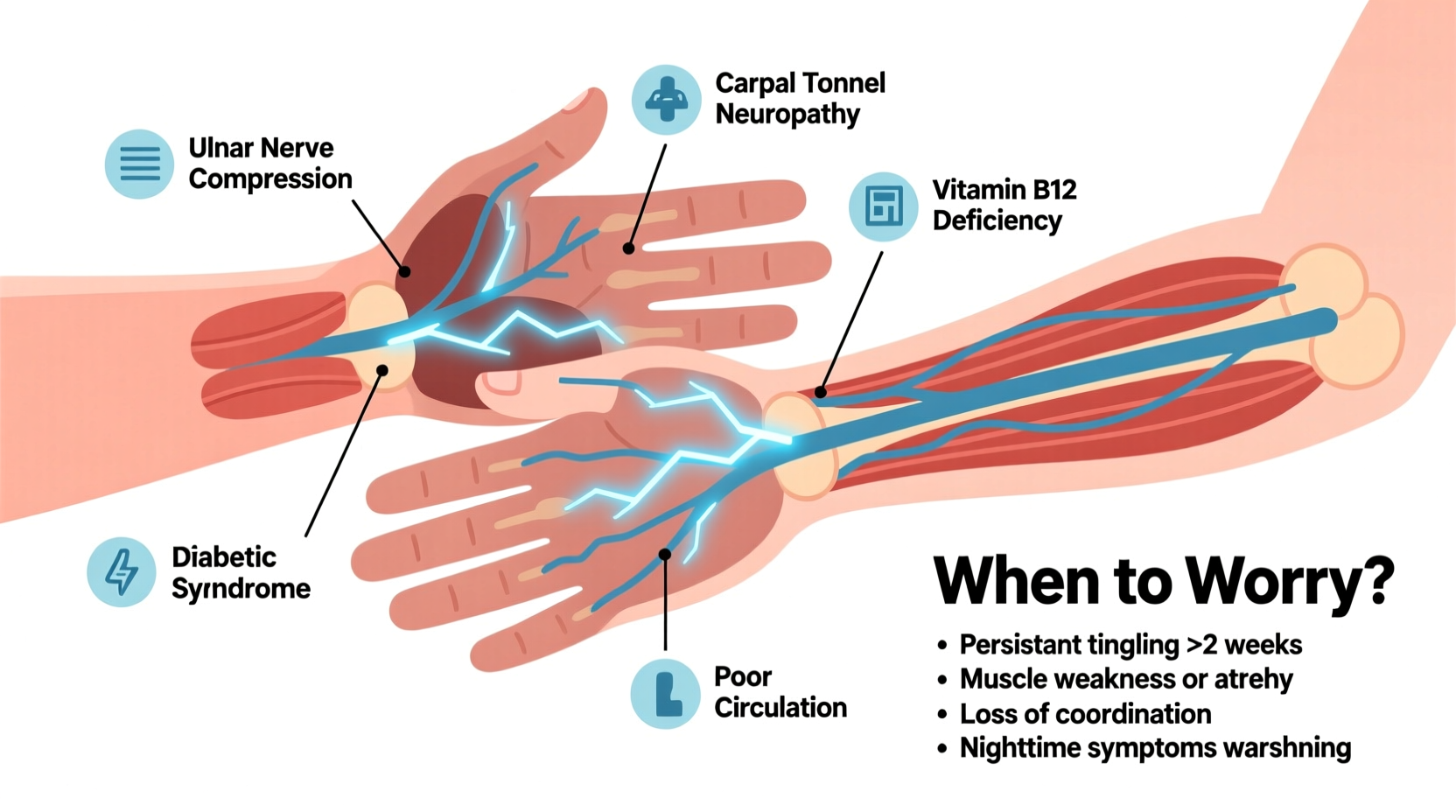
Hand tingling, medically referred to as paresthesia, occurs when nerves in the hands or arms are irritated, compressed, or damaged. The sensation may feel like pins and needles, numbness, burning, or even electric shocks. Several everyday factors can trigger this:
- Carpal tunnel syndrome: Repetitive hand movements, such as typing or using vibrating tools, can compress the median nerve in the wrist, leading to tingling in the thumb, index, middle, and part of the ring finger.
- Poor posture or nerve compression: Sitting or sleeping in a position that puts pressure on the ulnar or radial nerve (e.g., resting your head on your hand) can cause temporary tingling.
- Vitamin deficiencies: Low levels of B vitamins—especially B12, B6, and B1—are crucial for nerve health. Deficiencies can lead to peripheral neuropathy, often starting with tingling in the extremities.
- Diabetes: Elevated blood sugar over time damages nerves, particularly in the hands and feet—a condition known as diabetic neuropathy.
- Hypothyroidism: An underactive thyroid can contribute to fluid retention and swelling, which may compress nerves in the wrist or elbow.
- Anxiety or hyperventilation: Rapid breathing during panic attacks reduces carbon dioxide in the blood, causing tingling in the hands and around the mouth.
When to Worry: Red Flags That Need Medical Attention
While many cases of hand tingling resolve on their own, certain symptoms indicate a more serious condition. Seek prompt medical evaluation if you experience any of the following:
- Sudden onset of tingling accompanied by weakness, slurred speech, or facial drooping—this could be a sign of stroke.
- Tingling that spreads up the arm or into the shoulder or neck.
- Loss of coordination or muscle control in the hands.
- Numbness or tingling following a recent injury to the neck or spine.
- Symptoms that persist for more than a few days without explanation.
- Burning pain that worsens at night or interferes with sleep.
“Persistent paresthesia should never be ignored. Early diagnosis of nerve compression or systemic disease can prevent irreversible damage.” — Dr. Lena Patel, Neurologist at Boston General Hospital
Medical Conditions Linked to Chronic Hand Tingling
Recurrent or chronic hand tingling often stems from systemic diseases or structural problems. Identifying these conditions early improves outcomes significantly.
Peripheral Neuropathy
This condition involves damage to the peripheral nerves, commonly due to diabetes, autoimmune disorders, infections, or exposure to toxins. Symptoms typically start symmetrically in both hands or feet and progress gradually.
Cervical Radiculopathy
A pinched nerve in the neck—often caused by herniated discs or spinal arthritis—can send tingling down the arm and into specific fingers, depending on which nerve root is affected.
Multifocal Motor Neuropathy
A rare disorder where the immune system attacks motor nerves, leading to progressive weakness and tingling, usually in the hands. It’s often misdiagnosed as ALS but responds well to treatment.
Autoimmune Diseases
Conditions like lupus, rheumatoid arthritis, and Guillain-Barré syndrome can inflame or attack nerves, resulting in widespread or localized tingling.
| Condition | Key Symptoms | Diagnostic Method |
|---|---|---|
| Carpal Tunnel Syndrome | Tingling in thumb, index, middle fingers; worse at night | Nerve conduction study, physical exam |
| Diabetic Neuropathy | Burning, numbness in both hands/feet; gradual onset | Blood glucose test, neurological exam |
| Cervical Radiculopathy | Neck pain radiating to arm, muscle weakness | MRI, EMG |
| Vitamin B12 Deficiency | Fatigue, balance issues, cognitive changes | Blood test for serum B12 levels |
Step-by-Step Guide to Assessing and Managing Hand Tingling
If you're experiencing unexplained hand tingling, follow this practical sequence to determine whether home care is sufficient or medical consultation is necessary.
- Monitor symptom patterns: Note when the tingling occurs, how long it lasts, and whether it's linked to certain activities (e.g., typing, driving).
- Check for triggers: Evaluate posture, ergonomics, stress levels, and recent injuries.
- Assess associated symptoms: Look for pain, weakness, swelling, dizziness, or vision changes.
- Try conservative measures: Use ergonomic keyboards, apply warm compresses, perform gentle wrist stretches, and avoid prolonged pressure on elbows or wrists.
- Seek medical evaluation: If symptoms persist beyond a week or worsen, schedule an appointment with your primary care provider or neurologist.
- Follow diagnostic testing: Depending on suspected cause, tests may include blood work, imaging (X-ray, MRI), or nerve function studies (EMG/NCV).
Real-Life Example: A Case of Misdiagnosed Tingling
Sarah, a 45-year-old graphic designer, began noticing tingling in her right hand each morning. She assumed it was carpal tunnel and tried wrist braces and stretching. After three months, the numbness spread to her forearm and she started dropping objects. Her doctor ordered an MRI, which revealed a herniated disc in her cervical spine compressing a nerve root. Physical therapy and targeted exercises resolved her symptoms within two months. Sarah’s case highlights how symptoms mimicking common conditions can have deeper origins.
Prevention and Daily Care Tips
Even if you haven’t experienced tingling yet, proactive habits can protect nerve health and circulation in your hands.
- Use padded gloves when operating vibrating tools.
- Stay hydrated—dehydration can exacerbate nerve irritability.
- Eat a balanced diet rich in B vitamins: leafy greens, eggs, fish, and fortified cereals.
- Manage chronic conditions like diabetes and hypertension with regular monitoring and treatment.
- Practice mindfulness or breathing techniques to reduce anxiety-related tingling episodes.
FAQ
Can dehydration cause tingling in the hands?
Yes. Dehydration affects electrolyte balance, which can disrupt nerve signaling and lead to temporary paresthesia. Rehydrating usually resolves the sensation quickly.
Is hand tingling during pregnancy normal?
It’s relatively common, especially in the second and third trimesters. Fluid retention increases pressure on nerves, particularly in the wrists (carpal tunnel). Symptoms often improve after delivery.
How long does tingling last after a pinched nerve?
With proper rest and treatment, mild cases resolve within days to weeks. Chronic compression may take several months to heal, especially if nerve damage has occurred.
Conclusion
Hand tingling ranges from a fleeting annoyance to a warning sign of serious health issues. Most cases related to posture or minor nerve irritation improve with simple adjustments. However, persistent, spreading, or disabling symptoms demand medical investigation. By paying attention to your body, making ergonomic improvements, and seeking timely care, you can protect your nerve health and maintain full hand function.




 浙公网安备
33010002000092号
浙公网安备
33010002000092号 浙B2-20120091-4
Comments
No comments yet. Why don't you start the discussion?