
If you've recently noticed that some of your Instagram Direct Messages (DMs) appear with visible borders—either around individual messages or entire message threads—you're not alone. This visual change has confused many users who didn’t recall enabling such a feature. While Instagram continuously updates its interface, unexpected design shifts like bordered messages can raise questions about privacy, functionality, or even device issues. Understanding the root causes behind this display behavior is essential for maintaining control over your messaging experience.
Borders in Instagram DMs aren't part of the standard UI design as of recent stable releases. However, their appearance can stem from several factors ranging from app glitches and beta testing to accessibility settings or third-party tools. This article breaks down every possible reason why your messages may appear bordered, offers actionable fixes, and provides insight into what’s likely happening under the hood.
1. Instagram's Ongoing Feature Testing
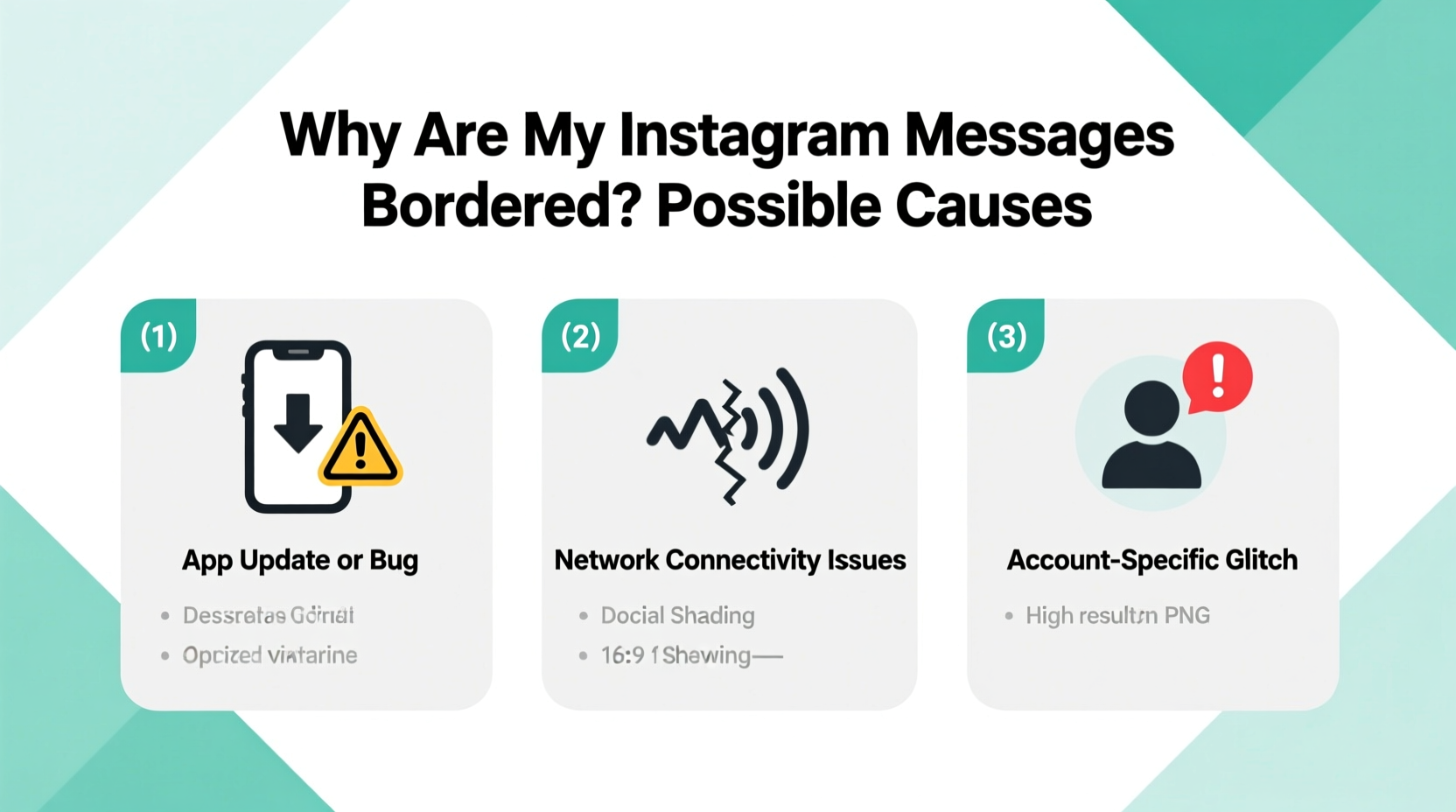
One of the most common reasons users see bordered messages is because they’ve been selected for an A/B test by Instagram. Meta, the parent company, frequently rolls out experimental features to small segments of users to gauge engagement, usability, and aesthetic preferences before wider release.
In some tests, Instagram has trialed new visual cues—such as colored borders, message grouping outlines, or highlighted reply indicators—to improve readability in group chats or distinguish between sent and received messages. These borders may appear subtly at first but become more noticeable when switching devices or updating the app.
“Instagram uses controlled rollouts to refine UX elements without disrupting the majority of users.” — Lena Park, Mobile App Analyst at TechInsight Labs
If you're seeing borders inconsistently across conversations or only on certain messages, it’s highly probable you’re part of a limited experiment. Unfortunately, users cannot opt in or out of these tests manually; participation depends on backend algorithms based on region, device type, usage patterns, and account age.
2. App Glitches and Rendering Bugs
Software bugs are another leading cause of unexpected bordered messages. After an app update—or due to corrupted cache files—the Instagram client may misrender message bubbles, applying unintended CSS-like styles such as outlines, shadows, or border strokes.
This typically happens after:
- A recent app update introduces conflicting code
- The app fails to load theme assets correctly
- There’s a mismatch between server-side templates and local rendering
These rendering anomalies often affect only specific message threads or occur intermittently. For example, one user reported that all outgoing messages displayed a thin gray border after updating to version 325.0, which disappeared only after reinstalling the app.
Step-by-Step Guide to Fix Rendering Issues
- Force-close the Instagram app from your device’s app manager.
- Go to Settings > Apps > Instagram > Storage.
- Tap “Clear Cache” (do not clear data unless necessary).
- Reopen the app and check if borders persist.
- If unresolved, uninstall and reinstall Instagram from the official app store.
3. Accessibility and Display Settings
Your device’s accessibility settings could also influence how Instagram renders messages. Features designed to enhance visibility—like increased contrast, bold text, or color correction—can sometimes alter app interfaces beyond their intended design.
For instance:
- iOS users with \"Increase Contrast\" enabled may see stronger outlines around interactive elements, including chat bubbles.
- Android users using high-dynamic-range (HDR) modes or custom font scaling might experience layout distortions.
| Setting | Potential Impact on Instagram DMs | Solution |
|---|---|---|
| Increase Contrast (iOS) | Adds dark outlines to buttons and message boxes | Disable in Settings > Accessibility > Display & Text Size |
| Bold Text (iOS/Android) | Alters spacing and container sizing | Turn off temporarily to test effect |
| Font Size > Default | Can cause overflow and forced borders | Reset to 100% system font size |
| Dark Mode Override | May trigger experimental UI states | Use automatic mode instead of forced toggle |
4. Third-Party Tools and Modified Clients
Using unofficial Instagram clients (e.g., FMWhatsApp, GBInstagram) or browser extensions that modify social media feeds can introduce unintended styling changes. These tools often inject custom CSS or JavaScript to alter appearance, which may include adding borders to differentiate message types or highlight unread content.
Even seemingly harmless extensions like ad blockers or theme modifiers can interfere with Instagram’s native styling. One Chrome extension known for dark-mode customization was found to apply `border: 1px solid #4a4a4a` to all `.x1lliihq` DOM elements—which correspond to message containers in web-based Instagram.
“We’ve seen dozens of cases where user-installed scripts caused visual artifacts mistaken for platform bugs.” — Devan Patel, Frontend Security Consultant
5. Real User Case: Unexpected Borders After iOS Update
Jamie T., a digital marketer from Portland, noticed that after updating her iPhone to iOS 17.5, all incoming Instagram messages in group chats appeared with faint blue borders. Initially concerned about being tagged or mentioned visually, she checked notification settings and contacted support. Upon further investigation, she realized the border only appeared when viewing messages on her phone—not on desktop.
She followed troubleshooting steps: cleared app cache, disabled “Bold Text,” and restarted her device. The borders vanished after turning off “Reduce Transparency” in Accessibility settings, which had been auto-enabled during the OS update. This case illustrates how operating system-level accessibility options can cascade into app-specific visual quirks.
Troubleshooting Checklist
Use this checklist to identify and resolve bordered message issues:
- ✅ Restart the Instagram app
- ✅ Clear app cache (not data)
- ✅ Check for pending app updates
- ✅ Disable accessibility features like Bold Text or Increase Contrast
- ✅ Test Instagram on another device or browser
- ✅ Avoid third-party mods or unofficial apps
- ✅ Reinstall Instagram if issue persists
- ✅ Report the bug via Settings > Help > Report a Problem
Frequently Asked Questions
Do bordered messages mean someone blocked me or restricted my account?
No. Bordered messages are unrelated to blocking or restriction status. They are typically visual artifacts or test features. If you were blocked, you’d see missing message delivery indicators or inability to view the person’s profile—not just borders.
Can I turn off the border if it’s part of a test?
Not directly. Instagram does not provide user-facing toggles for experimental UI changes. Your best option is to wait for the test to conclude or switch devices/accounts to exit the test group.
Are bordered messages a sign of hacking or unauthorized access?
No credible evidence links bordered messages to security breaches. The appearance is cosmetic and tied to display logic, not authentication or session status. Always monitor login activity via Settings > Security > Login Activity for actual security concerns.
Conclusion
The appearance of bordered messages on Instagram is rarely a cause for alarm. In most cases, it stems from legitimate sources like ongoing feature experiments, temporary rendering bugs, or device-specific accessibility settings. By understanding the potential causes—and knowing how to methodically troubleshoot them—you regain confidence in your app experience and avoid unnecessary worry.
Whether you're a casual user or manage a brand presence on Instagram, staying informed about platform behavior helps you respond wisely to changes. If the borders bother you, follow the steps outlined here to reset or stabilize your view. And if you discover something unusual that isn’t widely reported, consider sharing your findings—it might help others navigating the same confusion.




 浙公网安备
33010002000092号
浙公网安备
33010002000092号 浙B2-20120091-4
Comments
No comments yet. Why don't you start the discussion?