
A persistent sensation of heat in the legs—without an obvious external cause like sun exposure or intense exercise—can be unsettling. It may range from a mild warmth to a burning discomfort that interferes with sleep or daily activities. While occasional leg warmth is normal after physical exertion, chronic or unexplained heat warrants attention. This article explores the physiological and medical reasons behind hot legs, outlines actionable steps for symptom management, and guides when to seek professional help.
Common Medical Causes of Hot Legs
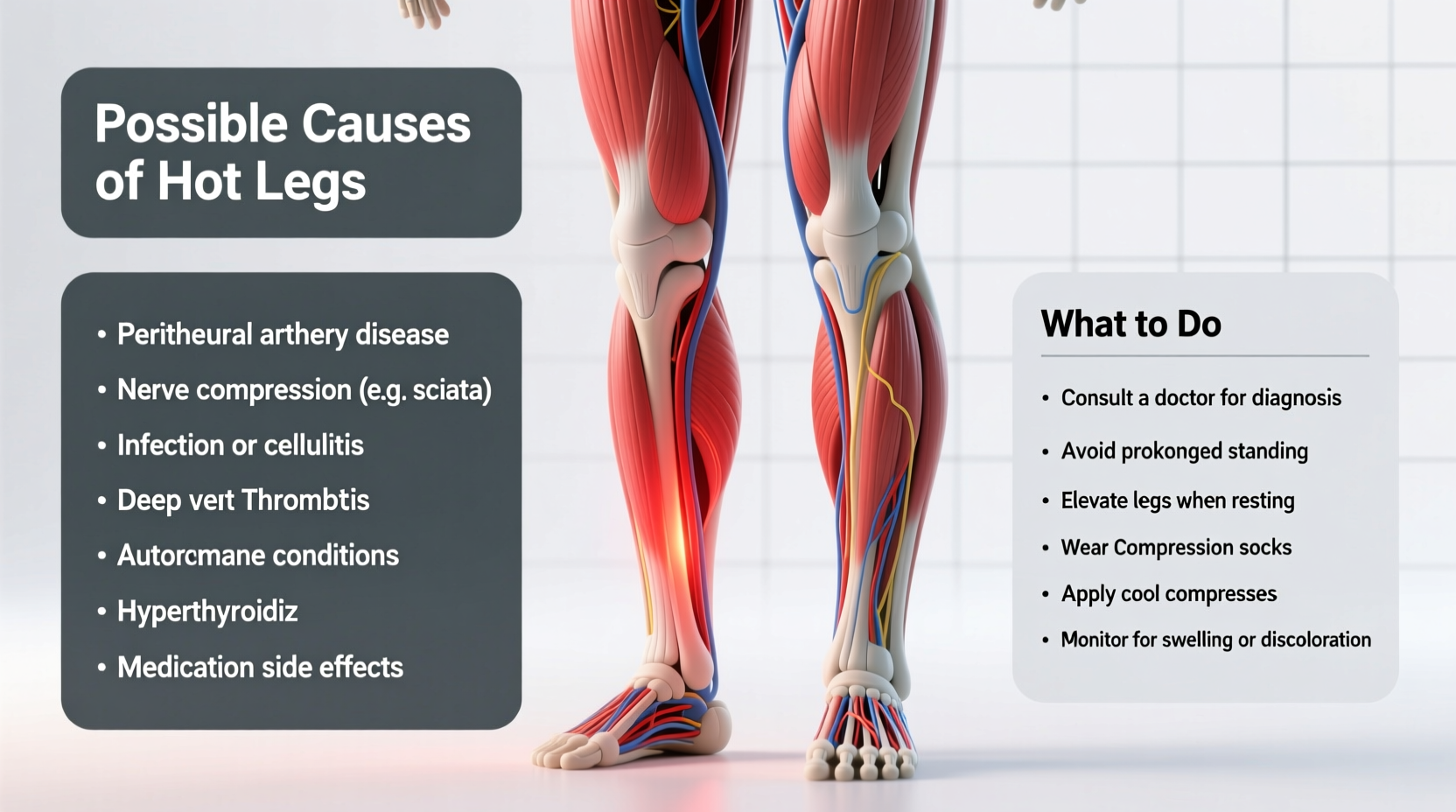
The feeling of heat in the legs often stems from underlying neurological, vascular, or systemic conditions. These are not always visible but can significantly impact comfort and mobility.
- Peripheral Neuropathy: One of the most frequent causes, especially among people with diabetes. Nerve damage leads to abnormal sensations such as burning, tingling, or heat, typically starting in the feet and moving upward.
- Restless Legs Syndrome (RLS): Often accompanied by an irresistible urge to move the legs, RLS can produce sensations of heat, crawling, or electric shocks, particularly at night.
- Varicose Veins and Chronic Venous Insufficiency: When valves in leg veins fail, blood pools in the lower limbs, causing swelling, heaviness, and a warm or burning sensation.
- Circulatory Issues: Poor blood flow due to atherosclerosis or deep vein thrombosis (DVT) can create localized warmth, often with redness and swelling.
- Small Fiber Neuropathy: A subtype affecting pain and temperature-sensing nerves, this condition causes burning pain without muscle weakness.
“Patients often describe their legs as ‘on fire’—especially at night. That kind of burning sensation should never be ignored, especially if it’s symmetrical and progressive.” — Dr. Lena Torres, Neurologist specializing in peripheral nerve disorders
Skin and Inflammatory Conditions
Some skin-related or inflammatory diseases manifest with a sensation of heat even when skin temperature remains normal.
- Erythromelalgia: A rare disorder causing episodes of intense burning pain, redness, and heat in the extremities, often triggered by warmth or exercise.
- Cellulitis: A bacterial skin infection that causes red, warm, swollen areas on the legs, usually accompanied by fever and tenderness.
- Allergic Reactions or Contact Dermatitis: Exposure to irritants like certain fabrics, soaps, or topical medications can trigger inflammation and a hot feeling.
- Lupus or Other Autoimmune Diseases: Systemic inflammation can affect blood vessels and nerves, leading to unusual sensations in the legs.
Lifestyle and Environmental Triggers
Not all causes are medical. Everyday habits and surroundings can contribute to leg discomfort.
- Tight Clothing or Compression: Socks or pants that restrict circulation may lead to a buildup of heat and tingling.
- Hot Showers or Heating Pads: Excessive heat application can overstimulate nerves and worsen burning sensations, especially in those with neuropathy.
- Prolonged Sitting or Standing: Both can impair circulation and increase leg temperature, particularly in warm environments.
- Medication Side Effects: Certain drugs—including chemotherapy agents, antivirals, and some antidepressants—can cause neuropathic side effects.
When Heat Is a Sign of Something More Serious
While many causes are manageable, some require urgent care. Deep vein thrombosis (DVT), for example, presents with warmth, swelling, and pain in one leg and increases the risk of pulmonary embolism. Similarly, undiagnosed diabetes or vitamin deficiencies can silently damage nerves over time.
Step-by-Step Guide to Managing Hot Legs
If you're experiencing persistent leg heat, follow this structured approach to identify triggers and find relief.
- Monitor Symptoms: Keep a log noting when the heat occurs, its duration, associated symptoms (tingling, swelling, pain), and potential triggers (heat, stress, sitting).
- Check Medications: Review prescriptions and supplements with your doctor to rule out drug-induced neuropathy.
- Assess Blood Sugar: Request a fasting glucose or HbA1c test, especially if you have risk factors for diabetes.
- Elevate and Cool: Elevate legs above heart level for 15–20 minutes and apply a cool (not icy) compress to reduce circulation-related warmth.
- Wear Breathable Clothing: Choose loose, moisture-wicking fabrics and avoid tight bands around thighs or calves.
- Stay Hydrated: Dehydration can exacerbate circulation and nerve function issues.
- Consult a Specialist: If symptoms persist beyond a few days or worsen, see a neurologist, vascular specialist, or endocrinologist.
Do’s and Don’ts: Quick Reference Table
| Do | Don’t |
|---|---|
| Elevate legs after prolonged standing | Apply direct ice to the skin |
| Wear compression socks (if recommended) | Ignore unilateral leg swelling and warmth |
| Use fragrance-free moisturizers for dry skin | Sit with legs crossed for long periods |
| Exercise regularly to improve circulation | Take hot baths or use heating pads frequently |
| Track symptoms in a journal | Self-diagnose based on internet searches |
Real-Life Example: Sarah’s Experience with Burning Legs
Sarah, a 52-year-old office worker, began noticing her legs felt unusually warm every evening. At first, she attributed it to her new ergonomic chair, but the sensation persisted—and intensified—over weeks. She experienced burning, especially at night, which disrupted her sleep. After ruling out varicose veins and skin infections, her doctor ordered a nerve conduction study. The results revealed early-stage diabetic neuropathy. With better blood sugar control, dietary changes, and prescribed gabapentin for nerve pain, Sarah’s symptoms improved within two months. Her case underscores the importance of timely diagnosis and holistic management.
Prevention and Long-Term Care Checklist
To reduce the risk of recurring or worsening symptoms, adopt these preventive measures:
- ✅ Maintain healthy blood sugar levels, especially if prediabetic or diabetic
- ✅ Exercise daily—walking, swimming, or cycling improves circulation
- ✅ Avoid smoking, which damages blood vessels and nerves
- ✅ Wear supportive, well-fitting shoes to protect feet and improve posture
- ✅ Practice good foot hygiene and inspect legs daily for cuts, redness, or swelling
- ✅ Limit alcohol consumption, which can aggravate nerve damage
- ✅ Take B-complex vitamins, particularly B12, if deficient
Frequently Asked Questions
Can anxiety cause my legs to feel hot?
Yes. Anxiety triggers the body’s fight-or-flight response, increasing blood flow to muscles and sometimes creating sensations of heat or tingling in the limbs. While temporary, chronic anxiety can amplify physical symptoms. Mindfulness, breathing exercises, and therapy can help manage both anxiety and its physical manifestations.
Is it normal for legs to feel hot during menopause?
Yes. Hormonal fluctuations during perimenopause and menopause can cause hot flashes that extend beyond the torso to the legs and feet. These episodes are usually temporary but can be managed with lifestyle adjustments or hormone replacement therapy under medical supervision.
Should I worry if only one leg feels hot?
Yes. Unilateral heat, especially with swelling, redness, or pain, may signal a blood clot (deep vein thrombosis). This is a medical emergency requiring immediate evaluation. Do not delay seeking care.
Conclusion: Take Action Before Symptoms Worsen
Hot legs are more than just a minor discomfort—they can be an early warning sign of nerve damage, circulatory problems, or systemic disease. Ignoring persistent symptoms risks progression to more serious complications, including permanent nerve injury or life-threatening clots. By understanding potential causes, tracking your symptoms, and taking proactive steps, you can regain comfort and protect your long-term health. Don’t wait for symptoms to escalate. Consult a healthcare provider to get the right diagnosis and treatment plan tailored to your needs.




 浙公网安备
33010002000092号
浙公网安备
33010002000092号 浙B2-20120091-4
Comments
No comments yet. Why don't you start the discussion?