
Miniature string lights—whether used for holiday décor, patio ambiance, or indoor mood lighting—are beloved for their charm and versatility. Yet many users find themselves replacing strands every few weeks or months, frustrated by bulbs that flicker, dim, or fail entirely. While it may seem like a manufacturing flaw, in most cases, premature burnout stems from user habits, environmental conditions, or incorrect setup. Understanding the root causes can save money, reduce waste, and keep your space glowing reliably.
These tiny incandescent or LED bulbs are sensitive to electrical load, heat buildup, and physical stress. When misused—even slightly—their lifespan plummets. This guide dives into the top reasons mini lights fail early, highlights real-world errors people make, and provides actionable steps to prevent repeat failures.
Understanding Mini Light Types and Lifespan Expectancy
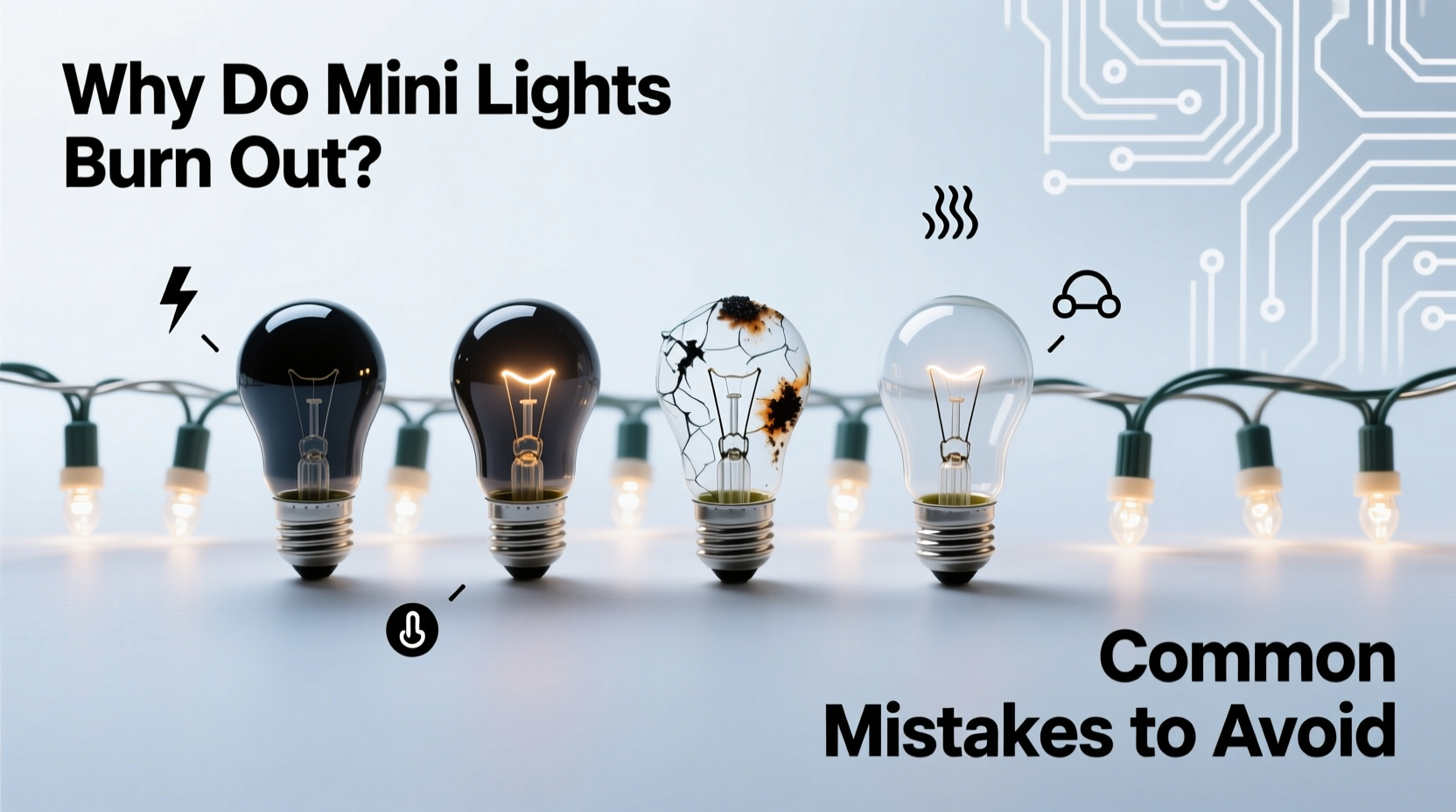
Before diagnosing problems, it's essential to distinguish between the two main types of mini lights: incandescent and LED. Their construction, power needs, and failure modes differ significantly.
- Incandescent mini lights: These traditional bulbs use a fine tungsten filament that glows when heated by electricity. They typically last 1,000–3,000 hours. While warm and nostalgic in appearance, they generate heat, consume more energy, and are far more fragile than LEDs.
- LED mini lights: Light-emitting diodes have no filament and operate at low voltage. Quality LED strings can last 25,000 to 50,000 hours—potentially over a decade with seasonal use. They’re cooler, more efficient, and more durable—but only if used correctly.
The confusion often begins when users assume all mini lights are equal. A strand labeled “mini” could be either type, and mixing them on the same circuit or assuming identical durability leads to frustration.
“Most customers don’t realize they’re using indoor-rated lights outdoors, or daisy-chaining too many strands. That’s the leading cause of early failure.” — Mark Delaney, Electrical Technician & Holiday Lighting Installer
Common Mistakes Leading to Premature Burnout
Even small oversights can drastically shorten the life of your mini lights. Below are the most frequent user errors—and how they trigger failure.
1. Exceeding Maximum Connectable Length (Daisy-Chaining Too Many Strands)
One of the biggest culprits is linking too many light strings together. Most incandescent sets are rated to connect only 3–5 strands end-to-end before overloading the first plug. Exceeding this draws excessive current, overheating wires and sockets. The result? Bulbs burn out rapidly, fuses blow, or entire sections go dark.
LEDs handle chaining better due to lower power draw, but even they have limits—usually 10–20 sets depending on wattage. Always consult manufacturer guidelines printed on the packaging or product tag.
2. Using Indoor Lights Outdoors (or Vice Versa)
Indoor mini lights lack weather-resistant insulation and sealed sockets. When exposed to moisture, humidity, or temperature swings, corrosion forms on contacts, increasing resistance and generating hot spots. This accelerates filament degradation in incandescents and can damage LED drivers.
Conversely, outdoor lights used indoors aren’t dangerous, but they’re often heavier-gauge and less flexible, making them harder to shape decoratively.
3. Poor Ventilation and Heat Trapping
Especially with incandescent bulbs, heat buildup is deadly. Wrapping lights tightly around heat sources (like Christmas trees near fireplaces), bundling wires, or covering them with fabric or insulation traps heat. This thermal stress weakens filaments and degrades solder joints.
A strand wrapped densely around a metal pole or stuffed into a glass jar without airflow will fail much faster than one hung loosely with space between bulbs.
4. Frequent On/Off Cycling
Every time an incandescent bulb turns on, a surge of current hits the cold filament. Over time, this thermal shock causes metal fatigue, leading to breakage. Lights left on for extended periods actually last longer than those switched hourly.
LEDs handle cycling better, but cheaply made ones with poor driver circuits can still suffer from repeated surges, especially if powered through unstable outlets or extension cords.
5. Using Damaged or Low-Quality Extension Cords
Thin, frayed, or undersized extension cords create voltage drops. Lights at the end of the chain receive insufficient power, forcing upstream bulbs to work harder. This imbalance stresses components and leads to uneven brightness and early burnout.
Always use heavy-duty, outdoor-rated cords for exterior setups, and ensure connections are snug and off the ground.
Do’s and Don’ts: Quick Reference Table
| Do | Don't |
|---|---|
| Use lights rated for their environment (indoor/outdoor) | Use indoor-only lights outside, even under eaves |
| Check max connectable length and adhere to it | Chain more than 3–5 incandescent strands together |
| Inspect cords and plugs for wear before each use | Use cracked or frayed cords to save money |
| Allow space between bulbs for airflow | Bundle or coil lights tightly during use |
| Store coiled loosely with tissue paper between loops | Crush lights into tight boxes or leave in direct sun |
Step-by-Step Guide to Extending Mini Light Lifespan
Follow this sequence each season to maximize longevity and performance.
- Inspect Before Installation: Unwrap the strand carefully. Look for cracked bulbs, frayed wires, bent pins, or corroded sockets. Discard or repair damaged sections immediately.
- Verify Compatibility: Confirm whether the lights are LED or incandescent, and check their maximum run length. Never mix types on the same circuit unless using a multi-port timer or splitter.
- Choose the Right Power Source: Plug into a grounded outlet. Use a surge protector or smart timer to prevent voltage spikes and automate on/off cycles.
- Install with Airflow in Mind: Hang lights with space between bulbs. Avoid compressing them against walls, inside enclosed fixtures, or under insulating materials.
- Limit Daily Cycling: If possible, set a timer to keep lights on for consistent periods (e.g., dusk to bedtime) rather than turning them on/off multiple times per evening.
- Test Mid-Season: After several weeks, check for dimming or flickering. Address issues early—replace failing bulbs or reposition overheated sections.
- Remove and Store Properly: Once taken down, clean gently with a dry cloth. Coil loosely around a cardboard reel or use a storage spool. Keep in a cool, dry place away from rodents and sunlight.
Real Example: Why Sarah’s Porch Lights Failed in 4 Weeks
Sarah decorated her front porch with five 100-light incandescent strands connected end-to-end, believing the total was safe. She used indoor-rated lights under a covered entryway, thinking “covered” meant “protected.” Within three weeks, half the bulbs were out. By week four, the entire display was dead.
An electrician diagnosed the issue: moisture had seeped into the sockets despite the roof, corroding contacts. Worse, she’d linked five strands—exceeding the 3-strand limit—overloading the first plug. The combination of excess current and dampness created hotspots that burned out filaments prematurely.
After switching to outdoor-rated LED strings (rated for 20-strand chaining) and using a proper extension cord, her new setup lasted four seasons without a single failure.
Essential Checklist for Long-Lasting Mini Lights
Use this checklist every time you install or store mini lights:
- ☑ Identify bulb type (LED vs. incandescent)
- ☑ Confirm indoor/outdoor rating matches installation site
- ☑ Check max connectable length and stay within limits
- ☑ Inspect for damaged wires, loose bulbs, or corrosion
- ☑ Use a surge-protected outlet or timer
- ☑ Ensure adequate spacing between bulbs for cooling
- ☑ Avoid sharp bends or pinching wires during installation
- ☑ Store coiled loosely in a climate-controlled area
- ☑ Label strands for easy future identification
Frequently Asked Questions
Why do only some bulbs go out on a strand?
In older incandescent sets, bulbs are wired in series—meaning one failed bulb breaks the circuit for the rest. However, modern mini lights often use shunted sockets that bypass dead bulbs. If only part of a strand fails, it may indicate a section-specific short, voltage drop, or damaged wire segment.
Can I replace incandescent bulbs with LED ones on the same strand?
No. While they may fit physically, the voltage requirements differ. LEDs need lower voltage and can be damaged by the higher current in incandescent circuits. Always use replacement bulbs specified for your strand type.
How can I tell if my lights are overheating?
Touch the wire and bulbs after 30 minutes of operation. If they’re too hot to hold comfortably, especially near the plug or where strands connect, they’re overheating. Immediate action—like reducing chain length or improving airflow—is needed.
Final Thoughts: Small Changes, Lasting Results
Mini lights don’t have to be disposable. With informed handling, even budget-friendly strands can deliver years of reliable service. The key lies in respecting electrical limits, honoring environmental ratings, and treating each component as part of a delicate system—not just a decorative afterthought.
By avoiding the common pitfalls outlined here—from daisy-chaining excess strands to storing lights in damp garages—you protect your investment and reduce unnecessary replacements. Whether illuminating a holiday tree or framing a backyard patio, well-maintained lights enhance ambiance without constant upkeep.




 浙公网安备
33010002000092号
浙公网安备
33010002000092号 浙B2-20120091-4
Comments
No comments yet. Why don't you start the discussion?